
BuddhistCatholicContemplativeEvangelicalGeneral ChristianHinduJewishLatter-day SaintMuslimNew VisionsProgressive Christian
Beliefs
- Buddhist
- Catholic
- Contemplative
- Evangelical
- General Christian
- Hindu
- Jewish
- Latter-day Saint
- More Voices
- Muslim
- New Visions
- Pagan
- Progressive Christian
Topics
- Religion News
- Food and Religion
- Sports and Religion
- Religious Art
- Religious Music and Entertainment
- Religious Events
- History and Religion
- Style and Religion
- Politics and Religion
- Women in Religion
- Recreation Outdoors and Religion
- Business Finance and Religion
- Careers Workplace and Religion
- Education and Religion
- Family Parenting and Religion
- Health Fitness and Religion
- Home and Religion
- Relationships and Religion
- Technology and Religion
- Travel and Religion
Columnists
- Buddhist Columnists
- Business Finance and Religion Columnists
- Careers Workplace and Religion Columnists
- Catholic Columnists
- Contemplative Columnists
- Education and Religion Columnists
- Evangelists Columnists
- Family Parenting and Religion Columnists
- General Christian Columnists
- Health Fitness and Religion Columnists
- Hindu Columnists
- History and Religion Columnists
- Home and Religion Columnists
- Jewish Columnists
- More Voices Columnists
- Latter Day Columnists
- Muslim Columnists
- New Visions Columnists
- Nonreligious Columnists
- Pagan Columnists
- Politics and Religion Columnists
- Progressive Columnists
- Recreation Outdoors and Religion Columnists
- Relationships and Religion Columnists
- Religion News Columnists
- Religious Art Columnists
- Religious Events Columnists
- Religious Music and Entertainment Columnists
- Sports and Religion Columnists
- Style and Religion Columnists
- Technology and Religion Columnists
- Travel and Religion Columnists
- Women in Religion Columnists
Resource Library
- 2026 Calendar
- Library of World Religions
- The 100 Most Holy Places on Earth
- Patheos Answers
- Podcasts
- Videos
- Faith Leaders Database
- Anglican Episcopalian
- Bahai
- Baptist
- Buddhism
- Christianity
- Confucianism
- Eastern Orthodoxy
- Hinduism
- Holiness and Pentecostal
- ISKCON
- Islam
- Judaism
- Lutheran
- Methodist
- The Church of Jesus Christ of Latter-day Saints
- New Age
- Paganism
- Presbytarian and Reformed
- Protestantism
- Religion Behind the Scenes
- Roman Catholic
- Scientology
- Shia Islam
- Sikhism
- Sufism
- Sunni Islam
- Taoism
- Zen
- See all religions
Research Tools
 Ad-Free & Subscriber Log-In Subscription Support
Ad-Free & Subscriber Log-In Subscription Support
Follow Patheos 

- Trending:
- Forgiveness
- |
- Marriage
- |
- Consciousness
- |
- Death Penalty
- |
- Election
- |
- Halloween
 Jesus Creed
- Home
- Evangelical
- Renewing the Institutional Church
Renewing the Institutional Church
Last updated on: May 17, 2016 at 12:05 am by Scot McKnight
Renewing the Institutional Church 2016-05-14T11:41:30-05:00 Scot McKnight
Patheos Explore the world's faith through different perspectives on religion and spirituality! Patheos has the views of the prevalent religions and spiritualities of the world.
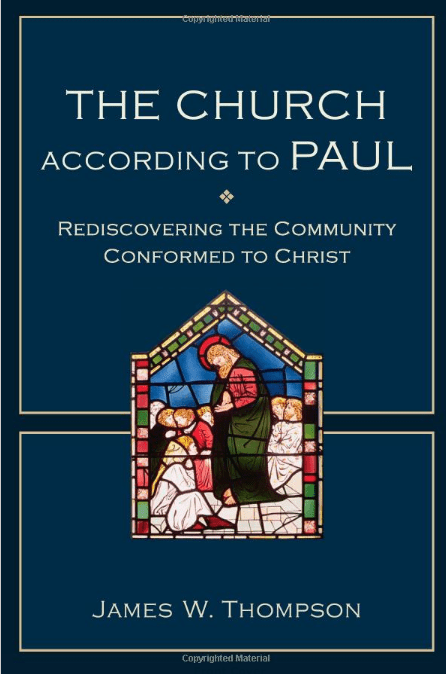 The church has fallen on hard times. Some have checked out, some have fought back. Both are responding to the hard times. James Thompson, in his well-researched book The Church according to Paul: Rediscovering the Community Conformed to Christ, opens with this story, and notice that last sentence, which will lead to our own story:
Shortly after the fall of the Berlin Wall, my wife and I visited a village church East Germany. Like the churches throughout other towns and villages of Germany, it stood at the center of town, with a spire that was visible from a distance. We entered a beautiful building that seated at least three hundred, but only twelve were in attendance on this Sunday morning—including the preacher, the organist, and us. If this village church was like others throughout Europe, it once would have been the center of community life, and the seats would have been filled. Now, however, it appeared to be a relic of the past.
A few years back Kris and I were in Venice on Pentecost Sunday, so we went to a historic Palladio-designed church. The doors were open, we walked in… and like the little hands game children play, we asked, “Where are all the people?” There were about twenty of us, most being members of the family of the child being baptized. Without that family there would have been fewer that ten. A “relic of the past,” no matter how magnificent the architecture. It was Pentecost Sunday at that!
So churches are reinventing themselves. Thompson thinks the declining churches and the growing churches could be equal in their faithfulness and that he is not offering a new reinvention of the church. Yes, he’s right: of the lines in the Creed the least resonant today may be “We believe in one holy catholic and apostolic church.” Some think the church has abandoned Jesus (or Jesus the church), others know the stories about the church that are not good stories, some that we can follow Jesus without the church, and yet others know that individualism in Protestant soteriology deconstructs the church (eventually).
What are the models of reinventing the church? Thompson gives these, and I ask What models of church are you seeing out there?
1. The church as political action committee. Liberal mainliners and conservative evangelicals both have found themselves in this box.
2. The church as corporation. Church growth principles focused on the homogenous unit. The aim here is growth.
3. The church as theater. Megachurches tend to congregate here: the focus is Sunday morning as a performance.
4. The church as association. Common interests gather here.
5. The missional church. He traces this to Lesslie Newbigin, to the mission of God, to the reign of God, and to the church of God. A theme is the church as alternative. He questions “sentness” as adequate or comprehensive enough. Thompson questions the missional church movement with this:
One is left with uncertainty about what is meant either by the missio Dei or by the kingdom. Should the missio Dei be understood primarily as God’s work in redemption, and thus the church is the primary way that God works in the world? Or should the missio Dei be understood as God’s work in all creation? The latter view marginalizes the church and envisions God at work outside the religious sphere. The task of the church, according to this understanding, is to discover what God is doing and then seek to participate in it. … Jesus did not invite his listeners to discover what God was already doing, but announced that the long-awaited kingdom was present in his ministry. While others healed and did acts of compassion, only Jesus inaugurated the kingdom. Thus one is left to wonder what the missional church advocates mean by their references to the kingdom. … If the church’s role is to discover what God is doing and then join in that, the kingdom of God could function without the church.
6. The emerging church.
Thompson, looking over some of these recent proposals, not least the missional and emerging church theories, and says this:
Attempts to reimagine the church have focused on strategies and often assume an ecclesiology without offering a critical analysis of the identity of the church. A special irony can be seen in the near absence from the discussion of Paul, the one who shaped communities more than anyone else we know. Paul offers the first written reflection on the nature of the church. Neither the attractional models of the church growth movement nor the missional or emerging church models incorporate Pauline theology at a substantive level into their understanding of the church.
Because we know more about Paul’s churches than we know about any other community in the New Testament, the apostle is the indispensable guide for anyone who looks for scriptural resources for reimagining the church.
Paul’s task was to define the community of believers in ways that did not conform to ancient concepts of community. When he converted people from different social classes and ethnic groups, he formed a community that was unparalleled in the ancient world. Thus his task was to build lasting communities, and his letters are attempts at ecclesial self-definition that challenged the common views of community.
Previous Post

May 16, 2016
Day Jobs of 20 Famous Writers
Next Post
May 17, 2016 No Holiness but Social Holiness (RJS)
Browse Our Archives
Select a Category Acts of the Apostles Adam Advent Anabaptism Angels Anglican Apologetics Atonement Baptism BCP Prayers Bible Biblical Studies Birds Blogging Bloglossary Bonhoeffer Books Calvinism Christianity Church Church History Coffee Colossians Commentary Recs Conversion Creation Creeds Culture Death Ecclesiastes Economics Education Embracing Grace Emergent Emerging Movement Eschatology Essays Ethics Eucharist Evangelicalism Family Fasting Fathers Fellowship of Differents Footsteps Tour Fun and Whimsical Gospel Grace Happiness Heaven Hell Holy Spirit Irenaeus James Jesus Jesus Creed Job Justification Kingdom of God Law Lectures Lent Liberalism Love and Marriage Mabanteneni Manhood Mary Miracles Missio Alliance MissioLife Missional Missional Jesus Movies and Film New Perspective Northern Seminary OneLife Origins Project Orthodox Parables Pastor's Spouse Pastoring and Leading Pastoring and Preaching Patristics Paul Paul-John Tour Pharisees Pietism Political Theology Prayer and Formation Preaching Problems for Faith Psalm 119 Psalms Public Issues Purgatory Religions Resurrection Revelation Romans Rule of JCreed Science and Faith Sermon on the Mount Sports Ten Commandments Theology Third Way Top Ten Lists Translations Uncategorized Universalism University Ministry Way Out Weekly Meanderings Wisdom Women and Ministry Work Worship Writing & Blogging Youth Ministry
Select a Month July 2021 January 2020 December 2019 November 2019 October 2019 September 2019 August 2019 July 2019 June 2019 May 2019 April 2019 March 2019 February 2019 January 2019 December 2018 November 2018 October 2018 September 2018 August 2018 July 2018 June 2018 May 2018 April 2018 March 2018 February 2018 January 2018 December 2017 November 2017 October 2017 September 2017 August 2017 July 2017 June 2017 May 2017 April 2017 March 2017 February 2017 January 2017 December 2016 November 2016 October 2016 September 2016 August 2016 July 2016 June 2016 May 2016 April 2016 March 2016 February 2016 January 2016 December 2015 November 2015 October 2015 September 2015 August 2015 July 2015 June 2015 May 2015 April 2015 March 2015 February 2015 January 2015 December 2014 November 2014 October 2014 September 2014 August 2014 July 2014 June 2014 May 2014 April 2014 March 2014 February 2014 January 2014 December 2013 November 2013 October 2013 September 2013 August 2013 July 2013 June 2013 May 2013 April 2013 March 2013 February 2013 January 2013 December 2012 November 2012 October 2012 September 2012 August 2012 July 2012 June 2012 May 2012 April 2012 March 2012 February 2012 January 2012 December 2011 November 2011 October 2011 September 2011 August 2011 July 2011 June 2011 May 2011 April 2011 March 2011 February 2011 January 2011 December 2010 November 2010 October 2010 September 2010 August 2010 July 2010 June 2010 May 2010 April 2010 March 2010 February 2010 January 2010 December 2009 November 2009 October 2009 September 2009 August 2009 July 2009 June 2009 May 2009 April 2009 March 2009 February 2009 January 2009 December 2008 November 2008 October 2008 September 2008 August 2008 July 2008 June 2008 May 2008 April 2008 March 2008 February 2008 January 2008 December 2007 November 2007 October 2007 September 2007 August 2007 July 2007 June 2007 May 2007 April 2007 March 2007 February 2007 January 2007 December 2006 November 2006 October 2006 September 2006 August 2006 July 2006 June 2006 May 2006 April 2006 March 2006 February 2006 January 2006 December 2005 November 2005 October 2005 September 2005 August 2005 July 2005 June 2005 May 2005 April 2005 0000
Follow Us!
TAKE THE
Religious Wisdom Quiz
Which prophet had a vision of God standing beside a destroyed altar?
Select your answer to see how you score.
Amos Micah Ezekiel Joel
Related posts from Jesus Creed

Rethinking Evangelism Through The Reformation
Church: Seven Reasons Not to Go to Church
TRENDING AT PATHEOS Evangelical

How the author of the world's best hymn...
I've been working with John Newton for a while now. This makes...

Long before this Lectio Divina, Psalm 130 - the song - started...

What About the Trees? Another Living Parable
After I finished writing the last article about falling leaves as a...

Why Classical Education Is a Conversation, Not a...
Come and Read: Joy in Classical Education When I was a little...

Falling Leaves: A Living Parable on Letting Go
I’ve spent the vast majority of my life in the southeast corner...

Cornell University has received a great deal of negative publicity and intense...
view all Evangelical blogs
Ad-Free & Subscriber Log-In Subscription Support
- About Us
- 2026 Calendar
- Videos
- Podcasts
- Library of World Religions
- Faith In Media Tracker
- Advertise With Us
- Write for Us
- Privacy Policy
- Terms of Service
- Do Not Sell My Data
- Contact Us
- Radiant Digital
- Manage Newsletter Subscriptions
- Unsubscribe From Notifications
- Sitemap
Copyright 2008-2026, Patheos. All rights reserved.
Subscription Support Ad-Free & Subscriber Log-In
Follow Patheos