
BuddhistCatholicContemplativeEvangelicalGeneral ChristianHinduJewishLatter-day SaintMuslimNew VisionsProgressive Christian
Beliefs
- Buddhist
- Catholic
- Contemplative
- Evangelical
- General Christian
- Hindu
- Jewish
- Latter-day Saint
- More Voices
- Muslim
- New Visions
- Pagan
- Progressive Christian
Topics
- Religion News
- Food and Religion
- Sports and Religion
- Religious Art
- Religious Music and Entertainment
- Religious Events
- History and Religion
- Style and Religion
- Politics and Religion
- Women in Religion
- Recreation Outdoors and Religion
- Business Finance and Religion
- Careers Workplace and Religion
- Education and Religion
- Family Parenting and Religion
- Health Fitness and Religion
- Home and Religion
- Relationships and Religion
- Technology and Religion
- Travel and Religion
Columnists
- Buddhist Columnists
- Business Finance and Religion Columnists
- Careers Workplace and Religion Columnists
- Catholic Columnists
- Contemplative Columnists
- Education and Religion Columnists
- Evangelists Columnists
- Family Parenting and Religion Columnists
- General Christian Columnists
- Health Fitness and Religion Columnists
- Hindu Columnists
- History and Religion Columnists
- Home and Religion Columnists
- Jewish Columnists
- More Voices Columnists
- Latter Day Columnists
- Muslim Columnists
- New Visions Columnists
- Nonreligious Columnists
- Pagan Columnists
- Politics and Religion Columnists
- Progressive Columnists
- Recreation Outdoors and Religion Columnists
- Relationships and Religion Columnists
- Religion News Columnists
- Religious Art Columnists
- Religious Events Columnists
- Religious Music and Entertainment Columnists
- Sports and Religion Columnists
- Style and Religion Columnists
- Technology and Religion Columnists
- Travel and Religion Columnists
- Women in Religion Columnists
Resource Library
- 2026 Calendar
- Library of World Religions
- The 100 Most Holy Places on Earth
- Patheos Answers
- Podcasts
- Videos
- Faith Leaders Database
- Anglican Episcopalian
- Bahai
- Baptist
- Buddhism
- Christianity
- Confucianism
- Eastern Orthodoxy
- Hinduism
- Holiness and Pentecostal
- ISKCON
- Islam
- Judaism
- Lutheran
- Methodist
- The Church of Jesus Christ of Latter-day Saints
- New Age
- Paganism
- Presbytarian and Reformed
- Protestantism
- Religion Behind the Scenes
- Roman Catholic
- Scientology
- Shia Islam
- Sikhism
- Sufism
- Sunni Islam
- Taoism
- Zen
- See all religions
Research Tools
 Ad-Free & Subscriber Log-In Subscription Support
Ad-Free & Subscriber Log-In Subscription Support
Follow Patheos 

- Trending:
- Forgiveness
- |
- Marriage
- |
- Consciousness
- |
- Death Penalty
- |
- Election
- |
- Halloween
 Jesus Creed
- Home
- Evangelical
- No Holiness but Social Holiness (RJS)
No Holiness but Social Holiness (RJS)
Last updated on: May 17, 2016 at 9:19 pm by RJS
No Holiness but Social Holiness (RJS) 2016-05-17T21:19:52-05:00 RJS
Patheos Explore the world's faith through different perspectives on religion and spirituality! Patheos has the views of the prevalent religions and spiritualities of the world.
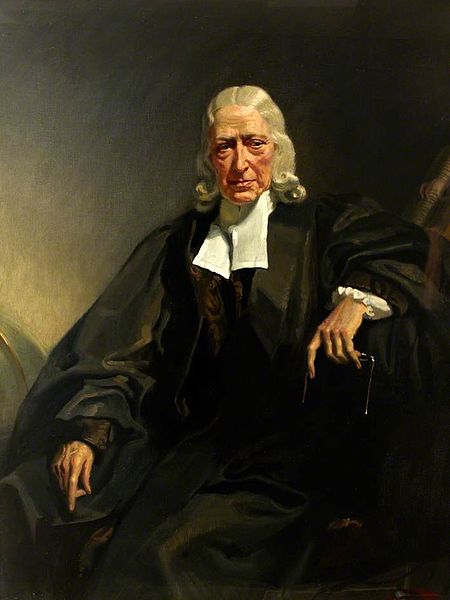 The final section of Matthew Nelson Hill’s new book Evolution and Holiness looks at John Wesley’s view of original sin and human nature and the interaction between the structures he put in place with small accountability groups and more modern ideas from sociobiology. I was raised in a Baptist church, with something of a “soft” Calvinist bent. (TULIP appalled me when I first heard of it in college – it was not explicitly or implicitly taught.) I have attended Presbyterian or Baptist churches all of my life. As a result some of these aspects of Wesley’s thought were new to me. (My Baptist upbringing and college taught me precious little about Lutheranism and nothing at all about Weslyanism, except that “we” were not like “them.”)
A key component of early Methodism was the creation of structures, small groups, designed for accountability to help to shape the serious Christian in what Wesley termed “Christian perfection.” Hill’s interest is in the way these accountability structures encourage virtues that might be considered “unnatural,” such virtues as altruism and generosity.
First, Wesley’s views:
Wesley did not see human nature in a positive light; yet he continually saw God working with individuals to help correct their natural tendencies. (p. 139)
All persons are not completely bent toward depravity because all persons are recipients of prevenient grace. (p. 140)
For those of us not schooled in theology, prevenient is from the Latin meaning coming before, antecedent or anticipatory. This is a grace that anticipates (and enables) conversion and sanctification.
For Wesley, Christian perfection always consisted of wholly loving God with one’s heart, soul, mind and strength, and loving one’s neighbor as oneself. (p. 140)
Christian perfection isn’t a final state, for is is possible to fall back into the ways of the world, but it is, in Wesley’s view, an achievable goal that should be sought in this life. It is also not achieved through human effort alone, but requires the grace and Spirit of God.
Wesley also focused on the whole person and thus sidestepped dualism that separated body and soul. Hill notes that he spoke and wrote using the language of his day and age – embodied souls or spirits, but he also had a holistic view of the human person. This shaped his approach to sanctification or Christian perfection.
Sanctification or “Christian perfection” is not an internal state but manifest in all aspects of life.
For Wesley, part of being truthful to the biblical understanding of perfection was recognizing the connection between Christian perfection and what he called “social holiness,” where inward holiness resulted in outward action. (p. 154)
We cannot separate loving God with heart, mind, soul, and strength from active and purposeful love of neighbor.
Wesley held original sin to be real, and depravity a disease of the human condition. Humans are constrained by the flesh, its histories and weakness. But these can be overcome.
Is God the causal agent in human Christian perfection or does human action play a central role? The answer may be similar to that which Paul proposes in Philippians 2:12-13, where he encourages those at the church in Philippi to “work out your own salvation with fear and trembling; for it is God who is at work in you, enabling you both to will and to work for his good pleasure.” … Wesley’s commentary, called Notes of the New Testament, proves extremely revealing. In it he articulates that “not for any merit of yours. Yet his influences are not to supersede, but to encourage, our own efforts. Work out your own salvation – Here is our duty. For it is God that worketh in you – Here is our encouragement. And O, what a glorious encouragement, to have the arm of Omnipotence stretched out for our support and our succour!” According to Wesley, both God and humanity play a critical role in Christian perfection: God acting through grace and humans acting through volition of the will. (p. 165-166)
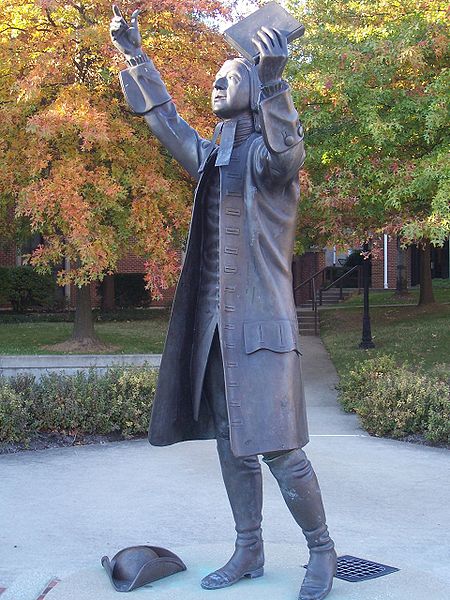 Second, Wesley’s structures: The Methodist societies. Structured groups of bands and classes met outside of regular Anglican services to provide accountability and discipleship. The bands, small groups of 5 to 10, and larger classes and societies, provided the structure necessary to encourage and enable change and spiritual growth in Christians … and enforce discipline.”The classes were effectively house churches, rather than “Sunday school” or other modes of more formal instruction. They met in homes of members and the leaders functioned as pastors.” (p. 182) The bands were smaller, more intimate groups. Accountability groups were viewed as essential for modification of behavior and progress toward Christian perfection and holiness. Christian faith is personal, but it is not isolated and inward.
Matthew Hill’s focus is on altruism and the way that these Methodist structures encouraged altruism. Because Christian perfection is social and outward, to love one’s neighbor as one’s self, Christian perfection must include altruistic ethics.
John Wesley created an environmental world of constraints that pushed people toward altruism. These constraints, which were the outcropping of his highly structured accountability groups, worked to suppress other biological tendencies that would have encouraged the individual to be more selfish. In a way, Wesley created an organized community that encourages underlying natural tendencies toward altruism. Wesley’s passion for a change in people’s lifestyle exuded in all that he did. With those who were ungenerous, he felt a strong need to encourage modifications in their behavior. One can easily track his encouragement in his sermons, especially those moments in which he employs fiery language when focusing on the seriousness of shifting one;s disposition toward altruism and Christian love. To those who seemed predisposed toward altruism , Wesley likewise encouraged through regular meetings, since accountability had proven to be necessary to maintain changed behavior. (p. 186)
Discipline in the bands and classes included rebuke and excommunication. This wasn’t a soft program, for true change requires serious effort. Hill points out that individuals were rarely expelled for failure to keep some religious ordinance, and “none were ever recorded as excommunicated for doctrinal differences.” (p. 188) Rather, most were removed for “lightness and carelessness” or “not taking seriously enough their religion.” Inward faith will be reflected in earnest attempts in outward actions. These outward actions will embody active love for others. Christian community is essential. Hill quotes from Wesley’s writings:
“Holy solitaries” is a phrase no more consistent with the gospel than holy adulterers. The gospel of Christ knows no religion, but social; no holiness but social holiness. “Faith working by love” is the length and breadth and depth and height of Christian perfection. “This commandment we have from Christ, that he who loves God, love his brother also;” and that we manifest our love “by doing good unto all men; especially them that are of the family of faith.” (p. 193)
Hill also includes an appendix with the directions given to band societies in 1744 (pp. 225-226). These include aspects of personal piety in attendance at holy services, regular prayer and the reading of and meditation on scripture and such rules as “neither to buy or sell anything on the Lord’s day,” and “to wear no needless ornaments, such as rings, earrings, necklaces, lace, ruffles” alongside social admonitions “not to mention the fault of any behind his back, and to stop those short that do,” and “to give alms of such things as you possess, and that to the uttermost of your power.” The bands and societies encouraged altruism, but also a strict kind of holiness that detours into legalism. On the other hand these structures do serve to shape and form people as Christians. (And such admonitions were not unique to Wesley and his followers of course.)
The success of Wesley’s movement rested in large part on his structures. These structures helped to confirm and established the new converts (revivalism was in the air) in their faith. Those who stayed were committed to serious change and a serious faith.
What can we learn from Wesley?
Do you agree that “the gospel of Christ knows no religion, but social; no holiness but social holiness?”
If you wish to contact me directly you may do so at rjs4mail[at]att.net.
If interested you can subscribe to a full text feed of my posts at Musings on Science and Theology.
Previous Post

May 17, 2016
Renewing the Institutional Church
Next Post
May 17, 2016 Going to Camp Boredom
Browse Our Archives
Select a Category Acts of the Apostles Adam Advent Anabaptism Angels Anglican Apologetics Atonement Baptism BCP Prayers Bible Biblical Studies Birds Blogging Bloglossary Bonhoeffer Books Calvinism Christianity Church Church History Coffee Colossians Commentary Recs Conversion Creation Creeds Culture Death Ecclesiastes Economics Education Embracing Grace Emergent Emerging Movement Eschatology Essays Ethics Eucharist Evangelicalism Family Fasting Fathers Fellowship of Differents Footsteps Tour Fun and Whimsical Gospel Grace Happiness Heaven Hell Holy Spirit Irenaeus James Jesus Jesus Creed Job Justification Kingdom of God Law Lectures Lent Liberalism Love and Marriage Mabanteneni Manhood Mary Miracles Missio Alliance MissioLife Missional Missional Jesus Movies and Film New Perspective Northern Seminary OneLife Origins Project Orthodox Parables Pastor's Spouse Pastoring and Leading Pastoring and Preaching Patristics Paul Paul-John Tour Pharisees Pietism Political Theology Prayer and Formation Preaching Problems for Faith Psalm 119 Psalms Public Issues Purgatory Religions Resurrection Revelation Romans Rule of JCreed Science and Faith Sermon on the Mount Sports Ten Commandments Theology Third Way Top Ten Lists Translations Uncategorized Universalism University Ministry Way Out Weekly Meanderings Wisdom Women and Ministry Work Worship Writing & Blogging Youth Ministry
Select a Month July 2021 January 2020 December 2019 November 2019 October 2019 September 2019 August 2019 July 2019 June 2019 May 2019 April 2019 March 2019 February 2019 January 2019 December 2018 November 2018 October 2018 September 2018 August 2018 July 2018 June 2018 May 2018 April 2018 March 2018 February 2018 January 2018 December 2017 November 2017 October 2017 September 2017 August 2017 July 2017 June 2017 May 2017 April 2017 March 2017 February 2017 January 2017 December 2016 November 2016 October 2016 September 2016 August 2016 July 2016 June 2016 May 2016 April 2016 March 2016 February 2016 January 2016 December 2015 November 2015 October 2015 September 2015 August 2015 July 2015 June 2015 May 2015 April 2015 March 2015 February 2015 January 2015 December 2014 November 2014 October 2014 September 2014 August 2014 July 2014 June 2014 May 2014 April 2014 March 2014 February 2014 January 2014 December 2013 November 2013 October 2013 September 2013 August 2013 July 2013 June 2013 May 2013 April 2013 March 2013 February 2013 January 2013 December 2012 November 2012 October 2012 September 2012 August 2012 July 2012 June 2012 May 2012 April 2012 March 2012 February 2012 January 2012 December 2011 November 2011 October 2011 September 2011 August 2011 July 2011 June 2011 May 2011 April 2011 March 2011 February 2011 January 2011 December 2010 November 2010 October 2010 September 2010 August 2010 July 2010 June 2010 May 2010 April 2010 March 2010 February 2010 January 2010 December 2009 November 2009 October 2009 September 2009 August 2009 July 2009 June 2009 May 2009 April 2009 March 2009 February 2009 January 2009 December 2008 November 2008 October 2008 September 2008 August 2008 July 2008 June 2008 May 2008 April 2008 March 2008 February 2008 January 2008 December 2007 November 2007 October 2007 September 2007 August 2007 July 2007 June 2007 May 2007 April 2007 March 2007 February 2007 January 2007 December 2006 November 2006 October 2006 September 2006 August 2006 July 2006 June 2006 May 2006 April 2006 March 2006 February 2006 January 2006 December 2005 November 2005 October 2005 September 2005 August 2005 July 2005 June 2005 May 2005 April 2005 0000
Follow Us!
TAKE THE
Religious Wisdom Quiz
How many men did Joshua initially send to Ai?
Select your answer to see how you score.
5,000 2,000 3,000 4,000
Related posts from Jesus Creed


The Gospel of With Us and Through Us

Northern Seminary Announces: Nijay Gupta Joins Faculty

The Gundrys and Me: Ruth Tucker
TRENDING AT PATHEOS Evangelical

The REST of Your Life: A Creative Wrestles...
This week I had a conversation with a good friend from church....

How the author of the world's best hymn...
I've been working with John Newton for a while now. This makes...

Long before this Lectio Divina, Psalm 130 - the song - started...

What About the Trees? Another Living Parable
After I finished writing the last article about falling leaves as a...

Why Classical Education Is a Conversation, Not a...
Come and Read: Joy in Classical Education When I was a little...

Cornell University has received a great deal of negative publicity and intense...
view all Evangelical blogs
Ad-Free & Subscriber Log-In Subscription Support
- About Us
- 2026 Calendar
- Videos
- Podcasts
- Library of World Religions
- Faith In Media Tracker
- Advertise With Us
- Write for Us
- Privacy Policy
- Terms of Service
- Do Not Sell My Data
- Contact Us
- Radiant Digital
- Manage Newsletter Subscriptions
- Unsubscribe From Notifications
- Sitemap
Copyright 2008-2026, Patheos. All rights reserved.
Subscription Support Ad-Free & Subscriber Log-In
Follow Patheos