
BuddhistCatholicContemplativeEvangelicalGeneral ChristianHinduJewishLatter-day SaintMuslimNew VisionsProgressive Christian
Beliefs
- Buddhist
- Catholic
- Contemplative
- Evangelical
- General Christian
- Hindu
- Jewish
- Latter-day Saint
- More Voices
- Muslim
- New Visions
- Pagan
- Progressive Christian
Topics
- Religion News
- Food and Religion
- Sports and Religion
- Religious Art
- Religious Music and Entertainment
- Religious Events
- History and Religion
- Style and Religion
- Politics and Religion
- Women in Religion
- Recreation Outdoors and Religion
- Business Finance and Religion
- Careers Workplace and Religion
- Education and Religion
- Family Parenting and Religion
- Health Fitness and Religion
- Home and Religion
- Relationships and Religion
- Technology and Religion
- Travel and Religion
Columnists
- Buddhist Columnists
- Business Finance and Religion Columnists
- Careers Workplace and Religion Columnists
- Catholic Columnists
- Contemplative Columnists
- Education and Religion Columnists
- Evangelists Columnists
- Family Parenting and Religion Columnists
- General Christian Columnists
- Health Fitness and Religion Columnists
- Hindu Columnists
- History and Religion Columnists
- Home and Religion Columnists
- Jewish Columnists
- More Voices Columnists
- Latter Day Columnists
- Muslim Columnists
- New Visions Columnists
- Nonreligious Columnists
- Pagan Columnists
- Politics and Religion Columnists
- Progressive Columnists
- Recreation Outdoors and Religion Columnists
- Relationships and Religion Columnists
- Religion News Columnists
- Religious Art Columnists
- Religious Events Columnists
- Religious Music and Entertainment Columnists
- Sports and Religion Columnists
- Style and Religion Columnists
- Technology and Religion Columnists
- Travel and Religion Columnists
- Women in Religion Columnists
Resource Library
- 2026 Calendar
- Library of World Religions
- The 100 Most Holy Places on Earth
- Patheos Answers
- Podcasts
- Videos
- Faith Leaders Database
- Anglican Episcopalian
- Bahai
- Baptist
- Buddhism
- Christianity
- Confucianism
- Eastern Orthodoxy
- Hinduism
- Holiness and Pentecostal
- ISKCON
- Islam
- Judaism
- Lutheran
- Methodist
- The Church of Jesus Christ of Latter-day Saints
- New Age
- Paganism
- Presbytarian and Reformed
- Protestantism
- Religion Behind the Scenes
- Roman Catholic
- Scientology
- Shia Islam
- Sikhism
- Sufism
- Sunni Islam
- Taoism
- Zen
- See all religions
Research Tools
 Ad-Free & Subscriber Log-In Subscription Support
Follow Patheos 

- Trending:
- Advent
- |
- Forgiveness
- |
- Thanksgiving
- |
- Election
- |
- Seasonal Holidays
- |
- Marriage
 Jesus Creed
- Home
- Evangelical
- The Flood (RJS)
The Flood (RJS)
Last updated on: April 28, 2016 at 6:41 pm by RJS
The Flood (RJS) 2016-04-28T18:41:54-05:00 RJS
Patheos Explore the world's faith through different perspectives on religion and spirituality! Patheos has the views of the prevalent religions and spiritualities of the world.
 Although we think about the flood as a staple Sunday school tale, it is rather gruesome. We have not a cute progression of animals trekking to safety two by two, but a tale of utter destruction – of the undoing of creation as related in Genesis 1-5. Who would put a picture like the one to the right on wall of their nursery? But we concentrate on cute animals, gloss over the details, and marvel and the merciful covenant established by God signified by the beautiful rainbow.
In reality, there are few passages in Genesis, or indeed in all of Scripture, that raise as many questions as the story of the flood in Genesis 6-8.
Who were the sons of God who “took wives for themselves of all that they chose?”
And how about the Nephilim … “the heroes that were of old, warriors of renown?”
What are we to make of the statement that “the Lord was sorry that he had made humankind on the earth, and it grieved him to his heart?”
Noah was the only one righteous among thousands and thousands?
Where did all the water come from?
How did the animals get to the ark?
How did they fit, including food for all?
How did they handle the waste?
Where did the animals get food after landfall? (Both herbivores and carnivores would have problems finding food.)
And this is only the tip of the iceberg.
The folks at Answers in Genesis have answers for all of these. The construction of The Ark Encounter, opening later this summer has forced them to address the questions. But frankly the answers are not consistent. Interestingly, one of the answers involves populating the Ark with “kinds” from which our current diversity of animals descended, with modification by natural selection … but don’t call it “evolution.” A cat kind, a dog kind, an elephant kind. This would require a rate of change in both genetic sequence and phenotype over only a thousand years or less that boggles the mind.
There is absolutely no evidence for a global flood covering the earth, or for a bottleneck in human and animal populations a mere four thousand three hundred and sixty three years ago. Human culture itself is far older, continuous, and dispersed around the globe. As just one example, John Walton notes in his Zondervan Illustrated Bible Background Commentary on Genesis that “no convincing archaeological evidence of anything approaching the size of the biblical flood has been uncovered.” Although there is abundant evidence for floods in Mesopotamia, the traces in different places have different dates. And “other cities whose occupation spans this time period (such as Jericho, continuously occupied from 7000 B.C.) contain no flood deposits whatsoever.” (p. 50)
But if we focus on the problems we will miss the intent of the original author/editor. The story of Noah and The Flood is included in the text of scripture for a reason. If we take scripture seriously we need to focus first on the message conveyed by the story.
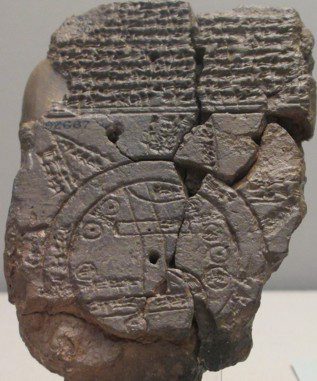 Of the three commentaries we’ve been looking at, Tremper Longman III (Genesis in the Story of God Bible Commentary), John Walton (The NIV Application Commentary Genesis), and Bill Arnold (Genesis (New Cambridge Bible Commentary)), none conclude that the flood account in Genesis should be taken to refer to a literal global flood four thousand three hundred and sixty three years ago. Walton is the most conservative, taking the position that the flood was “global” not as we see the world today, but according to an ancient Near Eastern map of the world. No one in the ancient Near East viewed the earth as a globe in space. Arnold is the least conservative – seeing the account as a compilation from two Israelite sources, with reference to other stories and legends in the surrounding culture. Concerning the introduction in 6:1-4 referencing the sons of God and Nephilim he notes: “Clearly this little pericope has its origins in the traditional mythology of the ancient Near East. … By placing vv. 1-4 immediately prior to the traditional Israelite explanation for the flood (vv. 5-6) the editor has transformed it and used it to show why the flood was necessary.” (p. 90)
 Why a flood? There was, as Longman notes, “a robust flood tradition in Mesopotamian literature.” There is the mention in the Sumerian King List, the Sumerian story of Ziusudra, the Gilgamesh Epic, Atrahasis, and likely more. These have similarities with the biblical narrative in Genesis, but profound differences as well. The purpose of the story of Noah is radically different; it ties into the theme of Genesis 3-5 and sets the stage for God’s covenant with his people. There has been a proliferation of evil, beginning with the fall. We see a little of this with the story of Cain and Abel, and in the digression concerning Lamech (4:23-25). The proliferation of evil is made crystal clear in the prelude to our story.
The Lord saw that the wickedness of humankind was great in the earth, and that every inclination of the thoughts of their hearts was only evil continually. And the Lord was sorry that he had made humankind on the earth, and it grieved him to his heart. So the Lord said, “I will blot out from the earth the human beings I have created—people together with animals and creeping things and birds of the air, for I am sorry that I have made them.” But Noah found favor in the sight of the Lord. (vv. 5-8)
The story of the flood that follows is a story of uncreation (destruction) and re-creation culminating in a new covenant with Noah. In my discussion I will follow primarily Bill Arnold’s comments.
Noah’s righteous presence changes everything and nothing; that is, it changes nothing about the need for an expression of God’s justice, but it changes everything about our understanding of God’s mercy. The justice of God demands that a flood occur, but the grace of God allows an escape for Noah. (p. 98)
In the context of this story there are no other righteous people. Noah (and his household) is the only one. When God speaks to Noah in verses 11-13 this is made clear. The Hebrew text contains a play on words in the verb forms used. “In a way difficult to express in English, the use of this Hebrew verb illustrates that God’s actions are both unavoidable and just. Humanity has corrupted itself and there for God declares humanity corrupt (i.e. “destroyed”). (p. 99) God will judge the wicked, but he will establish a covenant with the righteous, in this case Noah v. 18.
By means of contrast with the unrighteousness of humanity at large, Noah’s covenant with God is given fuller meaning. Covenant-living in not only the means of survival (i.e. salvation) from the flood, but also the Bible’s answer to humanities sinful nature more generally. In this and other ways, Noah’s covenant anticipates and previews the covenant between God and Abraham, as we shall see. Righteous covenant-living will be highlighted as Israel’s hope for salvation, nationally and individually. (p. 101)
When the flood hits it is massive. All of creation is undone. But God himself has saved Noah and his household, shutting them into the ark (v. 16).
The cosmic phenomena described in 7:11-24 are not some banal punishment for the sin of that ancient generation., but they represent a reversal of creation, or “uncreation” as it has been called. The priestly creation account of Gen 1 portrayed creation as a series of separations and distinctions, whereas Gen 6:9-7:24 portrays the annihilation of those distinctions. As the sky dome was created to keep the heavenly waters from falling to the earth (1:6-7), here the opened “windows of the heavens” reverse that created function (7:11). When the “fountains of the great deep [tĕhôm]” burst forth (7:11), the cosmic order that had been fashioned from watery chaos returns to watery chaos (1:2,9). Strikingly the sequence of annihilation, “birds, domestic animals, wild animals, all swarming things that swarm on the earth, and all human beings” (7:21) follows closely that of creation itself in Genesis 1:1-2:3.
And then God remembers Noah and the animals – the center point or fulcrum of the story. In the Bible, “[w]hen God remembers, promises are kept, salvation delivered, old covenants renewed.” (p. 104) And a wind blows over the waters.
As the first part of the story moves toward chaos (6:9-7:24) , from this point forward it moves toward new creation (8:1-9:19). Indeed, a re-creation is signaled by the renewed separation of sea and land, the receding of waters, and the gradual appearance of dry ground in a way reminiscent of Gen 1, making complete the theme of creation – uncreation – re-creation (8:3, 7, 13) (p. 104)
 There are more details that we could dig into in the story. But this is the broad stroke of the story.
Ten and one-half months after the flood began (7:11), Noah uncovered the ark and saw for himself that the ground was drying (8:13). His salvation complete, earth is now ready for new life. The age of a new world order is about to begin, and will be consecrated with new laws and a covenant in Gen 9. (p. 107)
Noah is the second Adam. A new covenant and a new start. But the story doesn’t change much.
Justice for the wicked and mercy for the righteous, those who live in covenant with God. This is the recurring theme of the Old Testament, and for that matter, the New Testament.
Perhaps, as John Walton suggests, the story recounts a real historical but local event, covering the whole world as known to the writer. More likely the story usurps a well known story of the ancient Near East and uses it to convey a message about God and his people. If there was a flood (and the story of a flood likely permeated the culture as common knowledge), it must have been from the LORD, both in the destruction and salvation. The primeval history of Genesis 1-11 is setting the stage for what is to come.
What are we to make of the flood?
If you wish to contact me directly you may do so at rjs4mail[at]att.net.
If interested you can subscribe to a full text feed of my posts at Musings on Science and Theology.
Previous Post

April 28, 2016
Resisting the Powers
Next Post
April 29, 2016 Sermon-makers are Person-makers
Browse Our Archives
Select a Category Acts of the Apostles Adam Advent Anabaptism Angels Anglican Apologetics Atonement Baptism BCP Prayers Bible Biblical Studies Birds Blogging Bloglossary Bonhoeffer Books Calvinism Christianity Church Church History Coffee Colossians Commentary Recs Conversion Creation Creeds Culture Death Ecclesiastes Economics Education Embracing Grace Emergent Emerging Movement Eschatology Essays Ethics Eucharist Evangelicalism Family Fasting Fathers Fellowship of Differents Footsteps Tour Fun and Whimsical Gospel Grace Happiness Heaven Hell Holy Spirit Irenaeus James Jesus Jesus Creed Job Justification Kingdom of God Law Lectures Lent Liberalism Love and Marriage Mabanteneni Manhood Mary Miracles Missio Alliance MissioLife Missional Missional Jesus Movies and Film New Perspective Northern Seminary OneLife Origins Project Orthodox Parables Pastor's Spouse Pastoring and Leading Pastoring and Preaching Patristics Paul Paul-John Tour Pharisees Pietism Political Theology Prayer and Formation Preaching Problems for Faith Psalm 119 Psalms Public Issues Purgatory Religions Resurrection Revelation Romans Rule of JCreed Science and Faith Sermon on the Mount Sports Ten Commandments Theology Third Way Top Ten Lists Translations Uncategorized Universalism University Ministry Way Out Weekly Meanderings Wisdom Women and Ministry Work Worship Writing & Blogging Youth Ministry
Select a Month July 2021 January 2020 December 2019 November 2019 October 2019 September 2019 August 2019 July 2019 June 2019 May 2019 April 2019 March 2019 February 2019 January 2019 December 2018 November 2018 October 2018 September 2018 August 2018 July 2018 June 2018 May 2018 April 2018 March 2018 February 2018 January 2018 December 2017 November 2017 October 2017 September 2017 August 2017 July 2017 June 2017 May 2017 April 2017 March 2017 February 2017 January 2017 December 2016 November 2016 October 2016 September 2016 August 2016 July 2016 June 2016 May 2016 April 2016 March 2016 February 2016 January 2016 December 2015 November 2015 October 2015 September 2015 August 2015 July 2015 June 2015 May 2015 April 2015 March 2015 February 2015 January 2015 December 2014 November 2014 October 2014 September 2014 August 2014 July 2014 June 2014 May 2014 April 2014 March 2014 February 2014 January 2014 December 2013 November 2013 October 2013 September 2013 August 2013 July 2013 June 2013 May 2013 April 2013 March 2013 February 2013 January 2013 December 2012 November 2012 October 2012 September 2012 August 2012 July 2012 June 2012 May 2012 April 2012 March 2012 February 2012 January 2012 December 2011 November 2011 October 2011 September 2011 August 2011 July 2011 June 2011 May 2011 April 2011 March 2011 February 2011 January 2011 December 2010 November 2010 October 2010 September 2010 August 2010 July 2010 June 2010 May 2010 April 2010 March 2010 February 2010 January 2010 December 2009 November 2009 October 2009 September 2009 August 2009 July 2009 June 2009 May 2009 April 2009 March 2009 February 2009 January 2009 December 2008 November 2008 October 2008 September 2008 August 2008 July 2008 June 2008 May 2008 April 2008 March 2008 February 2008 January 2008 December 2007 November 2007 October 2007 September 2007 August 2007 July 2007 June 2007 May 2007 April 2007 March 2007 February 2007 January 2007 December 2006 November 2006 October 2006 September 2006 August 2006 July 2006 June 2006 May 2006 April 2006 March 2006 February 2006 January 2006 December 2005 November 2005 October 2005 September 2005 August 2005 July 2005 June 2005 May 2005 April 2005 0000
Follow Us!
TAKE THE
Religious Wisdom Quiz
How many visions does the book of Revelation contain?
Select your answer to see how you score.
10 7 12 5
Related posts from Jesus Creed


The Gospel of With Us and Through Us

Northern Seminary Announces: Nijay Gupta Joins Faculty

The Gundrys and Me: Ruth Tucker
TRENDING AT PATHEOS Evangelical

When you hear the word riches, what comes to mind? For most...

Don’t Miss the Parents: A Creative Christmas Meditation
As we enter the Advent Season, I see many people trying to...

Making Stones Into Bread: Choosing the “Right” Work
I was on my online arts ministry Zoom meeting with the International...

Ukraine’s exhausted Christians face fifth winter of war
By Julian Lukins The full-scale war in Ukraine is taking “a serious...

Russell Brand's Conviction is not anti-Christian Persecution
How do we shed the reputation that the Church is OK with...

Have you ever caught yourself saying, “I’ll do it tomorrow,” or “Now...
view all Evangelical blogs
Ad-Free & Subscriber Log-In Subscription Support
- About Us
- 2026 Calendar
- Videos
- Podcasts
- Library of World Religions
- Faith In Media Tracker
- Advertise With Us
- Write for Us
- Privacy Policy
- Terms of Service
- Do Not Sell My Data
- Contact Us
- Radiant Digital
- Manage Newsletter Subscriptions
- Unsubscribe From Notifications
- Sitemap
Copyright 2008-2026, Patheos, part of the Radiant Digital network of media brands. All rights reserved.
Subscription Support Ad-Free & Subscriber Log-In
Follow Patheos