
BuddhistCatholicContemplativeEvangelicalGeneral ChristianHinduJewishLatter-day SaintMuslimNew VisionsProgressive Christian
Beliefs
- Buddhist
- Catholic
- Contemplative
- Evangelical
- General Christian
- Hindu
- Jewish
- Latter-day Saint
- More Voices
- Muslim
- New Visions
- Pagan
- Progressive Christian
Topics
- Religion News
- Food and Religion
- Sports and Religion
- Religious Art
- Religious Music and Entertainment
- Religious Events
- History and Religion
- Style and Religion
- Politics and Religion
- Women in Religion
- Recreation Outdoors and Religion
- Business Finance and Religion
- Careers Workplace and Religion
- Education and Religion
- Family Parenting and Religion
- Health Fitness and Religion
- Home and Religion
- Relationships and Religion
- Technology and Religion
- Travel and Religion
Columnists
- Buddhist Columnists
- Business Finance and Religion Columnists
- Careers Workplace and Religion Columnists
- Catholic Columnists
- Contemplative Columnists
- Education and Religion Columnists
- Evangelists Columnists
- Family Parenting and Religion Columnists
- General Christian Columnists
- Health Fitness and Religion Columnists
- Hindu Columnists
- History and Religion Columnists
- Home and Religion Columnists
- Jewish Columnists
- More Voices Columnists
- Latter Day Columnists
- Muslim Columnists
- New Visions Columnists
- Nonreligious Columnists
- Pagan Columnists
- Politics and Religion Columnists
- Progressive Columnists
- Recreation Outdoors and Religion Columnists
- Relationships and Religion Columnists
- Religion News Columnists
- Religious Art Columnists
- Religious Events Columnists
- Religious Music and Entertainment Columnists
- Sports and Religion Columnists
- Style and Religion Columnists
- Technology and Religion Columnists
- Travel and Religion Columnists
- Women in Religion Columnists
Resource Library
- 2026 Calendar
- Library of World Religions
- The 100 Most Holy Places on Earth
- Patheos Answers
- Podcasts
- Videos
- Faith Leaders Database
- Anglican Episcopalian
- Bahai
- Baptist
- Buddhism
- Christianity
- Confucianism
- Eastern Orthodoxy
- Hinduism
- Holiness and Pentecostal
- ISKCON
- Islam
- Judaism
- Lutheran
- Methodist
- The Church of Jesus Christ of Latter-day Saints
- New Age
- Paganism
- Presbytarian and Reformed
- Protestantism
- Religion Behind the Scenes
- Roman Catholic
- Scientology
- Shia Islam
- Sikhism
- Sufism
- Sunni Islam
- Taoism
- Zen
- See all religions
Research Tools
 Ad-Free & Subscriber Log-In Subscription Support
Ad-Free & Subscriber Log-In Subscription Support
Follow Patheos 

- Trending:
- Forgiveness
- |
- Marriage
- |
- Consciousness
- |
- Death Penalty
- |
- Election
- |
- Halloween
 Jesus Creed
- Home
- Evangelical
- You Are Not What You Eat! (RJS)
You Are Not What You Eat! (RJS)
Last updated on: April 5, 2016 at 7:02 am by RJS
You Are Not What You Eat! (RJS) 2016-04-05T07:02:33-05:00 RJS
Patheos Explore the world's faith through different perspectives on religion and spirituality! Patheos has the views of the prevalent religions and spiritualities of the world.
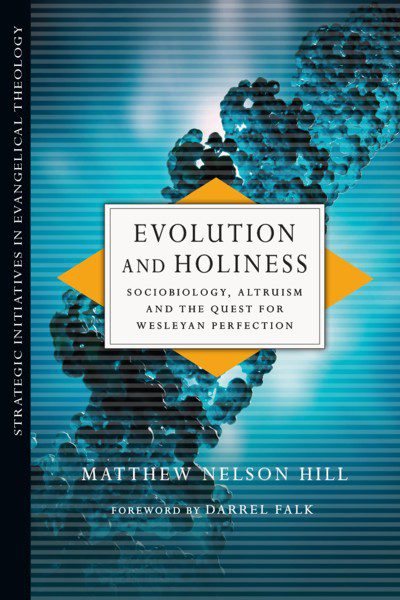 Many of the most interesting topics at the interface science and the Christian faith fall in the realm of neuroscience, sociobiology and evolutionary psychology. These are fields, it should be noted, that are in flux and undergoing rapid development. Much of the literature, especially the literature written for a popular audience reflects the inconsistencies of this rapid change. Chapter 3 of Matthew Nelson Hill’s new book Evolution and Holiness: Sociobiology, Altruism, and the Quest for Weslyan Perfection digs into the relationship between sociobiology and altruism.
The title to this post plays off of a popular one-line summary of human nature. Of course, we all know there must be more to being human that simply what we consume. Likewise, there is more to being human than a string of nucleotide bases transcribed at the appropriate time and place into proteins. We are more than what we eat and more than the information content of our genome. We don’t exist to eat and we don’t exist as bags of replicating genes. Sometimes this gets lost in the rhetoric of evolutionary biology.
Hill shapes chapter 3 around three critiques of sociobiological explanations of altruism (p. 63):
- Sociobiological explanations of altruism alone do not completely explain the phenomenon of human altruism. Rather the role of culture and its obvious influence on learned human behavior point to the reality that we are not merely the products of our genes.
- Sociobiologists often invoke problematic language when explaining altruism. This type of rhetoric exposes inconsistencies.
- There is an inability of sociobiologists to explain altruistic behavior without resorting to reductionism. The main problem with such oversimplification is that sociobiologists do not see the whole human person.
Hill suggests that the questions concerning nature and nurture are inherently reductionistic and therein lies a problem. I found the discussion in this chapter a little hard to follow at times, and Hill didn’t entirely convince me of this points, but in large part this reflects the muddle of sociobiology in popular presentation. There is no doubt that we are bombarded with oversimplifications, often reductionist oversimplifications. And problematic language abounds. But a true critique of sociobiological explanations of altruistic behavior needs to dig beneath these surface trappings and attack the core of the problem. The only real issue is metaphysical (ontological) naturalism.
But first Hill’s points.
Biological explanations. If sociobiology is limited to genetic explanations, the merely “biological” without considering culture and accumulated knowledge, the discipline will of necessity miss important aspects of what it means to be human, and consequently of the origins of altruistic behavior and self-sacrificing love. Some sociobiologists have so limited the discipline, either implicitly or explicitly. Hill quotes Richard Dawkins and E.O. Wilson among others. Humans (and other plants and animals) are more than sophisticated gene replication mechanisms. Denis Noble in The Music of Life gives a good overview of the biological problems with this view. Culture and environment bring additional complexity to the picture. We are shaped, down to the very structure of our brains, by social connections with other humans (and animals).
Of course, both “nature” (i.e. genetic factors) and nurture are natural forces. Sociobiology can (and will) be broadened to include these influences. A broader scientific approach still doesn’t answer all Christian concerns with sociobiology.
Problematic language is found in many places. Genes cannot be “selfish.” Selfishness is a moral attribute not properly attributed to a collection of DNA. Genes have no mind or morals or purposes. Such attributes are characteristic of higher level organisms, not of genes. The personified gene is pure fantasy. Moral language is used at other levels as well. Humans cannot be both constrained by genes and uniquely capable of overcoming genetics. Nor is there any reason to think that it is “good” to overcome the “selfish gene” although such is often expressed writings about sociobiology.
Reductionism is an interesting topic for consideration – and it fits well with Hill’s first point. Reductionist reasoning, in Hill’s view, does not acknowledge the whole human person when it considers the question of altruistic behavior. He considers three forms of reductionism: epistemological reductionism, ontological reductionism, and methodological reductionism.
Epistemological reductionism is the unprovable assumption that there is a unified set of physical laws capable of explaining all phenomena (life, society and human cognition). “With epistemological reductionism, the traits found in higher levels of complexity are explained entirely in terms of what is discovered on lower levels of complexity.” (p. 77) In a footnote to this statement Hill he gives the example of biology explained by biochemistry and chemistry including biochemistry in turn by physics.
Ontological reductionism is the assumption that the higher level organizations are nothing more than composites of the lower orders. “In this reduction, one posits that the integrity of the whole is determined completely by the traits of its constituent parts.” (p. 77)
Methodological reductionism is akin to methodological naturalism. This is the assumption that “natural sciences can explain the workings of physical, chemical, and biological processes without recourse to nonscientific or suprascientific ways of thinking.” (p. 78)
Scientific reductionism is a much misunderstood topic by scientists, students, and others. Chemistry is explained by physics, biochemistry by chemistry, and biology by chemistry, but only when the principles of physics, chemistry, and biochemistry are applied to the entire biological system. To take a simple example, a water molecule is not simply two hydrogen atoms and an oxygen atom – the properties of water are only explained by considering these three atoms as a unified whole. The properties of liquid water are only explained by considering the composite properties of many water molecules. The whole is more than the sum of its parts even if the same laws apply. Water in a cell is only explained by considering the crowded environment of the cell and the electrolytes that are present in the cell. Confined water has important properties distinct from those of bulk water.
Biology may be explained from chemistry and physics, but a complete explanation of life must include more than the individual cells, organs, or organisms. The more complete system must include the complex environment of social interactions with fellow organisms. With humans we add corporate memory, culture and tradition.
A better overall approach to thinking about science is to start with the whole system and break apart and simplify as necessary to understand the workings of the whole rather than to build up from the bottom. This keeps us aware of the simplifications that have been made. Reductions are essential, but should always be noted.
The sociobiological literature (and indeed much other literature in science and social science) is replete with unjustified reductionism. These reductions can help to analyze problems, but often the importance of the whole system is lost in the process. In sociobiology and evolutionary psychology the reductions tend to remove the person from the problem.
Human altruism. Hill suggests that the selfish gene and the selfish individual are unjustified reductions in sociobiological explanations of altruism. There is a ground assumption that altruistic behavior will only exist if it benefits the fitness of the population. Altruism cannot be “pure” but only an adaptive survival mechanism. These explanations of altruism, especially human altruistic behavior, fail to take into account the social cultural environment in which human behavior takes place. Conscious thought and give-and-take relationships are integral to who and what we are. Hill emphasizes that “the whole person, including free will, motivation, and intention, need to be accounted for without reductionism.”
Human altruism is a social trait that cannot be divorced from our biology, environment, tradition, and culture. In fact, humans can behave altruistically without thinking much about it, analyzing motive or consequences.
Free Will. But the key point buried in Hill’s analysis of the question of sociobiology and altruism is that of free will. The human mind, consciousness and will, is at the frontier of science. There is no scientific explanation for human freedom – a freedom some will deny on metaphysical grounds (either religious or naturalistic) but which we all intuitively experience. There are constraints on human freedom for sure, but they are not complete. We make real decisions all the time. “The genetic makeup of humans seems not to completely push human action into selfishness or complete altruism – instead, the human person lies somewhere in between. A more helpful explanation of altruism instead of reductionist accounts has to include the ability of an agent to utilize free will to overcome biological and environmental constraints on altruistic behavior.” (p. 104)
When do scientific explanations of human behavior, including altruistic behavior, venture into unjustified reductionism?
How much of human nature can be understood through science?
If you wish to contact me directly you may do so at rjs4mail[at]att.net.
If interested you can subscribe to a full text feed of my posts at Musings on Science and Theology.
Previous Post

April 5, 2016
The New Perspective in Northern Ireland
Next Post
April 5, 2016 What's Missing from Bernie's Free Tuition Plan?
Browse Our Archives
Select a Category Acts of the Apostles Adam Advent Anabaptism Angels Anglican Apologetics Atonement Baptism BCP Prayers Bible Biblical Studies Birds Blogging Bloglossary Bonhoeffer Books Calvinism Christianity Church Church History Coffee Colossians Commentary Recs Conversion Creation Creeds Culture Death Ecclesiastes Economics Education Embracing Grace Emergent Emerging Movement Eschatology Essays Ethics Eucharist Evangelicalism Family Fasting Fathers Fellowship of Differents Footsteps Tour Fun and Whimsical Gospel Grace Happiness Heaven Hell Holy Spirit Irenaeus James Jesus Jesus Creed Job Justification Kingdom of God Law Lectures Lent Liberalism Love and Marriage Mabanteneni Manhood Mary Miracles Missio Alliance MissioLife Missional Missional Jesus Movies and Film New Perspective Northern Seminary OneLife Origins Project Orthodox Parables Pastor's Spouse Pastoring and Leading Pastoring and Preaching Patristics Paul Paul-John Tour Pharisees Pietism Political Theology Prayer and Formation Preaching Problems for Faith Psalm 119 Psalms Public Issues Purgatory Religions Resurrection Revelation Romans Rule of JCreed Science and Faith Sermon on the Mount Sports Ten Commandments Theology Third Way Top Ten Lists Translations Uncategorized Universalism University Ministry Way Out Weekly Meanderings Wisdom Women and Ministry Work Worship Writing & Blogging Youth Ministry
Select a Month July 2021 January 2020 December 2019 November 2019 October 2019 September 2019 August 2019 July 2019 June 2019 May 2019 April 2019 March 2019 February 2019 January 2019 December 2018 November 2018 October 2018 September 2018 August 2018 July 2018 June 2018 May 2018 April 2018 March 2018 February 2018 January 2018 December 2017 November 2017 October 2017 September 2017 August 2017 July 2017 June 2017 May 2017 April 2017 March 2017 February 2017 January 2017 December 2016 November 2016 October 2016 September 2016 August 2016 July 2016 June 2016 May 2016 April 2016 March 2016 February 2016 January 2016 December 2015 November 2015 October 2015 September 2015 August 2015 July 2015 June 2015 May 2015 April 2015 March 2015 February 2015 January 2015 December 2014 November 2014 October 2014 September 2014 August 2014 July 2014 June 2014 May 2014 April 2014 March 2014 February 2014 January 2014 December 2013 November 2013 October 2013 September 2013 August 2013 July 2013 June 2013 May 2013 April 2013 March 2013 February 2013 January 2013 December 2012 November 2012 October 2012 September 2012 August 2012 July 2012 June 2012 May 2012 April 2012 March 2012 February 2012 January 2012 December 2011 November 2011 October 2011 September 2011 August 2011 July 2011 June 2011 May 2011 April 2011 March 2011 February 2011 January 2011 December 2010 November 2010 October 2010 September 2010 August 2010 July 2010 June 2010 May 2010 April 2010 March 2010 February 2010 January 2010 December 2009 November 2009 October 2009 September 2009 August 2009 July 2009 June 2009 May 2009 April 2009 March 2009 February 2009 January 2009 December 2008 November 2008 October 2008 September 2008 August 2008 July 2008 June 2008 May 2008 April 2008 March 2008 February 2008 January 2008 December 2007 November 2007 October 2007 September 2007 August 2007 July 2007 June 2007 May 2007 April 2007 March 2007 February 2007 January 2007 December 2006 November 2006 October 2006 September 2006 August 2006 July 2006 June 2006 May 2006 April 2006 March 2006 February 2006 January 2006 December 2005 November 2005 October 2005 September 2005 August 2005 July 2005 June 2005 May 2005 April 2005 0000
Follow Us!
TAKE THE
Religious Wisdom Quiz
What does "Hosanna" mean?
Select your answer to see how you score.
Hurry Save us Praise Rejoice
Related posts from Jesus Creed


The Gospel of With Us and Through Us

Northern Seminary Announces: Nijay Gupta Joins Faculty

The Gundrys and Me: Ruth Tucker
TRENDING AT PATHEOS Evangelical

The REST of Your Life: A Creative Wrestles...
This week I had a conversation with a good friend from church....

How the author of the world's best hymn...
I've been working with John Newton for a while now. This makes...

Long before this Lectio Divina, Psalm 130 - the song - started...

What About the Trees? Another Living Parable
After I finished writing the last article about falling leaves as a...

Why Classical Education Is a Conversation, Not a...
Come and Read: Joy in Classical Education When I was a little...

Cornell University has received a great deal of negative publicity and intense...
view all Evangelical blogs
Ad-Free & Subscriber Log-In Subscription Support
- About Us
- 2026 Calendar
- Videos
- Podcasts
- Library of World Religions
- Faith In Media Tracker
- Advertise With Us
- Write for Us
- Privacy Policy
- Terms of Service
- Do Not Sell My Data
- Contact Us
- Radiant Digital
- Manage Newsletter Subscriptions
- Unsubscribe From Notifications
- Sitemap
Copyright 2008-2026, Patheos. All rights reserved.
Subscription Support Ad-Free & Subscriber Log-In
Follow Patheos