
BuddhistCatholicContemplativeEvangelicalGeneral ChristianHinduJewishLatter-day SaintMuslimNew VisionsProgressive Christian
Beliefs
- Buddhist
- Catholic
- Contemplative
- Evangelical
- General Christian
- Hindu
- Jewish
- Latter-day Saint
- More Voices
- Muslim
- New Visions
- Pagan
- Progressive Christian
Topics
- Religion News
- Food and Religion
- Sports and Religion
- Religious Art
- Religious Music and Entertainment
- Religious Events
- History and Religion
- Style and Religion
- Politics and Religion
- Women in Religion
- Recreation Outdoors and Religion
- Business Finance and Religion
- Careers Workplace and Religion
- Education and Religion
- Family Parenting and Religion
- Health Fitness and Religion
- Home and Religion
- Relationships and Religion
- Technology and Religion
- Travel and Religion
Columnists
- Buddhist Columnists
- Business Finance and Religion Columnists
- Careers Workplace and Religion Columnists
- Catholic Columnists
- Contemplative Columnists
- Education and Religion Columnists
- Evangelists Columnists
- Family Parenting and Religion Columnists
- General Christian Columnists
- Health Fitness and Religion Columnists
- Hindu Columnists
- History and Religion Columnists
- Home and Religion Columnists
- Jewish Columnists
- More Voices Columnists
- Latter Day Columnists
- Muslim Columnists
- New Visions Columnists
- Nonreligious Columnists
- Pagan Columnists
- Politics and Religion Columnists
- Progressive Columnists
- Recreation Outdoors and Religion Columnists
- Relationships and Religion Columnists
- Religion News Columnists
- Religious Art Columnists
- Religious Events Columnists
- Religious Music and Entertainment Columnists
- Sports and Religion Columnists
- Style and Religion Columnists
- Technology and Religion Columnists
- Travel and Religion Columnists
- Women in Religion Columnists
Resource Library
- 2026 Calendar
- Library of World Religions
- The 100 Most Holy Places on Earth
- Patheos Answers
- Podcasts
- Videos
- Faith Leaders Database
- Anglican Episcopalian
- Bahai
- Baptist
- Buddhism
- Christianity
- Confucianism
- Eastern Orthodoxy
- Hinduism
- Holiness and Pentecostal
- ISKCON
- Islam
- Judaism
- Lutheran
- Methodist
- The Church of Jesus Christ of Latter-day Saints
- New Age
- Paganism
- Presbytarian and Reformed
- Protestantism
- Religion Behind the Scenes
- Roman Catholic
- Scientology
- Shia Islam
- Sikhism
- Sufism
- Sunni Islam
- Taoism
- Zen
- See all religions
Research Tools
 Ad-Free & Subscriber Log-In Subscription Support
Ad-Free & Subscriber Log-In Subscription Support
Follow Patheos 

- Trending:
- Forgiveness
- |
- Marriage
- |
- Consciousness
- |
- Death Penalty
- |
- Election
- |
- Halloween
 Jesus Creed
- Home
- Evangelical
- Squeamish About the Bible’s Blood Speak? (Jason Micheli)
Squeamish About the Bible’s Blood Speak? (Jason Micheli)
Last updated on: March 17, 2016 at 12:05 am by Scot McKnight
Squeamish About the Bible’s Blood Speak? (Jason Micheli) 2016-03-15T07:36:00-05:00 Scot McKnight
Patheos Explore the world's faith through different perspectives on religion and spirituality! Patheos has the views of the prevalent religions and spiritualities of the world.
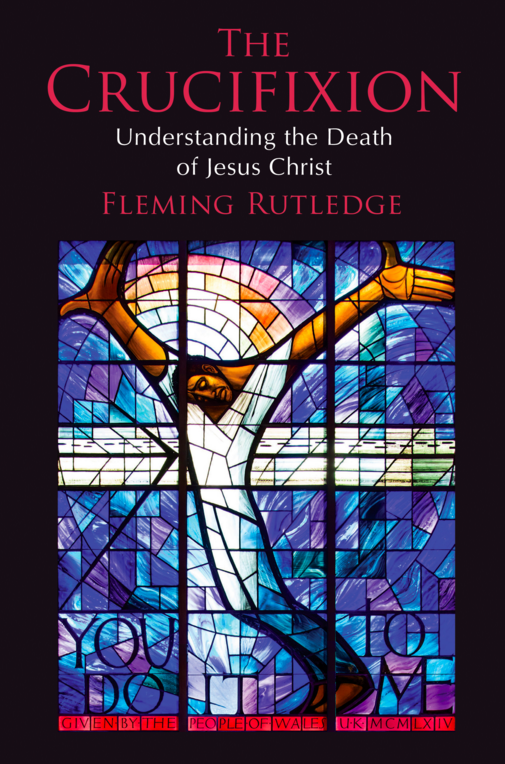 Jason Micheli will be posting reflections on Fleming Rutledge’s new book, The Crucifixion: Understanding the Death of Jesus Christ, through Lent. Jason is a United Methodist pastor in DC who blogs at www.tamedcynic.org
A year and a half ago Hannah Graham, a UVA student from my parish, went missing near her campus. Weeks later her body was found. She’d been assaulted and brutally murdered.
Theologically, I’ve always been committed to the sheer nothingness of evil. Rather than a thing with any substance or subsistence of its own, the tradition holds that evil is absence. Maybe evil is the privation of the good, as Augustine thought it, but during the prayer service I led in the days when Hannah was still missing, when everyone hoped for the best but suspected the worst, the presence of sin and evil was felt palpably throughout the sanctuary. In the months since then the devastation and trauma felt from her murder have grown and festered. I’ve watched with sadness and something like righteous anger as many of Hannah’s friends in my congregation continue to struggle with depression, despair, and a loss of faith. Two weeks ago, when it was reported that Jesse Matthew, her accused murderer, had decided to plead guilty, I rejoiced confident that God rejoiced too now that Hannah would receive at least this measure of justice.
My takeaway from this experience:
A vital refrain of scripture gets obscured when we individualize and moralize sin.
Sin costs something.
Sin must be atoned for.
Yes, Jesus enjoins us to forgive as much as 70 x 7 times, but sin, like the sin done to Hannah and the entire community who loved her, requires justice too. As my mother used to tell me, ‘Saying sorry doesn’t cut it. You’ve got to repair the damage you’ve done.’ Even for my mom, repair required sacrifice.
It’s right, even holy, to rejoice that Jesse Matthew will pay for the damage he’s done.
Sin costs something. This is the convicting acknowledgment running through the rituals of sacrifice in the Book of Leviticus. Counter to the popular complaint about traditional atonement theories which asks, flippantly, ‘Why can’t God just forgive?’ the fundamental presupposition of Leviticus is that there must be atonement for sin. Put aside distracting conceits like God’s offended honor and simply focus on the concrete, real-world devastation wrought by sin.
As Fleming Rutledge argues in her book, The Crucifixion:
‘Sin can’t just be forgiven and then set aside as though nothing has happened. If someone commits a terrible wrong, Christians know that we are to forgive; but something in us nevertheless cries out for justice. The Old and New Testaments both speak profoundly to this problem. It is not enough to say, ‘Mistakes were made, or ‘I didn’t mean to’ ; the whole system in Leviticus is set up to prevent anyone from thinking that unwitting sin doesn’t count.’
In Part 2 of The Crucifixion, Fleming Rutledge examines at length the primary atonement motifs (her preferred term over atonement theories) in the biblical narrative. She gives considerable attention to the motif of blood sacrifice, seeing it not only as the foundational motif upon which many other atonement motifs depend but also because blood sacrifice, along with passover, is the primary lens through which the early Christians interpreted the death of Jesus. They did so, after all, because ‘their single source for discovering the meaning of the strange death of their Lord was the scriptures they had always known.’
They grappled with the meaning of Christ’s death in the terms available to them, in other words, and in their scriptures blood sacrifice was a recurring motif for understanding how sinful humanity is brought near to their God. In particular, the Book of Leviticus became fertile ground for interpreting the terrible mystery of the cross. As Rutledge imagines:
‘It must have been a very exciting process. Anyone reading Leviticus and thinking of Jesus at the same time could hardly fail to notice a phrase like ‘a male without blemish’ in the list of stipulations. This is the sort of detail that would would jump off the page of the Hebrew Scriptures in those first years after the resurrection.’
Mainline and progressive Christians frequently express disdain for the blood imagery of scripture. We judge it, snobbishly Rutledge thinks, to be primitive; meanwhile, we let our kids play Black Ops 3, we fill the theaters for American Sniper, and we refer to those innocents killed by our drones as ‘bugsplat.’ That is, if we care about the droned dead at all. We exult in gore and violence in our entertainments, but we feign that we’re too fastidious to exalt God by singing ‘There’s a Fountain Filled with Blood.’ Rare is the Christmas preacher bold enough take the Slaughter of the Innocents as his text while the Washington Post app on my iPhone makes it uncomfortably obvious that the slaughter of innocents goes on every day. Never mind that in its use of blood imagery, scripture remains reticent, refusing to dwell in gore by focusing instead on the effects of the sacrificed blood.
In our disinclination towards the language of blood and sacrifice, treating it as a detachable option in atonement theology, Christians today could not be more different from the writers of the Old Testament who held that humanity is distant from God in its sin and atonement is possible only by way of blood. Viewed from the perspective of the Hebrew Scriptures, we make the very error Anselm cautions against in Cur Deus Homo. We’ve not truly considered the weight of sin.
My friend, Tony Jones, recently featured a guest post on his blog from someone who advocated altering the traditional serving words for the eucharist (The body of Christ broken for you. The blood of Christ shed for you.) to ‘Christ is here, in your brokenness. Christ is here, bringing you to life.’ Or, ‘Christ broken, with us in our brokenness. Christ’s life, flowing through our lives.’ Such redactions just won’t do the heavy lifting if one is committed to taking seriously the language of scripture. While the traditional imagery of blood sacrifice may make some squeamish, Fleming Rutledge insists it is ‘central to the story of salvation through Jesus Christ, and without this theme the Christian proclamation loses much of its power, becoming both theologically and ethically undernourished.’
Editing out blood sacrifice commits the very act is intended to avoid, violence.
It commits violence agains the text of scripture by eviscerating the language of the bible.
Scripture speaks of the blood of Christ 3 times more often than it speaks of the death of Christ. Such a statistic alone reveals the extent to which blood sacrifice is a dominant theme in extrapolating the meaning of Christ’s death. Scripture gives the witness repeatedly: God comes under God’s judgement as a blood sacrifice for sin. Put in the logic of the Old Testament’s sacrificial system: something of precious value is relinquished in exchange for something of even greater gain. Blood for peace.
We might find such language repellent. Many do. Perhaps we should recoil at it considering how its an indictment upon our own sinfulness. We might wish to alter the words we say when handing the host to a communicant. What we cannot do is pretend this is not the way scripture itself speaks. Not only is blood sacrifice a dominant motif in scripture, Fleming Rutledge demonstrates how its a theme upon which many other atonement motifs rely, such as representation, substitution, propitiation, vicarious suffering, and exchange. Something as simple as switching from ‘The blood of Christ shed for you’ to ‘The cup of love’ effectively mutes the polyvalence of scripture’s voice.
And what does lie behind our resistance to blood sacrifice?
Reading The Crucifixion, I can’t help but wonder if the popular disdain for blood sacrifice owes less to our concern for the violence of the century past (and the ways our theological language underwrote it) and if it has more to do with the way that the worldview of blood sacrifice contradicts our contemporary gospel of inclusivity along with its charitable appraisal of human nature and its ever progressing evolution. The self-image we derive from American culture is that I’m okay and you’re okay. We translate grace according to culture so that Paul’s message of rectification becomes ‘accept that you are accepted.’ God loves you just as you are, we preach, Because of course, God loves us. How could a good God not love wonderful people like us? As Stanley Hauerwas jokes, we make the doctrine of the incarnation ‘God put on our humanity and declared ‘Isn’t this nice?!’
The governing assumption behind blood sacrifice could not be more divergent. ‘The basic presupposition here [in Leviticus],’ says Rutledge, ‘is that we aren’t acceptable before the Lord just the way we are. Something has to transpire before we are counted as acceptable…the gap between the holiness of God and the sinfulness of human beings is assumed to be so great that the sacrificial offering has to be made on a regular basis.’ The self-satisfied smile we see in Joel Osteen is a reflection of our own.
Our glib view of ourselves is such that we cannot imagine why God would not want to come near us.
Scripture’s sober view of us is that we cannot come near God, in our guilt, without God providing the means for us to live in God’s presence.
Another life in place of our own, a blameless and unblemished one.
Whatever our reason for spurning blood sacrifice, our disdain for it raises an even more pernicious problem, for, as Fleming Rutledge implies, if we refuse to interpret Christ’s death as a blood sacrifice, ruling such imagery as out of bounds, what connection remains between Jesus and Jesus’ own scriptures? To jettison blood sacrifice is to unmoor Jesus from the bible by which he would have understood his own deeds and death, making it unclear in what sense it makes any sense to say, as we must, that Jesus was and is a Jew.
Disdain for blood sacrifice becomes a kind of supersessionism.
Desiring to cleanse our view of God of any violence we unwittingly commit a far worse sort of (theological) violence: cleansing God of God’s People.
Which begs the question, my own not Fleming’s, if progressive Christians in America today are substantively different than the Christian European sophisticates of the late 19th century who viewed the ethnic, cultic faith of the Jews with similar disdain.
If we profess the conviction that a crucified Jewish Messiah is Lord, then we must submit to understanding him according to the terms by which he would’ve understood himself.
And not only Jesus- the entire Book of Hebrews, which the Church Fathers understood as an extended sermon on Leviticus, is the longest sustained argument in scripture and the argument at hand is the preacher’s assertion that Christ’s death was a blood sacrifice offered for sin wherein priest and victim become one. At some point, no matter how squeamish the imagery might make the uninitiated, we must conclude that to do away with blood sacrifice requires us to do away with far too many of our sacred texts. Even Paul, as Rutledge unpacks, interpreted Jesus’ death as a sacrifice, doing so not in the cultic terms of the Book of Hebrews but in apocalyptic terms, as:
‘the definitive apocalyptic engagement with the forces of the enemy, at the frontier of the ages where Jesus’ self-abandonment was the ultimate weapon…the ultimate form of ‘passive resistance’ that overwhelms and routs the enemy.’
In addition to maintaining continuity between the testaments, the blood sacrifice motif also helps Christians avoid the common error of seeing Christ’s death as an occasion of God reacting to human sin and of God changing God’s mind about humanity as a consequence of Christ’s death. Instead, as Rutledge argues, the sacrifices of the Old Testament prepared the people for the perfect, once for all, sacrifice offered by Christ thus the cross is ‘an inherent, original movement within God’s very being. It is in the very being of God to offer God’s self sacrificially.’
Given her extended attention to blood sacrifice and to the scapegoat of the Levitical sacrifices, it surprised me that Rutledge largely confines the work of Rene Girard, whose scapegoat theory of the atonement is ascendant among progressives, to her footnotes. While she affirms Girard’s wisdom in identifying Christ’s death with the victimization of the lowly and oppressed, she wisely challenges how Girard’s emphasis on understanding Christ’s death purely in scapegoat terms has much to say to victims of oppression but has nothing to say for or about the oppressed’s victimizers.
Girard’s esteemed scapegoat theory is unable, Rutledge argues, to ‘envision the rectification of the [scapegoating’s] perpetrators.’
This little line buried in the footnotes made me long for an extended treatment of Girard, for her offhand critique hints at the way the blood sacrifice motif is inextricably linked to the offense of the Gospel:
‘For Christ also died for sins once for all, the righteous for the unrighteous.’
– 1 Peter 3.18
To unload the peculiar blood imagery of scripture, then, is to take on the prejudices of American culture, losing our particular, deeply offensive confession that God sacrificed God’s self not for the good and the godly, not for the righteous and the religious, but for the ungodly.
Sin does cost something.
It is right and good, I believe, to rejoice knowing Jesse Matthew will spend his life behind bars.
Nonetheless, the Gospel is that Christ died not just me or you or Pope Francis but for, serial killer and rapist, Jesse Matthew.
Trust me, I’ve seen the damage done by Jesse Matthew first hand.
I could so easily forget that Christ died for him too if, in my church, we didn’t weekly break bread and say ‘The blood of Christ poured out for you.’
For even him.
Previous Post

March 16, 2016
Charged with "Mischief"
Next Post
March 17, 2016 A Society Based on Lies? (RJS)
Browse Our Archives
Select a Category Acts of the Apostles Adam Advent Anabaptism Angels Anglican Apologetics Atonement Baptism BCP Prayers Bible Biblical Studies Birds Blogging Bloglossary Bonhoeffer Books Calvinism Christianity Church Church History Coffee Colossians Commentary Recs Conversion Creation Creeds Culture Death Ecclesiastes Economics Education Embracing Grace Emergent Emerging Movement Eschatology Essays Ethics Eucharist Evangelicalism Family Fasting Fathers Fellowship of Differents Footsteps Tour Fun and Whimsical Gospel Grace Happiness Heaven Hell Holy Spirit Irenaeus James Jesus Jesus Creed Job Justification Kingdom of God Law Lectures Lent Liberalism Love and Marriage Mabanteneni Manhood Mary Miracles Missio Alliance MissioLife Missional Missional Jesus Movies and Film New Perspective Northern Seminary OneLife Origins Project Orthodox Parables Pastor's Spouse Pastoring and Leading Pastoring and Preaching Patristics Paul Paul-John Tour Pharisees Pietism Political Theology Prayer and Formation Preaching Problems for Faith Psalm 119 Psalms Public Issues Purgatory Religions Resurrection Revelation Romans Rule of JCreed Science and Faith Sermon on the Mount Sports Ten Commandments Theology Third Way Top Ten Lists Translations Uncategorized Universalism University Ministry Way Out Weekly Meanderings Wisdom Women and Ministry Work Worship Writing & Blogging Youth Ministry
Select a Month July 2021 January 2020 December 2019 November 2019 October 2019 September 2019 August 2019 July 2019 June 2019 May 2019 April 2019 March 2019 February 2019 January 2019 December 2018 November 2018 October 2018 September 2018 August 2018 July 2018 June 2018 May 2018 April 2018 March 2018 February 2018 January 2018 December 2017 November 2017 October 2017 September 2017 August 2017 July 2017 June 2017 May 2017 April 2017 March 2017 February 2017 January 2017 December 2016 November 2016 October 2016 September 2016 August 2016 July 2016 June 2016 May 2016 April 2016 March 2016 February 2016 January 2016 December 2015 November 2015 October 2015 September 2015 August 2015 July 2015 June 2015 May 2015 April 2015 March 2015 February 2015 January 2015 December 2014 November 2014 October 2014 September 2014 August 2014 July 2014 June 2014 May 2014 April 2014 March 2014 February 2014 January 2014 December 2013 November 2013 October 2013 September 2013 August 2013 July 2013 June 2013 May 2013 April 2013 March 2013 February 2013 January 2013 December 2012 November 2012 October 2012 September 2012 August 2012 July 2012 June 2012 May 2012 April 2012 March 2012 February 2012 January 2012 December 2011 November 2011 October 2011 September 2011 August 2011 July 2011 June 2011 May 2011 April 2011 March 2011 February 2011 January 2011 December 2010 November 2010 October 2010 September 2010 August 2010 July 2010 June 2010 May 2010 April 2010 March 2010 February 2010 January 2010 December 2009 November 2009 October 2009 September 2009 August 2009 July 2009 June 2009 May 2009 April 2009 March 2009 February 2009 January 2009 December 2008 November 2008 October 2008 September 2008 August 2008 July 2008 June 2008 May 2008 April 2008 March 2008 February 2008 January 2008 December 2007 November 2007 October 2007 September 2007 August 2007 July 2007 June 2007 May 2007 April 2007 March 2007 February 2007 January 2007 December 2006 November 2006 October 2006 September 2006 August 2006 July 2006 June 2006 May 2006 April 2006 March 2006 February 2006 January 2006 December 2005 November 2005 October 2005 September 2005 August 2005 July 2005 June 2005 May 2005 April 2005 0000
Follow Us!
TAKE THE
Religious Wisdom Quiz
What was the name of Moses' sister?
Select your answer to see how you score.
Deborah Rebekah Miriam Rachel
Related posts from Jesus Creed

New Birth Transcending Atonement Theories
The Biggest Problem For Atonement Theories?
"God In Labor" in Christian Theology
TRENDING AT PATHEOS Evangelical

How the author of the world's best hymn...
I've been working with John Newton for a while now. This makes...

Long before this Lectio Divina, Psalm 130 - the song - started...

What About the Trees? Another Living Parable
After I finished writing the last article about falling leaves as a...

Why Classical Education Is a Conversation, Not a...
Come and Read: Joy in Classical Education When I was a little...

Falling Leaves: A Living Parable on Letting Go
I’ve spent the vast majority of my life in the southeast corner...

Cornell University has received a great deal of negative publicity and intense...
view all Evangelical blogs
Ad-Free & Subscriber Log-In Subscription Support
- About Us
- 2026 Calendar
- Videos
- Podcasts
- Library of World Religions
- Faith In Media Tracker
- Advertise With Us
- Write for Us
- Privacy Policy
- Terms of Service
- Do Not Sell My Data
- Contact Us
- Radiant Digital
- Manage Newsletter Subscriptions
- Unsubscribe From Notifications
- Sitemap
Copyright 2008-2026, Patheos. All rights reserved.
Subscription Support Ad-Free & Subscriber Log-In
Follow Patheos