
BuddhistCatholicContemplativeEvangelicalGeneral ChristianHinduJewishLatter-day SaintMuslimNew VisionsProgressive Christian
Beliefs
- Buddhist
- Catholic
- Contemplative
- Evangelical
- General Christian
- Hindu
- Jewish
- Latter-day Saint
- More Voices
- Muslim
- New Visions
- Pagan
- Progressive Christian
Topics
- Religion News
- Food and Religion
- Sports and Religion
- Religious Art
- Religious Music and Entertainment
- Religious Events
- History and Religion
- Style and Religion
- Politics and Religion
- Women in Religion
- Recreation Outdoors and Religion
- Business Finance and Religion
- Careers Workplace and Religion
- Education and Religion
- Family Parenting and Religion
- Health Fitness and Religion
- Home and Religion
- Relationships and Religion
- Technology and Religion
- Travel and Religion
Columnists
- Buddhist Columnists
- Business Finance and Religion Columnists
- Careers Workplace and Religion Columnists
- Catholic Columnists
- Contemplative Columnists
- Education and Religion Columnists
- Evangelists Columnists
- Family Parenting and Religion Columnists
- General Christian Columnists
- Health Fitness and Religion Columnists
- Hindu Columnists
- History and Religion Columnists
- Home and Religion Columnists
- Jewish Columnists
- More Voices Columnists
- Latter Day Columnists
- Muslim Columnists
- New Visions Columnists
- Nonreligious Columnists
- Pagan Columnists
- Politics and Religion Columnists
- Progressive Columnists
- Recreation Outdoors and Religion Columnists
- Relationships and Religion Columnists
- Religion News Columnists
- Religious Art Columnists
- Religious Events Columnists
- Religious Music and Entertainment Columnists
- Sports and Religion Columnists
- Style and Religion Columnists
- Technology and Religion Columnists
- Travel and Religion Columnists
- Women in Religion Columnists
Resource Library
- 2026 Calendar
- Library of World Religions
- The 100 Most Holy Places on Earth
- Patheos Answers
- Podcasts
- Videos
- Faith Leaders Database
- Anglican Episcopalian
- Bahai
- Baptist
- Buddhism
- Christianity
- Confucianism
- Eastern Orthodoxy
- Hinduism
- Holiness and Pentecostal
- ISKCON
- Islam
- Judaism
- Lutheran
- Methodist
- The Church of Jesus Christ of Latter-day Saints
- New Age
- Paganism
- Presbytarian and Reformed
- Protestantism
- Religion Behind the Scenes
- Roman Catholic
- Scientology
- Shia Islam
- Sikhism
- Sufism
- Sunni Islam
- Taoism
- Zen
- See all religions
Research Tools
 Ad-Free & Subscriber Log-In Subscription Support
Follow Patheos 

- Trending:
- Advent
- |
- Forgiveness
- |
- Thanksgiving
- |
- Election
- |
- Seasonal Holidays
- |
- Marriage
 Jesus Creed
- Home
- Evangelical
- The Perfection and Completion of Creation (RJS)
The Perfection and Completion of Creation (RJS)
Last updated on: March 8, 2016 at 6:16 am by RJS
The Perfection and Completion of Creation (RJS) 2016-03-08T06:16:09-06:00 RJS
Patheos Explore the world's faith through different perspectives on religion and spirituality! Patheos has the views of the prevalent religions and spiritualities of the world.
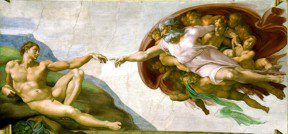 Most discussions of the Christian view of creation get off on the wrong foot right at the start. The problem is, they focus on the origin of the universe or the origin of life, not on the originator of life. From a Christian point of view this has to begin with Christ – in whom, by whom, and for whom everything was created. Anyone who has read my posts on Ron Highfield’s new book The Faithful Creator: Affirming Creation and Providence in an Age of Anxiety will know that I have some disagreement with some of his positions, but not in these next two chapters: Jesus Christ as Creator and Creation from Nothing. He makes a number of important points for consideration.
The key passages of Scripture connecting Christ and Creation are in Colossians 1, John 1, Hebrews 1, and 1 Cor. 8.
The Son is the image of the invisible God, … For in him all things were created… all things have been created through him and for him. (Col. 1)
In the beginning was the Word, … Through him all things were made; without him nothing was made that has been made. (John 1)
Yet for us there is but one God, the Father, from whom all things came and for whom we live; and there is but one Lord, Jesus Christ, through whom all things came and through whom we live. (1 Cor. 8)
In these last days he has spoken to us by his Son, whom he appointed heir of all things, and through whom also he made the universe. (Heb 1)
This connection between Christ and creation is of fundamental importance. Through the Trinity we see God revealed in a fashion that undermines the lifeless philosopher’s God.
The God who sent his Son to become flesh and blood among us to die and rise again through the Spirit for us sinners cannot be spaceless, timeless and loveless in his eternal life. Since what we know of God derives from how God has been revealed in Jesus Christ, we need not think of the triune relations as characterless causal relations. Those relations are acts of self-giving love. The Father’s fatherhood is his giving love for the Son in the Spirit and the Son’s sonship is his returning love for the Father in the Spirit. The Spirit is the bond of love between the Father and Son. The Trinity is an eternal community where cation, presence, life, causality, simultaneity (and hence time) fruitfulness, love, and otherness make sense. Hence in the eternal life of the triune God lies the possibility of creation. Since God is his own space and time and action and otherness, God can make room and time for creatures. (p. 127)
I might quibble on Highfield’s view of simultaneity and time, but this is minor in the present context. The Trinity defines a relationship within God himself not requiring any thing external to God. More significantly, however, the Trinity and the connection of Christ with creation puts to rest any notion of the incarnation as some kind of plan B in God’s creation.
We think of the incarnation as the result of a divine decision in time in response to the sin of humanity. Following the same trajectory it would seem that God’s decision to create and his decision to send his Son to become a creature are two separate decisions made for different reasons. Furthermore, given this line of reasoning, there would be no grounds for the incarnation had humanity not fallen into sin. God’s eternal plan, “the mystery of his will … to bring unity to all things in heaven and on earth under Christ” (Eph 1:9-10), would be relegated to plan-B status. But if we view salvation as the perfection and completion of creation, we will come to a different conclusion. We will then be able to reason backwards to creation from incarnation, death and resurrection, the end of which is to “bring unity to all things in heaven and on earth under Christ.” The decision to unite all things to God in Christ entails the decision to become incarnate, die and rise, and the decision to become incarnate entails the decision to create. (p. 128)
The point Highfield makes here is dead on. This is why I find the typical view of the biblical story as creation, fall, redemption, consummation to be missing an important element. Certainly we are fallen, and Christ is our redeemer, but there is so much more. Christ was from the very beginning was the perfection and completion of creation. The incarnation (including death and resurrection) is not, in any sense, plan-B; a response to humans (or worse some external malevolent being or force) knocking things off-kilter.
Highfield goes on:
What can we learn about God’s act of creating from the divine act of salvation? The Gospel of John may give us a clue. In Jesus’ final prayer for his disciples he said “Father, I want those you have given me to be with me where I am, and to see my glory, the glory you have given me because you loved me before the creation of the world.” (John 17:24) Why, then, did God create the world? Because Jesus loved us and wanted us to be with him forever. … How did God create the world? God created the world the same way he does everything else. The Father loves his Son, and the Son loves us in his love for the Father. Just as in his cat of salvation the Son’s love “compels us to love him in return, in creation it “compels” us to be (2 Cor. 5:14-15). (p. 129-130)
This isn’t an analogous to human creative activity, and it isn’t a material mechanism for creation. But we really shouldn’t look for a material mechanism. God creates from nothing – which takes us to the next chapter.
 Creation from nothing (ex nihilo) is a biblical doctrine in that it is consistent with the biblical understanding of God as free and sovereign, but it is not clearly in view in the Old Testament. The ancient authors were not thinking about the philosophical ramifications of creation from something versus creation from nothing. There was, however, a firm view of God as the one in whom and through whom creation came into being. Genesis 1 and Job make this clear. God spoke and things happened. But neither of these texts, or any others, deal with a mechanism for creation, or even with the origin of matter. Highfield argues that the articulated doctrine of creation from nothing arose primarily in response to Greek thought concerning world-formation. Much of the early and continuing speculation about creation from nothing wanders off on rabbit trails without leading anywhere productive. Creation from nothing is beyond our comprehension.
The doctrine of creation asserts that God created the world we experience – the world of concrete objects, of ideas and sense experience, of minds and intelligibility and unintelligibility – through himself without help from any other power. It makes no difference to the doctrine of creation how concrete objects may be resolved into their constituents. The doctrine of creatio ex nihilo makes clear that the God-creature relation is unlike any creature-creature relation. Reason can hope to discover physical relationships – spatiotemporal, quantitative and causal – among creatures, and it may speculate about metaphysical constituents and relations within the world. … But reason, metaphysical or scientific, cannot cross the gap expressed in the term creatio ex nihilo. For God’s act of creating is a free act of the divine will, reasonable and beneficent for sure, but nevertheless not necessary. (p. 141-142)
Highfield wouldn’t go here – but I’d say that perhaps creation was necessary. But if so, it was only necessary for a reason internal to the very nature of God (perhaps relating to the relationship of love and creation Highfield touched on earlier). Using human reason we cannot get to a necessary creation any more than we can get to the very nature of God. All we have is the knowledge after the fact that God did create as an act of divine will.
This lays the groundwork for discussion of divine creation and modern science. The next chapter and the next post on Highfield’s book.
Is salvation a response to a problem or the perfection and completion of creation intended from the beginning?
What does it mean to affirm the New Testament view of Christ as the one through whom and form whom all was created?
If you wish to contact me directly you may do so at rjs4mail[at]att.net.
If interested you can subscribe to a full text feed of my posts at Musings on Science and Theology.
Previous Post

March 8, 2016
Five Misconceptions about Election
Next Post
March 8, 2016 Small on Gospel, Big on Politics
Browse Our Archives
Select a Category Acts of the Apostles Adam Advent Anabaptism Angels Anglican Apologetics Atonement Baptism BCP Prayers Bible Biblical Studies Birds Blogging Bloglossary Bonhoeffer Books Calvinism Christianity Church Church History Coffee Colossians Commentary Recs Conversion Creation Creeds Culture Death Ecclesiastes Economics Education Embracing Grace Emergent Emerging Movement Eschatology Essays Ethics Eucharist Evangelicalism Family Fasting Fathers Fellowship of Differents Footsteps Tour Fun and Whimsical Gospel Grace Happiness Heaven Hell Holy Spirit Irenaeus James Jesus Jesus Creed Job Justification Kingdom of God Law Lectures Lent Liberalism Love and Marriage Mabanteneni Manhood Mary Miracles Missio Alliance MissioLife Missional Missional Jesus Movies and Film New Perspective Northern Seminary OneLife Origins Project Orthodox Parables Pastor's Spouse Pastoring and Leading Pastoring and Preaching Patristics Paul Paul-John Tour Pharisees Pietism Political Theology Prayer and Formation Preaching Problems for Faith Psalm 119 Psalms Public Issues Purgatory Religions Resurrection Revelation Romans Rule of JCreed Science and Faith Sermon on the Mount Sports Ten Commandments Theology Third Way Top Ten Lists Translations Uncategorized Universalism University Ministry Way Out Weekly Meanderings Wisdom Women and Ministry Work Worship Writing & Blogging Youth Ministry
Select a Month July 2021 January 2020 December 2019 November 2019 October 2019 September 2019 August 2019 July 2019 June 2019 May 2019 April 2019 March 2019 February 2019 January 2019 December 2018 November 2018 October 2018 September 2018 August 2018 July 2018 June 2018 May 2018 April 2018 March 2018 February 2018 January 2018 December 2017 November 2017 October 2017 September 2017 August 2017 July 2017 June 2017 May 2017 April 2017 March 2017 February 2017 January 2017 December 2016 November 2016 October 2016 September 2016 August 2016 July 2016 June 2016 May 2016 April 2016 March 2016 February 2016 January 2016 December 2015 November 2015 October 2015 September 2015 August 2015 July 2015 June 2015 May 2015 April 2015 March 2015 February 2015 January 2015 December 2014 November 2014 October 2014 September 2014 August 2014 July 2014 June 2014 May 2014 April 2014 March 2014 February 2014 January 2014 December 2013 November 2013 October 2013 September 2013 August 2013 July 2013 June 2013 May 2013 April 2013 March 2013 February 2013 January 2013 December 2012 November 2012 October 2012 September 2012 August 2012 July 2012 June 2012 May 2012 April 2012 March 2012 February 2012 January 2012 December 2011 November 2011 October 2011 September 2011 August 2011 July 2011 June 2011 May 2011 April 2011 March 2011 February 2011 January 2011 December 2010 November 2010 October 2010 September 2010 August 2010 July 2010 June 2010 May 2010 April 2010 March 2010 February 2010 January 2010 December 2009 November 2009 October 2009 September 2009 August 2009 July 2009 June 2009 May 2009 April 2009 March 2009 February 2009 January 2009 December 2008 November 2008 October 2008 September 2008 August 2008 July 2008 June 2008 May 2008 April 2008 March 2008 February 2008 January 2008 December 2007 November 2007 October 2007 September 2007 August 2007 July 2007 June 2007 May 2007 April 2007 March 2007 February 2007 January 2007 December 2006 November 2006 October 2006 September 2006 August 2006 July 2006 June 2006 May 2006 April 2006 March 2006 February 2006 January 2006 December 2005 November 2005 October 2005 September 2005 August 2005 July 2005 June 2005 May 2005 April 2005 0000
Follow Us!
TAKE THE
Religious Wisdom Quiz
What famous garden did God place Adam and Eve in?
Select your answer to see how you score.
Gethsemane Eden Sinai Bethel
Related posts from Jesus Creed


The Gospel of With Us and Through Us

Northern Seminary Announces: Nijay Gupta Joins Faculty

The Gundrys and Me: Ruth Tucker
TRENDING AT PATHEOS Evangelical

Making Stones Into Bread: Choosing the “Right” Work
I was on my online arts ministry Zoom meeting with the International...

Ukraine’s exhausted Christians face fifth winter of war
By Julian Lukins The full-scale war in Ukraine is taking “a serious...

Russell Brand's Conviction is not anti-Christian Persecution
How do we shed the reputation that the Church is OK with...

Have you ever caught yourself saying, “I’ll do it tomorrow,” or “Now...

Write Your Story: A Great Way to Find...
A few month’s back, my son was scrolling around Facebook and saw...

Throughout history, people have pursued pleasure, possessions, relationships, and success in an...
view all Evangelical blogs
Ad-Free & Subscriber Log-In Subscription Support
- About Us
- 2026 Calendar
- Videos
- Podcasts
- Library of World Religions
- Faith In Media Tracker
- Advertise With Us
- Write for Us
- Privacy Policy
- Terms of Service
- Do Not Sell My Data
- Contact Us
- Radiant Digital
- Manage Newsletter Subscriptions
- Unsubscribe From Notifications
- Sitemap
Copyright 2008-2026, Patheos. All rights reserved.
Subscription Support Ad-Free & Subscriber Log-In
Follow Patheos