
BuddhistCatholicContemplativeEvangelicalGeneral ChristianHinduJewishLatter-day SaintMuslimNew VisionsProgressive Christian
Beliefs
- Buddhist
- Catholic
- Contemplative
- Evangelical
- General Christian
- Hindu
- Jewish
- Latter-day Saint
- More Voices
- Muslim
- New Visions
- Pagan
- Progressive Christian
Topics
- Religion News
- Food and Religion
- Sports and Religion
- Religious Art
- Religious Music and Entertainment
- Religious Events
- History and Religion
- Style and Religion
- Politics and Religion
- Women in Religion
- Recreation Outdoors and Religion
- Business Finance and Religion
- Careers Workplace and Religion
- Education and Religion
- Family Parenting and Religion
- Health Fitness and Religion
- Home and Religion
- Relationships and Religion
- Technology and Religion
- Travel and Religion
Columnists
- Buddhist Columnists
- Business Finance and Religion Columnists
- Careers Workplace and Religion Columnists
- Catholic Columnists
- Contemplative Columnists
- Education and Religion Columnists
- Evangelists Columnists
- Family Parenting and Religion Columnists
- General Christian Columnists
- Health Fitness and Religion Columnists
- Hindu Columnists
- History and Religion Columnists
- Home and Religion Columnists
- Jewish Columnists
- More Voices Columnists
- Latter Day Columnists
- Muslim Columnists
- New Visions Columnists
- Nonreligious Columnists
- Pagan Columnists
- Politics and Religion Columnists
- Progressive Columnists
- Recreation Outdoors and Religion Columnists
- Relationships and Religion Columnists
- Religion News Columnists
- Religious Art Columnists
- Religious Events Columnists
- Religious Music and Entertainment Columnists
- Sports and Religion Columnists
- Style and Religion Columnists
- Technology and Religion Columnists
- Travel and Religion Columnists
- Women in Religion Columnists
Resource Library
- 2026 Calendar
- Library of World Religions
- The 100 Most Holy Places on Earth
- Patheos Answers
- Podcasts
- Videos
- Faith Leaders Database
- Anglican Episcopalian
- Bahai
- Baptist
- Buddhism
- Christianity
- Confucianism
- Eastern Orthodoxy
- Hinduism
- Holiness and Pentecostal
- ISKCON
- Islam
- Judaism
- Lutheran
- Methodist
- The Church of Jesus Christ of Latter-day Saints
- New Age
- Paganism
- Presbytarian and Reformed
- Protestantism
- Religion Behind the Scenes
- Roman Catholic
- Scientology
- Shia Islam
- Sikhism
- Sufism
- Sunni Islam
- Taoism
- Zen
- See all religions
Research Tools
 Ad-Free & Subscriber Log-In Subscription Support
Ad-Free & Subscriber Log-In Subscription Support
Follow Patheos 

- Trending:
- Forgiveness
- |
- Marriage
- |
- Consciousness
- |
- Death Penalty
- |
- Election
- |
- Halloween
 Jesus Creed
- Home
- Evangelical
- Reshaping the Gospel of Jesus: The Gospel of John
Reshaping the Gospel of Jesus: The Gospel of John
Last updated on: February 29, 2016 at 12:19 am by Scot McKnight
Reshaping the Gospel of Jesus: The Gospel of John 2016-02-27T21:10:21-06:00 Scot McKnight
Patheos Explore the world's faith through different perspectives on religion and spirituality! Patheos has the views of the prevalent religions and spiritualities of the world.
 Anyone familiar with the Synoptic Gospels — Matthew, Mark, Luke — who then launches for the first time into the Gospel of John, or anyone familiar with the Gospel of John who launches into the Synoptic Gospels encounters a culture shock: John and the Synoptics are noticeably different. Those who think like the Synoptics wonder what has happened to their vocabulary and pet themes when they hit John, and it works the other way too.
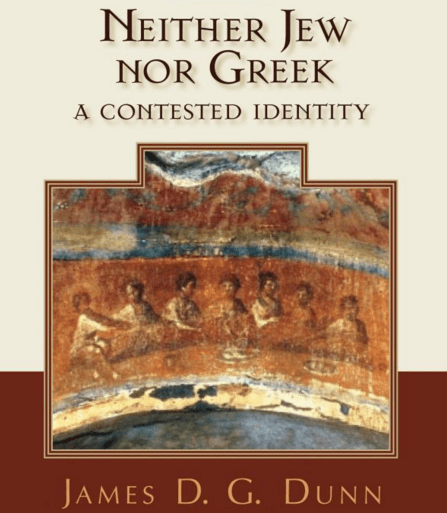
James D.G. Dunn, in Neither Jew Nor Greek: A Contested Identity, examines the “reshaping of the gospel of Jesus” in chp 43 of his 3 volume set on the Beginnings of Christianity. This is tricky terrain and soggy turf for many conservatives who are trained to think the sayings of Jesus must be quotations and anything but accurate quotations are not “historical” and therefore not true. (Notable here is modernity’s way of framing what “truth’ means, but that’s another discussion to be had.) Let’s jump into Dunn’s chp to draw out his major conclusions, conclusions drawn from a patient survey of facts.
The differences between GJohn and GSynoptics are noticeable, e.g., virgin birth and logos incarnation, speeches and teaching vs. discourses and I am sayings. So what happened? How do we account for the stylistic and substance changes? Do we pretend — as some have said — that John was private teaching and the Synoptics public? (Read the Gospels and you will see this doesn’t work consistently.) What to say?
I will provide summary conclusions from Dunn, who proceeds carefully and boldly and challengingly for some. First, GJohn is deeply connected to the Jesus tradition the Synoptics drew from:
But we can be sufficiently confident that the Johannine tradition too goes back to the first disciples, and indeed, in this case, has retained a clearer memory of the overlap period than we could have deduced from the Synoptic tradition. A simple uniform rule that the Synoptic tradition is always more reliable than John’s is immediately ruled out. John’s version of the beginning of Jesus’ mission is itself an example of how the memory of that overlap was handled in at least one strand of earliest Christianity or in some churches (321).
GJohn is the result of a lengthy process and GJohn does things differently:
That is to say, the evidence of John’s Gospel itself suggests that we should not assume that he saw his role as simply recalling memories of actual events of Jesus’ mission, or simply reciting the earlier tradition, in the fashion of the Synoptics. John may have concluded that to bring out the full significance of Jesus’ mission he had to retell the tradition in bolder ways which brought out that significance more clearly (335).
In short, it is hard to doubt that John’s version of Jesus’ teaching is an elaboration of aphorisms, parables, motifs and themes remembered as characteristic of Jesus’teaching, as attested in the Synoptic tradition. At the same time, John’s version was not pure invention, nor did it arise solely out of Easter faith. Rather it was elaboration of typical things that Jesus was remembered as saying.
…To criticize John’s procedure as inadmissible is to limit the task of the Evangelist to simply recording deeds and words of Jesus during his mission. But John evidently saw his task as something more the task of drawing out the fuller meaning of what Jesus had said (and done) by presenting that fuller understanding as the Spirit both reminding Jesus’ disciples of what Jesus had said and leading them into the fuller understanding of the truth made possible by Jesus’ resurrection and ascension (336-337).
Christology and discipleship both affirm the tradition about Jesus and open up fresh and fuller understandings of the same, so Jesus is Messiah and Son of God but also Logos and Wisdom. Discipleship is about following but also “faith” as abiding and love is opened up.
Hence,
at to read and interpret John’s Gospel as though John had been trying to do the same as the Synoptics is to misread and misinterpret his Gospel. This remains the challenge for those who approach John’s Gospel from a conservative perspective: by so doing, they may be missing and distorting John’s message! The truth of Jesus, the story of his mission and its significance, was not expressed in only one way, as though the Gospel of Jesus Christ could be told only by strictly limiting the interpretation of the earliest Jesus tradition, the ways in which Jesus was remembered. It proved also acceptable that the character and themes of Jesus’ mission provided the basis for fuller and deeper reflection on what Jesus stood for and achieved — still the Gospel of Jesus Christ (369).
Some then will wonder what this does both to the red-letter mentality (it never was right, it always was modernity’s mindset) but also to something like the Gospel of Thomas, which is Dunn’s next section, but I will cut to the chase on this:
It is free-floating teaching, without substantive historical anchor. Nor are there any indications that Thomas’s distinctive message was itself part of the immediate impact made by Jesus. The basic narrative of Thomas is too distinctive and too different from the other first-century indications of the impact made by Jesus for us to find a root for the Thomas perspective in Jesus’ mission or the early oral Jesus tradition (400).
In short, in terms of genre and literary form, ‘Gospel’ may seem to be the most natural title for Thomas. But Thomas’s structure and content are so different from the ‘gospel’ as given definition by Paul and the canonical Gospels, that the ‘Gospel of Thomas‘ can and should be judged a misnomer. And if the title persists, as now well established, Thomas has to be judged to be a very different gospel from the Gospels of the NT. Its exclusion from the canon of the NT, the canon of the fourfold Jesus tradition, is both understandable and was entirely appropriate (402).
Previous Post

February 28, 2016
Jesus Creed in Pakistan
Next Post
February 29, 2016 The Most Persecuted Religion in the World Is?
Browse Our Archives
Select a Category Acts of the Apostles Adam Advent Anabaptism Angels Anglican Apologetics Atonement Baptism BCP Prayers Bible Biblical Studies Birds Blogging Bloglossary Bonhoeffer Books Calvinism Christianity Church Church History Coffee Colossians Commentary Recs Conversion Creation Creeds Culture Death Ecclesiastes Economics Education Embracing Grace Emergent Emerging Movement Eschatology Essays Ethics Eucharist Evangelicalism Family Fasting Fathers Fellowship of Differents Footsteps Tour Fun and Whimsical Gospel Grace Happiness Heaven Hell Holy Spirit Irenaeus James Jesus Jesus Creed Job Justification Kingdom of God Law Lectures Lent Liberalism Love and Marriage Mabanteneni Manhood Mary Miracles Missio Alliance MissioLife Missional Missional Jesus Movies and Film New Perspective Northern Seminary OneLife Origins Project Orthodox Parables Pastor's Spouse Pastoring and Leading Pastoring and Preaching Patristics Paul Paul-John Tour Pharisees Pietism Political Theology Prayer and Formation Preaching Problems for Faith Psalm 119 Psalms Public Issues Purgatory Religions Resurrection Revelation Romans Rule of JCreed Science and Faith Sermon on the Mount Sports Ten Commandments Theology Third Way Top Ten Lists Translations Uncategorized Universalism University Ministry Way Out Weekly Meanderings Wisdom Women and Ministry Work Worship Writing & Blogging Youth Ministry
Select a Month July 2021 January 2020 December 2019 November 2019 October 2019 September 2019 August 2019 July 2019 June 2019 May 2019 April 2019 March 2019 February 2019 January 2019 December 2018 November 2018 October 2018 September 2018 August 2018 July 2018 June 2018 May 2018 April 2018 March 2018 February 2018 January 2018 December 2017 November 2017 October 2017 September 2017 August 2017 July 2017 June 2017 May 2017 April 2017 March 2017 February 2017 January 2017 December 2016 November 2016 October 2016 September 2016 August 2016 July 2016 June 2016 May 2016 April 2016 March 2016 February 2016 January 2016 December 2015 November 2015 October 2015 September 2015 August 2015 July 2015 June 2015 May 2015 April 2015 March 2015 February 2015 January 2015 December 2014 November 2014 October 2014 September 2014 August 2014 July 2014 June 2014 May 2014 April 2014 March 2014 February 2014 January 2014 December 2013 November 2013 October 2013 September 2013 August 2013 July 2013 June 2013 May 2013 April 2013 March 2013 February 2013 January 2013 December 2012 November 2012 October 2012 September 2012 August 2012 July 2012 June 2012 May 2012 April 2012 March 2012 February 2012 January 2012 December 2011 November 2011 October 2011 September 2011 August 2011 July 2011 June 2011 May 2011 April 2011 March 2011 February 2011 January 2011 December 2010 November 2010 October 2010 September 2010 August 2010 July 2010 June 2010 May 2010 April 2010 March 2010 February 2010 January 2010 December 2009 November 2009 October 2009 September 2009 August 2009 July 2009 June 2009 May 2009 April 2009 March 2009 February 2009 January 2009 December 2008 November 2008 October 2008 September 2008 August 2008 July 2008 June 2008 May 2008 April 2008 March 2008 February 2008 January 2008 December 2007 November 2007 October 2007 September 2007 August 2007 July 2007 June 2007 May 2007 April 2007 March 2007 February 2007 January 2007 December 2006 November 2006 October 2006 September 2006 August 2006 July 2006 June 2006 May 2006 April 2006 March 2006 February 2006 January 2006 December 2005 November 2005 October 2005 September 2005 August 2005 July 2005 June 2005 May 2005 April 2005 0000
Follow Us!
TAKE THE
Religious Wisdom Quiz
Where did Jacob and his family settle in Egypt?
Select your answer to see how you score.
Thebes Memphis Cairo Goshen
Related posts from Jesus Creed


The Gospel of With Us and Through Us

Northern Seminary Announces: Nijay Gupta Joins Faculty

The Gundrys and Me: Ruth Tucker
TRENDING AT PATHEOS Evangelical

How the author of the world's best hymn...
I've been working with John Newton for a while now. This makes...

Long before this Lectio Divina, Psalm 130 - the song - started...

What About the Trees? Another Living Parable
After I finished writing the last article about falling leaves as a...

Why Classical Education Is a Conversation, Not a...
Come and Read: Joy in Classical Education When I was a little...

Falling Leaves: A Living Parable on Letting Go
I’ve spent the vast majority of my life in the southeast corner...

Cornell University has received a great deal of negative publicity and intense...
view all Evangelical blogs
Ad-Free & Subscriber Log-In Subscription Support
- About Us
- 2026 Calendar
- Videos
- Podcasts
- Library of World Religions
- Faith In Media Tracker
- Advertise With Us
- Write for Us
- Privacy Policy
- Terms of Service
- Do Not Sell My Data
- Contact Us
- Radiant Digital
- Manage Newsletter Subscriptions
- Unsubscribe From Notifications
- Sitemap
Copyright 2008-2026, Patheos. All rights reserved.
Subscription Support Ad-Free & Subscriber Log-In
Follow Patheos