
BuddhistCatholicContemplativeEvangelicalGeneral ChristianHinduJewishLatter-day SaintMuslimNew VisionsProgressive Christian
Beliefs
- Buddhist
- Catholic
- Contemplative
- Evangelical
- General Christian
- Hindu
- Jewish
- Latter-day Saint
- More Voices
- Muslim
- New Visions
- Pagan
- Progressive Christian
Topics
- Religion News
- Food and Religion
- Sports and Religion
- Religious Art
- Religious Music and Entertainment
- Religious Events
- History and Religion
- Style and Religion
- Politics and Religion
- Women in Religion
- Recreation Outdoors and Religion
- Business Finance and Religion
- Careers Workplace and Religion
- Education and Religion
- Family Parenting and Religion
- Health Fitness and Religion
- Home and Religion
- Relationships and Religion
- Technology and Religion
- Travel and Religion
Columnists
- Buddhist Columnists
- Business Finance and Religion Columnists
- Careers Workplace and Religion Columnists
- Catholic Columnists
- Contemplative Columnists
- Education and Religion Columnists
- Evangelists Columnists
- Family Parenting and Religion Columnists
- General Christian Columnists
- Health Fitness and Religion Columnists
- Hindu Columnists
- History and Religion Columnists
- Home and Religion Columnists
- Jewish Columnists
- More Voices Columnists
- Latter Day Columnists
- Muslim Columnists
- New Visions Columnists
- Nonreligious Columnists
- Pagan Columnists
- Politics and Religion Columnists
- Progressive Columnists
- Recreation Outdoors and Religion Columnists
- Relationships and Religion Columnists
- Religion News Columnists
- Religious Art Columnists
- Religious Events Columnists
- Religious Music and Entertainment Columnists
- Sports and Religion Columnists
- Style and Religion Columnists
- Technology and Religion Columnists
- Travel and Religion Columnists
- Women in Religion Columnists
Resource Library
- 2026 Calendar
- Library of World Religions
- The 100 Most Holy Places on Earth
- Patheos Answers
- Podcasts
- Videos
- Faith Leaders Database
- Anglican Episcopalian
- Bahai
- Baptist
- Buddhism
- Christianity
- Confucianism
- Eastern Orthodoxy
- Hinduism
- Holiness and Pentecostal
- ISKCON
- Islam
- Judaism
- Lutheran
- Methodist
- The Church of Jesus Christ of Latter-day Saints
- New Age
- Paganism
- Presbytarian and Reformed
- Protestantism
- Religion Behind the Scenes
- Roman Catholic
- Scientology
- Shia Islam
- Sikhism
- Sufism
- Sunni Islam
- Taoism
- Zen
- See all religions
Research Tools
 Ad-Free & Subscriber Log-In Subscription Support
Ad-Free & Subscriber Log-In Subscription Support
Follow Patheos 

- Trending:
- Forgiveness
- |
- Marriage
- |
- Consciousness
- |
- Death Penalty
- |
- Election
- |
- Halloween
 Jesus Creed
- Home
- Evangelical
- How To Read Job (RJS)
How To Read Job (RJS)
Last updated on: February 9, 2016 at 9:11 am by RJS
How To Read Job (RJS) 2016-02-09T09:11:04-06:00 RJS
Patheos Explore the world's faith through different perspectives on religion and spirituality! Patheos has the views of the prevalent religions and spiritualities of the world.
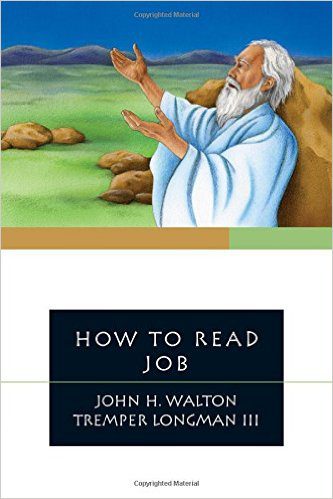 Several years ago I posted a long series on the book of Job (See here for the posts) using the commentaries written by John Walton (Job (The NIV Application Commentary)) and Tremper Longman III (Job (Baker Commentary on the Old Testament Wisdom and Psalms)) both published in August 2012. The book of Job is an often misunderstood and misused or overlooked book, but it is a powerful book and one we would do well to study. The book of Job is a profound exploration of wisdom and suffering, of the nature of God, the nature of Creation, the nature of man, and the interaction of God with his creation and his creatures. The series on Job and the detailed reading of both of these excellent commentaries along with a handful of other sources was one of the most satisfying series of posts I’ve done. This is a book that we should study more often as Christians.
Of course, two 400+ page commentaries are rather daunting and hard to plow through. Fortunately Longman and Walton have teamed up to put out a short study of the book of Job designed especially for bible studies in small groups or adult classes. How to Read Job (IVP 2015) draws on their combined insights to bring the interested readers through the book. A mere 200 pages, with discussion question, the book is an excellent resource.
The structure of the book gives some insight into its strengths.
Part One: Reading Job as Literature
1. What Is the Book of Job About?
2. What Is the Rhetorical Strategy of the Book of Job?
3. Job in the Context of the Ancient Near East
4. Is Job a Real Person?
Both Walton and Longman see the book of Job as a literary work designed as a thought experiment to explore some very important questions concerning God and his governance of the world. It is not a historical book.
We therefore adopt the position that , though job himself may have been a real person who actually lived, the rest of the book is a literary work of art providing a wisdom discussion that is framed by extremes. … This is important for some readers because it is easy to get distracted by this picture of a God who is “making wagers with the devil” or has no knowledge of what Satan is doing or of what motivates Job’s righteousness. Instead we should take this scenario as a hypothetical one: what if we imagine …? In this view, the truth of the message of Job is preserved while potential concerns about the nature of God are avoided. … Whether we label it a thought experiment or simply a hypothetical scenario built around extremes, we can encounter the God-given message of the text undistracted from incidental curiosities and without the angst that comes with wondering why God killed Job’s children. (p. 39)
This is a very important point. Too many times Christians get hung up on the problems with Job as history and simply cannot see the book for its intended message and effect.
Each chapter of the book ends with further reflections – questions that will make good discussion starters in any bible study class.
After chapter 4 Longman and Walton pose questions including:
Why is it important to determine the genre of the book of Job?
How would you describe its genre?
How does thinking of the book as a thought experiment affect the way we interpret the book?
I’d add another to the mix:
Is Job as thought experiment consistent with our understanding of the nature and purpose of scripture?
Walton and Longman deal with this issue in the chapter, making reference to the parable of the Good Samaritan. Certainly it is possible to convey important theological messages in the form of stories using places and situations. All truth is not bald fact. But this is a question that gets to the core of the problem that many Christians face when considering the genre of Job.
Part Two: Getting to Know the Characters of the Book of Job
5. What Do We Learn About God from the Book of Job?
6. Who Is “Satan” in Job?
7. What Is the Role of Job in the Book of Job?
8. How to Assess Job’s Human Advisers
9. Who Is Job’s Advocate?
10. Behemoth and Leviathan, the Most Powerful Creatures Imaginable
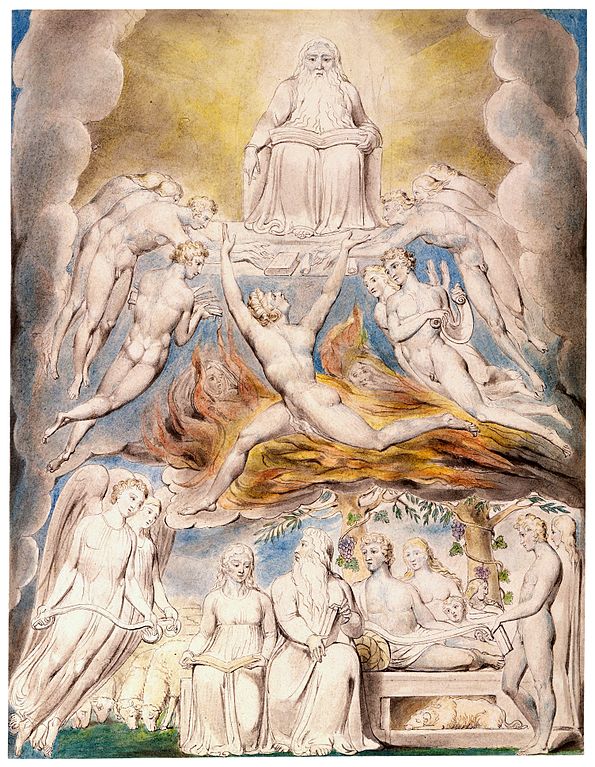 The challenger (transliterated and capitalized as a proper name in most English translations of Job 1 and 2) should not be confused with Satan of the New Testament. Walton and Longman conclude chapter 6:
The challenger comes among the sons of God, who are the members of the heavenly council (not mere angels, who are messengers for the council). This standing him a legitimate status and identifies him as one whom God has delegated to perform certain tasks. The challenge that he brings concerns a potential unintended consequence in the way God acts in the world. He is right about the potential that anticipated reward has for undermining human righteousness. God does not rebuke him; instead, he actively addresses the challenge by giving the challenger freedom to test the system. In that way, Job, unknowingly, becomes the star witness for the defense of that system. (p. 55-56)
When I first read the commentaries by Longman and Walton, I also listened to the NIV dramatization of Job provided on Bible Gateway. In this dramatization the man speaking the role of the challenger had a sinister voice intended to convey the image of Satan to the hearer. With the new 2011 update and a new dramatization, this has changed. Satan is simply portrayed as a challenger. This is actually an important part of understanding the genre and purpose of the book. In no way does Job portray God as “making wagers with the devil” because the devil, the New Testament Satan, has no part in the book.
Part Three: The Theological Message of the Book of Job
11. The Retribution Principle and Theodicy in Job
12. The Retribution Principle in Wisdom Literature
13. Does Job Believe in the Afterlife?
14. Learning About the Cosmos from the Book of Job
15. The Theology of Suffering in the Book of Job
16. Job’s View of God
Chapter 13 raises another excellent point for discussion. Often we read our New Testament understanding of life, death, and the age to come into the Old Testament. But the Old Testament understanding was often quite different. There are hints that the Israelites hoped for something better than death and Sheol, but no clear theology of the afterlife until Daniel 12.
Once we recognize that the Israelites had no hope of heaven and begin to read the contexts of the Old Testament in light of their limited understanding, we gain valuable insight into important theological issues. First we learn that a relationship with God need not be construed around a hope of heaven. This is important for Christians to understand because it is common for people to think that the work of Christ is primarily intended to offer us the benefits of going to heaven and living forever rather than going to hell. Such an understanding is a distortion. The work of Christ makes it possible for us to be in relationship with God now and forever. … We learn from the book of Job and from Israelite theology that we should focus more on our present relationship with God than on our future benefits. We should be focused on God rather than on ourselves.
Second, when we come to understand the limited revelation that Israel had about the afterlife, we gain a greater appreciation of the emphasis on the retribution principle. With no hope of enjoying the benefits of God’s justice in eternity, the Israelites believed that if God was indeed just, that justice would have to come into play in this life. (p. 118)
We have a hope for ultimate justice, even when it fails in this world. Would the absence of such a hope change your passion for God?
Part Four: Reading Job as a Christian
17. Job and Jesus
18. The Message of the Book of Job for Today
19. Does the Book of Job Provide Comfort?
20. Applying the Book of Job
This is an excellent little book that should provide important understanding and foster productive discussion of the purpose and message of the book of Job. It makes me eager to lead a class on Job. With How to Read Job available to all, and augmented by the full commentaries by Longman and Walton, any such class will be an enriching experience. Perhaps I’ll get the chance some day.
What is the message and purpose of the book of Job?
What does it teach us today?
If you wish to contact me directly you may do so at rjs4mail[at]att.net.
If interested you can subscribe to a full text feed of my posts at Musings on Science and Theology.
Stay in touch! Like Jesus Creed on Facebook:
Previous Post

February 9, 2016
Perplexed by Atonement Theories? The Core of it All
Next Post
February 9, 2016 Love It! Collaborative Education
Browse Our Archives
Select a Category Acts of the Apostles Adam Advent Anabaptism Angels Anglican Apologetics Atonement Baptism BCP Prayers Bible Biblical Studies Birds Blogging Bloglossary Bonhoeffer Books Calvinism Christianity Church Church History Coffee Colossians Commentary Recs Conversion Creation Creeds Culture Death Ecclesiastes Economics Education Embracing Grace Emergent Emerging Movement Eschatology Essays Ethics Eucharist Evangelicalism Family Fasting Fathers Fellowship of Differents Footsteps Tour Fun and Whimsical Gospel Grace Happiness Heaven Hell Holy Spirit Irenaeus James Jesus Jesus Creed Job Justification Kingdom of God Law Lectures Lent Liberalism Love and Marriage Mabanteneni Manhood Mary Miracles Missio Alliance MissioLife Missional Missional Jesus Movies and Film New Perspective Northern Seminary OneLife Origins Project Orthodox Parables Pastor's Spouse Pastoring and Leading Pastoring and Preaching Patristics Paul Paul-John Tour Pharisees Pietism Political Theology Prayer and Formation Preaching Problems for Faith Psalm 119 Psalms Public Issues Purgatory Religions Resurrection Revelation Romans Rule of JCreed Science and Faith Sermon on the Mount Sports Ten Commandments Theology Third Way Top Ten Lists Translations Uncategorized Universalism University Ministry Way Out Weekly Meanderings Wisdom Women and Ministry Work Worship Writing & Blogging Youth Ministry
Select a Month July 2021 January 2020 December 2019 November 2019 October 2019 September 2019 August 2019 July 2019 June 2019 May 2019 April 2019 March 2019 February 2019 January 2019 December 2018 November 2018 October 2018 September 2018 August 2018 July 2018 June 2018 May 2018 April 2018 March 2018 February 2018 January 2018 December 2017 November 2017 October 2017 September 2017 August 2017 July 2017 June 2017 May 2017 April 2017 March 2017 February 2017 January 2017 December 2016 November 2016 October 2016 September 2016 August 2016 July 2016 June 2016 May 2016 April 2016 March 2016 February 2016 January 2016 December 2015 November 2015 October 2015 September 2015 August 2015 July 2015 June 2015 May 2015 April 2015 March 2015 February 2015 January 2015 December 2014 November 2014 October 2014 September 2014 August 2014 July 2014 June 2014 May 2014 April 2014 March 2014 February 2014 January 2014 December 2013 November 2013 October 2013 September 2013 August 2013 July 2013 June 2013 May 2013 April 2013 March 2013 February 2013 January 2013 December 2012 November 2012 October 2012 September 2012 August 2012 July 2012 June 2012 May 2012 April 2012 March 2012 February 2012 January 2012 December 2011 November 2011 October 2011 September 2011 August 2011 July 2011 June 2011 May 2011 April 2011 March 2011 February 2011 January 2011 December 2010 November 2010 October 2010 September 2010 August 2010 July 2010 June 2010 May 2010 April 2010 March 2010 February 2010 January 2010 December 2009 November 2009 October 2009 September 2009 August 2009 July 2009 June 2009 May 2009 April 2009 March 2009 February 2009 January 2009 December 2008 November 2008 October 2008 September 2008 August 2008 July 2008 June 2008 May 2008 April 2008 March 2008 February 2008 January 2008 December 2007 November 2007 October 2007 September 2007 August 2007 July 2007 June 2007 May 2007 April 2007 March 2007 February 2007 January 2007 December 2006 November 2006 October 2006 September 2006 August 2006 July 2006 June 2006 May 2006 April 2006 March 2006 February 2006 January 2006 December 2005 November 2005 October 2005 September 2005 August 2005 July 2005 June 2005 May 2005 April 2005 0000
Follow Us!
TAKE THE
Religious Wisdom Quiz
Who said, "Do not be afraid, for those who are with us are more than those who are with them"?
Select your answer to see how you score.
Elisha Elijah Gideon Joshua
Related posts from Jesus Creed


The Gospel of With Us and Through Us

Northern Seminary Announces: Nijay Gupta Joins Faculty

The Gundrys and Me: Ruth Tucker
TRENDING AT PATHEOS Evangelical

The REST of Your Life: A Creative Wrestles...
This week I had a conversation with a good friend from church....

How the author of the world's best hymn...
I've been working with John Newton for a while now. This makes...

Long before this Lectio Divina, Psalm 130 - the song - started...

What About the Trees? Another Living Parable
After I finished writing the last article about falling leaves as a...

Why Classical Education Is a Conversation, Not a...
Come and Read: Joy in Classical Education When I was a little...

Cornell University has received a great deal of negative publicity and intense...
view all Evangelical blogs
Ad-Free & Subscriber Log-In Subscription Support
- About Us
- 2026 Calendar
- Videos
- Podcasts
- Library of World Religions
- Faith In Media Tracker
- Advertise With Us
- Write for Us
- Privacy Policy
- Terms of Service
- Do Not Sell My Data
- Contact Us
- Radiant Digital
- Manage Newsletter Subscriptions
- Unsubscribe From Notifications
- Sitemap
Copyright 2008-2026, Patheos. All rights reserved.
Subscription Support Ad-Free & Subscriber Log-In
Follow Patheos