
BuddhistCatholicContemplativeEvangelicalGeneral ChristianHinduJewishLatter-day SaintMuslimNew VisionsProgressive Christian
Beliefs
- Buddhist
- Catholic
- Contemplative
- Evangelical
- General Christian
- Hindu
- Jewish
- Latter-day Saint
- More Voices
- Muslim
- New Visions
- Pagan
- Progressive Christian
Topics
- Religion News
- Food and Religion
- Sports and Religion
- Religious Art
- Religious Music and Entertainment
- Religious Events
- History and Religion
- Style and Religion
- Politics and Religion
- Women in Religion
- Recreation Outdoors and Religion
- Business Finance and Religion
- Careers Workplace and Religion
- Education and Religion
- Family Parenting and Religion
- Health Fitness and Religion
- Home and Religion
- Relationships and Religion
- Technology and Religion
- Travel and Religion
Columnists
- Buddhist Columnists
- Business Finance and Religion Columnists
- Careers Workplace and Religion Columnists
- Catholic Columnists
- Contemplative Columnists
- Education and Religion Columnists
- Evangelists Columnists
- Family Parenting and Religion Columnists
- General Christian Columnists
- Health Fitness and Religion Columnists
- Hindu Columnists
- History and Religion Columnists
- Home and Religion Columnists
- Jewish Columnists
- More Voices Columnists
- Latter Day Columnists
- Muslim Columnists
- New Visions Columnists
- Nonreligious Columnists
- Pagan Columnists
- Politics and Religion Columnists
- Progressive Columnists
- Recreation Outdoors and Religion Columnists
- Relationships and Religion Columnists
- Religion News Columnists
- Religious Art Columnists
- Religious Events Columnists
- Religious Music and Entertainment Columnists
- Sports and Religion Columnists
- Style and Religion Columnists
- Technology and Religion Columnists
- Travel and Religion Columnists
- Women in Religion Columnists
Resource Library
- 2026 Calendar
- Library of World Religions
- The 100 Most Holy Places on Earth
- Patheos Answers
- Podcasts
- Videos
- Faith Leaders Database
- Anglican Episcopalian
- Bahai
- Baptist
- Buddhism
- Christianity
- Confucianism
- Eastern Orthodoxy
- Hinduism
- Holiness and Pentecostal
- ISKCON
- Islam
- Judaism
- Lutheran
- Methodist
- The Church of Jesus Christ of Latter-day Saints
- New Age
- Paganism
- Presbytarian and Reformed
- Protestantism
- Religion Behind the Scenes
- Roman Catholic
- Scientology
- Shia Islam
- Sikhism
- Sufism
- Sunni Islam
- Taoism
- Zen
- See all religions
Research Tools
 Ad-Free & Subscriber Log-In Subscription Support
Ad-Free & Subscriber Log-In Subscription Support
Follow Patheos 

- Trending:
- Forgiveness
- |
- Marriage
- |
- Consciousness
- |
- Death Penalty
- |
- Election
- |
- Halloween
 Jesus Creed
- Home
- Evangelical
- Jesus Remembered is also Jesus Interpreted
Jesus Remembered is also Jesus Interpreted
Last updated on: February 3, 2016 at 12:11 am by Scot McKnight
Jesus Remembered is also Jesus Interpreted 2016-01-31T18:39:15-06:00 Scot McKnight
Patheos Explore the world's faith through different perspectives on religion and spirituality! Patheos has the views of the prevalent religions and spiritualities of the world.
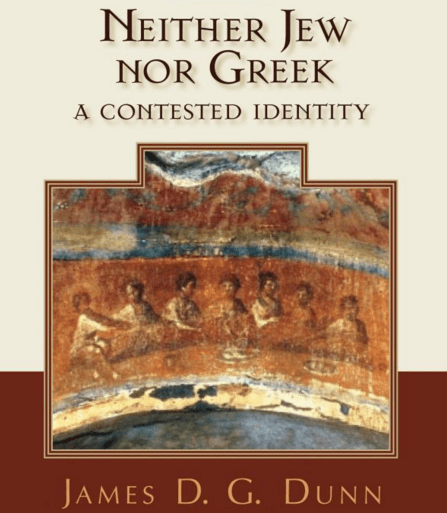 Though it is at times overcooked it is just as often undercooked — the Jesus who was remembered was interpreted in that very act of remembering. We are looking at James D.G. Dunn’s Neither Jew nor Greek: A Contested Identity, which builds on Dunn’s earlier volumes: Jesus Remembered and Beginning from Jerusalem. This is the major accomplishment of Dunn’s academic career, and I am proud to have been one of Jimmy’s students.
[Post one, post two, post three.]
In this post I want to sketch what happened to Jesus as he was remembered by Mark when that remembered Jesus got to Matthew and then to Luke. Thus, the christology of Matthew and the christology of Luke. As Dunn emphasizes, there is massive solidarity in the Synoptic Gospels yet there are distinctive emphases in each. Most of what follows is citation from Dunn’s NJNG.
Here’s what needs to be noted as you read what follows — and read it slowly and you will catch the whole easily: Matthew and Luke carry on Mark’s Jesus but they shift emphases and enhance emphases and interpret the tradition they were given. This, in my view, is a model of how to do pastoral ministry and theology. Not revolutionary newness but gentle, discerning adjustments.
Matthew
(1) Somewhat surprisingly for a Gospel of Jesus, Son of God, Matthew breaks Mark’s inclusio formed by Mark 1.1 and 15.39. He retains the confession of the centurion (Matt. 27.54/Mark 15.39), but his opening verse designates Jesus Christ as ‘son of David, son of Abraham’ (Matt. 1.1). Matthew also omits one of Mark’s summary accounts of unclean spirits hailing Jesus as ‘the Son of God’ (Mark 3.11). On the other hand, Matthew significantly heightens the Son of God motif.252
(2) Matthew refers to Jesus as the Messiah (Christ) about as often as Mark, slightly emphasizing the titular significance of ‘Christ’ (1.16; 27.17, 22), but he has weakened the messianic secret motif so prominent in Mark. As for the ‘son of man’ motif, its more frequent usage in Matthew (principally due to Matthew’s incorporation of Q material) somewhat diminishes the effectiveness of Mark’s abrupt juxtaposition of Peter’s confession of Jesus’ as Messiah with the first of the suffering Son of Man predictions (Mark 8.29-31). 253
(3) In contrast to Mark, Matthew highlights the messianic theme of Jesus as ‘son of David. 254
(4) That Jesus was the answer to the hopes and expectations of Israel is one of Matthew’s great emphases, indicated particularly by his concern repeatedly to note that Jesus fulfilled various scriptures — scriptures whose messianic significance Jesus had brought to light… 255
(5) More disputed is the influence of a Moses-prophet expectation, rooted in Deut. 18.15, 18; but Matthew does seem to present Jesus as a new Moses, or as the fulfillment of Israel’s divinely intended purpose. 256
(6) Matthew, however, goes beyond what might be regarded as the traditional Jewish expectations. The birth of Jesus is not simply symbolical of God’s presence with his people (Matt. 1.23), as in Isaiah’s prophecy (7.14). Jesus himself expresses or embodies the divine presence — ‘Emmanuel, God is with us’. 257
(7) In a similar way, Matthew seems to go beyond the Q material in regarding Jesus not simply as the spokesman of divine Wisdom, but as himself embodying divine Wisdom. 258
(8) One other feature worthy of note confirms the conclusion that Matthew drew on and shaped the Jesus tradition to present a higher christology than his predecessors. This is the fact that Matthew uses the term proskynein far more frequently than either Mark or Luke. 259
Luke
(1) Luke enhances Mark’s christology of Jesus as the Son of God by his account of the virginal conception (Luke 1.32,35), and strengthens the tradition of Jesus speaking of God as his Father, but otherwise he simply retains the ‘Son/Father’ references of Mark and Q. 283
(2) Jesus as Messiah and son of David is also enhanced by the birth narrative (Luke 1.69; 2.11,26) and added at 4.41, but otherwise the Markan emphasis is retained. 284
(3) Distinctively Lukan is the emphasis Luke places on the role of the Holy Spirit in his christology — in Jesus’ conception (1.35), at the beginning of Jesus’ mission (4.1,14) and in his anointing for mission (4.18; Acts 10.38). 284
(4) This also links into the strand of Moses-prophet christology which Luke retains: provision of food in the wilderness (9.12-17); in the Transfiguration story, Moses and Elijah speak with Jesus about Jesus’ ‘exodus’ (9.31); Jesus casts out demons ‘by the finger of God’ (11.20; echoing Exod. 8.19). 284-5
(5) Luke takes over most of the Son of Man references in his material, but has some distinctive references, perhaps best explained as performance variations in recitals of Jesus tradition.285
(6) Another feature highlights the transition which Jesus’ resurrection formed between his mission and his post-resurrection exalted state, or, as we may say, between volume 1 and volume 2 of Luke’s two-volume work. This is Luke’s careful use of the title kyrios for Jesus. What is notable is that Luke refrains from having Jesus spoken of as the Lord during his mission by other actors in the drama that Luke unfolds.285
(7) Ironically, this reinforced emphasis on Jesus’ resurrection reflects also a shift in emphasis regarding the function of the cross as well as the resurrection in the Gospel according to Luke….In short, a rather remarkable feature of Luke-Acts is that the theology of Jesus’ death as atoning sacrifice is almost completely absent. The thought is much more of the wonder of Jesus’ resurrection, and (as we shall see) of the resultant power of the Spirit. 286, 287
Previous Post

February 2, 2016
Late to Work Excuses
Next Post
February 3, 2016 Why Should the Church Now Weep?
Browse Our Archives
Select a Category Acts of the Apostles Adam Advent Anabaptism Angels Anglican Apologetics Atonement Baptism BCP Prayers Bible Biblical Studies Birds Blogging Bloglossary Bonhoeffer Books Calvinism Christianity Church Church History Coffee Colossians Commentary Recs Conversion Creation Creeds Culture Death Ecclesiastes Economics Education Embracing Grace Emergent Emerging Movement Eschatology Essays Ethics Eucharist Evangelicalism Family Fasting Fathers Fellowship of Differents Footsteps Tour Fun and Whimsical Gospel Grace Happiness Heaven Hell Holy Spirit Irenaeus James Jesus Jesus Creed Job Justification Kingdom of God Law Lectures Lent Liberalism Love and Marriage Mabanteneni Manhood Mary Miracles Missio Alliance MissioLife Missional Missional Jesus Movies and Film New Perspective Northern Seminary OneLife Origins Project Orthodox Parables Pastor's Spouse Pastoring and Leading Pastoring and Preaching Patristics Paul Paul-John Tour Pharisees Pietism Political Theology Prayer and Formation Preaching Problems for Faith Psalm 119 Psalms Public Issues Purgatory Religions Resurrection Revelation Romans Rule of JCreed Science and Faith Sermon on the Mount Sports Ten Commandments Theology Third Way Top Ten Lists Translations Uncategorized Universalism University Ministry Way Out Weekly Meanderings Wisdom Women and Ministry Work Worship Writing & Blogging Youth Ministry
Select a Month July 2021 January 2020 December 2019 November 2019 October 2019 September 2019 August 2019 July 2019 June 2019 May 2019 April 2019 March 2019 February 2019 January 2019 December 2018 November 2018 October 2018 September 2018 August 2018 July 2018 June 2018 May 2018 April 2018 March 2018 February 2018 January 2018 December 2017 November 2017 October 2017 September 2017 August 2017 July 2017 June 2017 May 2017 April 2017 March 2017 February 2017 January 2017 December 2016 November 2016 October 2016 September 2016 August 2016 July 2016 June 2016 May 2016 April 2016 March 2016 February 2016 January 2016 December 2015 November 2015 October 2015 September 2015 August 2015 July 2015 June 2015 May 2015 April 2015 March 2015 February 2015 January 2015 December 2014 November 2014 October 2014 September 2014 August 2014 July 2014 June 2014 May 2014 April 2014 March 2014 February 2014 January 2014 December 2013 November 2013 October 2013 September 2013 August 2013 July 2013 June 2013 May 2013 April 2013 March 2013 February 2013 January 2013 December 2012 November 2012 October 2012 September 2012 August 2012 July 2012 June 2012 May 2012 April 2012 March 2012 February 2012 January 2012 December 2011 November 2011 October 2011 September 2011 August 2011 July 2011 June 2011 May 2011 April 2011 March 2011 February 2011 January 2011 December 2010 November 2010 October 2010 September 2010 August 2010 July 2010 June 2010 May 2010 April 2010 March 2010 February 2010 January 2010 December 2009 November 2009 October 2009 September 2009 August 2009 July 2009 June 2009 May 2009 April 2009 March 2009 February 2009 January 2009 December 2008 November 2008 October 2008 September 2008 August 2008 July 2008 June 2008 May 2008 April 2008 March 2008 February 2008 January 2008 December 2007 November 2007 October 2007 September 2007 August 2007 July 2007 June 2007 May 2007 April 2007 March 2007 February 2007 January 2007 December 2006 November 2006 October 2006 September 2006 August 2006 July 2006 June 2006 May 2006 April 2006 March 2006 February 2006 January 2006 December 2005 November 2005 October 2005 September 2005 August 2005 July 2005 June 2005 May 2005 April 2005 0000
Follow Us!
TAKE THE
Religious Wisdom Quiz
Place me like a seal over your heart, for love is as strong as death and burns like what?
Select your answer to see how you score.
The sun A blazing flame Lightning A torch
Related posts from Jesus Creed


The Gospel of With Us and Through Us

Northern Seminary Announces: Nijay Gupta Joins Faculty

The Gundrys and Me: Ruth Tucker
TRENDING AT PATHEOS Evangelical

How the author of the world's best hymn...
I've been working with John Newton for a while now. This makes...

Long before this Lectio Divina, Psalm 130 - the song - started...

What About the Trees? Another Living Parable
After I finished writing the last article about falling leaves as a...

Why Classical Education Is a Conversation, Not a...
Come and Read: Joy in Classical Education When I was a little...

Falling Leaves: A Living Parable on Letting Go
I’ve spent the vast majority of my life in the southeast corner...

Cornell University has received a great deal of negative publicity and intense...
view all Evangelical blogs
Ad-Free & Subscriber Log-In Subscription Support
- About Us
- 2026 Calendar
- Videos
- Podcasts
- Library of World Religions
- Faith In Media Tracker
- Advertise With Us
- Write for Us
- Privacy Policy
- Terms of Service
- Do Not Sell My Data
- Contact Us
- Radiant Digital
- Manage Newsletter Subscriptions
- Unsubscribe From Notifications
- Sitemap
Copyright 2008-2026, Patheos. All rights reserved.
Subscription Support Ad-Free & Subscriber Log-In
Follow Patheos