
BuddhistCatholicContemplativeEvangelicalGeneral ChristianHinduJewishLatter-day SaintMuslimNew VisionsProgressive Christian
Beliefs
- Buddhist
- Catholic
- Contemplative
- Evangelical
- General Christian
- Hindu
- Jewish
- Latter-day Saint
- More Voices
- Muslim
- New Visions
- Pagan
- Progressive Christian
Topics
- Religion News
- Food and Religion
- Sports and Religion
- Religious Art
- Religious Music and Entertainment
- Religious Events
- History and Religion
- Style and Religion
- Politics and Religion
- Women in Religion
- Recreation Outdoors and Religion
- Business Finance and Religion
- Careers Workplace and Religion
- Education and Religion
- Family Parenting and Religion
- Health Fitness and Religion
- Home and Religion
- Relationships and Religion
- Technology and Religion
- Travel and Religion
Columnists
- Buddhist Columnists
- Business Finance and Religion Columnists
- Careers Workplace and Religion Columnists
- Catholic Columnists
- Contemplative Columnists
- Education and Religion Columnists
- Evangelists Columnists
- Family Parenting and Religion Columnists
- General Christian Columnists
- Health Fitness and Religion Columnists
- Hindu Columnists
- History and Religion Columnists
- Home and Religion Columnists
- Jewish Columnists
- More Voices Columnists
- Latter Day Columnists
- Muslim Columnists
- New Visions Columnists
- Nonreligious Columnists
- Pagan Columnists
- Politics and Religion Columnists
- Progressive Columnists
- Recreation Outdoors and Religion Columnists
- Relationships and Religion Columnists
- Religion News Columnists
- Religious Art Columnists
- Religious Events Columnists
- Religious Music and Entertainment Columnists
- Sports and Religion Columnists
- Style and Religion Columnists
- Technology and Religion Columnists
- Travel and Religion Columnists
- Women in Religion Columnists
Resource Library
- 2026 Calendar
- Library of World Religions
- The 100 Most Holy Places on Earth
- Patheos Answers
- Podcasts
- Videos
- Faith Leaders Database
- Anglican Episcopalian
- Bahai
- Baptist
- Buddhism
- Christianity
- Confucianism
- Eastern Orthodoxy
- Hinduism
- Holiness and Pentecostal
- ISKCON
- Islam
- Judaism
- Lutheran
- Methodist
- The Church of Jesus Christ of Latter-day Saints
- New Age
- Paganism
- Presbytarian and Reformed
- Protestantism
- Religion Behind the Scenes
- Roman Catholic
- Scientology
- Shia Islam
- Sikhism
- Sufism
- Sunni Islam
- Taoism
- Zen
- See all religions
Research Tools
 Ad-Free & Subscriber Log-In Subscription Support
Ad-Free & Subscriber Log-In Subscription Support
Follow Patheos 

- Trending:
- Forgiveness
- |
- Marriage
- |
- Consciousness
- |
- Death Penalty
- |
- Election
- |
- Halloween
 Jesus Creed
- Home
- Evangelical
- In the Beginning (RJS)
In the Beginning (RJS)
Last updated on: January 5, 2016 at 7:00 am by RJS
In the Beginning (RJS) 2016-01-05T07:00:32-06:00 RJS
Patheos Explore the world's faith through different perspectives on religion and spirituality! Patheos has the views of the prevalent religions and spiritualities of the world.
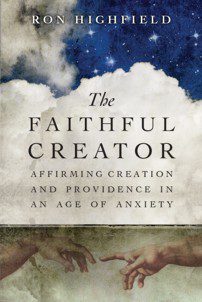 The first chapter of Ron Highfield’s new book The Faithful Creator: Affirming Creation and Providence in an Age of Anxiety looked at the theology of creation in the Old Testament. A commenter on A Theology of Creation suggested that this was the wrong place to start. As Christians our understanding of Christ should shape our theology of creation. Irrespective of the disagreement over the correct starting place, Highfield (and I) certainly agree that Christ shapes our theology of creation. The second chapter of Highfield’s book looks at the New Testament theology of creation – In the beginning was the Word.
Highfield identified five theses concerning creation in the Old Testament. All five of these are also affirmed in the New Testament.
- The one God is the absolute origin and sovereign ruler over all that is not God. The doxology at the end of Romans 11 provides one example: “For from him and through him and for him are all things.”
- The one God freely established the Creator-creature relation, which is characterized by generosity, freedom, and power on the Creator’s side and dependence and debt on the creature’s side. On this one Highfield references Acts 17:28 and Romans 9:20. He could also reference Romans 11 again (although he doesn’t).
- The creation really exists before God and stands before him as good; that is, as the result of God’s act of creation, the creature is really what God intended it to be and can be used for the purpose God intended. A number of NT passages refer to all that God has created as good including 1 Tim. 4:4 and 1 Cor. 10:25-26.
- The Creator-creature relation established at the beginning, with its characteristic qualities, endures for all time. Revelation 4:11 provides an example: You are worthy, our Lord and God, to receive glory and honor and power, for you created all things, and by your will they were created and have their being.
- Human beings possess a unique relationship to the Creator characterized by their image and likeness to God and responsibility to him. Many passages could be cited. The parables in Luke 15 of the lost coin, lost sheep, and lost son provide a powerful example. So to does John 3:16-17.
Christ and Creation. However, these five theses only set the stage for a New Testament theology of creation. More important is the role of Christ as Creator. Highfield identifies four specific christological creation texts. John 1-5, 10-14; 1 Cor. 8:4-6; Col. 1:15-20; and Hebrews 1:1-4. All four of these identify the creator as the father of the Lord Jesus the Christ. They also (although Highfield doesn’t include this in his summary) highlight creation as in, through, and for Jesus the Christ. (I’ve taken the passages from the NRSV.)
John 1:1-5, 14:
In the beginning was the Word, and the Word was with God, and the Word was God. He was in the beginning with God. All things came into being through him, and without him not one thing came into being. What has come into being in him was life, and the life was the light of all people. …And the Word became flesh and lived among us, and we have seen his glory, the glory as of a father’s only son, full of grace and truth. The light shines in the darkness, and the darkness did not overcome it.
This is a key creation passage – perhaps the key New Testament passage. “The Word through whom salvation comes is the means, the instrument through whom God created all things and in whom all things live.” (p. 45) There are four assertions about the Word. (1) The Word was in the beginning. (2) The Word was with God – indicating “a distinction of some kind from God (ho theos).” (p. 46) (3) The Word was God. John 1:1 has “καὶ ὁ λόγος ἦν πρὸς τὸν θεόν, καὶ θεὸς ἦν ὁ λόγος.” Highfield notes that the last reference, καὶ θεὸς, does not contain the article. This gives a slightly different meaning than often inferred from the English translation – the Word was divinity with the God in the beginning. (4) Not content to rest with this John combines 1 and 2 – He (the Word) was in the beginning with God.
Highfield next looks at the relationship of the Word to creation “All things came into being through him …”. His view is somewhat more indirect than I would suppose. ““God” (ho theos) is the implied subject of this sentence, and the Word is the instrument through which God created all things.” (p. 46) For Highfield John attests to Christ as God’s instrument – a reading that seems to derive from a prior commitment and other New Testament references rather than the text of John itself. At any rate, everything comes to be through “the creative agency of the Word.” It is also possible to make a connection between Christ as the light of all people and Genesis 1:3 Then God said, “Let there be light”; and there was light. John blends two meanings of the word light – physical light and enlightenment.
1 Corinthians 8:4-6
Hence, as to the eating of food offered to idols, we know that “no idol in the world really exists,” and that “there is no God but one.” Indeed, even though there may be so-called gods in heaven or on earth—as in fact there are many gods and many lords— yet for us there is one God, the Father, from whom are all things and for whom we exist, and one Lord, Jesus Christ, through whom are all things and through whom we exist.
Highfield works through the entire passage, but he last verse hits on the point we want to emphasize. God is the one from who all things are and for whom we exist. Here the agency of Christ is clear – he is the one through whom all things are and through whom we exist. God is the Creator, Christ is the agent of creation.
And in that reversal Paul calls for a dramatic shift in the way we understand creation, salvation and ethics. Everything – God and creation, beginning and end, salvation and damnation – must be understood in view of the life, death, and resurrection of Jesus Christ. (p. 51)
Colossians 1:15-20
He is the image of the invisible God, the firstborn of all creation; for in him all things in heaven and on earth were created, things visible and invisible, whether thrones or dominions or rulers or powers—all things have been created through him and for him. He himself is before all things, and in him all things hold together. … and through him God was pleased to reconcile to himself all things, whether on earth or in heaven, by making peace through the blood of his cross.
Highfield notes that the two qualifiers image and firstborn are significant. “These two qualifications indicate a close ontological relationship between the Son and the Father and an ontological gulf between the Son and creation.” (p. 52) The image is the revelation of God (the invisible God). See also 2 Cor. 4:4. The designation firstborn of all creation needs more discussion.
Designating the Son as the “firstborn” (prōtotokos) over creation indicates not that he is the chronologically first creature but that he is superior in rank to all creatures. According to McDonough [Christ as Creator p. 185] the title “firstborn” may “speak of an inextricable link between Messiah and creation. … He was always its intended ruler. It was made for his purposes according to his specifications.
The end of the passage, with God making peace through the blood of his cross, connects salvation and creation. Salvation through Christ fulfills what was from the beginning.
Hebrews 1:1-4
Long ago God spoke to our ancestors in many and various ways by the prophets, but in these last days he has spoken to us by a Son, whom he appointed heir of all things, through whom he also created the worlds. He is the reflection of God’s glory and the exact imprint of God’s very being, and he sustains all things by his powerful word. When he had made purification for sins, he sat down at the right hand of the Majesty on high, having become as much superior to angels as the name he has inherited is more excellent than theirs.
It is the Son through whom God created all things He is the reflection of God’s glory and the exact imprint of God’s very being. Hard to get much stronger than this. It is through the Son that we know God.
Highfield concludes the chapter by summarizing:
As these four texts witness, the New Testament identifies the Creator as the Father of the Lord Jesus Christ. The One revealed in the life, teaching, death, and resurrection of Jesus is the Creator of heaven and earth. This identification not only highlights the universal significance of the work of Jesus Christ but also sheds new light on the character and purpose of creation. The divine act of creation anticipates and prepares the way for the divine act of salvation through Jesus Christ. The New Testament brings the biblical themes of creation and salvation into new intimacy. In Jesus Christ we see the revelation of the Jesus-character of creation and the Creator-character of salvation. (p. 55)
All four passages witness to Christ as the one through whom and for whom creation exists. They tie together salvation and creation. Highfield doesn’t go here in this chapter, but in my reading this is not entirely consistent with the view of Christ as the solution of a man-made problem. We see a sweep of scripture that includes creation, fall, and redemption, but not a storyline that envisions God fixing something that went astray from his original plan. Christ was always the intended king and salvation though Christ fulfills what was always intended from the beginning.
How do these New Testament passages shape your view of creation?
Has Highfield left out anything important?
If you wish to contact me directly you may do so at rjs4mail[at]att.net.
If interested you can subscribe to a full text feed of my posts at Musings on Science and Theology.
Previous Post
January 5, 2016
How Theologians Do History?
Next Post

January 5, 2016 Liberation Theology and the KGB?
Browse Our Archives
Select a Category Acts of the Apostles Adam Advent Anabaptism Angels Anglican Apologetics Atonement Baptism BCP Prayers Bible Biblical Studies Birds Blogging Bloglossary Bonhoeffer Books Calvinism Christianity Church Church History Coffee Colossians Commentary Recs Conversion Creation Creeds Culture Death Ecclesiastes Economics Education Embracing Grace Emergent Emerging Movement Eschatology Essays Ethics Eucharist Evangelicalism Family Fasting Fathers Fellowship of Differents Footsteps Tour Fun and Whimsical Gospel Grace Happiness Heaven Hell Holy Spirit Irenaeus James Jesus Jesus Creed Job Justification Kingdom of God Law Lectures Lent Liberalism Love and Marriage Mabanteneni Manhood Mary Miracles Missio Alliance MissioLife Missional Missional Jesus Movies and Film New Perspective Northern Seminary OneLife Origins Project Orthodox Parables Pastor's Spouse Pastoring and Leading Pastoring and Preaching Patristics Paul Paul-John Tour Pharisees Pietism Political Theology Prayer and Formation Preaching Problems for Faith Psalm 119 Psalms Public Issues Purgatory Religions Resurrection Revelation Romans Rule of JCreed Science and Faith Sermon on the Mount Sports Ten Commandments Theology Third Way Top Ten Lists Translations Uncategorized Universalism University Ministry Way Out Weekly Meanderings Wisdom Women and Ministry Work Worship Writing & Blogging Youth Ministry
Select a Month July 2021 January 2020 December 2019 November 2019 October 2019 September 2019 August 2019 July 2019 June 2019 May 2019 April 2019 March 2019 February 2019 January 2019 December 2018 November 2018 October 2018 September 2018 August 2018 July 2018 June 2018 May 2018 April 2018 March 2018 February 2018 January 2018 December 2017 November 2017 October 2017 September 2017 August 2017 July 2017 June 2017 May 2017 April 2017 March 2017 February 2017 January 2017 December 2016 November 2016 October 2016 September 2016 August 2016 July 2016 June 2016 May 2016 April 2016 March 2016 February 2016 January 2016 December 2015 November 2015 October 2015 September 2015 August 2015 July 2015 June 2015 May 2015 April 2015 March 2015 February 2015 January 2015 December 2014 November 2014 October 2014 September 2014 August 2014 July 2014 June 2014 May 2014 April 2014 March 2014 February 2014 January 2014 December 2013 November 2013 October 2013 September 2013 August 2013 July 2013 June 2013 May 2013 April 2013 March 2013 February 2013 January 2013 December 2012 November 2012 October 2012 September 2012 August 2012 July 2012 June 2012 May 2012 April 2012 March 2012 February 2012 January 2012 December 2011 November 2011 October 2011 September 2011 August 2011 July 2011 June 2011 May 2011 April 2011 March 2011 February 2011 January 2011 December 2010 November 2010 October 2010 September 2010 August 2010 July 2010 June 2010 May 2010 April 2010 March 2010 February 2010 January 2010 December 2009 November 2009 October 2009 September 2009 August 2009 July 2009 June 2009 May 2009 April 2009 March 2009 February 2009 January 2009 December 2008 November 2008 October 2008 September 2008 August 2008 July 2008 June 2008 May 2008 April 2008 March 2008 February 2008 January 2008 December 2007 November 2007 October 2007 September 2007 August 2007 July 2007 June 2007 May 2007 April 2007 March 2007 February 2007 January 2007 December 2006 November 2006 October 2006 September 2006 August 2006 July 2006 June 2006 May 2006 April 2006 March 2006 February 2006 January 2006 December 2005 November 2005 October 2005 September 2005 August 2005 July 2005 June 2005 May 2005 April 2005 0000
Follow Us!
TAKE THE
Religious Wisdom Quiz
Who was visited by an angel to announce his wife would have John the Baptist?
Select your answer to see how you score.
Zechariah Joseph Simon Caiaphas
Related posts from Jesus Creed


The Gospel of With Us and Through Us

Northern Seminary Announces: Nijay Gupta Joins Faculty

The Gundrys and Me: Ruth Tucker
TRENDING AT PATHEOS Evangelical

The REST of Your Life: A Creative Wrestles...
This week I had a conversation with a good friend from church....

How the author of the world's best hymn...
I've been working with John Newton for a while now. This makes...

Long before this Lectio Divina, Psalm 130 - the song - started...

What About the Trees? Another Living Parable
After I finished writing the last article about falling leaves as a...

Why Classical Education Is a Conversation, Not a...
Come and Read: Joy in Classical Education When I was a little...

Cornell University has received a great deal of negative publicity and intense...
view all Evangelical blogs
Ad-Free & Subscriber Log-In Subscription Support
- About Us
- 2026 Calendar
- Videos
- Podcasts
- Library of World Religions
- Faith In Media Tracker
- Advertise With Us
- Write for Us
- Privacy Policy
- Terms of Service
- Do Not Sell My Data
- Contact Us
- Radiant Digital
- Manage Newsletter Subscriptions
- Unsubscribe From Notifications
- Sitemap
Copyright 2008-2026, Patheos. All rights reserved.
Subscription Support Ad-Free & Subscriber Log-In
Follow Patheos