
BuddhistCatholicContemplativeEvangelicalGeneral ChristianHinduJewishLatter-day SaintMuslimNew VisionsProgressive Christian
Beliefs
- Buddhist
- Catholic
- Contemplative
- Evangelical
- General Christian
- Hindu
- Jewish
- Latter-day Saint
- More Voices
- Muslim
- New Visions
- Pagan
- Progressive Christian
Topics
- Religion News
- Food and Religion
- Sports and Religion
- Religious Art
- Religious Music and Entertainment
- Religious Events
- History and Religion
- Style and Religion
- Politics and Religion
- Women in Religion
- Recreation Outdoors and Religion
- Business Finance and Religion
- Careers Workplace and Religion
- Education and Religion
- Family Parenting and Religion
- Health Fitness and Religion
- Home and Religion
- Relationships and Religion
- Technology and Religion
- Travel and Religion
Columnists
- Buddhist Columnists
- Business Finance and Religion Columnists
- Careers Workplace and Religion Columnists
- Catholic Columnists
- Contemplative Columnists
- Education and Religion Columnists
- Evangelists Columnists
- Family Parenting and Religion Columnists
- General Christian Columnists
- Health Fitness and Religion Columnists
- Hindu Columnists
- History and Religion Columnists
- Home and Religion Columnists
- Jewish Columnists
- More Voices Columnists
- Latter Day Columnists
- Muslim Columnists
- New Visions Columnists
- Nonreligious Columnists
- Pagan Columnists
- Politics and Religion Columnists
- Progressive Columnists
- Recreation Outdoors and Religion Columnists
- Relationships and Religion Columnists
- Religion News Columnists
- Religious Art Columnists
- Religious Events Columnists
- Religious Music and Entertainment Columnists
- Sports and Religion Columnists
- Style and Religion Columnists
- Technology and Religion Columnists
- Travel and Religion Columnists
- Women in Religion Columnists
Resource Library
- 2026 Calendar
- Library of World Religions
- The 100 Most Holy Places on Earth
- Patheos Answers
- Podcasts
- Videos
- Faith Leaders Database
- Anglican Episcopalian
- Bahai
- Baptist
- Buddhism
- Christianity
- Confucianism
- Eastern Orthodoxy
- Hinduism
- Holiness and Pentecostal
- ISKCON
- Islam
- Judaism
- Lutheran
- Methodist
- The Church of Jesus Christ of Latter-day Saints
- New Age
- Paganism
- Presbytarian and Reformed
- Protestantism
- Religion Behind the Scenes
- Roman Catholic
- Scientology
- Shia Islam
- Sikhism
- Sufism
- Sunni Islam
- Taoism
- Zen
- See all religions
Research Tools
 Ad-Free & Subscriber Log-In Subscription Support
Follow Patheos 

- Trending:
- Advent
- |
- Forgiveness
- |
- Thanksgiving
- |
- Election
- |
- Seasonal Holidays
- |
- Marriage
 Jesus Creed
- Home
- Evangelical
- Evolution, Belief, and the Virgin Birth (RJS)
Evolution, Belief, and the Virgin Birth (RJS)
Last updated on: December 11, 2015 at 9:12 pm by RJS
Evolution, Belief, and the Virgin Birth (RJS) 2015-12-11T21:12:08-06:00 RJS
Patheos Explore the world's faith through different perspectives on religion and spirituality! Patheos has the views of the prevalent religions and spiritualities of the world.
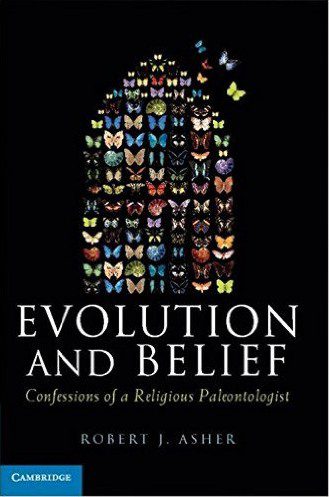 One of the common objections to evolutionary creation relates to the lack of evidence for macro-evolution as opposed to micro-evolution. Most people have no problem with evolution of a sort producing variation within species. Many will even accept the evolutionary formation of new closely related species (e.g. domestic dogs, wild dogs, wolves, foxes, jackals, and coyotes from a dog-like predecessor). But whales from even-toed ungulates (i.e. the group that includes pigs, camels, and hippos)? This strains credulity. The evidence for common descent, however, is powerful, buried in the bones and the genes. This is worth a closer look. Today I am going to start a series that looks more closely at the evidence, beginning with Robert Asher’s book Evolution and Belief: Confessions of a Religious Paleontologist. Dr. Robert Asher is Curator of Vertebrates in the Museum of Zoology at the University of Cambridge. His research focuses on the morphology and interrelationships of living and extinct mammals. His book provides a fascinating and quite readable explanation of the evidence for evolution, concentrating on examples in mammalian evolution (his area of expertise).
But what does this have to do with the virgin birth?
The first chapter of Evolution and Belief looks at the relationship between science and religion. Asher discusses such issues as agency and cause, methodological naturalism, and design. One of the examples that Asher uses is the virgin birth. His take on this is quite different from that of most evangelicals, but then Asher is not an evangelical, and like many he explicitly disavows the designation.
Robert Asher is not an atheist; he does not rule out the existence of the supernatural or spiritual. He is, as he describes himself, a religious paleontologist. He sees design in creation, but doesn’t see design and randomness as opposites.
The equations “purpose = God” and “randomness = atheism” are contingent upon some preconceived notion of order, and we humans have no choice but to understand “order” from our own desperately parochial perspective. The fact that we find it difficult to appreciate the creative power of apparent randomness does not mean that God suffers from this problem too. This very simple observation was made by Darwin in all six editions of the Origin: “We naturally infer that [complex organs have] been formed by a somewhat analogous process [to human design]. But may not this inference be presumptuous? Have we any right to assume that the Creator works by intellectual powers like those of man?”
… Recognizing that the “intelligence” of a creator applied to phenomena such as the origin of life or the cosmos – issues wholly beyond the scope of evolutionary biology – might work through techniques that resemble randomness to a human strikes me as perfectly reasonable, even if it is not amenable to rational (dis)proof. In contrast, requiring that God’s style of invention has to resemble our own, as do many creationists and atheists alike, seems extraordinarily presumptuous and vain. (p. 14)
At the end of the chapter he turns the discussion to miracles, and especially the miracle of the virgin birth of Jesus.
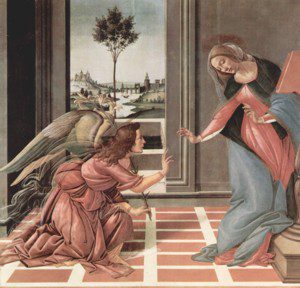 Matthew 1:18 relates the claim:
This is how the birth of Jesus the Messiah came about: His mother Mary was pledged to be married to Joseph, but before they came together, she was found to be pregnant through the Holy Spirit.
Joseph responds to Mary’s pregnancy by planning to divorce her and an angel in a dream reiterates the claim “what is conceived in her is from the Holy Spirit.” Luke 1:34-35 records Mary’s response when told she would conceive and give birth to a son, the Messiah.
“How will this be,” Mary asked the angel, “since I am a virgin?” The angel answered, “The Holy Spirit will come on you, and the power of the Most High will overshadow you. So the holy one to be born will be called the Son of God.
The very idea of a miraculous conception, that a virgin conceived and bore a son, hits a nerve in our secular Western society – both modern and postmodern. Frankly is it unscientific. Robert Asher does not see acceptance of the virgin birth as traditionally understood to be either reasonable or necessary. This doesn’t mean that he throws the Bible out. On the contrary he sees the gospels as basically trustworthy with much of of the New Testament (especially Paul’s letters and Mark’s gospel) written “well within the range of an oral tradition based on eyewitness accounts.” (p. 24) Asher’s reasoning about the virgin birth is rooted in his understanding of cause and effect in science.
However, does this enable me to believe in an actual human being born of a virgin? No it does not – at least not in a biological sense, which is how most people understand this question and how, therefore, I should answer it. Female humans do not give birth unless they have been inseminated. As he was a human being, I infer based on what I know of biology that Christ would have developed in His mother’s womb, from zygote to morula to embryo to fetus. … (p. 24)
Everything that I understand about human biology indicates that He, too, had a biological father. There is no doubt, however, that this father was perceived as divine by his followers. As a human being, of course Christ had a biological father; it is not rational to believe otherwise. … Simply stated, Christianity is my faith. It is not an unshakable faith, nor do I believe literally in many parts of the Bible. Indeed, much of the text of this chapter disqualifies me as a theist Christian by most evangelical standards. Nevertheless, Christianity seems to me a legitimate account of the agency behind life, and while the causes of life’s diversity are fascinating, they are not of immediate relevance to this faith. (p. 25)
This paragraph from Asher is rooted in a discussion of miracles, because the virgin birth, or more accurately virginal conception, if true in a biological sense, is a miracle. It is an intervention by God into the natural order. Jesus was fully human, therefore he carried DNA that came from two sources – male (he had a Y chromosome) and female (Mary’s we presume). If the male source didn’t come from Joseph in the usual way it had to come from somewhere. Whose DNA was it? Would it have traced to Joseph? Was it something else entirely synthesized by God for this purpose? Asher doesn’t bring this question up specifically, but he does focus in on the question of intervention. Rather than quote a large segment I will choose a few particularly pertinent sections:
Let me phrase this differently. Do I believe in miracles? If by “miracle” you mean a spontaneous failure of a natural law due to the contrary influence of some supernatural agency, then no. … However, this is not at all the same thing as denying the existence of a divinity, including the Christian sort. … The “do you believe in miracles?” question assumes an opposition between “nature” and “god” that is wholly our own fabrication, as if the two compete with one another for our attention. This question presumes a philosophy that the two things are independent, even antagonistic – but I don’t think they are. Rather one is an expression of the other. God cannot “intrude” into the normal operation of nature because, the way I see it, nature is a part of God; it represents God’s thought, or laws, in action. He cannot intrude upon himself. (p. 25-26)
Asher’s view of the virgin birth is shaped by his understanding of biology, of cause and effect, and by his view of God. There are scientific, philosophical, and theological reasons to question the traditional view of the virgin birth.
Another perspective. There are other ways to look at the issues surrounding the virgin birth though. The Rev. Dr. John Polkinghorne comes to a different conclusion in his short book Testing Scripture. Dr. Polkinghorne is a scientist, a theoretical physicist and Professor at Cambridge before he became an Anglican priest. He understands the scientific concepts of cause and effect. He takes Scripture seriously, but not with the assumptions of inerrancy common in American evangelicalism. Still, Dr. Polkinghorne accepts the virginal conception of Jesus.
Luke, very explicitly in his story of the Annunciation (1.34-35), and Matthew, more obliquely (1.18), both assert the virginal conception of Jesus. Christian tradition has attached great significance to this, often rather inaccurately calling it the ‘virgin birth’. Yet in the New Testament it seems nowhere as widely significant as the Resurrection. Paul is content to simply lay stress on Jesus’ solidarity with humanity: ‘God sent his Son, born of woman, born under the law’ (Galatians 4.4). The theological importance of the virginal conception lies in its lending emphasis to the presence of a total divine initiative in the coming of Jesus, even if this truth is much more frequently expressed by the New Testament writers simply in the language of his having been sent. Jesus was not opportunistically co-opted for God’s purpose when he was found to be suitable, but he was part of that purpose from the start. The virginal conception is a powerful myth, and I believe that in the religion of the Incarnation the power of story fuses with the power of a true story, so that the great Christian myths are enacted myths. On this basis, I find myself able to believe in the virgin birth, even if the motivating evidence is less extensive than for the belief in the Resurrection. (p. 68-69 Testing Scripture)
Interaction not Intervention. Robert Asher sees the virginal conception as proposing an intervention by God and rejects it on this basis. John Polkinghorne looks behind the statements at the reason for the story. One of the most important criterion for thinking through the incredible claims in scripture is God’s interaction with his creatures rather than his intervention in his creation. The miracles ring true when they enhance our understanding of the interaction of God with his people in divine self-revelation. The virginal conception is part of the Incarnation, “The Word became flesh and made his dwelling among us”. The magnificent early Christian hymns quoted by Paul in Col 1.15-20 and Phil 2.6-11 catch the essence of this enacted myth as well. Where did the male DNA come from? I rather expect that if we could do the genetic testing it would trace back to Joseph. After all, the Messiah comes from the house and lineage of David. The genealogies in Matthew and Luke both run from Joseph to David. But Jesus was not merely a man, “opportunistically co-opted for God’s purpose.” He is the Word become flesh.
It makes no sense to try to defend the virginal conception, the resurrection, or any of the other signs or miracles related in the New Testament, separate from the story of the Gospel, the life, death, and resurrection of Jesus as God’s Messiah. In the context of God’s mission within his creation the miracles make sense. Separate from this they will never make sense.
Is there an important distinction between intervention and interaction?
Why do you believe in the virginal conception? Or if you don’t, why not?
If you wish to contact me directly you may do so at rjs4mail[at]att.net.
If interested you can subscribe to a full text feed of my posts at Musings on Science and Theology.
Previous Post

December 10, 2015
Permission to Ponder
Next Post

December 11, 2015 Jesus Creed Books of the Year 2015
Browse Our Archives
Select a Category Acts of the Apostles Adam Advent Anabaptism Angels Anglican Apologetics Atonement Baptism BCP Prayers Bible Biblical Studies Birds Blogging Bloglossary Bonhoeffer Books Calvinism Christianity Church Church History Coffee Colossians Commentary Recs Conversion Creation Creeds Culture Death Ecclesiastes Economics Education Embracing Grace Emergent Emerging Movement Eschatology Essays Ethics Eucharist Evangelicalism Family Fasting Fathers Fellowship of Differents Footsteps Tour Fun and Whimsical Gospel Grace Happiness Heaven Hell Holy Spirit Irenaeus James Jesus Jesus Creed Job Justification Kingdom of God Law Lectures Lent Liberalism Love and Marriage Mabanteneni Manhood Mary Miracles Missio Alliance MissioLife Missional Missional Jesus Movies and Film New Perspective Northern Seminary OneLife Origins Project Orthodox Parables Pastor's Spouse Pastoring and Leading Pastoring and Preaching Patristics Paul Paul-John Tour Pharisees Pietism Political Theology Prayer and Formation Preaching Problems for Faith Psalm 119 Psalms Public Issues Purgatory Religions Resurrection Revelation Romans Rule of JCreed Science and Faith Sermon on the Mount Sports Ten Commandments Theology Third Way Top Ten Lists Translations Uncategorized Universalism University Ministry Way Out Weekly Meanderings Wisdom Women and Ministry Work Worship Writing & Blogging Youth Ministry
Select a Month July 2021 January 2020 December 2019 November 2019 October 2019 September 2019 August 2019 July 2019 June 2019 May 2019 April 2019 March 2019 February 2019 January 2019 December 2018 November 2018 October 2018 September 2018 August 2018 July 2018 June 2018 May 2018 April 2018 March 2018 February 2018 January 2018 December 2017 November 2017 October 2017 September 2017 August 2017 July 2017 June 2017 May 2017 April 2017 March 2017 February 2017 January 2017 December 2016 November 2016 October 2016 September 2016 August 2016 July 2016 June 2016 May 2016 April 2016 March 2016 February 2016 January 2016 December 2015 November 2015 October 2015 September 2015 August 2015 July 2015 June 2015 May 2015 April 2015 March 2015 February 2015 January 2015 December 2014 November 2014 October 2014 September 2014 August 2014 July 2014 June 2014 May 2014 April 2014 March 2014 February 2014 January 2014 December 2013 November 2013 October 2013 September 2013 August 2013 July 2013 June 2013 May 2013 April 2013 March 2013 February 2013 January 2013 December 2012 November 2012 October 2012 September 2012 August 2012 July 2012 June 2012 May 2012 April 2012 March 2012 February 2012 January 2012 December 2011 November 2011 October 2011 September 2011 August 2011 July 2011 June 2011 May 2011 April 2011 March 2011 February 2011 January 2011 December 2010 November 2010 October 2010 September 2010 August 2010 July 2010 June 2010 May 2010 April 2010 March 2010 February 2010 January 2010 December 2009 November 2009 October 2009 September 2009 August 2009 July 2009 June 2009 May 2009 April 2009 March 2009 February 2009 January 2009 December 2008 November 2008 October 2008 September 2008 August 2008 July 2008 June 2008 May 2008 April 2008 March 2008 February 2008 January 2008 December 2007 November 2007 October 2007 September 2007 August 2007 July 2007 June 2007 May 2007 April 2007 March 2007 February 2007 January 2007 December 2006 November 2006 October 2006 September 2006 August 2006 July 2006 June 2006 May 2006 April 2006 March 2006 February 2006 January 2006 December 2005 November 2005 October 2005 September 2005 August 2005 July 2005 June 2005 May 2005 April 2005 0000
Follow Us!
TAKE THE
Religious Wisdom Quiz
What was the name of the place where bitter water was made sweet?
Select your answer to see how you score.
Sinai Rephidim Elim Marah
Related posts from Jesus Creed


The Gospel of With Us and Through Us

Northern Seminary Announces: Nijay Gupta Joins Faculty

The Gundrys and Me: Ruth Tucker
TRENDING AT PATHEOS Evangelical

When you hear the word riches, what comes to mind? For most...

Don’t Miss the Parents: A Creative Christmas Meditation
As we enter the Advent Season, I see many people trying to...

Making Stones Into Bread: Choosing the “Right” Work
I was on my online arts ministry Zoom meeting with the International...

Ukraine’s exhausted Christians face fifth winter of war
By Julian Lukins The full-scale war in Ukraine is taking “a serious...

Russell Brand's Conviction is not anti-Christian Persecution
How do we shed the reputation that the Church is OK with...

Have you ever caught yourself saying, “I’ll do it tomorrow,” or “Now...
view all Evangelical blogs
Ad-Free & Subscriber Log-In Subscription Support
- About Us
- 2026 Calendar
- Videos
- Podcasts
- Library of World Religions
- Faith In Media Tracker
- Advertise With Us
- Write for Us
- Privacy Policy
- Terms of Service
- Do Not Sell My Data
- Contact Us
- Radiant Digital
- Manage Newsletter Subscriptions
- Unsubscribe From Notifications
- Sitemap
Copyright 2008-2026, Patheos, part of the Radiant Digital network of media brands. All rights reserved.
Subscription Support Ad-Free & Subscriber Log-In
Follow Patheos