
BuddhistCatholicContemplativeEvangelicalGeneral ChristianHinduJewishLatter-day SaintMuslimNew VisionsProgressive Christian
Beliefs
- Buddhist
- Catholic
- Contemplative
- Evangelical
- General Christian
- Hindu
- Jewish
- Latter-day Saint
- More Voices
- Muslim
- New Visions
- Pagan
- Progressive Christian
Topics
- Religion News
- Food and Religion
- Sports and Religion
- Religious Art
- Religious Music and Entertainment
- Religious Events
- History and Religion
- Style and Religion
- Politics and Religion
- Women in Religion
- Recreation Outdoors and Religion
- Business Finance and Religion
- Careers Workplace and Religion
- Education and Religion
- Family Parenting and Religion
- Health Fitness and Religion
- Home and Religion
- Relationships and Religion
- Technology and Religion
- Travel and Religion
Columnists
- Buddhist Columnists
- Business Finance and Religion Columnists
- Careers Workplace and Religion Columnists
- Catholic Columnists
- Contemplative Columnists
- Education and Religion Columnists
- Evangelists Columnists
- Family Parenting and Religion Columnists
- General Christian Columnists
- Health Fitness and Religion Columnists
- Hindu Columnists
- History and Religion Columnists
- Home and Religion Columnists
- Jewish Columnists
- More Voices Columnists
- Latter Day Columnists
- Muslim Columnists
- New Visions Columnists
- Nonreligious Columnists
- Pagan Columnists
- Politics and Religion Columnists
- Progressive Columnists
- Recreation Outdoors and Religion Columnists
- Relationships and Religion Columnists
- Religion News Columnists
- Religious Art Columnists
- Religious Events Columnists
- Religious Music and Entertainment Columnists
- Sports and Religion Columnists
- Style and Religion Columnists
- Technology and Religion Columnists
- Travel and Religion Columnists
- Women in Religion Columnists
Resource Library
- 2026 Calendar
- Library of World Religions
- The 100 Most Holy Places on Earth
- Patheos Answers
- Podcasts
- Videos
- Faith Leaders Database
- Anglican Episcopalian
- Bahai
- Baptist
- Buddhism
- Christianity
- Confucianism
- Eastern Orthodoxy
- Hinduism
- Holiness and Pentecostal
- ISKCON
- Islam
- Judaism
- Lutheran
- Methodist
- The Church of Jesus Christ of Latter-day Saints
- New Age
- Paganism
- Presbytarian and Reformed
- Protestantism
- Religion Behind the Scenes
- Roman Catholic
- Scientology
- Shia Islam
- Sikhism
- Sufism
- Sunni Islam
- Taoism
- Zen
- See all religions
Research Tools
 Ad-Free & Subscriber Log-In Subscription Support
Follow Patheos 

- Trending:
- Advent
- |
- Forgiveness
- |
- Thanksgiving
- |
- Election
- |
- Seasonal Holidays
- |
- Marriage
 Jesus Creed
- Home
- Evangelical
- A Proposed Model for Egalitarians: An Honest Tension
A Proposed Model for Egalitarians: An Honest Tension
Last updated on: October 27, 2015 at 12:06 am by Scot McKnight
A Proposed Model for Egalitarians: An Honest Tension 2015-10-25T14:49:39-05:00 Scot McKnight
Patheos Explore the world's faith through different perspectives on religion and spirituality! Patheos has the views of the prevalent religions and spiritualities of the world.
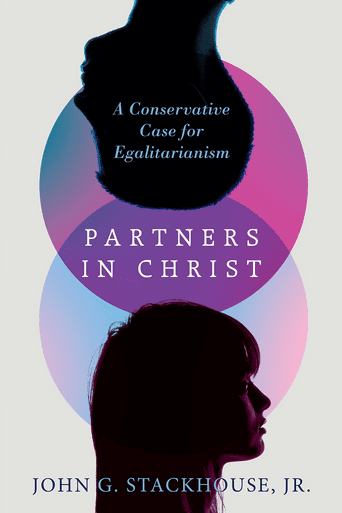 We think with and inside models or theories. What does a model of egalitarianism look like? John Stackhouse proposes a model in his new book Partners in Christ: A Conservative Case for Egalitarianism.
Before we get to his model, a point about method: we can construct a model on the inductive method by examining all the bits and pieces and theories or we can enter into a model with the expectation of challenging a model by examining the evidence and the counter theories. Stackhouse proposes that model, and I have to say that this is the way most of us think about most topics. Think about how we think about politics or economics: how many of us have examined the facts and the theories vs. how many of us have a theory and the modify it as life takes us on its journey?
Here are two approaches to his model. After growing up in a conservative complementarian and patriarchal model, Stackhouse’s mind changed over time into an egalitarian model. Thus, he begins with what life presented to him:
I did not want to think that the Bible was hard to understand about gender, however. I wanted to think simply and clearly about it. In particular, I wanted to be a feminist all the way (back before feminist became the “f-word” that no decent person would use in public). I believed in women and men as coequal partners before God, bearers together of God’s image, with no job or role or responsibility closed to either of them except where sheer biology dictated that only one sex could bear children. This simple position made the most sense of the world around me, made the most sense of my experiences of capable women both within and outside the church, and made the most sense of my relationship with my wife. But an egalitarian position did not make the most sense of the tradition of the church, and neither did it square with a number of Bible verses that seemed forthrightly to forbid a woman from exercising coequal leadership in the family or the congregation (44).
So he articulates his model in these terms:
I propose, then, a paradigm of gender that does, indeed, draw no lines between men and women as to role in home, church, or society— beyond those required by biology (45).
But this must be examined and challenged at places. So he begins with equality. He states the proposal this way:
There are lots of scriptural clues, therefore, to indicate that the egalitarians are right: God originally intended women and men to be coequal partners in stewarding the earth, without one being subordinate to the other, and God has never rescinded that mandate. Indeed, in God’s renewal of all things, in his great salvation plan to restore shalom, men and women will treat each other as they were intended to treat each other—and we already see this renewed order in the inbreaking of the kingdom evident in the New Testament (48).
But he is willing to let this be challenged in the following considerations, and I call this Stackhouse’s honest tension:
First, the testimony of most of the Bible—from Genesis 3 until the last epistles of the New Testament—bespeaks an overwhelming pattern of patriarchy. Men are in charge, and they are supposed to be in charge, for almost all of the Bible.
Second, God depicts his own relationship with Israel, and then Christ’s with the church, in terms of a patriarchal marriage of nonequals.
Third, Jesus did indeed welcome women into his circle of disciples—but not his inner circle.
For his part, Paul does recognize and affirm women’s service to the church. But he also expressly forbids (at least some) women to teach or have authority over (at least some) men (at least sometimes).
Good models consider it all; the best models consider it all in the best way. Stackhouse will move in the rest of this book with that model and these tensions.
The strategy is one of divine accommodation to the human condition for the sake of the gospel mission but, in light of the inbreaking of the kingdom of God, we are to see the kingdom over time to begin to be seen more and more. He states this in a question:
What would our understanding of gender look like, however, if we took the “already, but not yet” principle seriously? What if we were to expect, instead of one extreme or the other, an appropriately paradoxical situation: a slow and partial realization of gospel values here and there, as God patiently and carefully works his mysterious ways along the multiple fronts of kingdom advance? (55)
Here is an example of what this looks like:
I suggest that Paul is guided by the Holy Spirit—even used by the Holy Spirit perhaps without his full awareness of the implications—to do two good things simultaneously: (1) to give the church prudent instruction as to how to survive and thrive in a patriarchal culture that he thinks won’t last long; and also (2) to maintain and promote the egalitarian teaching that is evident throughout the Bible and dynamic particularly in the career of Jesus and that in the right circumstances will leave gender lines behind (67).
And this:
when society was patriarchal, as it was in the New Testament context and as it has been everywhere in the world except in modern society in our day, then the church avoided scandal by going along with patriarchy, even as the Bible ameliorated it and made women’s situation better than it was under any other culture’s gender code. Now, however, that our modern society is at least officially egalitarian, the scandal (ironically enough) is that the church is not going along with society, not rejoicing in the unprecedented freedom to let women and men serve according to gift and call without an arbitrary gender line. This scandal of keeping women subordinate to men impedes both the evangelism of others and the edification—the retention and development of faith—of those already converted (71).
Patriarchy, then, for him is a divine accommodation and not the will of God. This is seen in the parallel to slavery.
So he comes to this conclusion about his model, to accommodation, and to a redemptive movement in history:
the fundamental practical question today is this: What is God calling Christians to do in regard to gender when society itself shifts to egalitarianism? I am arguing that there no longer remains any rationale for the woman to remain in the once expected role of dependence and submission—just as there isn’t any rationale for the grown-up child to keep acting as if he requires his parents’ direction as he did when he was little. When, under the providence of God and the ongoing, spreading influence of kingdom values, society opens up to the abolition of slavery or the emancipation of women, then Christians can rejoice and, indeed, be in the vanguard of such change—as we have been in both causes. The dark irony remains today, I repeat, precisely in Christians lagging behind society and still requiring a submissive role for women—a posture that now is a scandalous mirror image of the scandal that egalitarianism would have caused in the patriarchal first century (91).
Previous Post

October 26, 2015
Charles Colson: Culture Warrior?
Next Post
October 27, 2015 That is Wisdom! (RJS)
Browse Our Archives
Select a Category Acts of the Apostles Adam Advent Anabaptism Angels Anglican Apologetics Atonement Baptism BCP Prayers Bible Biblical Studies Birds Blogging Bloglossary Bonhoeffer Books Calvinism Christianity Church Church History Coffee Colossians Commentary Recs Conversion Creation Creeds Culture Death Ecclesiastes Economics Education Embracing Grace Emergent Emerging Movement Eschatology Essays Ethics Eucharist Evangelicalism Family Fasting Fathers Fellowship of Differents Footsteps Tour Fun and Whimsical Gospel Grace Happiness Heaven Hell Holy Spirit Irenaeus James Jesus Jesus Creed Job Justification Kingdom of God Law Lectures Lent Liberalism Love and Marriage Mabanteneni Manhood Mary Miracles Missio Alliance MissioLife Missional Missional Jesus Movies and Film New Perspective Northern Seminary OneLife Origins Project Orthodox Parables Pastor's Spouse Pastoring and Leading Pastoring and Preaching Patristics Paul Paul-John Tour Pharisees Pietism Political Theology Prayer and Formation Preaching Problems for Faith Psalm 119 Psalms Public Issues Purgatory Religions Resurrection Revelation Romans Rule of JCreed Science and Faith Sermon on the Mount Sports Ten Commandments Theology Third Way Top Ten Lists Translations Uncategorized Universalism University Ministry Way Out Weekly Meanderings Wisdom Women and Ministry Work Worship Writing & Blogging Youth Ministry
Select a Month July 2021 January 2020 December 2019 November 2019 October 2019 September 2019 August 2019 July 2019 June 2019 May 2019 April 2019 March 2019 February 2019 January 2019 December 2018 November 2018 October 2018 September 2018 August 2018 July 2018 June 2018 May 2018 April 2018 March 2018 February 2018 January 2018 December 2017 November 2017 October 2017 September 2017 August 2017 July 2017 June 2017 May 2017 April 2017 March 2017 February 2017 January 2017 December 2016 November 2016 October 2016 September 2016 August 2016 July 2016 June 2016 May 2016 April 2016 March 2016 February 2016 January 2016 December 2015 November 2015 October 2015 September 2015 August 2015 July 2015 June 2015 May 2015 April 2015 March 2015 February 2015 January 2015 December 2014 November 2014 October 2014 September 2014 August 2014 July 2014 June 2014 May 2014 April 2014 March 2014 February 2014 January 2014 December 2013 November 2013 October 2013 September 2013 August 2013 July 2013 June 2013 May 2013 April 2013 March 2013 February 2013 January 2013 December 2012 November 2012 October 2012 September 2012 August 2012 July 2012 June 2012 May 2012 April 2012 March 2012 February 2012 January 2012 December 2011 November 2011 October 2011 September 2011 August 2011 July 2011 June 2011 May 2011 April 2011 March 2011 February 2011 January 2011 December 2010 November 2010 October 2010 September 2010 August 2010 July 2010 June 2010 May 2010 April 2010 March 2010 February 2010 January 2010 December 2009 November 2009 October 2009 September 2009 August 2009 July 2009 June 2009 May 2009 April 2009 March 2009 February 2009 January 2009 December 2008 November 2008 October 2008 September 2008 August 2008 July 2008 June 2008 May 2008 April 2008 March 2008 February 2008 January 2008 December 2007 November 2007 October 2007 September 2007 August 2007 July 2007 June 2007 May 2007 April 2007 March 2007 February 2007 January 2007 December 2006 November 2006 October 2006 September 2006 August 2006 July 2006 June 2006 May 2006 April 2006 March 2006 February 2006 January 2006 December 2005 November 2005 October 2005 September 2005 August 2005 July 2005 June 2005 May 2005 April 2005 0000
Follow Us!
TAKE THE
Religious Wisdom Quiz
Who was the first Nazarite?
Select your answer to see how you score.
Samson David Samuel Eli
Related posts from Jesus Creed

Do Egalitarians Take the Bible Seriously?

Women and People of Color in Academia


TRENDING AT PATHEOS Evangelical

Making Stones Into Bread: Choosing the “Right” Work
I was on my online arts ministry Zoom meeting with the International...

Ukraine’s exhausted Christians face fifth winter of war
By Julian Lukins The full-scale war in Ukraine is taking “a serious...

Russell Brand's Conviction is not anti-Christian Persecution
How do we shed the reputation that the Church is OK with...

Have you ever caught yourself saying, “I’ll do it tomorrow,” or “Now...

Write Your Story: A Great Way to Find...
A few month’s back, my son was scrolling around Facebook and saw...

Throughout history, people have pursued pleasure, possessions, relationships, and success in an...
view all Evangelical blogs
Ad-Free & Subscriber Log-In Subscription Support
- About Us
- 2026 Calendar
- Videos
- Podcasts
- Library of World Religions
- Faith In Media Tracker
- Advertise With Us
- Write for Us
- Privacy Policy
- Terms of Service
- Do Not Sell My Data
- Contact Us
- Radiant Digital
- Manage Newsletter Subscriptions
- Unsubscribe From Notifications
- Sitemap
Copyright 2008-2026, Patheos, part of the Radiant Digital network of media brands. All rights reserved.
Subscription Support Ad-Free & Subscriber Log-In
Follow Patheos