
BuddhistCatholicContemplativeEvangelicalGeneral ChristianHinduJewishLatter-day SaintMuslimNew VisionsProgressive Christian
Beliefs
- Buddhist
- Catholic
- Contemplative
- Evangelical
- General Christian
- Hindu
- Jewish
- Latter-day Saint
- More Voices
- Muslim
- New Visions
- Pagan
- Progressive Christian
Topics
- Religion News
- Food and Religion
- Sports and Religion
- Religious Art
- Religious Music and Entertainment
- Religious Events
- History and Religion
- Style and Religion
- Politics and Religion
- Women in Religion
- Recreation Outdoors and Religion
- Business Finance and Religion
- Careers Workplace and Religion
- Education and Religion
- Family Parenting and Religion
- Health Fitness and Religion
- Home and Religion
- Relationships and Religion
- Technology and Religion
- Travel and Religion
Columnists
- Buddhist Columnists
- Business Finance and Religion Columnists
- Careers Workplace and Religion Columnists
- Catholic Columnists
- Contemplative Columnists
- Education and Religion Columnists
- Evangelists Columnists
- Family Parenting and Religion Columnists
- General Christian Columnists
- Health Fitness and Religion Columnists
- Hindu Columnists
- History and Religion Columnists
- Home and Religion Columnists
- Jewish Columnists
- More Voices Columnists
- Latter Day Columnists
- Muslim Columnists
- New Visions Columnists
- Nonreligious Columnists
- Pagan Columnists
- Politics and Religion Columnists
- Progressive Columnists
- Recreation Outdoors and Religion Columnists
- Relationships and Religion Columnists
- Religion News Columnists
- Religious Art Columnists
- Religious Events Columnists
- Religious Music and Entertainment Columnists
- Sports and Religion Columnists
- Style and Religion Columnists
- Technology and Religion Columnists
- Travel and Religion Columnists
- Women in Religion Columnists
Resource Library
- 2026 Calendar
- Library of World Religions
- The 100 Most Holy Places on Earth
- Patheos Answers
- Podcasts
- Videos
- Faith Leaders Database
- Anglican Episcopalian
- Bahai
- Baptist
- Buddhism
- Christianity
- Confucianism
- Eastern Orthodoxy
- Hinduism
- Holiness and Pentecostal
- ISKCON
- Islam
- Judaism
- Lutheran
- Methodist
- The Church of Jesus Christ of Latter-day Saints
- New Age
- Paganism
- Presbytarian and Reformed
- Protestantism
- Religion Behind the Scenes
- Roman Catholic
- Scientology
- Shia Islam
- Sikhism
- Sufism
- Sunni Islam
- Taoism
- Zen
- See all religions
Research Tools
 Ad-Free & Subscriber Log-In Subscription Support
Follow Patheos 

- Trending:
- Advent
- |
- Forgiveness
- |
- Thanksgiving
- |
- Election
- |
- Seasonal Holidays
- |
- Marriage
 Jesus Creed
- Home
- Evangelical
- LT Johnson and John Paul II’s Theology of the Body
LT Johnson and John Paul II’s Theology of the Body
Last updated on: September 29, 2015 at 12:02 am by Scot McKnight
LT Johnson and John Paul II’s Theology of the Body 2015-09-26T15:57:49-05:00 Scot McKnight
Patheos Explore the world's faith through different perspectives on religion and spirituality! Patheos has the views of the prevalent religions and spiritualities of the world.
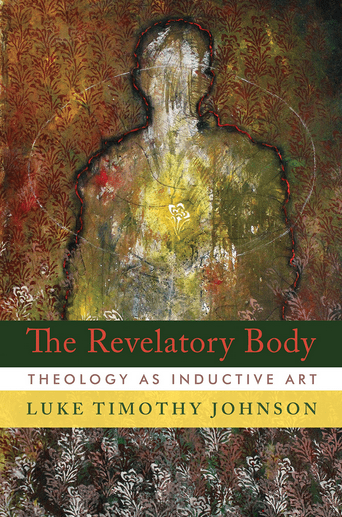 Luke Timothy Johnson, in his new theology of embodied experience (The Revelatory Body), begins what he calls “The Way Not Taken: A Disembodied Theology of the Body.” He does by taking on the late John Paul II. His aim is to show that if embodied experience is revelatory and part of theology, then the late pope’s theology of the body and sexuality proves to be source for this discussion. Johnson, as will become clear in this book, thinks revelation continues into the present through the Spirit and the church’s discernment.
Here is Johnson’s opening:
Among the many books available that in one way or another call themselves theologies of the body, perhaps the most notable is the collection of conferences delivered at papal audiences by the late (and now Saint) John Paul II, published as Theology of the Body: Human Love in the Divine Plan. Appearing with such a title, under the name of the (then) sitting leader of Christianity’s largest denomination, the book was bound to attract attention, and it did, especially among conservative Roman Catholics, who have greeted all papal teaching on sexuality with extravagant praise (21).
He points his finger at Charles J. Chaput, Janet Smith, Jennifer Popiel and especially at George Weigel. Johnson’s assessment?
Indeed, I regard the pope’s effort as exemplifying precisely the wrong kind of approach to the mystery of human embodiedness. … But his effort in this book falls far short of adequate theological thinking on the subject of the human body as the arena of God’s self-disclosure. The pope’s book is inadequate, not in the obvious way that all theology is inadequate to speak of God (and should therefore exhibit intellectual modesty), but in the sense that it simply does not engage what ought most to be engaged in a theology of the body. Because of its theological weakness, the pope’s teaching does not really respond to the anxieties of those who, seeking a Christian understanding of the body and of human sexuality, look for practical guidance for their lives as sexually active adults (23).
Johnson thinks JP2 focused love too much on sex and body too much on sexual love to be a theology of the body. In fact, “The topic of human love in all its dimensions has been wonderfully explored by the world’s literature, but none of its grandeur or giddiness appears in these talks, which remain at a level of abstraction far removed from novels and newspapers that carry stories of love among people who look and act like us” (24). He denounces him even more forcefully:
In the pope’s formulations, though, human sexuality is observed by telescope from a distant planet. Solemn pronouncements are made on the basis of scriptural exegesis rather than living experience. The effect is something like that of a sunset painted by the unsighted (24-25).
Johnson thinks JP2’s scripture exegesis flat and uncritical and incomplete. E.g., he should have looked more at Song of Songs, more at Tobit, more at 1 Cor 7 as well as at the texts of terror in the Bible. His exegesis of Gen 1 and 2 led JP2 to an overfocus on males and an underfocus on women, who are also sexual beings. If the former pope wants to approach things with phenomenology, as JP2 says, then he needs at least to deal with same sex orientation and homosexuality (27). He reduces, too, to transmission of life — love is sex and sex is for reproduction. [Interestingly enough, I find a similar lack of comprehensive biblical theology in many conservative evangelicalsm — I’m thinking of both Piper’s and the Kellers’ books, who also should have looked more at Song of Songs, etc..]
Johnson thinks JP2 left out things: the mystery of the human body is unacknowledged and masked by confident knowledge. We are implicated in our bodies but don’t comprehend ourselves well enough. He focuses too much on control, Johnson contends. JP2 doesn’t value embodied pleasure sufficiently. “In papal teaching, sexual passion and pleasure appear primarily as an obstacle to authentic love. But many of us have experienced sexual passion and pleasure as both humbling and liberating, a means through which our bodies know better and more quickly than our minds, choose better and faster than our reluctant wills, even get us to where God apparently wants us in a way our calculating minds never could” (29).
Behind JP2’s Theology of the Body was Paul VI’s Humanae Vitae, an encyclical designed to fight artificial birth control. Johnson goes after Paul VI’s encyclical as well: “a regression in moral reasoning” (31), “sacrifice logic to a rhetorical brinkmanship” (32 [birth control = abortion], “pervasive sexism” (32), “absolute prohibition of artificial birth control becomes increasingly scandalous in the face of massive medical realities” (33), and Humanae Vitae, Johnson argues, should be revisited rather than defended. The document was produced against the discernment of those around Paul VI.
Johnson:
Our reading of Scripture must indeed shape our perceptions of the world, but our understanding of Scripture must, in turn, be reshaped by our experience of God in our mortal bodies, in the fabric of our human freedom and in the cosmic play of God’s freedom. . Theology that takes the self-disclosure of God in human experience — in the bodies of actual women and men — with the same seriousness as it does God’s revelation in Scripture does not turn its back on tradition, but recognizes that tradition must constantly be renewed by the powerful leading of the Holy Spirit if it is not to become a form of idolatry, a falsification of the Living God (34-35).
Previous Post

September 28, 2015
Is there a CSA near you?
Next Post
September 29, 2015 Forget the Fish Already! (RJS)
Browse Our Archives
Select a Category Acts of the Apostles Adam Advent Anabaptism Angels Anglican Apologetics Atonement Baptism BCP Prayers Bible Biblical Studies Birds Blogging Bloglossary Bonhoeffer Books Calvinism Christianity Church Church History Coffee Colossians Commentary Recs Conversion Creation Creeds Culture Death Ecclesiastes Economics Education Embracing Grace Emergent Emerging Movement Eschatology Essays Ethics Eucharist Evangelicalism Family Fasting Fathers Fellowship of Differents Footsteps Tour Fun and Whimsical Gospel Grace Happiness Heaven Hell Holy Spirit Irenaeus James Jesus Jesus Creed Job Justification Kingdom of God Law Lectures Lent Liberalism Love and Marriage Mabanteneni Manhood Mary Miracles Missio Alliance MissioLife Missional Missional Jesus Movies and Film New Perspective Northern Seminary OneLife Origins Project Orthodox Parables Pastor's Spouse Pastoring and Leading Pastoring and Preaching Patristics Paul Paul-John Tour Pharisees Pietism Political Theology Prayer and Formation Preaching Problems for Faith Psalm 119 Psalms Public Issues Purgatory Religions Resurrection Revelation Romans Rule of JCreed Science and Faith Sermon on the Mount Sports Ten Commandments Theology Third Way Top Ten Lists Translations Uncategorized Universalism University Ministry Way Out Weekly Meanderings Wisdom Women and Ministry Work Worship Writing & Blogging Youth Ministry
Select a Month July 2021 January 2020 December 2019 November 2019 October 2019 September 2019 August 2019 July 2019 June 2019 May 2019 April 2019 March 2019 February 2019 January 2019 December 2018 November 2018 October 2018 September 2018 August 2018 July 2018 June 2018 May 2018 April 2018 March 2018 February 2018 January 2018 December 2017 November 2017 October 2017 September 2017 August 2017 July 2017 June 2017 May 2017 April 2017 March 2017 February 2017 January 2017 December 2016 November 2016 October 2016 September 2016 August 2016 July 2016 June 2016 May 2016 April 2016 March 2016 February 2016 January 2016 December 2015 November 2015 October 2015 September 2015 August 2015 July 2015 June 2015 May 2015 April 2015 March 2015 February 2015 January 2015 December 2014 November 2014 October 2014 September 2014 August 2014 July 2014 June 2014 May 2014 April 2014 March 2014 February 2014 January 2014 December 2013 November 2013 October 2013 September 2013 August 2013 July 2013 June 2013 May 2013 April 2013 March 2013 February 2013 January 2013 December 2012 November 2012 October 2012 September 2012 August 2012 July 2012 June 2012 May 2012 April 2012 March 2012 February 2012 January 2012 December 2011 November 2011 October 2011 September 2011 August 2011 July 2011 June 2011 May 2011 April 2011 March 2011 February 2011 January 2011 December 2010 November 2010 October 2010 September 2010 August 2010 July 2010 June 2010 May 2010 April 2010 March 2010 February 2010 January 2010 December 2009 November 2009 October 2009 September 2009 August 2009 July 2009 June 2009 May 2009 April 2009 March 2009 February 2009 January 2009 December 2008 November 2008 October 2008 September 2008 August 2008 July 2008 June 2008 May 2008 April 2008 March 2008 February 2008 January 2008 December 2007 November 2007 October 2007 September 2007 August 2007 July 2007 June 2007 May 2007 April 2007 March 2007 February 2007 January 2007 December 2006 November 2006 October 2006 September 2006 August 2006 July 2006 June 2006 May 2006 April 2006 March 2006 February 2006 January 2006 December 2005 November 2005 October 2005 September 2005 August 2005 July 2005 June 2005 May 2005 April 2005 0000
Follow Us!
TAKE THE
Religious Wisdom Quiz
Who lived in Ur of the Chaldeans before God called him?
Select your answer to see how you score.
Jacob Lot Isaac Abram
Related posts from Jesus Creed


The Gospel of With Us and Through Us

Northern Seminary Announces: Nijay Gupta Joins Faculty

The Gundrys and Me: Ruth Tucker
TRENDING AT PATHEOS Evangelical

When you hear the word riches, what comes to mind? For most...

Don’t Miss the Parents: A Creative Christmas Meditation
As we enter the Advent Season, I see many people trying to...

Making Stones Into Bread: Choosing the “Right” Work
I was on my online arts ministry Zoom meeting with the International...

Ukraine’s exhausted Christians face fifth winter of war
By Julian Lukins The full-scale war in Ukraine is taking “a serious...

Russell Brand's Conviction is not anti-Christian Persecution
How do we shed the reputation that the Church is OK with...

Have you ever caught yourself saying, “I’ll do it tomorrow,” or “Now...
view all Evangelical blogs
Ad-Free & Subscriber Log-In Subscription Support
- About Us
- 2026 Calendar
- Videos
- Podcasts
- Library of World Religions
- Faith In Media Tracker
- Advertise With Us
- Write for Us
- Privacy Policy
- Terms of Service
- Do Not Sell My Data
- Contact Us
- Radiant Digital
- Manage Newsletter Subscriptions
- Unsubscribe From Notifications
- Sitemap
Copyright 2008-2026, Patheos, part of the Radiant Digital network of media brands. All rights reserved.
Subscription Support Ad-Free & Subscriber Log-In
Follow Patheos