
BuddhistCatholicContemplativeEvangelicalGeneral ChristianHinduJewishLatter-day SaintMuslimNew VisionsProgressive Christian
Beliefs
- Buddhist
- Catholic
- Contemplative
- Evangelical
- General Christian
- Hindu
- Jewish
- Latter-day Saint
- More Voices
- Muslim
- New Visions
- Pagan
- Progressive Christian
Topics
- Religion News
- Food and Religion
- Sports and Religion
- Religious Art
- Religious Music and Entertainment
- Religious Events
- History and Religion
- Style and Religion
- Politics and Religion
- Women in Religion
- Recreation Outdoors and Religion
- Business Finance and Religion
- Careers Workplace and Religion
- Education and Religion
- Family Parenting and Religion
- Health Fitness and Religion
- Home and Religion
- Relationships and Religion
- Technology and Religion
- Travel and Religion
Columnists
- Buddhist Columnists
- Business Finance and Religion Columnists
- Careers Workplace and Religion Columnists
- Catholic Columnists
- Contemplative Columnists
- Education and Religion Columnists
- Evangelists Columnists
- Family Parenting and Religion Columnists
- General Christian Columnists
- Health Fitness and Religion Columnists
- Hindu Columnists
- History and Religion Columnists
- Home and Religion Columnists
- Jewish Columnists
- More Voices Columnists
- Latter Day Columnists
- Muslim Columnists
- New Visions Columnists
- Nonreligious Columnists
- Pagan Columnists
- Politics and Religion Columnists
- Progressive Columnists
- Recreation Outdoors and Religion Columnists
- Relationships and Religion Columnists
- Religion News Columnists
- Religious Art Columnists
- Religious Events Columnists
- Religious Music and Entertainment Columnists
- Sports and Religion Columnists
- Style and Religion Columnists
- Technology and Religion Columnists
- Travel and Religion Columnists
- Women in Religion Columnists
Resource Library
- 2026 Calendar
- Library of World Religions
- The 100 Most Holy Places on Earth
- Patheos Answers
- Podcasts
- Videos
- Faith Leaders Database
- Anglican Episcopalian
- Bahai
- Baptist
- Buddhism
- Christianity
- Confucianism
- Eastern Orthodoxy
- Hinduism
- Holiness and Pentecostal
- ISKCON
- Islam
- Judaism
- Lutheran
- Methodist
- The Church of Jesus Christ of Latter-day Saints
- New Age
- Paganism
- Presbytarian and Reformed
- Protestantism
- Religion Behind the Scenes
- Roman Catholic
- Scientology
- Shia Islam
- Sikhism
- Sufism
- Sunni Islam
- Taoism
- Zen
- See all religions
Research Tools
 Ad-Free & Subscriber Log-In Subscription Support
Ad-Free & Subscriber Log-In Subscription Support
Follow Patheos 

- Trending:
- Forgiveness
- |
- Marriage
- |
- Consciousness
- |
- Death Penalty
- |
- Election
- |
- Halloween
 Jesus Creed
- Home
- Evangelical
- I Wish Pastors Knew … Part 2 (RJS)
I Wish Pastors Knew … Part 2 (RJS)
Last updated on: September 24, 2015 at 6:50 am by RJS
I Wish Pastors Knew … Part 2 (RJS) 2015-09-24T06:50:02-05:00 RJS
Patheos Explore the world's faith through different perspectives on religion and spirituality! Patheos has the views of the prevalent religions and spiritualities of the world.
 In his first letter to the Corinthians Paul includes the oft quoted statement “I have become all things to all people so that by all possible means I might save some.” (9:22) One application of this and the surrounding context is the need to meet people where they are. In order to do meet people where they are it is necessary to make the effort to understand the contexts in which people live and the ways in which they think. There are a multitude of ways this can play out, and it will be different for an inner city church, a rural church, or a suburban church.
As an academic and a scientist in a community dominated by a local University this need to meet people where they are is something I have pondered often. In this environment, a church or a pastor that desires to make an impact beyond undergraduate students could be well advised to understand the academic environment, the way academics think, and the experience of academics in Christian communities.
J. Aaron Simmons put up a pair of posts at Seminarium recently, Seven Things I Wish All Pastors Knew About Academics—Part 1 and Part 2. This isn’t intended as a criticism, or some statement of superiority. It is a desire for understanding. Aaron’s list focuses particularly on the experience of Christians in Christian communities, but some (especially 3 and 4) are equally important for outreach. Some items on Simmons’ list are not as relevant for scientists as for social scientists or humanists (Simmons is a philosopher), but they are all worth some discussion. You can read Aaron’s posts in their entirety at the links above. I will summarize the list including a few select quotes and add a few comments of my own.
1) Academics, as academics, are not pastors—and we are not trying to be.
“Often confusion and mistrust result from the suspicion that academics are threatening to the office of the pastor. This is unfortunate and rarely grounded in reality. Academics should be threatening to sloppy thinking, falsehood, unjustified assertions, and resistance to critique, but these are all things that pastors should seek to avoid as well. Indeed, if pastors saw academics as resources in the way that they see coaches, business owners, and civic leaders, then the life of the mind and the life of faith might be more commonly integrated in churches.”
2) Academics generally understand that disagreement does not imply disunity.
3) Appeals to “non-negotiables” are often problematic for academics due to a general comfort with ambiguity.
4) Asking critical questions is a primary way in which academics build relationships.
“Accordingly, asking critical questions is a sign of taking something seriously and, hence, of wanting further engagement with it. Too often pastors assume that asking such questions is a sign of arrogance or unbelief.”
5) Academics have “gifts” too.
6) Like most people, academics don’t like being stereotyped.
“Christians often protest against the stereotypical ways in which they are presented in popular culture. Similarly, academics don’t like being stereotyped by Christians as simply being liberal atheists who are dangerous to the spiritual life of those who would be swayed by our influence.”
7) Many academics realize that the life of the mind and the life of faith are not at odds.
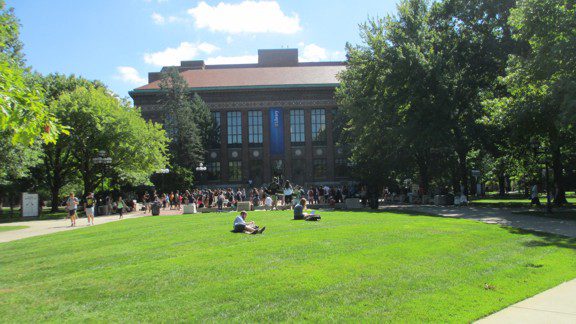 There are some points that Simmons makes that I disagree with, or would argue differently. But this is OK (disagreement doesn’t imply disunity). Sometimes it is simply that my perspective as a scientist in a secular university differs from his perspective as a philosopher of religion. Sometimes though, I wonder if it is because we have a slightly different view of Christian faith. I think that there are some things that are “non-negotiables” in the Christian faith, not because they can’t be questioned or shouldn’t be explored, but because if one moves in certain directions one is no longer a Christian. Of course, the only way one learns what is truly “non-negotiable” is by asking critical questions and digging into the how and why. In the sciences there are certainly things that become “non-negotiables” simply because the arguments are so strong.
There are three specific points I’d like to comment on and then move into discussion.
The first point is critical. Pastoring well is a hard job requiring a skill set that most academics don’t have. I know that I have not the patience, energy, or people skill for it myself. I’d much rather think and write and teach. The same is true of many colleagues. We shouldn’t be a threat, but sometimes seem to be viewed as threats. I suspect that part of the problem is an implicit hierarchical approach to church. There is an attitude among many (not all) pastors and churches that the pastor is to be the go-to-guy and should be able to supply the answers on issues concerning Bible, theology, and Christian practice. This can spill over into a posture that prevents open discussion with fellow Christians who have expertise in these or related areas. We all need to be able to move between the postures of student and teacher and to cultivate the skill of listening well.
Simmons’ fourth point is where I’ve run into the most trouble. True engagement from an academic will always involve critical and digging questions. We have trained for years to question, to think critically, to read closely, to dig into details, to look at things from a variety of angles. Asking questions rather than accepting pronouncements is part of the culture. I don’t think that I’ve had pastors take this as a sign of arrogance or disbelief, but I have known those who find it threatening. Academics simply don’t take things on authority. The first impulse is always to question until a level of understanding is obtained or a weakness is exposed.
There is a corollary to this – the aim of education in the academy is to make peers out of students. I have succeeded when my students turn around and start contributing to my education. It isn’t a threat when they challenge me, but the goal. I expect to have to defend my position. This is how people learn. Shouldn’t pastors and churches have a similar goal … to make peers and disciples out of parishioners? Too often the goal seems to be to accumulate followers and if this means sticking with milk so be it, rather than to produce peers, adult Christians, capable of eating solid food.
The sixth point deserves more comment as well. We all have a tendency to develop an insider mentality. Sitting on the edge of two worlds can be challenging.
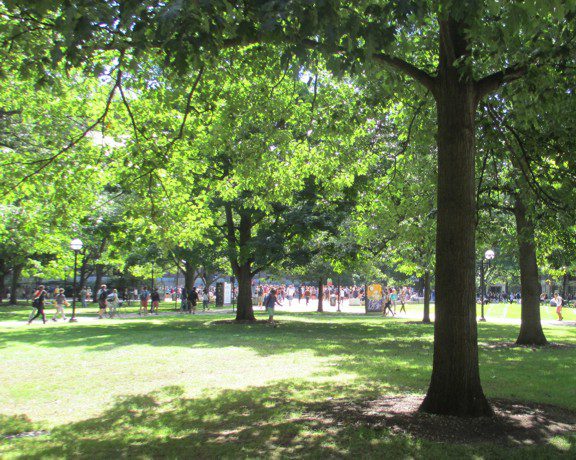 Being a Christian in the University can mean being something of an outsider. It isn’t overt hostility (often), but a combination of different priorities and focus and a bit of bemused wonder, being different. There is, as well, a general assumption in the university that intelligent people know that Christianity can’t be true, a general negative impression of Christians, along with an underlying assumption of secular humanism. I have known several Christian graduate students who have opted away from a career in academics because of this atmosphere.
The Church isn’t really much better. We’ve been part of a church for many years where a wide range of views are held, some more openly than others. It is fairly conservative, but not rigid on non-essentials, and with a fairly small list of essentials. We’ve been comfortable here. Many churches in the area would not be as open. But even here I’ve sat through a number of speakers, some guests, some local, several with my then young children sitting next to me, where the message was to beware of the professors (the “them” down the road) who sought to destroy the faith. To be fair, this has happened seldom over the last decade. It was more common in the past. But many churches are worse.
On another occasion at a different church a movie was shown, an apologetic defense of the faith, with a humorous scene making fun of the objections of the scientists complete with white lab coats, microscopes, and bubbling test tubes. “They” attack the bible “we” know it’s true. I was uncomfortable, but most in the audience saw nothing wrong with portrayal.
And then there are those who dismiss Christian academics (unless they hold the “right” positions) as having caved to peer pressure and the pursuit of worldly advancement. This is insulting. Most of us are trying hard to find the right road to walk from conviction. Of course we could be wrong on some issues, but a dismissal questioning motives simply enlarges the gulf between academics and the church.
There is the same implicit assumption at work in many churches as there is in the University. “We” and “they” are separate.
How would you respond to these seven points?
Would you add anything?
Are any of these points off the mark?
Is there a place in the church for critical questions and deep engagement?
If you wish to contact me directly, you may do so at rjs4mail[at]att.net
If interested you can subscribe to a full text feed of my posts at Musings on Science and Theology.
Previous Post

September 24, 2015
If You Believe in Restorative Justice... (by Wye Huxford)
Next Post
September 25, 2015 Oprah and Brother Jesus
Browse Our Archives
Select a Category Acts of the Apostles Adam Advent Anabaptism Angels Anglican Apologetics Atonement Baptism BCP Prayers Bible Biblical Studies Birds Blogging Bloglossary Bonhoeffer Books Calvinism Christianity Church Church History Coffee Colossians Commentary Recs Conversion Creation Creeds Culture Death Ecclesiastes Economics Education Embracing Grace Emergent Emerging Movement Eschatology Essays Ethics Eucharist Evangelicalism Family Fasting Fathers Fellowship of Differents Footsteps Tour Fun and Whimsical Gospel Grace Happiness Heaven Hell Holy Spirit Irenaeus James Jesus Jesus Creed Job Justification Kingdom of God Law Lectures Lent Liberalism Love and Marriage Mabanteneni Manhood Mary Miracles Missio Alliance MissioLife Missional Missional Jesus Movies and Film New Perspective Northern Seminary OneLife Origins Project Orthodox Parables Pastor's Spouse Pastoring and Leading Pastoring and Preaching Patristics Paul Paul-John Tour Pharisees Pietism Political Theology Prayer and Formation Preaching Problems for Faith Psalm 119 Psalms Public Issues Purgatory Religions Resurrection Revelation Romans Rule of JCreed Science and Faith Sermon on the Mount Sports Ten Commandments Theology Third Way Top Ten Lists Translations Uncategorized Universalism University Ministry Way Out Weekly Meanderings Wisdom Women and Ministry Work Worship Writing & Blogging Youth Ministry
Select a Month July 2021 January 2020 December 2019 November 2019 October 2019 September 2019 August 2019 July 2019 June 2019 May 2019 April 2019 March 2019 February 2019 January 2019 December 2018 November 2018 October 2018 September 2018 August 2018 July 2018 June 2018 May 2018 April 2018 March 2018 February 2018 January 2018 December 2017 November 2017 October 2017 September 2017 August 2017 July 2017 June 2017 May 2017 April 2017 March 2017 February 2017 January 2017 December 2016 November 2016 October 2016 September 2016 August 2016 July 2016 June 2016 May 2016 April 2016 March 2016 February 2016 January 2016 December 2015 November 2015 October 2015 September 2015 August 2015 July 2015 June 2015 May 2015 April 2015 March 2015 February 2015 January 2015 December 2014 November 2014 October 2014 September 2014 August 2014 July 2014 June 2014 May 2014 April 2014 March 2014 February 2014 January 2014 December 2013 November 2013 October 2013 September 2013 August 2013 July 2013 June 2013 May 2013 April 2013 March 2013 February 2013 January 2013 December 2012 November 2012 October 2012 September 2012 August 2012 July 2012 June 2012 May 2012 April 2012 March 2012 February 2012 January 2012 December 2011 November 2011 October 2011 September 2011 August 2011 July 2011 June 2011 May 2011 April 2011 March 2011 February 2011 January 2011 December 2010 November 2010 October 2010 September 2010 August 2010 July 2010 June 2010 May 2010 April 2010 March 2010 February 2010 January 2010 December 2009 November 2009 October 2009 September 2009 August 2009 July 2009 June 2009 May 2009 April 2009 March 2009 February 2009 January 2009 December 2008 November 2008 October 2008 September 2008 August 2008 July 2008 June 2008 May 2008 April 2008 March 2008 February 2008 January 2008 December 2007 November 2007 October 2007 September 2007 August 2007 July 2007 June 2007 May 2007 April 2007 March 2007 February 2007 January 2007 December 2006 November 2006 October 2006 September 2006 August 2006 July 2006 June 2006 May 2006 April 2006 March 2006 February 2006 January 2006 December 2005 November 2005 October 2005 September 2005 August 2005 July 2005 June 2005 May 2005 April 2005 0000
Follow Us!
TAKE THE
Religious Wisdom Quiz
Which Psalm contains "Create in me a clean heart, O God"?
Select your answer to see how you score.
Psalm 70 Psalm 51 Psalm 110 Psalm 33
Related posts from Jesus Creed


The Gospel of With Us and Through Us

Northern Seminary Announces: Nijay Gupta Joins Faculty

The Gundrys and Me: Ruth Tucker
TRENDING AT PATHEOS Evangelical

The REST of Your Life: A Creative Wrestles...
This week I had a conversation with a good friend from church....

How the author of the world's best hymn...
I've been working with John Newton for a while now. This makes...

Long before this Lectio Divina, Psalm 130 - the song - started...

What About the Trees? Another Living Parable
After I finished writing the last article about falling leaves as a...

Why Classical Education Is a Conversation, Not a...
Come and Read: Joy in Classical Education When I was a little...

Cornell University has received a great deal of negative publicity and intense...
view all Evangelical blogs
Ad-Free & Subscriber Log-In Subscription Support
- About Us
- 2026 Calendar
- Videos
- Podcasts
- Library of World Religions
- Faith In Media Tracker
- Advertise With Us
- Write for Us
- Privacy Policy
- Terms of Service
- Do Not Sell My Data
- Contact Us
- Radiant Digital
- Manage Newsletter Subscriptions
- Unsubscribe From Notifications
- Sitemap
Copyright 2008-2026, Patheos. All rights reserved.
Subscription Support Ad-Free & Subscriber Log-In
Follow Patheos