
BuddhistCatholicContemplativeEvangelicalGeneral ChristianHinduJewishLatter-day SaintMuslimNew VisionsProgressive Christian
Beliefs
- Buddhist
- Catholic
- Contemplative
- Evangelical
- General Christian
- Hindu
- Jewish
- Latter-day Saint
- More Voices
- Muslim
- New Visions
- Pagan
- Progressive Christian
Topics
- Religion News
- Food and Religion
- Sports and Religion
- Religious Art
- Religious Music and Entertainment
- Religious Events
- History and Religion
- Style and Religion
- Politics and Religion
- Women in Religion
- Recreation Outdoors and Religion
- Business Finance and Religion
- Careers Workplace and Religion
- Education and Religion
- Family Parenting and Religion
- Health Fitness and Religion
- Home and Religion
- Relationships and Religion
- Technology and Religion
- Travel and Religion
Columnists
- Buddhist Columnists
- Business Finance and Religion Columnists
- Careers Workplace and Religion Columnists
- Catholic Columnists
- Contemplative Columnists
- Education and Religion Columnists
- Evangelists Columnists
- Family Parenting and Religion Columnists
- General Christian Columnists
- Health Fitness and Religion Columnists
- Hindu Columnists
- History and Religion Columnists
- Home and Religion Columnists
- Jewish Columnists
- More Voices Columnists
- Latter Day Columnists
- Muslim Columnists
- New Visions Columnists
- Nonreligious Columnists
- Pagan Columnists
- Politics and Religion Columnists
- Progressive Columnists
- Recreation Outdoors and Religion Columnists
- Relationships and Religion Columnists
- Religion News Columnists
- Religious Art Columnists
- Religious Events Columnists
- Religious Music and Entertainment Columnists
- Sports and Religion Columnists
- Style and Religion Columnists
- Technology and Religion Columnists
- Travel and Religion Columnists
- Women in Religion Columnists
Resource Library
- 2026 Calendar
- Library of World Religions
- The 100 Most Holy Places on Earth
- Patheos Answers
- Podcasts
- Videos
- Faith Leaders Database
- Anglican Episcopalian
- Bahai
- Baptist
- Buddhism
- Christianity
- Confucianism
- Eastern Orthodoxy
- Hinduism
- Holiness and Pentecostal
- ISKCON
- Islam
- Judaism
- Lutheran
- Methodist
- The Church of Jesus Christ of Latter-day Saints
- New Age
- Paganism
- Presbytarian and Reformed
- Protestantism
- Religion Behind the Scenes
- Roman Catholic
- Scientology
- Shia Islam
- Sikhism
- Sufism
- Sunni Islam
- Taoism
- Zen
- See all religions
Research Tools
 Ad-Free & Subscriber Log-In Subscription Support
Ad-Free & Subscriber Log-In Subscription Support
Follow Patheos 

- Trending:
- Forgiveness
- |
- Marriage
- |
- Consciousness
- |
- Death Penalty
- |
- Election
- |
- Halloween
 Jesus Creed
- Home
- Evangelical
- Theology: Has it become too Propositional?
Theology: Has it become too Propositional?
Last updated on: September 23, 2015 at 12:02 am by Scot McKnight
Theology: Has it become too Propositional? 2015-09-20T12:21:40-05:00 Scot McKnight
Patheos Explore the world's faith through different perspectives on religion and spirituality! Patheos has the views of the prevalent religions and spiritualities of the world.
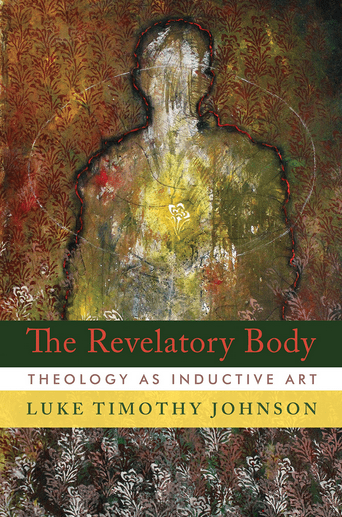 Think about what theology is or how it is taught: we read texts — Bible, Creeds, Augustine, Luther, Barth — and then we arrive at conclusions and we articulate that theology and then what do we do? We seek to get church people to conform to the ideas. I don’t think this is a simplification. Luke Timothy Johnson, in his new book, The Revelatory Body: Theology as Inductive Art, doesn’t either. He thinks theology moved from Spirit to letter but now also must move from letter to Spirit. This is one of his many similar expressions:
In short, we do not find in these theologians either a sustained interest in particular and embodied human experience, or an indication that such particular and embodied human experience can disclose the presence and power of the Living God in the world today. I do not think that I am alone when I confess that, in reading these eminent theologians, even those from whom, like Rahner, I have learned so much, I sometimes have had the sense that theology remains a discipline concerned above all with texts and propositions based in the past, rather than the discernment of the work of the Living God in the present. Perhaps others have sensed, as I have, that the introduction of a specific and particular human experience into this academic conversation would be something of an embarrassment (14-15).
That last sentence is where this book goes — a theology shaped by experience in the body that seeks to redress the imbalance of a theology that is too word-y and therefore wood-en. One at times hears echoes of a Lockean epistemology in this book, but it would take some history of philosophy experts to tease those out. But the idea that human experience is set within experience is at least an echo of Locke. These are the leitmotifs of The Revelatory Body:
Two simple convictions animate this exercise in theology. The first is that the human body is the preeminent arena for God’s revelation in the world, the medium through which God’s Holy Spirit is most clearly expressed. God’s self-disclosure in the world is thus continuous and constant. The second conviction is that the task of theology is the discernment of God’s self-disclosure in the world through the medium of the body. Therefore, theology is necessarily an inductive art rather than a deductive science (1).
Theology then is action, discernment, articulation of action. Action then is the arena for authentic faith.
An even simpler premise underlies these convictions: authentic faith is more than a matter of right belief; it is the response of human beings in trust and obedience to the one whom Scripture designates as the Living God, in contrast to the dead idols that are constructed by humans as projections of their own desires (1).
Theology that is too word-y moves into idolatry of words.
Theology tends toward idolatry because of the way words can seduce us into thinking that they adequately express and represent reality (1).
In this essay I seek to enliven theological language by challenging the sufficiency of abstract propositions for the discernment of God’s work in the world (2).
Yes, yes, yes, one can hear the the hands rising since so many are asking about the dangers of this approach, the same questions asked from Barth on about the Schleiermacherian tradition of rooting theology in that sense of dependence upon God. What are the dangers? Johnson himself lists three:
The first danger is that the language of Scripture and the creeds might not only be declared insufficient, it might be abandoned altogether (3).
The second danger expands on the first: it views human experience as dangerously erratic, all too susceptible to delusion and sin. Human expe rience needs to be disciplined and transformed by the words of Scripture and the teachings of the church. To privilege experience as a source for theology is, in effect, to reject the formative importance of the tradition.
The third danger is a variation of the first two: attention to the ever-shifting, always unstable realm of human bodily existence means abandoning the scientific character of theology, which traditionally has been able to claim status as scientia (science) precisely because it is based on a secure body of knowledge located in Scripture and creed, from which further corollaries might be developed through deductive reasoning. Indeed, theology so conceived can even claim to have a “systematic” character. … (4).
There is also, to be sure, an element of political self-interest in the third objection. If theology is a deductive science based in Scripture and creed, then it is primarily an academic exercise controlled by experts in ancient language, philosophical idiom, and the history of ideas. Experts in these areas have an assumed authority over the content, meaning, and application of God’s revelation. Theology begins in language and ends in action, with power over the movement in the hands, not of pastoral practitioners, but of scholarly theorists (5).
Johnson’s claim is to get experience back in the balance. Thus,
My project in this essay is not to overthrow all precedent or to replace Scripture and creeds; rather, it is very much an effort to restore a balance. A turn to human experience, I argue, actually opens Scripture to what it was intended to address in the first place; likewise, an attention to the ever-active self-disclosure of God in the world actually supports the statements of the creeds (5).
What do you think?
Previous Post

September 22, 2015
Heaven Promise Livestream Event
Next Post

September 23, 2015 Preaching as Spell-Casting (by Jonathan Storment)
Browse Our Archives
Select a Category Acts of the Apostles Adam Advent Anabaptism Angels Anglican Apologetics Atonement Baptism BCP Prayers Bible Biblical Studies Birds Blogging Bloglossary Bonhoeffer Books Calvinism Christianity Church Church History Coffee Colossians Commentary Recs Conversion Creation Creeds Culture Death Ecclesiastes Economics Education Embracing Grace Emergent Emerging Movement Eschatology Essays Ethics Eucharist Evangelicalism Family Fasting Fathers Fellowship of Differents Footsteps Tour Fun and Whimsical Gospel Grace Happiness Heaven Hell Holy Spirit Irenaeus James Jesus Jesus Creed Job Justification Kingdom of God Law Lectures Lent Liberalism Love and Marriage Mabanteneni Manhood Mary Miracles Missio Alliance MissioLife Missional Missional Jesus Movies and Film New Perspective Northern Seminary OneLife Origins Project Orthodox Parables Pastor's Spouse Pastoring and Leading Pastoring and Preaching Patristics Paul Paul-John Tour Pharisees Pietism Political Theology Prayer and Formation Preaching Problems for Faith Psalm 119 Psalms Public Issues Purgatory Religions Resurrection Revelation Romans Rule of JCreed Science and Faith Sermon on the Mount Sports Ten Commandments Theology Third Way Top Ten Lists Translations Uncategorized Universalism University Ministry Way Out Weekly Meanderings Wisdom Women and Ministry Work Worship Writing & Blogging Youth Ministry
Select a Month July 2021 January 2020 December 2019 November 2019 October 2019 September 2019 August 2019 July 2019 June 2019 May 2019 April 2019 March 2019 February 2019 January 2019 December 2018 November 2018 October 2018 September 2018 August 2018 July 2018 June 2018 May 2018 April 2018 March 2018 February 2018 January 2018 December 2017 November 2017 October 2017 September 2017 August 2017 July 2017 June 2017 May 2017 April 2017 March 2017 February 2017 January 2017 December 2016 November 2016 October 2016 September 2016 August 2016 July 2016 June 2016 May 2016 April 2016 March 2016 February 2016 January 2016 December 2015 November 2015 October 2015 September 2015 August 2015 July 2015 June 2015 May 2015 April 2015 March 2015 February 2015 January 2015 December 2014 November 2014 October 2014 September 2014 August 2014 July 2014 June 2014 May 2014 April 2014 March 2014 February 2014 January 2014 December 2013 November 2013 October 2013 September 2013 August 2013 July 2013 June 2013 May 2013 April 2013 March 2013 February 2013 January 2013 December 2012 November 2012 October 2012 September 2012 August 2012 July 2012 June 2012 May 2012 April 2012 March 2012 February 2012 January 2012 December 2011 November 2011 October 2011 September 2011 August 2011 July 2011 June 2011 May 2011 April 2011 March 2011 February 2011 January 2011 December 2010 November 2010 October 2010 September 2010 August 2010 July 2010 June 2010 May 2010 April 2010 March 2010 February 2010 January 2010 December 2009 November 2009 October 2009 September 2009 August 2009 July 2009 June 2009 May 2009 April 2009 March 2009 February 2009 January 2009 December 2008 November 2008 October 2008 September 2008 August 2008 July 2008 June 2008 May 2008 April 2008 March 2008 February 2008 January 2008 December 2007 November 2007 October 2007 September 2007 August 2007 July 2007 June 2007 May 2007 April 2007 March 2007 February 2007 January 2007 December 2006 November 2006 October 2006 September 2006 August 2006 July 2006 June 2006 May 2006 April 2006 March 2006 February 2006 January 2006 December 2005 November 2005 October 2005 September 2005 August 2005 July 2005 June 2005 May 2005 April 2005 0000
Follow Us!
TAKE THE
Religious Wisdom Quiz
True or False: Cain killed his brother Abel because God rejected Cain's offering.
Select your answer to see how you score.
FALSE TRUE
Related posts from Jesus Creed


The Gospel of With Us and Through Us

Northern Seminary Announces: Nijay Gupta Joins Faculty

The Gundrys and Me: Ruth Tucker
TRENDING AT PATHEOS Evangelical

The REST of Your Life: A Creative Wrestles...
This week I had a conversation with a good friend from church....

How the author of the world's best hymn...
I've been working with John Newton for a while now. This makes...

Long before this Lectio Divina, Psalm 130 - the song - started...

What About the Trees? Another Living Parable
After I finished writing the last article about falling leaves as a...

Why Classical Education Is a Conversation, Not a...
Come and Read: Joy in Classical Education When I was a little...

Cornell University has received a great deal of negative publicity and intense...
view all Evangelical blogs
Ad-Free & Subscriber Log-In Subscription Support
- About Us
- 2026 Calendar
- Videos
- Podcasts
- Library of World Religions
- Faith In Media Tracker
- Advertise With Us
- Write for Us
- Privacy Policy
- Terms of Service
- Do Not Sell My Data
- Contact Us
- Radiant Digital
- Manage Newsletter Subscriptions
- Unsubscribe From Notifications
- Sitemap
Copyright 2008-2026, Patheos. All rights reserved.
Subscription Support Ad-Free & Subscriber Log-In
Follow Patheos