
BuddhistCatholicContemplativeEvangelicalGeneral ChristianHinduJewishLatter-day SaintMuslimNew VisionsProgressive Christian
Beliefs
- Buddhist
- Catholic
- Contemplative
- Evangelical
- General Christian
- Hindu
- Jewish
- Latter-day Saint
- More Voices
- Muslim
- New Visions
- Pagan
- Progressive Christian
Topics
- Religion News
- Food and Religion
- Sports and Religion
- Religious Art
- Religious Music and Entertainment
- Religious Events
- History and Religion
- Style and Religion
- Politics and Religion
- Women in Religion
- Recreation Outdoors and Religion
- Business Finance and Religion
- Careers Workplace and Religion
- Education and Religion
- Family Parenting and Religion
- Health Fitness and Religion
- Home and Religion
- Relationships and Religion
- Technology and Religion
- Travel and Religion
Columnists
- Buddhist Columnists
- Business Finance and Religion Columnists
- Careers Workplace and Religion Columnists
- Catholic Columnists
- Contemplative Columnists
- Education and Religion Columnists
- Evangelists Columnists
- Family Parenting and Religion Columnists
- General Christian Columnists
- Health Fitness and Religion Columnists
- Hindu Columnists
- History and Religion Columnists
- Home and Religion Columnists
- Jewish Columnists
- More Voices Columnists
- Latter Day Columnists
- Muslim Columnists
- New Visions Columnists
- Nonreligious Columnists
- Pagan Columnists
- Politics and Religion Columnists
- Progressive Columnists
- Recreation Outdoors and Religion Columnists
- Relationships and Religion Columnists
- Religion News Columnists
- Religious Art Columnists
- Religious Events Columnists
- Religious Music and Entertainment Columnists
- Sports and Religion Columnists
- Style and Religion Columnists
- Technology and Religion Columnists
- Travel and Religion Columnists
- Women in Religion Columnists
Resource Library
- 2026 Calendar
- Library of World Religions
- The 100 Most Holy Places on Earth
- Patheos Answers
- Podcasts
- Videos
- Faith Leaders Database
- Anglican Episcopalian
- Bahai
- Baptist
- Buddhism
- Christianity
- Confucianism
- Eastern Orthodoxy
- Hinduism
- Holiness and Pentecostal
- ISKCON
- Islam
- Judaism
- Lutheran
- Methodist
- The Church of Jesus Christ of Latter-day Saints
- New Age
- Paganism
- Presbytarian and Reformed
- Protestantism
- Religion Behind the Scenes
- Roman Catholic
- Scientology
- Shia Islam
- Sikhism
- Sufism
- Sunni Islam
- Taoism
- Zen
- See all religions
Research Tools
 Ad-Free & Subscriber Log-In Subscription Support
Ad-Free & Subscriber Log-In Subscription Support
Follow Patheos 

- Trending:
- Forgiveness
- |
- Marriage
- |
- Consciousness
- |
- Death Penalty
- |
- Election
- |
- Halloween
 Jesus Creed
- Home
- Evangelical
- I Wish Pastors Knew … Part 1 (RJS)
I Wish Pastors Knew … Part 1 (RJS)
Last updated on: September 17, 2015 at 6:23 am by RJS
I Wish Pastors Knew … Part 1 (RJS) 2015-09-17T06:23:46-05:00 RJS
Patheos Explore the world's faith through different perspectives on religion and spirituality! Patheos has the views of the prevalent religions and spiritualities of the world.
 Pastoring is a hard job. No question about this. People are messy and pain and suffering are quite real. I don’t want to criticize. But there are some things I wish pastors knew about life as a scientist, or for that matter about life as an academic across a range of disciplines.
But first …
Scot recently linked a book I (Still) Believe: Leading Bible Scholars Share Their Stories of Faith and Scholarship. Seeing Walter Moberly, whose book on Old Testament Theology I’ve slowly been working through, on the list of contributors I immediately ordered a copy. The back cover to the book poses the question: “Is serious academic study of the Bible a threat to faith?” and the contributors were asked to address a series of questions including “Have there been ways in which you felt your faith to be in jeopardy as a result of your study?” and “How might you address the question of “losing faith” through serious study of the Bible?“
Two of these chapters are worth a serious look today, Walter Moberly and Bruce Waltke.
Walter Moberly relates how, when preparing for ministry or perhaps to alternate between academic and ministerial positions, he contracted a chronic illness that decided the matter:
In Christian ministry you need an energy that I no longer have, an availability that I can no longer offer. The academic life is more structured and sedentary that Christian ministry, and I am also a private citizen at evenings and weekends, which are necessary recovery times. … [Eventually] I was able to accept my limitation as part of God’s good purpose for me. Alongside that acceptance came also a growing sense of vocation to be a theologian working with Scripture. (p. 204)
As I said, pastoral work is hard and deserves our support and respect. But there is more to Moberly’s story. Over the years he describes his professional life as “a continuing process of learning, trying to find categories and frames of reference that would help me genuinely unite head and heart, i.e. unite rigorous scholarly work with the priorities of faith in the study of the Bible.” (p. 206)
As an Old Testament scholar one significant challenge is the relationship between the text and reality, a challenge that confronted him early on.
The problem lay with material that has no clear indication of genre, whose genre must therefore be inferred. My initial assumption was that if a narrative were “history-like” then it should be considered “history.” (p. 206)
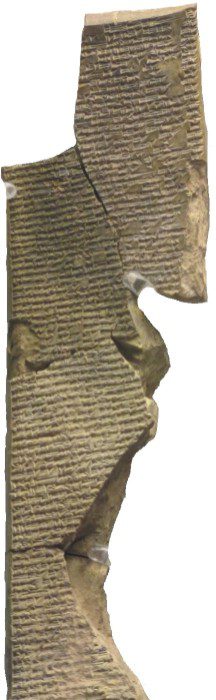 Many Christians today hold a similar position. It is a push-back that I have gotten repeatedly as I’ve explored interpretations of Genesis 1-11 and other passages of Scripture (Job and Jonah for example). Genesis 1 (creation) or 11 (the tower of Babel) is history-like prose and should therefore be taken at face value as history. Moberly grew to realize that this is an overly simplistic approach. In contemporary literature we often make judgements about genre for texts that are “history-like.” The stories carry meaning whatever the genre. He goes on:
The oddity, or so it came to seem to me, is to combine a flexible understanding of the nature and purpose of genre in contemporary material with a rather inflexible understanding of the nature and purpose of genre in biblical material.
As I reflected on the fact that literature may validly portray reality through a variety of genres, I cam to ask myself: If a literary genre – say myth or legend – is widely attested in the pre-modern world and was meaningful to those who used it, why should it not be present in Scripture? Or more theologically, why should God not be able to make use of such meaningful genre as a part of inspired Scripture? (p. 207)
This doesn’t mean that texts are dismissed as myth or legend, but that effort can be redirected to carefully consider the genre of each passage and to focus on understanding the subject matter and the intended message. This has been the focus of Moberly’s career at Durham, a secular university where the ability to articulate the perspectives of faith in a manner that can be understood in this environment is necessary.
Among other things, this is perhaps a reminder to any would-be Christian scholar that we need to be prepared to let God lead and direct us as we wills, in ways that we may not expect and maybe will not initially welcome or comprehend. Probably the greatest challenge that any Christian scholar faces, however, is not different from that which any believer faces: How can I keep my first love fresh? Love for God and love for one’s subject can both become dulled over time. There is no simple solution. For me, at least, it is a matter of life-long learning: learning to bring together head and heart, learning to pursue both truth and goodness, and learning to recognize that any and every place and time and situation is where, in the words of Moses, I must choose life. (p. 210)
I am a Christian scholar. As I read this chapter by Moberly I realized why I have appreciated his book on Old Testament theology so much. His approach is one that I can understand. He looks at the evidence honestly and with eyes and ears and heart that appreciates the message. This isn’t just an academic exercise, nor is it a matter of toeing some doctrinal line. Genuine faith seeking understanding.
How does his approach strike you? Is is dangerous or valuable?
How would you respond if Moberly was in your church?
Unfortunately Moberly’s is an approach that is suspect in much of the evangelical church. It can lead to scholars being unwelcome, or merely tolerated in the church. Tolerated, at least, if they keep quiet and hold their disruptive questions and observations to themselves. I’ve learned that keeping quiet is often the best approach. It can be either that or forgo most Christian fellowship altogether.
Another Scholar, Another Story. Some of the other chapters in the book tell similar stories of genuine faith seeking understanding. This can have consequences. Bruce Waltke writes of how he left his position at Dallas Theological Seminary when he realized that he could not sign the statement of faith without reservation. It wasn’t that he then disagreed with the statement, but he couldn’t think through the issues about which he had some reservations while remaining at Dallas.
But before this he was challenged as a Ph.D. student at Harvard in Ancient Near Eastern Literatures and Languages.
Whereas Dallas focused on the dissimilarities between the Old Testament and ancient Near Eastern literatures, Harvard emphasized their similarity, and this similarity makes the Bible appear to be a very human – not a divinely inspired – book. The cosmogony of Genesis 1 is similar to the pagan cosmogonies of the biblical world; Moses’ book of the covenant at some points repeats word-for-word the Code of Hammurabi; the war annals of the historical book resemble those of the pagans; David’s psalms are similar to Sumarian, Akkadian, and Canaanite hymns; and Israel’s prophets find their counterpart in other ancient Near Eastern religions. (p. 244)
But the Bible isn’t merely a human book. The theology is totally dissimilar, and the Bible is primarily a theological book. It’s importance to the church is the theological message. That the forms are similar isn’t terribly surprising. After all, the authors were shaped by their language and culture. Waltke reflects:
When I went through the Ishtar Gate at Babylon and saw the image of Marduk, the patron deity of Babylon, with his dragon-like head, lion-like torso covered with fish scales and his serpentine tail, I thought to myself: “No wonder Daniel had visions of incredible animals.” Probably, Moses, who had the finest education of his day, was familiar with other law codes and God used his education in formulating the law. (p. 244)
 My husband and I saw the Ishtar Gate in the Pergamon Museum in Berlin this summer. It is truly impressive, with Marduk (lower pair in the image to the right – click for a closer look) and aurochs symbolizing Adad (upper pair), and many lions along the way. He remarked that anyone teaching Daniel should include images of the Ishtar gate. It is far more impressive than any mental image he had ever had from 50+ years in the church and countless sermons and lessons. How must the captives have felt when taken to the grandeur of the city and the palace? Certainly this shapes the way the stories are told.
Waltke notes that “now he has come to regard the canonical form of the book of Deuteronomy as a post-exilic work that recounts the history of Moses’s writing of the book of the law, which comprises all but fifty-nine verses of the book of Deuteronomy.” (p. 247) Likewise that Isaiah as written by two authors, say Isaiah and his disciple, is supported by evidences of style and audience and is consistent with the book of Isaiah as Scripture.
I am not a Fundamentalist, who stands upon the Word of God, convinced that my preconceived interpretations of my tradition are right or that my interpretations are inerrant. Rather I stand under the Word, trying to understand how and what it means. (p. 248)
Waltke’s conclusions do not always agree with Moberly’s. He remains somewhat more conservative I believe. But the ground is similar: faith seeking understanding going with the evidence. Comfortable with a level of uncertainty and the open discussion of the questions surrounding the Old Testament, he draws the line between the radical naturalism and skepticism of the modern academy and faith in God rather than a fence around some preferred and “safe” interpretation to be defended at all costs.
Bruce Waltke has paid for his scholarly integrity at times. Not all appreciate this approach, and some fear his conclusions.
I wish all pastors understood that this is picture of good Christian scholarship not a threat to the faith.
Is there room for faith seeking understanding in the church?
What does this mean in your context?
I Wish Pastors Knew … Part 2 will address the issue of scholarship and the church more broadly.
If you wish to contact me directly, you may do so at rjs4mail[at]att.net
If interested you can subscribe to a full text feed of my posts at Musings on Science and Theology.
Previous Post

September 17, 2015
Some Questions about Heaven
Next Post
September 17, 2015 Sleeping in Separate Bedrooms? The Anglican Compromise?
Browse Our Archives
Select a Category Acts of the Apostles Adam Advent Anabaptism Angels Anglican Apologetics Atonement Baptism BCP Prayers Bible Biblical Studies Birds Blogging Bloglossary Bonhoeffer Books Calvinism Christianity Church Church History Coffee Colossians Commentary Recs Conversion Creation Creeds Culture Death Ecclesiastes Economics Education Embracing Grace Emergent Emerging Movement Eschatology Essays Ethics Eucharist Evangelicalism Family Fasting Fathers Fellowship of Differents Footsteps Tour Fun and Whimsical Gospel Grace Happiness Heaven Hell Holy Spirit Irenaeus James Jesus Jesus Creed Job Justification Kingdom of God Law Lectures Lent Liberalism Love and Marriage Mabanteneni Manhood Mary Miracles Missio Alliance MissioLife Missional Missional Jesus Movies and Film New Perspective Northern Seminary OneLife Origins Project Orthodox Parables Pastor's Spouse Pastoring and Leading Pastoring and Preaching Patristics Paul Paul-John Tour Pharisees Pietism Political Theology Prayer and Formation Preaching Problems for Faith Psalm 119 Psalms Public Issues Purgatory Religions Resurrection Revelation Romans Rule of JCreed Science and Faith Sermon on the Mount Sports Ten Commandments Theology Third Way Top Ten Lists Translations Uncategorized Universalism University Ministry Way Out Weekly Meanderings Wisdom Women and Ministry Work Worship Writing & Blogging Youth Ministry
Select a Month July 2021 January 2020 December 2019 November 2019 October 2019 September 2019 August 2019 July 2019 June 2019 May 2019 April 2019 March 2019 February 2019 January 2019 December 2018 November 2018 October 2018 September 2018 August 2018 July 2018 June 2018 May 2018 April 2018 March 2018 February 2018 January 2018 December 2017 November 2017 October 2017 September 2017 August 2017 July 2017 June 2017 May 2017 April 2017 March 2017 February 2017 January 2017 December 2016 November 2016 October 2016 September 2016 August 2016 July 2016 June 2016 May 2016 April 2016 March 2016 February 2016 January 2016 December 2015 November 2015 October 2015 September 2015 August 2015 July 2015 June 2015 May 2015 April 2015 March 2015 February 2015 January 2015 December 2014 November 2014 October 2014 September 2014 August 2014 July 2014 June 2014 May 2014 April 2014 March 2014 February 2014 January 2014 December 2013 November 2013 October 2013 September 2013 August 2013 July 2013 June 2013 May 2013 April 2013 March 2013 February 2013 January 2013 December 2012 November 2012 October 2012 September 2012 August 2012 July 2012 June 2012 May 2012 April 2012 March 2012 February 2012 January 2012 December 2011 November 2011 October 2011 September 2011 August 2011 July 2011 June 2011 May 2011 April 2011 March 2011 February 2011 January 2011 December 2010 November 2010 October 2010 September 2010 August 2010 July 2010 June 2010 May 2010 April 2010 March 2010 February 2010 January 2010 December 2009 November 2009 October 2009 September 2009 August 2009 July 2009 June 2009 May 2009 April 2009 March 2009 February 2009 January 2009 December 2008 November 2008 October 2008 September 2008 August 2008 July 2008 June 2008 May 2008 April 2008 March 2008 February 2008 January 2008 December 2007 November 2007 October 2007 September 2007 August 2007 July 2007 June 2007 May 2007 April 2007 March 2007 February 2007 January 2007 December 2006 November 2006 October 2006 September 2006 August 2006 July 2006 June 2006 May 2006 April 2006 March 2006 February 2006 January 2006 December 2005 November 2005 October 2005 September 2005 August 2005 July 2005 June 2005 May 2005 April 2005 0000
Follow Us!
TAKE THE
Religious Wisdom Quiz
Who is the author of the Book of Revelation?
Select your answer to see how you score.
Peter Paul John Ezekiel
Related posts from Jesus Creed


The Gospel of With Us and Through Us

Northern Seminary Announces: Nijay Gupta Joins Faculty

The Gundrys and Me: Ruth Tucker
TRENDING AT PATHEOS Evangelical

The REST of Your Life: A Creative Wrestles...
This week I had a conversation with a good friend from church....

How the author of the world's best hymn...
I've been working with John Newton for a while now. This makes...

Long before this Lectio Divina, Psalm 130 - the song - started...

What About the Trees? Another Living Parable
After I finished writing the last article about falling leaves as a...

Why Classical Education Is a Conversation, Not a...
Come and Read: Joy in Classical Education When I was a little...

Cornell University has received a great deal of negative publicity and intense...
view all Evangelical blogs
Ad-Free & Subscriber Log-In Subscription Support
- About Us
- 2026 Calendar
- Videos
- Podcasts
- Library of World Religions
- Faith In Media Tracker
- Advertise With Us
- Write for Us
- Privacy Policy
- Terms of Service
- Do Not Sell My Data
- Contact Us
- Radiant Digital
- Manage Newsletter Subscriptions
- Unsubscribe From Notifications
- Sitemap
Copyright 2008-2026, Patheos. All rights reserved.
Subscription Support Ad-Free & Subscriber Log-In
Follow Patheos