
BuddhistCatholicContemplativeEvangelicalGeneral ChristianHinduJewishLatter-day SaintMuslimNew VisionsProgressive Christian
Beliefs
- Buddhist
- Catholic
- Contemplative
- Evangelical
- General Christian
- Hindu
- Jewish
- Latter-day Saint
- More Voices
- Muslim
- New Visions
- Pagan
- Progressive Christian
Topics
- Religion News
- Food and Religion
- Sports and Religion
- Religious Art
- Religious Music and Entertainment
- Religious Events
- History and Religion
- Style and Religion
- Politics and Religion
- Women in Religion
- Recreation Outdoors and Religion
- Business Finance and Religion
- Careers Workplace and Religion
- Education and Religion
- Family Parenting and Religion
- Health Fitness and Religion
- Home and Religion
- Relationships and Religion
- Technology and Religion
- Travel and Religion
Columnists
- Buddhist Columnists
- Business Finance and Religion Columnists
- Careers Workplace and Religion Columnists
- Catholic Columnists
- Contemplative Columnists
- Education and Religion Columnists
- Evangelists Columnists
- Family Parenting and Religion Columnists
- General Christian Columnists
- Health Fitness and Religion Columnists
- Hindu Columnists
- History and Religion Columnists
- Home and Religion Columnists
- Jewish Columnists
- More Voices Columnists
- Latter Day Columnists
- Muslim Columnists
- New Visions Columnists
- Nonreligious Columnists
- Pagan Columnists
- Politics and Religion Columnists
- Progressive Columnists
- Recreation Outdoors and Religion Columnists
- Relationships and Religion Columnists
- Religion News Columnists
- Religious Art Columnists
- Religious Events Columnists
- Religious Music and Entertainment Columnists
- Sports and Religion Columnists
- Style and Religion Columnists
- Technology and Religion Columnists
- Travel and Religion Columnists
- Women in Religion Columnists
Resource Library
- 2026 Calendar
- Library of World Religions
- The 100 Most Holy Places on Earth
- Patheos Answers
- Podcasts
- Videos
- Faith Leaders Database
- Anglican Episcopalian
- Bahai
- Baptist
- Buddhism
- Christianity
- Confucianism
- Eastern Orthodoxy
- Hinduism
- Holiness and Pentecostal
- ISKCON
- Islam
- Judaism
- Lutheran
- Methodist
- The Church of Jesus Christ of Latter-day Saints
- New Age
- Paganism
- Presbytarian and Reformed
- Protestantism
- Religion Behind the Scenes
- Roman Catholic
- Scientology
- Shia Islam
- Sikhism
- Sufism
- Sunni Islam
- Taoism
- Zen
- See all religions
Research Tools
 Ad-Free & Subscriber Log-In Subscription Support
Ad-Free & Subscriber Log-In Subscription Support
Follow Patheos 

- Trending:
- Forgiveness
- |
- Marriage
- |
- Consciousness
- |
- Death Penalty
- |
- Election
- |
- Halloween
 Jesus Creed
- Home
- Evangelical
- Weekly Meanderings, 12 September 2015
Weekly Meanderings, 12 September 2015
Last updated on: September 12, 2015 at 12:01 am by Scot McKnight
Weekly Meanderings, 12 September 2015 2015-09-10T19:48:16-05:00 Scot McKnight
Patheos Explore the world's faith through different perspectives on religion and spirituality! Patheos has the views of the prevalent religions and spiritualities of the world.
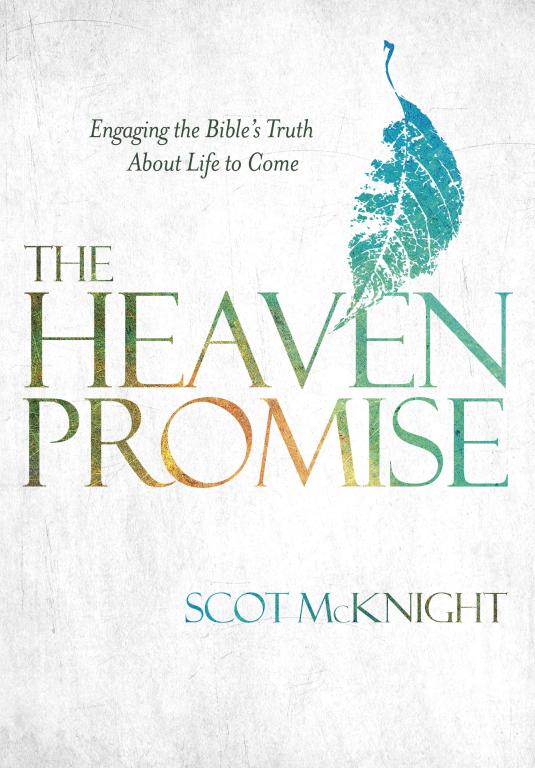 Enjoy a new set of links to blogs and news, providing you some fun for Saturday morning coffee and breakfast. Once again Kris found a number of these links and single-handedly at times seems to keep this Saturday offering on its feet.
Quality time? Nope, there’s no substitute for presence, by Frank Bruni:
There’s simply no real substitute for physical presence.
We delude ourselves when we say otherwise, when we invoke and venerate “quality time,” a shopworn phrase with a debatable promise: that we can plan instances of extraordinary candor, plot episodes of exquisite tenderness, engineer intimacy in an appointed hour.
We can try. We can cordon off one meal each day or two afternoons each week and weed them of distractions. We can choose a setting that encourages relaxation and uplift. We can fill it with totems and frippery — a balloon for a child, sparkling wine for a spouse — that signal celebration and create a sense of the sacred.
And there’s no doubt that the degree of attentiveness that we bring to an occasion ennobles or demeans it. Better to spend 15 focused, responsive minutes than 30 utterly distracted ones.
But people tend not to operate on cue. At least our moods and emotions don’t. We reach out for help at odd points; we bloom at unpredictable ones. The surest way to see the brightest colors, or the darkest ones, is to be watching and waiting and ready for them.
Your car, a mobile hotspot, by Brian Fung:
AT&T revealed recently that its biggest source of growth is coming not from new cellphone subscriptions — a crowded and saturated market — but from providing Internet access to next-generation cars.
Now AT&T is taking the next step in its bid to wire the automobile. On Tuesday, the company said it’s starting to sell a 4G LTE hotspot that plugs into a port in your vehicle, effectively converting it into a rolling WiFi router.
To use the palm-sized device, which is manufactured by ZTE and known as the Mobley, drivers have to insert it into a diagnostic outlet that comes standard in many cars. When you start the vehicle, the hotspot also starts up, allowing you to connect up to five mobile devices.
The dongle costs $100 without a contract and is free with a two-year agreement. You can link it to your existing bucket of shared AT&T data or buy a dedicated plan for it.
When should a person’s conscience trump the requirement of a job? Eugene Volokh’s splendid legal commentary on Kim Davis:
Under Title VII of the federal Civil Rights Act, both public and private employers have a duty to exempt religious employees from generally applicable work rules, so long as this won’t create an “undue hardship,” meaning more than a modest cost, on the employer. If the employees can be accommodated in a way that would let the job still get done without much burden on the employer, coworkers, and customers — for instance by switching the employee’s assignments with another employee or by otherwise slightly changing the job duties — then the employer must accommodate them. (The Muslim flight attendant I mentioned above, for instance, claims that she has always been able to work out arrangements under which the other flight attendant serves the alcohol instead of her.)
Thus, for instance, in all the cases I mentioned in the numbered list above, the religious objectors got an accommodation, whether in court or as a result of the employer’s settling a lawsuit brought by the EEOC. Likewise, the EEOC is currently litigating a case in which it claims that a trucking company must accommodate a Muslim employee’s religious objections to transporting alcohol, and the court has indeed concluded that the employer had a duty to accommodate such objections. But if the accommodation would have been quite difficult or expensive (beyond the inevitable cost that always come when rearranging tasks), then the employer wouldn’t have had to provide it….
The government is barred by the Free Exercise Clause from discriminating based on religion, but the government has no constitutional duty to give religious objectors special exemptions from generally applicable rules. Maybe it (and private employers) shouldn’t have such a statutory duty, either. …
OK, now we’ve seen the big picture, which is that sincere religious objections can indeed legally excuse you from doing part of your job — if the employer can exempt you without undue cost to itself, its other employees, or its clients (recognizing that some cost is inevitable with any exemption request). Now let’s try to see how it can apply to the Kim Davis controversy. [Go to link above to see it worked out.]…
There’s a lot of appeal to the “you take the job, you follow the rules — if you have a religious objection to the rules, quit the job” approach may be. But it’s not the approach that modern American federal employment law has taken, or the approach that the state religious exemption law in Kentucky and many other states has taken.
It happens in Australia, too: Kristina Keneally on faith and political office:
“How much does your faith influence your political decisions?” Journalists asked me this question a couple of a dozen times during my tenure as a parliamentarian. On each occasion I felt like rolling my eyes; by the end of my career, I probably started to do so visibly. Somewhere along the line I decided the best response to a silly question was an equally nonsensical answer: “37%,” I’d confidently reply and enjoy the poor journo’s confusion and momentary silence….
There are those who argue religious belief has no place in civic discourse. Yet from the earliest periods of recorded history we are presented with evidence that human beings possess a spiritual dimension. The people with the longest continuous cultural history on Earth, Aboriginal Australians, tell rich spiritual stories to explain creation and humanity’s relationship to it.
Human beings are physical and they are spiritual. They bring their spiritual selves, however expressed, to their political discussions. This is not a threat to civil society. For thousands of years the spiritual life of human beings has supported and encouraged the extension of human rights, the establishment of civic communities, promulgation of the public good and extraordinary acts of self-sacrifice for one’s fellow citizens.
Religious belief has had its dark civic moments too. The Inquisition was hardly a triumph for human generosity. Using the Bible to justify slavery wasn’t exactly in keeping with Paul’s statement that “There is no longer Jew or Gentile, slave or free, male and female. For you are all one in Christ Jesus.”…
No mainstream political party or figure argues that religion has no place in civic life. Richard Di Natale’s claims that the Greens will be a more centrist progressive party will not be realised as long as the party remains hostile to organised religion and people of faith. Spirituality and religious belief are central to how human beings make sense of and interpret their existence, and therefore they are central to how human society organises itself.
No sensible solution to some of the most vexed societal questions – whether on national security or marriage equality – can be derived and resolved without understanding and respecting the religious dimensions of human actions. Perhaps this is why I rolled my eyes so often. Asking a politician about their faith is the wrong question. Rather we should ask, “How well do you know the faith of your fellow citizens?”
Jack Levison goes provocative on us with a reminder that deserves conversation — sometimes “right” is not the same as “Christian”:
What then characterizes a spirit-filled church? Not the swaying or swagger of people in motion. Not the pouring out of emotion. Certainly not leaders engaged in self-promotion. Not even people headed in the right direction. Why? Because the spirit inspires a church with a clear focus: crucifixion.
Architecture. Activities. Adoration. Every last artery of the body of Christ must flow with the full absorption of Jesus Christ crucified. There is only one issue on which the church must be right. Not same-sex marriage. Not climate change. Not evolution. The work of the Spirit that eclipses all of these—regardless of how right a Christian or church may be on these issues—is the full-fledged communication of Jesus Christ crucified.
[SMcK: my aim is seeking truth, not what is right, but what is truth.]
The emigration/immigration (seeming) explosion, Fraser Nelson contends, is a sign of poverty diminishing more than the onset of poverty.
The migration crisis is about more than Syria. A few weeks ago, Theresa May repeated one of the biggest mistakes in politics: thinking that third-world development will somehow mean fewer migrants. In a Daily Telegraph article, she argued that:-
‘We must help African countries to develop economic and social opportunities so that people want to stay.’
Give aid, not shelter, runs the argument – and she’s not the first to make it. ‘As the benefits of economic growth are spread in Mexico,’ Bill Clinton once assured Americans, ‘there will be less illegal immigration because more Mexicans will be able to support their children by staying home.’ When José Manuel Barroso led the European Commission, he made the same argument, saying that third world development would tackle the ‘root causes’ of migration. In fact, the reverse is true, as I argue in my Daily Telegraphcolumn today….
Now, it’s 1,500 a day. Globalisation has kicked in, global poverty has halved over 25 years. The poor world is becoming richer, so people are on the move. War acts as a catalyst; far more of those affected by violence have the means and inclination to flee. But globally, there is less war and less poverty than at any time in our history. The Great Migration should be understood as the flip side of the greatest triumph of our age: the collapse in global poverty.
Study after study shows this to be the case. When aid was given to poor rural Mexican villages in exchange for occupants attending school and health clinics, it led to them leaving rather than staying.
Will your son make it to professional basketball or baseball?
Those big dreams aren’t all that unusual. According to arecent poll from NPR, the Robert Wood Johnson Foundation and the Harvard T.H. Chan School of Public Health, 26 percent of U.S. parents whose children in high school play sports hope their child will become a professional athlete one day. Among families with household incomes of less than $50,000 annually, the number is 39 percent.
According to the National Collegiate Athletic Association, only a tiny percentage of high school athletes actually go on to play professionally — roughly 1 in 168 high school baseball players will get drafted by a Major League Baseball team, and just 1 in 2,451 men’s high school basketball players will get drafted by a National Basketball Association team….
Wanting your child to be a college athlete or even play sports professionally is “a great goal to have,” Jones says. “But I think it needs to be tempered with the sense of understanding that, most likely, your kid is not going to be a professional player.”
Pope Francis makes annulment more efficient:
(CNN)Pope Francis on Tuesday reformed the process by which Catholics may annul their marriages, in yet another sign of his desire to make the church more welcoming and responsive to people on the margins.
The three main changes are:
• Eliminating a second review by a cleric before a marriage can be nullified.
• Giving bishops the ability to fast-track and grant the annulments themselves in certain circumstances, for example when spousal abuse or an extramarital affair has occurred.
• The process should be free, except for a nominal fee for administrative costs.
The reforms came Tuesday in the form of two “motu proprio” documents, Latin for “by (the Pope’s) own initiative.” They become part of Catholic canon law on December 8, the beginning of the Pope’s declared “Year of Mercy.”
Not all like his changes. Anthony Faiola:
Papal power, Burke warned, “is not absolute.” He added, “The pope does not have the power to change teaching (or) doctrine.”
Burke’s words belied a growing sense of alarm among strict conservatives, exposing what is fast emerging as a culture war over Francis’s papacy and the powerful hierarchy that governs the Roman Catholic Church.
This month, Francis makes his first trip to the United States at a time when his progressive allies are heralding him as a revolutionary, a man who only last week broadened the power of priests to forgive women who commit what Catholic teachings call the “mortal sin” of abortion during his newly declared “year of mercy” starting in December. On Sunday, he called for “every” Catholic parish in Europe to offer shelter to one refugee family from the thousands of asylum-seekers risking all to escape war-torn Syria and other pockets of conflict and poverty.
Yet as he upends church convention, Francis also is grappling with a conservative backlash to the liberal momentum building inside the church. In more than a dozen interviews, including with seven senior church officials, insiders say the change has left the hierarchy more polarized over the direction of the church than at any point since the great papal reformers of the 1960s.
The old story about college tuition hikes continues to concern America’s parents (and grandparents):
To understand the feeling of crisis that many see in higher education right now, it’s useful to start with some figures from 40 years ago. In 1974, the median American family earned just under $13,000 a year. A new home could be had for $36,000, an average new car for $4,400. Attending a four-year private college cost around $2,000 a year: affordable, with some scrimping, to even median earners. As for public university, it was a bargain at $510 a year. To put these figures in 2015 dollars, we’re talking about median household income of $62,000, a house for $174,000 and a sticker price of $21,300 for the car, $10,300 for the private university and $2,500 for the public one.
Continue reading the main story
A lot has changed since then. Median family income has fallen to about $52,000, while median home prices have increased by about two-thirds. (Car prices have remained steady.) But the real outlier is higher education. Tuition at a private university is now roughly three times as expensive as it was in 1974, costing an average of $31,000 a year; public tuition, at $9,000, has risen by nearly four times. This is a painful bill for all but the very richest. For the average American household that doesn’t receive a lot of financial aid, higher education is simply out of reach.
Previous Post

September 11, 2015
Recent Revelations about Reverends (John Frye)
Next Post
September 13, 2015 O God...
Browse Our Archives
Select a Category Acts of the Apostles Adam Advent Anabaptism Angels Anglican Apologetics Atonement Baptism BCP Prayers Bible Biblical Studies Birds Blogging Bloglossary Bonhoeffer Books Calvinism Christianity Church Church History Coffee Colossians Commentary Recs Conversion Creation Creeds Culture Death Ecclesiastes Economics Education Embracing Grace Emergent Emerging Movement Eschatology Essays Ethics Eucharist Evangelicalism Family Fasting Fathers Fellowship of Differents Footsteps Tour Fun and Whimsical Gospel Grace Happiness Heaven Hell Holy Spirit Irenaeus James Jesus Jesus Creed Job Justification Kingdom of God Law Lectures Lent Liberalism Love and Marriage Mabanteneni Manhood Mary Miracles Missio Alliance MissioLife Missional Missional Jesus Movies and Film New Perspective Northern Seminary OneLife Origins Project Orthodox Parables Pastor's Spouse Pastoring and Leading Pastoring and Preaching Patristics Paul Paul-John Tour Pharisees Pietism Political Theology Prayer and Formation Preaching Problems for Faith Psalm 119 Psalms Public Issues Purgatory Religions Resurrection Revelation Romans Rule of JCreed Science and Faith Sermon on the Mount Sports Ten Commandments Theology Third Way Top Ten Lists Translations Uncategorized Universalism University Ministry Way Out Weekly Meanderings Wisdom Women and Ministry Work Worship Writing & Blogging Youth Ministry
Select a Month July 2021 January 2020 December 2019 November 2019 October 2019 September 2019 August 2019 July 2019 June 2019 May 2019 April 2019 March 2019 February 2019 January 2019 December 2018 November 2018 October 2018 September 2018 August 2018 July 2018 June 2018 May 2018 April 2018 March 2018 February 2018 January 2018 December 2017 November 2017 October 2017 September 2017 August 2017 July 2017 June 2017 May 2017 April 2017 March 2017 February 2017 January 2017 December 2016 November 2016 October 2016 September 2016 August 2016 July 2016 June 2016 May 2016 April 2016 March 2016 February 2016 January 2016 December 2015 November 2015 October 2015 September 2015 August 2015 July 2015 June 2015 May 2015 April 2015 March 2015 February 2015 January 2015 December 2014 November 2014 October 2014 September 2014 August 2014 July 2014 June 2014 May 2014 April 2014 March 2014 February 2014 January 2014 December 2013 November 2013 October 2013 September 2013 August 2013 July 2013 June 2013 May 2013 April 2013 March 2013 February 2013 January 2013 December 2012 November 2012 October 2012 September 2012 August 2012 July 2012 June 2012 May 2012 April 2012 March 2012 February 2012 January 2012 December 2011 November 2011 October 2011 September 2011 August 2011 July 2011 June 2011 May 2011 April 2011 March 2011 February 2011 January 2011 December 2010 November 2010 October 2010 September 2010 August 2010 July 2010 June 2010 May 2010 April 2010 March 2010 February 2010 January 2010 December 2009 November 2009 October 2009 September 2009 August 2009 July 2009 June 2009 May 2009 April 2009 March 2009 February 2009 January 2009 December 2008 November 2008 October 2008 September 2008 August 2008 July 2008 June 2008 May 2008 April 2008 March 2008 February 2008 January 2008 December 2007 November 2007 October 2007 September 2007 August 2007 July 2007 June 2007 May 2007 April 2007 March 2007 February 2007 January 2007 December 2006 November 2006 October 2006 September 2006 August 2006 July 2006 June 2006 May 2006 April 2006 March 2006 February 2006 January 2006 December 2005 November 2005 October 2005 September 2005 August 2005 July 2005 June 2005 May 2005 April 2005 0000
Follow Us!
TAKE THE
Religious Wisdom Quiz
Who wrote the Book of Acts?
Select your answer to see how you score.
Peter Mark Luke Paul
Related posts from Jesus Creed

Weekly Meanderings, 9 March 2019

Weekly Meanderings, 28 October 2017

Weekly Meanderings, 18 March 2017

Weekly Meanderings, 11 March 2017
TRENDING AT PATHEOS Evangelical

The REST of Your Life: A Creative Wrestles...
This week I had a conversation with a good friend from church....

How the author of the world's best hymn...
I've been working with John Newton for a while now. This makes...

Long before this Lectio Divina, Psalm 130 - the song - started...

What About the Trees? Another Living Parable
After I finished writing the last article about falling leaves as a...

Why Classical Education Is a Conversation, Not a...
Come and Read: Joy in Classical Education When I was a little...

Cornell University has received a great deal of negative publicity and intense...
view all Evangelical blogs
Ad-Free & Subscriber Log-In Subscription Support
- About Us
- 2026 Calendar
- Videos
- Podcasts
- Library of World Religions
- Faith In Media Tracker
- Advertise With Us
- Write for Us
- Privacy Policy
- Terms of Service
- Do Not Sell My Data
- Contact Us
- Radiant Digital
- Manage Newsletter Subscriptions
- Unsubscribe From Notifications
- Sitemap
Copyright 2008-2026, Patheos. All rights reserved.
Subscription Support Ad-Free & Subscriber Log-In
Follow Patheos