
BuddhistCatholicContemplativeEvangelicalGeneral ChristianHinduJewishLatter-day SaintMuslimNew VisionsProgressive Christian
Beliefs
- Buddhist
- Catholic
- Contemplative
- Evangelical
- General Christian
- Hindu
- Jewish
- Latter-day Saint
- More Voices
- Muslim
- New Visions
- Pagan
- Progressive Christian
Topics
- Religion News
- Food and Religion
- Sports and Religion
- Religious Art
- Religious Music and Entertainment
- Religious Events
- History and Religion
- Style and Religion
- Politics and Religion
- Women in Religion
- Recreation Outdoors and Religion
- Business Finance and Religion
- Careers Workplace and Religion
- Education and Religion
- Family Parenting and Religion
- Health Fitness and Religion
- Home and Religion
- Relationships and Religion
- Technology and Religion
- Travel and Religion
Columnists
- Buddhist Columnists
- Business Finance and Religion Columnists
- Careers Workplace and Religion Columnists
- Catholic Columnists
- Contemplative Columnists
- Education and Religion Columnists
- Evangelists Columnists
- Family Parenting and Religion Columnists
- General Christian Columnists
- Health Fitness and Religion Columnists
- Hindu Columnists
- History and Religion Columnists
- Home and Religion Columnists
- Jewish Columnists
- More Voices Columnists
- Latter Day Columnists
- Muslim Columnists
- New Visions Columnists
- Nonreligious Columnists
- Pagan Columnists
- Politics and Religion Columnists
- Progressive Columnists
- Recreation Outdoors and Religion Columnists
- Relationships and Religion Columnists
- Religion News Columnists
- Religious Art Columnists
- Religious Events Columnists
- Religious Music and Entertainment Columnists
- Sports and Religion Columnists
- Style and Religion Columnists
- Technology and Religion Columnists
- Travel and Religion Columnists
- Women in Religion Columnists
Resource Library
- 2026 Calendar
- Library of World Religions
- The 100 Most Holy Places on Earth
- Patheos Answers
- Podcasts
- Videos
- Faith Leaders Database
- Anglican Episcopalian
- Bahai
- Baptist
- Buddhism
- Christianity
- Confucianism
- Eastern Orthodoxy
- Hinduism
- Holiness and Pentecostal
- ISKCON
- Islam
- Judaism
- Lutheran
- Methodist
- The Church of Jesus Christ of Latter-day Saints
- New Age
- Paganism
- Presbytarian and Reformed
- Protestantism
- Religion Behind the Scenes
- Roman Catholic
- Scientology
- Shia Islam
- Sikhism
- Sufism
- Sunni Islam
- Taoism
- Zen
- See all religions
Research Tools
 Ad-Free & Subscriber Log-In Subscription Support
Follow Patheos 

- Trending:
- Advent
- |
- Forgiveness
- |
- Thanksgiving
- |
- Election
- |
- Seasonal Holidays
- |
- Marriage
 Jesus Creed
- Home
- Evangelical
- America’s Deepest Heresy
America’s Deepest Heresy
Last updated on: September 9, 2015 at 6:44 am by Scot McKnight
America’s Deepest Heresy 2015-09-09T06:44:55-05:00 Scot McKnight
Patheos Explore the world's faith through different perspectives on religion and spirituality! Patheos has the views of the prevalent religions and spiritualities of the world.
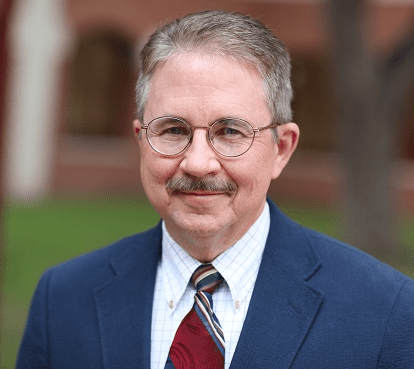 Studying heresies is a way of studying how orthodoxy came into full expression. As I said in recent post, heresy is the mother of orthodoxy. It is problems that give rise to solutions or resolutions or articulations. In that context Roger Olson, in his fine new book Counterfeit Christianity: The Persistence of Errors in the Church, examines what I would say is America’s deepest heresy: deism. It is both historic — Thomas Jefferson — and pervasive — in Moral Therapeutic Deism. It is with us and it is probably here to stay. To re-use an image Olson uses from Karl Barth lat in this chp, the gospel is a gift taken in hand, but some deist hands then think they can control the gift and reshape it.
Hence, a heresy. There are three parts here:
First, Folk Religion.
As Olson puts it, this heresy is a kind of folk religion: “heresy rears its ugly head in the form of what some sociologists of religion call “folk religion” (138).
Folk religion is to religion what folk medicine is to the science of medicine and what folk psychology is to the science of psychology. 139
Folk religion replaces tradition, orthodoxy, scholarship, inquiry, biblical hermeneutics, and theology with beliefs based on comfort and spiritual excitement or satisfaction. 140
It replaces biblical and theological teachings about life after death with “testimonies” of near death or death experiences in books and movies. 140
And folk religion divorces religion from public life and reduces it to a coping mechanism for individuals caught in the complexities of life. When a great world religion like Christianity is reduced to a folk religion it loses its ability to influence public, communal life together. 140
Religion, or Christian orthodoxy, is not about populism, voting, or what people like. Christian orthodoxy is anchored in firm turf — in the gospel.
Second, Deism.
He frames all of this through the idea of Deism, and this must be understood for its importance. “The word Deism has taken on a much broader semantic range than it had in the eighteenth century when Thomas Jefferson embodied it. The thesis of this chapter is twofold: (1) Deism is a heresy, and (2) it is still very much alive and well and an attractive option for many Christians” (139).
Deism owes its origins in the Enlightenment:
Many intellectually minded elites of Europe sought a new foundation for religion and politics in universal reason. The beginnings of modern science were showing the way forward—knowledge of the universe based on observation and logic apart from revelation, tradition, and faith. 142
Lord Herbert posited that all religion could be summed up in five “common notions”: (1) that there is a supreme Deity; (2) that this Deity ought to be worshipped; (3) that virtue combined with piety is the chief part of divine worship; (4) that men should repent of their sins and turn from them; (5) that reward and punishment follow from the goodness and justice of God, both in this life and after it. 142-3
He takes a brief glance at four major figures: John Toland, Matthew Tindal, Voltaire, and Thomas Jefferson
Deism is seen in a number of configurations, with these three capturing what I think is happening today: (1) It combine science and religion without conflict by subsuming the latter under the former. (2) It can be colonized by the powers as a kind of civil religion. And, (3) religion is de-personalized because God is distant.
Third, Moral Therapeutic Deism (MTD).
This set of terms has come to us through both Christian Smith (with Melinda Denton) and Kenda Creasy Dean, each of whom has been reviewed on this blog.
MTD h as five “guiding beliefs”:
(1) A god exists who created and orders the world and watches over life on earth.
(2) God wants people to be good, nice, and fair to each other, as taught in the Bible and by most world religions.
(3) The central goal of life is to be happy and to feel good about oneself.
(4) God is not involved in my life except when I need God to resolve a problem.
And (5) Good people go to heaven when they die. 141
So why is it a heresy? Olson says:
1. It is an alternative religion; it’s focus is not revising Christianity but creating a new religion.
2. It is part of America’s consciousness.
So who then is the Deist today?
Olson: “I would call anyone primarily a Deist who believes: (1) that God exists as the creator and moral governor of the universe but is uninvolved in daily life and never intervenes supernaturally in the courses of nature and history, and (2) religion is primarily, if not exclusively, about morality—living a “good life” of being nice to others and true to oneself” (148).
It is Christianity without its God, without its power, without its atonement, and without its discipleship.
Previous Post

September 8, 2015
Reading the Bible With Evolution in Mind (RJS)
Next Post
September 9, 2015 One Preacher about Another Preacher (Jonathan Storment)
Browse Our Archives
Select a Category Acts of the Apostles Adam Advent Anabaptism Angels Anglican Apologetics Atonement Baptism BCP Prayers Bible Biblical Studies Birds Blogging Bloglossary Bonhoeffer Books Calvinism Christianity Church Church History Coffee Colossians Commentary Recs Conversion Creation Creeds Culture Death Ecclesiastes Economics Education Embracing Grace Emergent Emerging Movement Eschatology Essays Ethics Eucharist Evangelicalism Family Fasting Fathers Fellowship of Differents Footsteps Tour Fun and Whimsical Gospel Grace Happiness Heaven Hell Holy Spirit Irenaeus James Jesus Jesus Creed Job Justification Kingdom of God Law Lectures Lent Liberalism Love and Marriage Mabanteneni Manhood Mary Miracles Missio Alliance MissioLife Missional Missional Jesus Movies and Film New Perspective Northern Seminary OneLife Origins Project Orthodox Parables Pastor's Spouse Pastoring and Leading Pastoring and Preaching Patristics Paul Paul-John Tour Pharisees Pietism Political Theology Prayer and Formation Preaching Problems for Faith Psalm 119 Psalms Public Issues Purgatory Religions Resurrection Revelation Romans Rule of JCreed Science and Faith Sermon on the Mount Sports Ten Commandments Theology Third Way Top Ten Lists Translations Uncategorized Universalism University Ministry Way Out Weekly Meanderings Wisdom Women and Ministry Work Worship Writing & Blogging Youth Ministry
Select a Month July 2021 January 2020 December 2019 November 2019 October 2019 September 2019 August 2019 July 2019 June 2019 May 2019 April 2019 March 2019 February 2019 January 2019 December 2018 November 2018 October 2018 September 2018 August 2018 July 2018 June 2018 May 2018 April 2018 March 2018 February 2018 January 2018 December 2017 November 2017 October 2017 September 2017 August 2017 July 2017 June 2017 May 2017 April 2017 March 2017 February 2017 January 2017 December 2016 November 2016 October 2016 September 2016 August 2016 July 2016 June 2016 May 2016 April 2016 March 2016 February 2016 January 2016 December 2015 November 2015 October 2015 September 2015 August 2015 July 2015 June 2015 May 2015 April 2015 March 2015 February 2015 January 2015 December 2014 November 2014 October 2014 September 2014 August 2014 July 2014 June 2014 May 2014 April 2014 March 2014 February 2014 January 2014 December 2013 November 2013 October 2013 September 2013 August 2013 July 2013 June 2013 May 2013 April 2013 March 2013 February 2013 January 2013 December 2012 November 2012 October 2012 September 2012 August 2012 July 2012 June 2012 May 2012 April 2012 March 2012 February 2012 January 2012 December 2011 November 2011 October 2011 September 2011 August 2011 July 2011 June 2011 May 2011 April 2011 March 2011 February 2011 January 2011 December 2010 November 2010 October 2010 September 2010 August 2010 July 2010 June 2010 May 2010 April 2010 March 2010 February 2010 January 2010 December 2009 November 2009 October 2009 September 2009 August 2009 July 2009 June 2009 May 2009 April 2009 March 2009 February 2009 January 2009 December 2008 November 2008 October 2008 September 2008 August 2008 July 2008 June 2008 May 2008 April 2008 March 2008 February 2008 January 2008 December 2007 November 2007 October 2007 September 2007 August 2007 July 2007 June 2007 May 2007 April 2007 March 2007 February 2007 January 2007 December 2006 November 2006 October 2006 September 2006 August 2006 July 2006 June 2006 May 2006 April 2006 March 2006 February 2006 January 2006 December 2005 November 2005 October 2005 September 2005 August 2005 July 2005 June 2005 May 2005 April 2005 0000
Follow Us!
TAKE THE
Religious Wisdom Quiz
To whom does Paul say he has become all things so that by all possible means he might save some?
Select your answer to see how you score.
The Jews The weak Everyone The Gentiles
Related posts from Jesus Creed
Gospel of Health and Wealth: A Heresy
Heresy: The Mother of Orthodoxy (and what about...
A Counterfeit Christian, or Heretic: Yes or No

TRENDING AT PATHEOS Evangelical

When you hear the word riches, what comes to mind? For most...

Don’t Miss the Parents: A Creative Christmas Meditation
As we enter the Advent Season, I see many people trying to...

Making Stones Into Bread: Choosing the “Right” Work
I was on my online arts ministry Zoom meeting with the International...

Ukraine’s exhausted Christians face fifth winter of war
By Julian Lukins The full-scale war in Ukraine is taking “a serious...

Russell Brand's Conviction is not anti-Christian Persecution
How do we shed the reputation that the Church is OK with...

Have you ever caught yourself saying, “I’ll do it tomorrow,” or “Now...
view all Evangelical blogs
Ad-Free & Subscriber Log-In Subscription Support
- About Us
- 2026 Calendar
- Videos
- Podcasts
- Library of World Religions
- Faith In Media Tracker
- Advertise With Us
- Write for Us
- Privacy Policy
- Terms of Service
- Do Not Sell My Data
- Contact Us
- Radiant Digital
- Manage Newsletter Subscriptions
- Unsubscribe From Notifications
- Sitemap
Copyright 2008-2026, Patheos, part of the Radiant Digital network of media brands. All rights reserved.
Subscription Support Ad-Free & Subscriber Log-In
Follow Patheos