
BuddhistCatholicContemplativeEvangelicalGeneral ChristianHinduJewishLatter-day SaintMuslimNew VisionsProgressive Christian
Beliefs
- Buddhist
- Catholic
- Contemplative
- Evangelical
- General Christian
- Hindu
- Jewish
- Latter-day Saint
- More Voices
- Muslim
- New Visions
- Pagan
- Progressive Christian
Topics
- Religion News
- Food and Religion
- Sports and Religion
- Religious Art
- Religious Music and Entertainment
- Religious Events
- History and Religion
- Style and Religion
- Politics and Religion
- Women in Religion
- Recreation Outdoors and Religion
- Business Finance and Religion
- Careers Workplace and Religion
- Education and Religion
- Family Parenting and Religion
- Health Fitness and Religion
- Home and Religion
- Relationships and Religion
- Technology and Religion
- Travel and Religion
Columnists
- Buddhist Columnists
- Business Finance and Religion Columnists
- Careers Workplace and Religion Columnists
- Catholic Columnists
- Contemplative Columnists
- Education and Religion Columnists
- Evangelists Columnists
- Family Parenting and Religion Columnists
- General Christian Columnists
- Health Fitness and Religion Columnists
- Hindu Columnists
- History and Religion Columnists
- Home and Religion Columnists
- Jewish Columnists
- More Voices Columnists
- Latter Day Columnists
- Muslim Columnists
- New Visions Columnists
- Nonreligious Columnists
- Pagan Columnists
- Politics and Religion Columnists
- Progressive Columnists
- Recreation Outdoors and Religion Columnists
- Relationships and Religion Columnists
- Religion News Columnists
- Religious Art Columnists
- Religious Events Columnists
- Religious Music and Entertainment Columnists
- Sports and Religion Columnists
- Style and Religion Columnists
- Technology and Religion Columnists
- Travel and Religion Columnists
- Women in Religion Columnists
Resource Library
- 2026 Calendar
- Library of World Religions
- The 100 Most Holy Places on Earth
- Patheos Answers
- Podcasts
- Videos
- Faith Leaders Database
- Anglican Episcopalian
- Bahai
- Baptist
- Buddhism
- Christianity
- Confucianism
- Eastern Orthodoxy
- Hinduism
- Holiness and Pentecostal
- ISKCON
- Islam
- Judaism
- Lutheran
- Methodist
- The Church of Jesus Christ of Latter-day Saints
- New Age
- Paganism
- Presbytarian and Reformed
- Protestantism
- Religion Behind the Scenes
- Roman Catholic
- Scientology
- Shia Islam
- Sikhism
- Sufism
- Sunni Islam
- Taoism
- Zen
- See all religions
Research Tools
 Ad-Free & Subscriber Log-In Subscription Support
Ad-Free & Subscriber Log-In Subscription Support
Follow Patheos 

- Trending:
- Forgiveness
- |
- Marriage
- |
- Consciousness
- |
- Death Penalty
- |
- Election
- |
- Halloween
 Jesus Creed
- Home
- Evangelical
- Reading the Bible With Evolution in Mind (RJS)
Reading the Bible With Evolution in Mind (RJS)
Last updated on: September 8, 2015 at 11:11 am by RJS
Reading the Bible With Evolution in Mind (RJS) 2015-09-08T11:11:47-05:00 RJS
Patheos Explore the world's faith through different perspectives on religion and spirituality! Patheos has the views of the prevalent religions and spiritualities of the world.
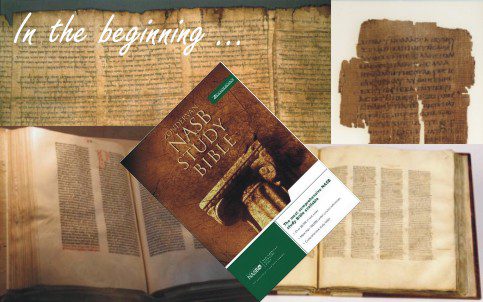 The last substantive section of Gary N. Fugle’s book Laying Down Arms to Heal the Creation-Evolution Divide looks at the regions of (apparent) conflict between evolutionary biology and the Christian Bible. His approach is predicated on the assumption that “we cannot comfortably argue that God created one reliable source of information in the Bible and created a second conflicting, unreliable source in nature.” And he goes on: “This means we should use Scripture to rightly interpret what we observe and experience in nature and, at the same time, allow the natural world to inform us how to rightly interpret the Bible.” (p. 225) He is convinced that “the bible is inerrant in what God intended to communicate.” (p. 228) But this doesn’t mean that human interpretations are inerrant. In fact the history of the church tells us that human interpretations can go awry, sometimes seriously and sometimes in minor ways. The question of an earth centered vs. sun centered solar system is one such example.
I am not sure if Martin Luther believed the earth was flat with a vault over the top holding back the waters above or not. Nor am I certain how much opposition he gave to the views of Copernicus concerning the solar system. There is a much publicized dinner table quote recorded by a student where he ridiculed the idea that the earth moves (one reference here). It is important to note that not too many years down the road the University of Wittenberg did teach heliocentrism. John Calvin may have also ridiculed the idea that the earth moved rather than the sun (Owen Gingerich, at the time Research Professor of Astronomy and History of Science at the Harvard—Smithsonian Center for Astrophysics, gives an example in this article from 2002).
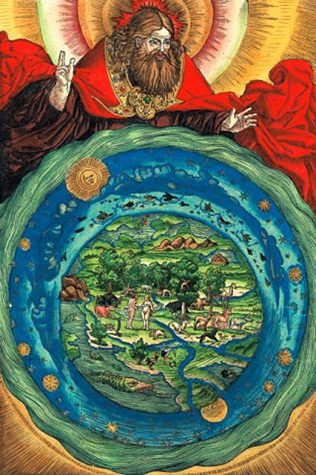 Regardless of Luther’s actual beliefs, the image by Lucas Cranach the Elder accompanying Genesis 1 in Luther’s German translation of the Bible portrays an earth with a firmament and with waters above reflecting the imagery found in the text. This is not consistent today’s understanding of the cosmos. Few of us find this troubling. Here we have allowed science to teach us how to interpret the Bible, with some fits and starts along the way.
So where do we go from here? There is a universal doctrine of creation derived from Scripture. Fugle outlines the main points: God is one, God instilled his creation with order, God exists apart from the world and is not limited by it, God is sovereign over all that exists, God’s creative actions culminated in humans. The last is a place where Scripture teaches something removed from the picture suggested by some scientists. We are not unimportant accidental specs of organic life on an obscure planet in the backwaters of an immense universe. We are God’s image bearers with whom he is in relationship. But none of this depends on the methods or time frame of creation.
Fugle outlines two major approaches to reading Genesis with evolution in mind. We can read the text as entirely figurative or symbolic in nature. Certainly the Bible uses figurative language (If you doubt this try reading Daniel or Ezekiel, or many of the other Prophets). This is a viable option that takes Scripture seriously and does not deny the authority of God behind the text. However, it is not the option that Fugle prefers.
Although the figurative interpretations resolve conflicts with evolutionary theory, we should proceed with caution or we may too readily dismiss real history. … Therefore the second option is to acknowledge that early Genesis passages contain many literary techniques and figurative elements while also retaining the backdrop that they are based on or alluding to real historical events that occurred in the past. In other words, a story may be constructed to emphasize specific messages about a historic event without providing precise chronological or factual details. In contrast to pure symbolism, I will present arguments that some Genesis sections were written in this way. … The key distinctive in this approach is that it invites us to respond to the contained worldview as a real product of a historical narrative rather than merely metaphorical expressions about God and Human existence. (p. 236)
In the next three chapters Fugle considers: Creation over six days; Adam, Eve, and Original Sin; and The Biblical Flood. I am going to take these out of order, leaving Adam and Eve for a separate post on Thursday.
Creation over six days is entirely contrary to the conclusions of modern science through a wide variety of lines of evidence – sedimentary columns, distant galaxies, fossils, radiometric dating, and more. The biblical text also provides a number of hints that it isn’t to be interpreted in this way. The artistry of the text and the framework of the days of creation, for example. This doesn’t mean that it is entirely figurative or symbolic. There is a history behind the text. “The statement that God created the heavens and earth is a historical claim about something that is literally true, and the succession of events in Genesis 1 implies a progression through time rather than an instantaneous creation.” (p. 242) Fugle also sees the verbs for creation “let the land produce” as indicating a historical process consistent with evolution. He sees no reason to rule out this kind of consistency in the text. The claim that we should only consider the ancient context “unnecessarily limits what may be contained within these God-inspired verses.” (p. 245)
Fugle also discusses John Walton’s approach to Genesis 1 as inauguration of a cosmic temple, ordering and assigning function. This is a historical claim of a different sort, but there is still a historical foundation for the text. It is a viable possibility.Although Scripture does speak of God as the ultimate creator of everything, this isn’t the point of Genesis 1-2. Here we have the inauguration of the earth and the garden as sacred space, God’s temple.
The Biblical Flood. There is no physical evidence for a flood of global proportions and a wide range of difficulties with such an interpretation. The number of animals relative to the size of the ark, the ability of distant kinds to get to the ark from distant locations, from the arctic to Australia to South America. The extinction of either saltwater or freshwater sea creatures in a global flood (depending on the salt content of the water). The super speed evolution required over a few thousand years to produce all current species from a virtual handful of kinds. The difficulty of dispersing all these species over the globe. “However, to put it frankly, incredible calisthenics are required to hold together a worldwide flood construct and there is virtually no scientific support for it.” (p. 265)
A worldwide flood is often used as a cure-all for the questions raised by the layering of fossils in the geological columns. However, this discussion generally misses the main point of the fossil evidence, the sequencing of plant and animal fossils. This can’t be accounted for by locomotion or by size. Fugle illustrates this nicely with the organization of plant fossils.
Flood geology explanations entirely break down when we consider the locations of fossilized plants. Plants obviously lack the ability to move through floodwaters. What the fossil record shows is conspicuous sequencing: (1) the lowest sediments contain only primitive plants such as ferns and horsetails, (2) intermediate sediments are dominated by cone-bearing gymnosperms but also contain some ferns and horesetails, and finally, (3) recent sediments are filled with a huge variety of flowering plants, as well as representatives of the earlier plant groups. These plant fossil patterns correspond to our comprehensive understanding of how plant types evolved over time. (p. 266)
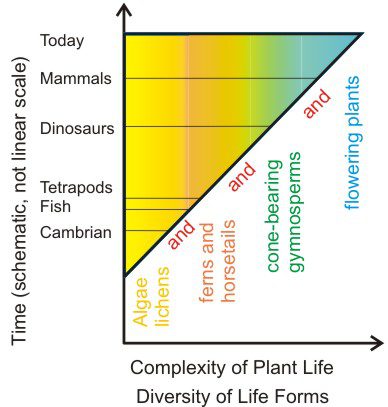 An image to hold in mind when considering the grand form of the fossil record and evolutionary theory is that of water filling a reservoir. As time goes on there is a wider diversity of types, but not complete disappearance of all earlier types. This could be explained by an old earth progressive creation picture, but is not explicable by a recent global flood.
Then we turn to the Bible.
Perhaps the most revealing evidence against flood geology [and a global flood] is that none of its incredible claims are mentioned in the Bible. Does it not seem odd that there are no references in the narratives of Noah’s flood or later Genesis chapters fro (1) monumental atmospheric and geological events around the globe, (2) massive migrations of unrecognizable animal species from distant lands to Noah’s location … or (3) remarkable evolutionary transformations in animal forms during the limited years of human history after Noah? It is far more reasonable to understand that, if Noah’s ark was real, he gathered significant local animals onto his vessel and survived a large-scale flooding event in the region of the earth with which he and his family were familiar. (p. 268)
Young earth global flood formulations that include consideration of the size of the ark and the number of animals that it could contain generally propose that the current diversity arose from fast diversification (evolution) of kinds present on the ark. For example, lions, tigers, cheetahs, pumas, house cats etc. derive from a recent cat-like ancestor from the ark. This rate of change far exceeds anything an evolutionary biologist would propose and we would expect some appreciation for this rapid rate of change in the written historical record, both in Scripture and in other ancient texts. But no such tradition exists. Common sense understanding leads to a view that species are static.
Fugle also runs through a number of textual reasons to consider the text as referring to a local rather than global flood. On these grounds “[m]ost Christian scholars conclude that the narrative of Noah’s flood is either an entirely figurative story with important symbolism or a creative account about a significant event in a localized geological area.” (p. 262)
Fugle appears to favor the local flood view. He does not argue that an entirely figurative story with important symbolism is contrary to Christian orthodoxy, or even to evangelicalism. We need to deal with the issues to determine the most likely interpretation.
How can we faithfully read the text with evolution in mind?
Should science ever shape our reading of the text?
Are heliocentrism and evolution significantly different in this regard?
If you wish to contact me directly, you may do so at rjs4mail[at]att.net
If interested you can subscribe to a full text feed of my posts at Musings on Science and Theology.
Previous Post

September 8, 2015
Keeping Your Faith Alive: Some Questions for Us (Phillip Camp)
Next Post
September 9, 2015 America's Deepest Heresy
Browse Our Archives
Select a Category Acts of the Apostles Adam Advent Anabaptism Angels Anglican Apologetics Atonement Baptism BCP Prayers Bible Biblical Studies Birds Blogging Bloglossary Bonhoeffer Books Calvinism Christianity Church Church History Coffee Colossians Commentary Recs Conversion Creation Creeds Culture Death Ecclesiastes Economics Education Embracing Grace Emergent Emerging Movement Eschatology Essays Ethics Eucharist Evangelicalism Family Fasting Fathers Fellowship of Differents Footsteps Tour Fun and Whimsical Gospel Grace Happiness Heaven Hell Holy Spirit Irenaeus James Jesus Jesus Creed Job Justification Kingdom of God Law Lectures Lent Liberalism Love and Marriage Mabanteneni Manhood Mary Miracles Missio Alliance MissioLife Missional Missional Jesus Movies and Film New Perspective Northern Seminary OneLife Origins Project Orthodox Parables Pastor's Spouse Pastoring and Leading Pastoring and Preaching Patristics Paul Paul-John Tour Pharisees Pietism Political Theology Prayer and Formation Preaching Problems for Faith Psalm 119 Psalms Public Issues Purgatory Religions Resurrection Revelation Romans Rule of JCreed Science and Faith Sermon on the Mount Sports Ten Commandments Theology Third Way Top Ten Lists Translations Uncategorized Universalism University Ministry Way Out Weekly Meanderings Wisdom Women and Ministry Work Worship Writing & Blogging Youth Ministry
Select a Month July 2021 January 2020 December 2019 November 2019 October 2019 September 2019 August 2019 July 2019 June 2019 May 2019 April 2019 March 2019 February 2019 January 2019 December 2018 November 2018 October 2018 September 2018 August 2018 July 2018 June 2018 May 2018 April 2018 March 2018 February 2018 January 2018 December 2017 November 2017 October 2017 September 2017 August 2017 July 2017 June 2017 May 2017 April 2017 March 2017 February 2017 January 2017 December 2016 November 2016 October 2016 September 2016 August 2016 July 2016 June 2016 May 2016 April 2016 March 2016 February 2016 January 2016 December 2015 November 2015 October 2015 September 2015 August 2015 July 2015 June 2015 May 2015 April 2015 March 2015 February 2015 January 2015 December 2014 November 2014 October 2014 September 2014 August 2014 July 2014 June 2014 May 2014 April 2014 March 2014 February 2014 January 2014 December 2013 November 2013 October 2013 September 2013 August 2013 July 2013 June 2013 May 2013 April 2013 March 2013 February 2013 January 2013 December 2012 November 2012 October 2012 September 2012 August 2012 July 2012 June 2012 May 2012 April 2012 March 2012 February 2012 January 2012 December 2011 November 2011 October 2011 September 2011 August 2011 July 2011 June 2011 May 2011 April 2011 March 2011 February 2011 January 2011 December 2010 November 2010 October 2010 September 2010 August 2010 July 2010 June 2010 May 2010 April 2010 March 2010 February 2010 January 2010 December 2009 November 2009 October 2009 September 2009 August 2009 July 2009 June 2009 May 2009 April 2009 March 2009 February 2009 January 2009 December 2008 November 2008 October 2008 September 2008 August 2008 July 2008 June 2008 May 2008 April 2008 March 2008 February 2008 January 2008 December 2007 November 2007 October 2007 September 2007 August 2007 July 2007 June 2007 May 2007 April 2007 March 2007 February 2007 January 2007 December 2006 November 2006 October 2006 September 2006 August 2006 July 2006 June 2006 May 2006 April 2006 March 2006 February 2006 January 2006 December 2005 November 2005 October 2005 September 2005 August 2005 July 2005 June 2005 May 2005 April 2005 0000
Follow Us!
TAKE THE
Religious Wisdom Quiz
Who was the king that the angel of the Lord struck because he did not give God glory, but received the worship of the people, and who was eaten by worms?
Select your answer to see how you score.
Haddam Herod Saul Hezekiah
Related posts from Jesus Creed


The Gospel of With Us and Through Us

Northern Seminary Announces: Nijay Gupta Joins Faculty

The Gundrys and Me: Ruth Tucker
TRENDING AT PATHEOS Evangelical

The REST of Your Life: A Creative Wrestles...
This week I had a conversation with a good friend from church....

How the author of the world's best hymn...
I've been working with John Newton for a while now. This makes...

Long before this Lectio Divina, Psalm 130 - the song - started...

What About the Trees? Another Living Parable
After I finished writing the last article about falling leaves as a...

Why Classical Education Is a Conversation, Not a...
Come and Read: Joy in Classical Education When I was a little...

Cornell University has received a great deal of negative publicity and intense...
view all Evangelical blogs
Ad-Free & Subscriber Log-In Subscription Support
- About Us
- 2026 Calendar
- Videos
- Podcasts
- Library of World Religions
- Faith In Media Tracker
- Advertise With Us
- Write for Us
- Privacy Policy
- Terms of Service
- Do Not Sell My Data
- Contact Us
- Radiant Digital
- Manage Newsletter Subscriptions
- Unsubscribe From Notifications
- Sitemap
Copyright 2008-2026, Patheos. All rights reserved.
Subscription Support Ad-Free & Subscriber Log-In
Follow Patheos