
BuddhistCatholicContemplativeEvangelicalGeneral ChristianHinduJewishLatter-day SaintMuslimNew VisionsProgressive Christian
Beliefs
- Buddhist
- Catholic
- Contemplative
- Evangelical
- General Christian
- Hindu
- Jewish
- Latter-day Saint
- More Voices
- Muslim
- New Visions
- Pagan
- Progressive Christian
Topics
- Religion News
- Food and Religion
- Sports and Religion
- Religious Art
- Religious Music and Entertainment
- Religious Events
- History and Religion
- Style and Religion
- Politics and Religion
- Women in Religion
- Recreation Outdoors and Religion
- Business Finance and Religion
- Careers Workplace and Religion
- Education and Religion
- Family Parenting and Religion
- Health Fitness and Religion
- Home and Religion
- Relationships and Religion
- Technology and Religion
- Travel and Religion
Columnists
- Buddhist Columnists
- Business Finance and Religion Columnists
- Careers Workplace and Religion Columnists
- Catholic Columnists
- Contemplative Columnists
- Education and Religion Columnists
- Evangelists Columnists
- Family Parenting and Religion Columnists
- General Christian Columnists
- Health Fitness and Religion Columnists
- Hindu Columnists
- History and Religion Columnists
- Home and Religion Columnists
- Jewish Columnists
- More Voices Columnists
- Latter Day Columnists
- Muslim Columnists
- New Visions Columnists
- Nonreligious Columnists
- Pagan Columnists
- Politics and Religion Columnists
- Progressive Columnists
- Recreation Outdoors and Religion Columnists
- Relationships and Religion Columnists
- Religion News Columnists
- Religious Art Columnists
- Religious Events Columnists
- Religious Music and Entertainment Columnists
- Sports and Religion Columnists
- Style and Religion Columnists
- Technology and Religion Columnists
- Travel and Religion Columnists
- Women in Religion Columnists
Resource Library
- 2026 Calendar
- Library of World Religions
- The 100 Most Holy Places on Earth
- Patheos Answers
- Podcasts
- Videos
- Faith Leaders Database
- Anglican Episcopalian
- Bahai
- Baptist
- Buddhism
- Christianity
- Confucianism
- Eastern Orthodoxy
- Hinduism
- Holiness and Pentecostal
- ISKCON
- Islam
- Judaism
- Lutheran
- Methodist
- The Church of Jesus Christ of Latter-day Saints
- New Age
- Paganism
- Presbytarian and Reformed
- Protestantism
- Religion Behind the Scenes
- Roman Catholic
- Scientology
- Shia Islam
- Sikhism
- Sufism
- Sunni Islam
- Taoism
- Zen
- See all religions
Research Tools
 Ad-Free & Subscriber Log-In Subscription Support
Ad-Free & Subscriber Log-In Subscription Support
Follow Patheos 

- Trending:
- Forgiveness
- |
- Marriage
- |
- Consciousness
- |
- Death Penalty
- |
- Election
- |
- Halloween
 Jesus Creed
- Home
- Evangelical
- Resisting the Kingdom Trend
Resisting the Kingdom Trend
Last updated on: September 1, 2015 at 7:24 am by Scot McKnight
Resisting the Kingdom Trend 2015-09-01T07:24:38-05:00 Scot McKnight
Patheos Explore the world's faith through different perspectives on religion and spirituality! Patheos has the views of the prevalent religions and spiritualities of the world.
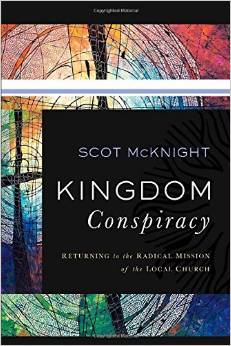 The biggest challenge to traditional kingdom theory is coming from NT scholars and tide is changing. The kingdom trend is to think Jesus and the apostles mean one of two things when they use the expression. Either it means the dynamic rule or reign of God or it means social justice and peace. In my book Kingdom Conspiracy I call these two options the pleated pants theory and the skinny jeans kingdom theory. This post will focus on the challenge to the pleated pants (reduction to dynamic reign).
My contention in that book, and the reason I wrote it is because my mind has shifted from the pleated pants and at times a hint of the skinny jeans theories to another view, is that these two theories are missing the mark and that kingdom is a complex of five elements: king, rule, people, place and law. I became dissatisfied with both theories and summoned myself to the Bible and historical texts to investigate this all over again. What I see in each is a reduction of kingdom to one or two elements — for the skinny jeans to justice and peace and for the pleated pants to redemptive rule. Both say something right, but both are reductive.
So, when someone like Reggie McNeal leans as he does toward the skinny jeans crowd in his book Kingdom Come, I both don’t blame him and think at the same time he’s fundamentally wrong. I will dip into his book in the weeks ahead, but today I want to call your attention to two scholars who have written about the kingdom in ways that show that the tide is moving away from reductionism and moving toward much greater appreciation of the Jewish context of what kingdom meant and what it therefore means for us today.
From the first of the NT scholarly challenges I provide only a quotation and from the second, perhaps America’s most knowledgeable NT scholar (and I don’t say that lightly), a sketch of his fresh analysis of what kingdom meant to Jesus.
First, R. McL. Wilson, one of the UK’s most prominent experts in gnosticism and in the NT. The most highly respectable English-language commentary series of the 20th-21st Centuries is the ICC (International Critical Commentary). Wilson is the author of the commentary on Colossians, and I grab this quotation from him as he summarizes what kingdom means in the NT. [1]
It has been argued that the primary significance is that of sovereignty, the rule of God in the hearts and lives of men and women, rather than that of a realm or kingdom. This, however, may be to introduce a false contrast: sovereignty implies a territory within which that sovereignty is exercised, a community over which the sovereign rules, people who accept that rule.
Notice his elements: (1) rule of God, (2) territory (or land), (3) community (people), and “people who accept that rule” implies there is (4) a law by which that sovereign king rules.
Notice, too, what he is opposing: the pleated pants theory so typical among NT scholars. What do they think? That kingdom means “the rule of God in the hearts and lives of men and women” (so Dalman-ish, so Harnack-ian, and also so evangelical-sounding) and the pleated pants sorts believe this over against “a realm or kingdom” (that is, a place or a territory). You may know that the major alternative many of us were taught and also taught was that you must choose between “rule” (the reality of ruling, of sovereignty, the dynamic, the spirituality) and “realm” (which implies territory and land and a geographical space). It can’t be both, we were taught and we continued to teach.
Wilson thinks that alternative is false, as do I, and he thinks kingdom implies rule, space, people and law. This from someone who is famous for his historical analysis, wherever that analysis might lead. He also has no dog in this fight theologically from what I can tell.
Now to Dale Allison, Jr., and his book Constructing Jesus: Memory, Imagination, and History (BakerAcademic, 2010). Two observations: try as you may you won’t discover Dale’s theology, unless it is a-theology; instead, what you will find with Dale is rigorous historical investigation wherever the evidence leads. Dale has written the finest commentary ever written — the ICC — on Matthew (with WD Davies, 3 volumes), and as well the best commentary ever written on James (again, the ICC). In addition, he is the author of a number of exceptional studies, my favorite being his book The New Moses. His newest big book, Constructing Jesus, is yet another example of his meticulous efforts. He, too, has no dog in this fight. He sets out to discern just what Jesus meant by kingdom, and he approaches the five points I outlined above though his emphasis is heavily futuristic.
In this book is an “excursus” on kingdom of God (164-204), and he makes 18 points. Here they are:
1. “Gustaf Dalman famously affirmed, “No doubt can be entertained that both in the Old Testament and in Jewish literature mlkwt, when applied to God, means always the ‘kingly rule’ (Herrschaft), never the ‘kingdom’ (Reich), as if it were meant to suggest the territory governed.” Dalman supported this statement, which much subsequent discussion has almost taken for granted, by appealing to Ps 22:29… 103:19; 145:11-13; Obad 21; and a number of rabbinic texts” (170).
Dale Allison calls into question all the evidence Dalman uses here and offers counter evidence, which is what I offer in Kingdom Conspiracy, both from the OT and Josephus, with brief glances elsewhere. I, too, in Kingdom Conspiracy, pointed a long finger at Dalman — what Dale says here is accurate: “has almost taken for granted” — I might have said it stronger: most have relied upon Dalman and simply assumed he got it right. Here’s a big point: if Dalman was wrong, the kingdom theory of the pleated pants folks falls off their legs into a heap!
2. “Both basileia and mlkwt, as the dictionaries indicate, often mean “kingdom,” and it takes only rudimentary acquaintance with Jewish texts to realize that God is the ruler of the realm known as “heaven,” and further that, in both this age and the age to come, God’s kingship cannot be separated from the people of Israel, who in turn are inextricably bound up with the fate of their land and its capital, Jerusalem. It is almost inescapable, then, that many passages about God’s eschatological rule, even some in which mlkwt could mean “royal rule,” have a territorial dimension…” [for which he offers abundant support, e.g., Isa 24:23].
3. “Christian exegetical tradition has, however, habitually sought to separate the kingdom of God from Jewish territorial expectations.” He calls this “ecclesiastical eisegesis” (175). He continues: “After the fourth century, conceptualizing the kingdom of God as an earthly, territorial kingdom ceased to be an option for the vast majority of exegetes. Thereafter orthodox theologians and commentators usually agreed with Augustine, who closely associated the kingdom with the church invisible, that is, the elect on earth and in heaven” (175).
Let us call what it is: this is anti-Judaism and de-Judaizing of the Bible and Christian theology; sometimes it become anti-Semitic as well. But most importantly, it is universalizing the Bible at the expense of its Jewishness. Dale provides a good quotation from Dalman to this point.
4. The term “kingdom of God” is kingdom plus ruler, and this is found in the OT all over the place — and refers to the “ruler’s realm” (177), where “realm” means territory not simply dynamic reign (which was what Dalman handed on).
5. Frequently the Gospels use “kingdom” for a “territory ruled by a king, kingdom” (BDAG, and Allison cites Mark 3:24; 6:23; 13:8; Matt 4:8; 12:25-26; Luke 19:12, 15).
6. Sometimes in the Gospels “kingdom” sounds like a “place” (178), and he cites Matt 13:41-42; 14:25…
7. The sayings about “entering” the kingdom have to be entering into some kind of “place” (pp. 179-181), where they are modeled upon “entering into the land” (Exod 12:25). This is a theology of “second entry” (181).
8. He refers to and embraces the work of Jonathan Pennington’s work on kingdom where kingdom of heaven is posed as more than simply an equivalent for “God” (which also goes back to Dalman). Further, “of heaven/s” is territorial in Matthew, the place where God rules now.
9. The Beatitudes confirm this: Matthew 5:3; 5:5 — the second one is “land” (not earth) and it defines the first one, hence “kingdom” and “land” are territorial in connotation.
10. At the cross — Luke 23:42 — Jesus is asked by the one co-crucified about remembering him when he enters kingdom and kingdom here is defined by Jesus as “paradise,” which always means a place/territory (183).
11. The Gospel of Thomas conceptualizes the kingdom as a place (GThom 49, 50, 82; p. 184).
12. “Although much Christian theology eventually made the exegetical mistake of more or less identifying the kingdom with the church, sources up until the fourth century often envision the kingdom as a future time and place. In many of these, moreover, basileia and regnum seem to mean above all “realm” or “kingdom.” In this respect, these later, extracanonical texts preserve, in my judgment, an original feature of the Jesus tradition” (184). [Allison looks at many texts. I added some italics above.]
13. Some kingdom texts are land texts: Matt 8:11-12 and 19:28 and pars. He observes:
If Jesus ever spoke of the kingdom of God as a place, as the Synoptics more than suggest he did, we can be sure that his Jewish hearers would have thought in terms of the land of Israel, its capital, and the temple, which together “were the sacred centre of the earth’ that “would one day attract all peoples.” Once his sayings became the property of Gentile churches, alternative, nonterritorial readings could and did come into being. That, however, tells us next to nothing about the historical Jesus (186, italics added).
14. Sometimes kingdom is the same as life or eternal life, and this shows that kingdom blended quickly into the future (territorial?) place of God’s final rule. This captures kingdom as utopia.
15. Critiques Dalman’s slide from kingdom of heaven (malkuth shamayim) into “age to come” (olam haba). Here Dalman should have seen that kingdom is connected to the future place of God’s eternal reign. He has here an extensive discussion. With this conclusion:
My judgment, then, is that basileia is, in the Synoptics, a realm as well as a reign; it is a place and a time yet to come in which God will reign supreme. The term designates, in many or perhaps most cases, the “grosse Heilszustand am Ende der Tage,” [Hans Windisch] “the future which God will bring about.” The formulation of Johannes Weiss remains valid: basileia is “the objective messianic Kingdom, which usually is pictured as a territory into which one enters, or as a land in which one has a share’ (201).
Allison here is pressing the eschatological, final kingdom more than the present realizations of that kingdom, but notice how territorial kingdom is to the futuristic language of Jesus.
16. Yes, at times kingdom means rule. He points to Luke 11:20. [In my Kingdom Conspiracy, I break down the second element — the rule of the king — into two dimensions: redemptive rule and governing rule. I see Luke 11:20 as the redemptive rule of God breaking in.]
17. Now notice this point: “With this in mind, I want to suggest that, in addition to the meanings given in the dictionaries, basileia may on occasion mean neither God’s “rule” nor “reign” but refer rather, by metonymy, to God’s people.6 One recalls Ps 102:22 … ” (202).
Here Allison observes that kingdom means people — and I would contend that people is implicit constantly in the Jewish world since God’s rule of God’s territory requires a people in order for it to be a kingdom. Allison states this explicitly: “A kingdom is empty and so nothing without its subjects, and Exod 19:6 famously declares, “You [Israel] will be to me a kingdom [MT: mmlkt; Aquila, Symmachus, Theodotion: fiaoiXeia] of priests and a holy nation'” (203). He sees a royal people as crucial to a number of sayings of Jesus.
18. “When speaking of the eschatological future, scholars, observing that Jesus, if the Synoptics have it right, preferred instead to employ “the kingdom of God,” have found here verbal innovation, maybe even a deliberate theological decision” (203). We don’t, he observes, know when this rabbinic language became the official language. Hence, we don’t know if Jesus’ use is novel or not. Nor does it matter.
In Allison then we have a king, a rule, a future territorial rule by God the king, and a people. All that we need here is the law and Allison would have the same five elements I listed at the top of this post. What Allison focuses on is the future territorial rule of the king (the kingdom of God of the future) and not enough on the present dimensions of the kingdom (if kingdom is territorial, where is that territory now?) and as a result he doesn’t explore the relationship of the present kingdom and the present church.
But make no mistake: kingdom cannot be separated, as both Wilson and Allison show, from God, God’s rule, God’s rule over God’s people, and God’s rule in God’s place.
[1] Wilson, 118.
Previous Post

August 31, 2015
So, What is a Gospel?
Next Post
September 1, 2015 The Faithfulness of God (RJS)
Browse Our Archives
Select a Category Acts of the Apostles Adam Advent Anabaptism Angels Anglican Apologetics Atonement Baptism BCP Prayers Bible Biblical Studies Birds Blogging Bloglossary Bonhoeffer Books Calvinism Christianity Church Church History Coffee Colossians Commentary Recs Conversion Creation Creeds Culture Death Ecclesiastes Economics Education Embracing Grace Emergent Emerging Movement Eschatology Essays Ethics Eucharist Evangelicalism Family Fasting Fathers Fellowship of Differents Footsteps Tour Fun and Whimsical Gospel Grace Happiness Heaven Hell Holy Spirit Irenaeus James Jesus Jesus Creed Job Justification Kingdom of God Law Lectures Lent Liberalism Love and Marriage Mabanteneni Manhood Mary Miracles Missio Alliance MissioLife Missional Missional Jesus Movies and Film New Perspective Northern Seminary OneLife Origins Project Orthodox Parables Pastor's Spouse Pastoring and Leading Pastoring and Preaching Patristics Paul Paul-John Tour Pharisees Pietism Political Theology Prayer and Formation Preaching Problems for Faith Psalm 119 Psalms Public Issues Purgatory Religions Resurrection Revelation Romans Rule of JCreed Science and Faith Sermon on the Mount Sports Ten Commandments Theology Third Way Top Ten Lists Translations Uncategorized Universalism University Ministry Way Out Weekly Meanderings Wisdom Women and Ministry Work Worship Writing & Blogging Youth Ministry
Select a Month July 2021 January 2020 December 2019 November 2019 October 2019 September 2019 August 2019 July 2019 June 2019 May 2019 April 2019 March 2019 February 2019 January 2019 December 2018 November 2018 October 2018 September 2018 August 2018 July 2018 June 2018 May 2018 April 2018 March 2018 February 2018 January 2018 December 2017 November 2017 October 2017 September 2017 August 2017 July 2017 June 2017 May 2017 April 2017 March 2017 February 2017 January 2017 December 2016 November 2016 October 2016 September 2016 August 2016 July 2016 June 2016 May 2016 April 2016 March 2016 February 2016 January 2016 December 2015 November 2015 October 2015 September 2015 August 2015 July 2015 June 2015 May 2015 April 2015 March 2015 February 2015 January 2015 December 2014 November 2014 October 2014 September 2014 August 2014 July 2014 June 2014 May 2014 April 2014 March 2014 February 2014 January 2014 December 2013 November 2013 October 2013 September 2013 August 2013 July 2013 June 2013 May 2013 April 2013 March 2013 February 2013 January 2013 December 2012 November 2012 October 2012 September 2012 August 2012 July 2012 June 2012 May 2012 April 2012 March 2012 February 2012 January 2012 December 2011 November 2011 October 2011 September 2011 August 2011 July 2011 June 2011 May 2011 April 2011 March 2011 February 2011 January 2011 December 2010 November 2010 October 2010 September 2010 August 2010 July 2010 June 2010 May 2010 April 2010 March 2010 February 2010 January 2010 December 2009 November 2009 October 2009 September 2009 August 2009 July 2009 June 2009 May 2009 April 2009 March 2009 February 2009 January 2009 December 2008 November 2008 October 2008 September 2008 August 2008 July 2008 June 2008 May 2008 April 2008 March 2008 February 2008 January 2008 December 2007 November 2007 October 2007 September 2007 August 2007 July 2007 June 2007 May 2007 April 2007 March 2007 February 2007 January 2007 December 2006 November 2006 October 2006 September 2006 August 2006 July 2006 June 2006 May 2006 April 2006 March 2006 February 2006 January 2006 December 2005 November 2005 October 2005 September 2005 August 2005 July 2005 June 2005 May 2005 April 2005 0000
Follow Us!
TAKE THE
Religious Wisdom Quiz
What does Jesus teach about serving others?
Select your answer to see how you score.
Only serve the rich Never serve Serve only family Whoever wants to be great must be a servant
Related posts from Jesus Creed
Who Are the Kingdom People? Wheaton Prof Speaks

Models Of The Kingdom: Eight Views
Kingdom: IH Marshall and S McKnight
TRENDING AT PATHEOS Evangelical

How the author of the world's best hymn...
I've been working with John Newton for a while now. This makes...

Long before this Lectio Divina, Psalm 130 - the song - started...

What About the Trees? Another Living Parable
After I finished writing the last article about falling leaves as a...

Why Classical Education Is a Conversation, Not a...
Come and Read: Joy in Classical Education When I was a little...

Falling Leaves: A Living Parable on Letting Go
I’ve spent the vast majority of my life in the southeast corner...

Cornell University has received a great deal of negative publicity and intense...
view all Evangelical blogs
Ad-Free & Subscriber Log-In Subscription Support
- About Us
- 2026 Calendar
- Videos
- Podcasts
- Library of World Religions
- Faith In Media Tracker
- Advertise With Us
- Write for Us
- Privacy Policy
- Terms of Service
- Do Not Sell My Data
- Contact Us
- Radiant Digital
- Manage Newsletter Subscriptions
- Unsubscribe From Notifications
- Sitemap
Copyright 2008-2026, Patheos. All rights reserved.
Subscription Support Ad-Free & Subscriber Log-In
Follow Patheos