
BuddhistCatholicContemplativeEvangelicalGeneral ChristianHinduJewishLatter-day SaintMuslimNew VisionsProgressive Christian
Beliefs
- Buddhist
- Catholic
- Contemplative
- Evangelical
- General Christian
- Hindu
- Jewish
- Latter-day Saint
- More Voices
- Muslim
- New Visions
- Pagan
- Progressive Christian
Topics
- Religion News
- Food and Religion
- Sports and Religion
- Religious Art
- Religious Music and Entertainment
- Religious Events
- History and Religion
- Style and Religion
- Politics and Religion
- Women in Religion
- Recreation Outdoors and Religion
- Business Finance and Religion
- Careers Workplace and Religion
- Education and Religion
- Family Parenting and Religion
- Health Fitness and Religion
- Home and Religion
- Relationships and Religion
- Technology and Religion
- Travel and Religion
Columnists
- Buddhist Columnists
- Business Finance and Religion Columnists
- Careers Workplace and Religion Columnists
- Catholic Columnists
- Contemplative Columnists
- Education and Religion Columnists
- Evangelists Columnists
- Family Parenting and Religion Columnists
- General Christian Columnists
- Health Fitness and Religion Columnists
- Hindu Columnists
- History and Religion Columnists
- Home and Religion Columnists
- Jewish Columnists
- More Voices Columnists
- Latter Day Columnists
- Muslim Columnists
- New Visions Columnists
- Nonreligious Columnists
- Pagan Columnists
- Politics and Religion Columnists
- Progressive Columnists
- Recreation Outdoors and Religion Columnists
- Relationships and Religion Columnists
- Religion News Columnists
- Religious Art Columnists
- Religious Events Columnists
- Religious Music and Entertainment Columnists
- Sports and Religion Columnists
- Style and Religion Columnists
- Technology and Religion Columnists
- Travel and Religion Columnists
- Women in Religion Columnists
Resource Library
- 2026 Calendar
- Library of World Religions
- The 100 Most Holy Places on Earth
- Patheos Answers
- Podcasts
- Videos
- Faith Leaders Database
- Anglican Episcopalian
- Bahai
- Baptist
- Buddhism
- Christianity
- Confucianism
- Eastern Orthodoxy
- Hinduism
- Holiness and Pentecostal
- ISKCON
- Islam
- Judaism
- Lutheran
- Methodist
- The Church of Jesus Christ of Latter-day Saints
- New Age
- Paganism
- Presbytarian and Reformed
- Protestantism
- Religion Behind the Scenes
- Roman Catholic
- Scientology
- Shia Islam
- Sikhism
- Sufism
- Sunni Islam
- Taoism
- Zen
- See all religions
Research Tools
 Ad-Free & Subscriber Log-In Subscription Support
Follow Patheos 

- Trending:
- Advent
- |
- Forgiveness
- |
- Thanksgiving
- |
- Election
- |
- Seasonal Holidays
- |
- Marriage
 Jesus Creed
- Home
- Evangelical
- The Value of Evolution (RJS)
The Value of Evolution (RJS)
Last updated on: August 27, 2015 at 8:49 am by RJS
The Value of Evolution (RJS) 2015-08-27T08:49:41-05:00 RJS
Patheos Explore the world's faith through different perspectives on religion and spirituality! Patheos has the views of the prevalent religions and spiritualities of the world.
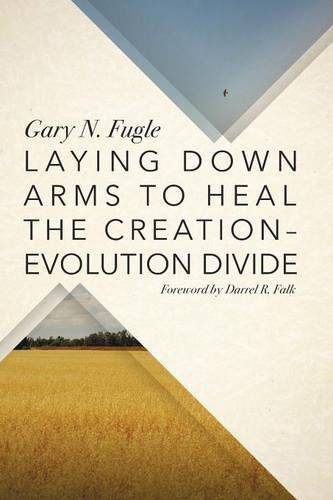 The fourth section of Gary N. Fugle’s book Laying Down Arms to Heal the Creation-Evolution Divide looks at the value of biological evolution. It is hard for the non-scientist, and even many scientists who are not conversant with biology, to appreciate the depth and importance of the evolutionary theory in biology.
[O]nce the idea of evolutionary change is considered, we find that it has enormous power to explain much of what we see in the biological realm. This explanatory power pervades all levels of biology, extending from the origin of cell organelles to complex interactions within ecosystems. With evolution in mind, phenomena in one area of biology after another become understandable like they never were before. Biologists are able to repeatedly exclaim, “Aha! I get it! Now that makes sense.” It is because of this sweeping power to make sense of the natural world that evolution is regarded as one of the few unifying principles in the biology discipline. (p. 129)
Now some biologists will claim that this level of explanation removes God from the picture. Fugle’s response, along with that of other Christian scientists, is a sense of awe in understanding God’s methods of creation.
If you wonder why scientists find the evidence persuasive, read this section of Fugle’s book. He runs through a discussion of body plans and embryology; moves to fossils, with sequential ordering and transitional forms; considers biogeography and the dispersion of forms and species; and concludes with evidence embedded in the genetic coding of DNA. This gives a flavor of the range of evidence for evolution available. It is important to realize however, that the evidence for evolution is so pervasive that no short book can do justice to the sum total. Fugle includes a range of examples, but it would be a mistake to think that this is more than just the tip of the iceberg.
An outline of a few of the examples:
 Whales provide a particularly significant example illustrating a number of the lines of evidence for evolution. Mainstream science leads to the conclusion that whales evolved from land mammals over the last 65 million years or so. Almost every line of evidence for evolution is illustrated by the whale.
The whale fin has the same external hydrodynamic structure as fish but the bone structure found in vertebrates, especially mammals with a humerus, ulna, radius, carpals. Whales also have vestigial pelvic bones.
The embryos of many whales develop hind limb buds that are reabsorbed, as well as external ear lobes, also reabsorbed. “Baleen whale embryos start with nostrils toward the tip of the snout, but, as development progresses, changes in the shape and size of skull bones cause the nostrils to migrate to their final place at the top of the head to form the blowhole.” (p. 144)
The fossil record shows a progression of whales with disappearing rear legs and nostrils at various locations along the snout. Transitional forms abound. The ankle bones of ancient whale precursors have a structure similar to that of even-toed hoofed animals.
The genome project confirms these connections. Whale and dolphin DNA is most similar to the hippopotamus, then cow, sheep, deer and giraffes. All consistent with evolution from an even-toed hoofed precursor. All of these connections could simply be “the way God chose to do it,”creating a succession of unrelated species, but this does not seem as satisfactory as the explanatory power of evolution … as the mechanism God chose to use in creation.
Vestigial structures provide a powerful line of evidence for evolution. The pelvic bones of whales are one example. Moles born blind for life … “also have the basic form of an eye, including a bony eye socket, eyelids, a structural “eyeball,” and even a lens, but a functioning retina for sight is not formed.” (p. 140) “Flightless beetles grow perfectly formed wings that remain permanently locked away under their fused wing covers.” (p. 141) These structures make sense in the context of evolutionary theory, but little sense if we assume spontaneous creation.
Continental drift. Fossils of marsupials, large reptiles, and seed bearing trees are found on Antarctica – in an inhospitable environment today, but similar to those found in Africa and South America. “This is really a rather remarkable confirmation of continental drift and evolutionary theory since no marsupials, reptiles, or trees could possibly have lived on Antarctica if it was always located where it is today.” (p. 189)
 Vestigial genes, duplicate genes and pseudogenes. Production of vitamin C, also know as ascorbic acid, gives an example of a vestigial gene.
The majority of mammals have a useful protein-coding gene for an enzyme (L-gulonolactone oxidase or “GULO”) that allows them to synthesize their own ascorbic acid molecules. However, almost all primates (i.e., tasiers, all monkeys, the great apes, and humans) lack the ability to make ascorbic acid. … It may seem logical to assume that since most primates don’t manufacture ascorbic acid they simply lack the gene for making it. This is not the case! Instead, the DNA of the deficient primates contains a nonfunctional mutant copy of the GULO gene. This dysfunctional DNA sequence is clearly recognizable as the gene for ascorbic acid synthesis, due to the overall matching pattern of DNA bases, but there are noticeable errors in the sequence that interfere with normal production of the GULO enzyme. (p. 199)
Sure, God could have simply created primates with the dysfunctional DNA, but why should we prefer this explanation?
Many genes are duplicated in the genome. These can be modified leading to beneficial new capacities or disabled without affecting the viability of an animal. Evolutionary theory predicts that beneficial mutations will be selected, but inactivated genes will also be carried along for the ride. They experience little selective pressure, either negative or positive. “With the pseudogenes as a nonfunctional passenger, there are no constraints on additional mutations in nucleotide bases and these should accumulate steadily through ancestral lineages without consequence to individual organisms.” (p. 200) One such example is a missing 11 base pair sequence in a version of the SHMT pseudogene in gibbons, orangutans, chimpanzees, gorillas and humans. “The SHMT pseudogene in other primate species is not missing this distinctive set of eleven bases.” (p. 202) The conclusion is that this eleven base pair segment was lost in a common ancestor to these “great apes” after divergence from the other primates. This supports a tree of connection derived from a wide variety of data.
Ring Species. Consider Ensatina eschascholtzii salamanders in Oregon and California. Populations in Oregon interbreed freely, and as the populations move down the Sierra Nevada and the coastal mountains they interbreed freely with neighboring populations. When they overlap again in Southern California the populations cannot interbreed. They are biologically distinct entities. This isn’t “macroevolution” (a category distinction that isn’t really recognized in biology) but it is an illustration of the development of new species through the accumulation of evolutionary change.
For that matter Chihuahuas and Great Danes would likely be considered separate species if we only had these two varieties of dogs. It is the varieties between that connect the two in one family.
And this leads us to …
Macro and micro evolution. There really is no significant distinction between macro and micro evolution, except the amount of time involved. This doesn’t mean we have all the answers In fact, according to Fugle “It has never been certain that we understood all the natural mechanisms needed to explain the grand story of life.” (p. 219)
This is still true, but much progress has been made in the last several decades.
Duplicate genes provide a mechanism for evolution that has only recently been recognized. “In the past, we typically viewed mutations primarily as disruptions in currently functioning systems. But a mutation in a duplicated gene can occur without harming an organism because the original gene still functions and gives rise to the normal protein product.” (p. 219) A duplicate gene can be modified stepwise to give rise to a related, but distinct protein product providing a new functional capacity to an organism. Many active enzymes are similar, but fulfill different functions.
We are also learning that “a relatively small number of genes direct crucial embryonic events.” (p. 220) Changes in these genes can have interesting consequences. Hoxc8 is a gene that produces a product that prevents formation of limbs in snakes. This gene is present in lizards, but the product is not expressed. In another example, Giraffe necks are the result of an extended developmental period for the requisite process, not a distinctively new process.
The take-home message is that genetic-changes that alter the regulation of developmental steps are the likely source of many major evolutionary changes. This means that organism differences may not be so much the presence or absence of particular genes but rather the regulation of where, when, and how existing developmental genes are expressed. It is highly significant that these processes contrast with the typically perceived evolutionary progression of small, accumulated steps. (p. 221)
Major transfers of DNA between organisms likely played a major role in primitive forms of the Precambrian and Cambrian periods as well. We see remnants of these events in the DNA of modern plants and animals.
All of these mechanisms add to our understanding of evolutionary biology and counter some of the skepticism that mutation could lead to new organisms. There may also be other mechanisms not yet fully understood. But the patterns are clear. Biology isn’t a finely tuned machine, but a mesh of potentially interchangeable or malleable components constrained by basic chemistry and physics.
I’ve summarized only a small part of the evidence Gary Fugle outlines in this section (at 94 pages, the longest section of the book) and he’s provided only an overview of the vast amount of evidence for evolutionary biology. There are genuine reasons why scientists believe that the earth is very old and life is interconnected via evolutionary mechanism. Evolution is not a theory in trouble. The value of evolutionary theory is not the elimination of God (despite the claims of a few scientists and the fears of more Christians) but the coherent story that emerges from the evidence of the natural world. It is truly awe inspiring.
Evolutionary theory is the framework through which everything makes sense.
If evolution isn’t true we are left with an enormous number of facts and observations, but no story that puts them together.
What evidence do you find convincing?
If you don’t find the evidence convincing, what would it take to convince you of the strength of evolutionary theory?
If you wish to contact me directly, you may do so at rjs4mail[at]att.net
If interested you can subscribe to a full text feed of my posts at Musings on Science and Theology.
Previous Post

August 27, 2015
Theology of a Prophet
Next Post
August 28, 2015 We Haven't Heard from Chesterton For Too Long
Browse Our Archives
Select a Category Acts of the Apostles Adam Advent Anabaptism Angels Anglican Apologetics Atonement Baptism BCP Prayers Bible Biblical Studies Birds Blogging Bloglossary Bonhoeffer Books Calvinism Christianity Church Church History Coffee Colossians Commentary Recs Conversion Creation Creeds Culture Death Ecclesiastes Economics Education Embracing Grace Emergent Emerging Movement Eschatology Essays Ethics Eucharist Evangelicalism Family Fasting Fathers Fellowship of Differents Footsteps Tour Fun and Whimsical Gospel Grace Happiness Heaven Hell Holy Spirit Irenaeus James Jesus Jesus Creed Job Justification Kingdom of God Law Lectures Lent Liberalism Love and Marriage Mabanteneni Manhood Mary Miracles Missio Alliance MissioLife Missional Missional Jesus Movies and Film New Perspective Northern Seminary OneLife Origins Project Orthodox Parables Pastor's Spouse Pastoring and Leading Pastoring and Preaching Patristics Paul Paul-John Tour Pharisees Pietism Political Theology Prayer and Formation Preaching Problems for Faith Psalm 119 Psalms Public Issues Purgatory Religions Resurrection Revelation Romans Rule of JCreed Science and Faith Sermon on the Mount Sports Ten Commandments Theology Third Way Top Ten Lists Translations Uncategorized Universalism University Ministry Way Out Weekly Meanderings Wisdom Women and Ministry Work Worship Writing & Blogging Youth Ministry
Select a Month July 2021 January 2020 December 2019 November 2019 October 2019 September 2019 August 2019 July 2019 June 2019 May 2019 April 2019 March 2019 February 2019 January 2019 December 2018 November 2018 October 2018 September 2018 August 2018 July 2018 June 2018 May 2018 April 2018 March 2018 February 2018 January 2018 December 2017 November 2017 October 2017 September 2017 August 2017 July 2017 June 2017 May 2017 April 2017 March 2017 February 2017 January 2017 December 2016 November 2016 October 2016 September 2016 August 2016 July 2016 June 2016 May 2016 April 2016 March 2016 February 2016 January 2016 December 2015 November 2015 October 2015 September 2015 August 2015 July 2015 June 2015 May 2015 April 2015 March 2015 February 2015 January 2015 December 2014 November 2014 October 2014 September 2014 August 2014 July 2014 June 2014 May 2014 April 2014 March 2014 February 2014 January 2014 December 2013 November 2013 October 2013 September 2013 August 2013 July 2013 June 2013 May 2013 April 2013 March 2013 February 2013 January 2013 December 2012 November 2012 October 2012 September 2012 August 2012 July 2012 June 2012 May 2012 April 2012 March 2012 February 2012 January 2012 December 2011 November 2011 October 2011 September 2011 August 2011 July 2011 June 2011 May 2011 April 2011 March 2011 February 2011 January 2011 December 2010 November 2010 October 2010 September 2010 August 2010 July 2010 June 2010 May 2010 April 2010 March 2010 February 2010 January 2010 December 2009 November 2009 October 2009 September 2009 August 2009 July 2009 June 2009 May 2009 April 2009 March 2009 February 2009 January 2009 December 2008 November 2008 October 2008 September 2008 August 2008 July 2008 June 2008 May 2008 April 2008 March 2008 February 2008 January 2008 December 2007 November 2007 October 2007 September 2007 August 2007 July 2007 June 2007 May 2007 April 2007 March 2007 February 2007 January 2007 December 2006 November 2006 October 2006 September 2006 August 2006 July 2006 June 2006 May 2006 April 2006 March 2006 February 2006 January 2006 December 2005 November 2005 October 2005 September 2005 August 2005 July 2005 June 2005 May 2005 April 2005 0000
Follow Us!
TAKE THE
Religious Wisdom Quiz
Who prayed for rain after a long drought and sent his servant to look seven times?
Select your answer to see how you score.
Isaiah Elijah Hosea Samuel
Related posts from Jesus Creed


The Gospel of With Us and Through Us

Northern Seminary Announces: Nijay Gupta Joins Faculty

The Gundrys and Me: Ruth Tucker
TRENDING AT PATHEOS Evangelical

Making Stones Into Bread: Choosing the “Right” Work
I was on my online arts ministry Zoom meeting with the International...

Ukraine’s exhausted Christians face fifth winter of war
By Julian Lukins The full-scale war in Ukraine is taking “a serious...

Russell Brand's Conviction is not anti-Christian Persecution
How do we shed the reputation that the Church is OK with...

Have you ever caught yourself saying, “I’ll do it tomorrow,” or “Now...

Write Your Story: A Great Way to Find...
A few month’s back, my son was scrolling around Facebook and saw...

Throughout history, people have pursued pleasure, possessions, relationships, and success in an...
view all Evangelical blogs
Ad-Free & Subscriber Log-In Subscription Support
- About Us
- 2026 Calendar
- Videos
- Podcasts
- Library of World Religions
- Faith In Media Tracker
- Advertise With Us
- Write for Us
- Privacy Policy
- Terms of Service
- Do Not Sell My Data
- Contact Us
- Radiant Digital
- Manage Newsletter Subscriptions
- Unsubscribe From Notifications
- Sitemap
Copyright 2008-2026, Patheos, part of the Radiant Digital network of media brands. All rights reserved.
Subscription Support Ad-Free & Subscriber Log-In
Follow Patheos