
BuddhistCatholicContemplativeEvangelicalGeneral ChristianHinduJewishLatter-day SaintMuslimNew VisionsProgressive Christian
Beliefs
- Buddhist
- Catholic
- Contemplative
- Evangelical
- General Christian
- Hindu
- Jewish
- Latter-day Saint
- More Voices
- Muslim
- New Visions
- Pagan
- Progressive Christian
Topics
- Religion News
- Food and Religion
- Sports and Religion
- Religious Art
- Religious Music and Entertainment
- Religious Events
- History and Religion
- Style and Religion
- Politics and Religion
- Women in Religion
- Recreation Outdoors and Religion
- Business Finance and Religion
- Careers Workplace and Religion
- Education and Religion
- Family Parenting and Religion
- Health Fitness and Religion
- Home and Religion
- Relationships and Religion
- Technology and Religion
- Travel and Religion
Columnists
- Buddhist Columnists
- Business Finance and Religion Columnists
- Careers Workplace and Religion Columnists
- Catholic Columnists
- Contemplative Columnists
- Education and Religion Columnists
- Evangelists Columnists
- Family Parenting and Religion Columnists
- General Christian Columnists
- Health Fitness and Religion Columnists
- Hindu Columnists
- History and Religion Columnists
- Home and Religion Columnists
- Jewish Columnists
- More Voices Columnists
- Latter Day Columnists
- Muslim Columnists
- New Visions Columnists
- Nonreligious Columnists
- Pagan Columnists
- Politics and Religion Columnists
- Progressive Columnists
- Recreation Outdoors and Religion Columnists
- Relationships and Religion Columnists
- Religion News Columnists
- Religious Art Columnists
- Religious Events Columnists
- Religious Music and Entertainment Columnists
- Sports and Religion Columnists
- Style and Religion Columnists
- Technology and Religion Columnists
- Travel and Religion Columnists
- Women in Religion Columnists
Resource Library
- 2026 Calendar
- Library of World Religions
- The 100 Most Holy Places on Earth
- Patheos Answers
- Podcasts
- Videos
- Faith Leaders Database
- Anglican Episcopalian
- Bahai
- Baptist
- Buddhism
- Christianity
- Confucianism
- Eastern Orthodoxy
- Hinduism
- Holiness and Pentecostal
- ISKCON
- Islam
- Judaism
- Lutheran
- Methodist
- The Church of Jesus Christ of Latter-day Saints
- New Age
- Paganism
- Presbytarian and Reformed
- Protestantism
- Religion Behind the Scenes
- Roman Catholic
- Scientology
- Shia Islam
- Sikhism
- Sufism
- Sunni Islam
- Taoism
- Zen
- See all religions
Research Tools
 Ad-Free & Subscriber Log-In Subscription Support
Ad-Free & Subscriber Log-In Subscription Support
Follow Patheos 

- Trending:
- Forgiveness
- |
- Marriage
- |
- Consciousness
- |
- Death Penalty
- |
- Election
- |
- Halloween
 Jesus Creed
- Home
- Evangelical
- Harper Lee’s Original Novel (or was it?)
Harper Lee’s Original Novel (or was it?)
Last updated on: August 6, 2015 at 12:05 am by Scot McKnight
Harper Lee’s Original Novel (or was it?) 2015-08-05T15:38:22-05:00 Scot McKnight
Patheos Explore the world's faith through different perspectives on religion and spirituality! Patheos has the views of the prevalent religions and spiritualities of the world.
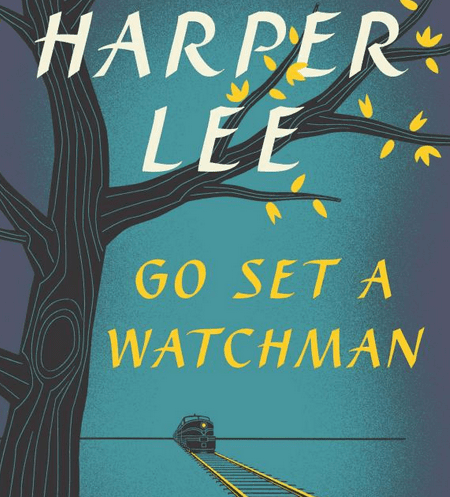
My response to Harper Lee’s novel, Go Set a Watchman. Spoiler alert: you may learn things here you’d rather not know if you plan to read the novel. As with her previous novel, there’s plenty of n-words at work in the narrative. True to its day, illustrating over and over the systemic evil.
I’m no expert on Harper Lee, and even less an expert on fiction. But I give today some reflections on this penetrating novel. It deeply disturbed me. I found the ending far more realistic and ambivalent than I wanted. The book tells the story of racism and the desire by Southern whites to protect their segregationism to which they were blind.
There’s more than a scuffle about the publication of this novel. I’ve been enough of a fan of Harper Lee that I would read anything she’s written, even if it doesn’t live up to her classic novel. What could? I lean toward those who think it should have been published, but there’s a debate here that will be decided by whether you read it or not. I chose the group that reads it. I’m glad I did. I’m glad in part because it opens a window on the development of Lee’s craft and mind.
Let us propose that Harper Lee’s two novels, To Kill a Mockingbird and Go Set a Watchman, were meant to be read in succession — the former first. What then? Before we answer that question, let us counter-propose that the story we’ve been told is accurate: that Harper Lee originally wrote a novel, her editor (Tay Hohoff) asked for lots of revisions, Lee went to work to edit and edit … but finally Hohoff had her way with Lee and Lee started all over with a novel that took on the same basic subject – racism in the South — and that became To Kill a Mockingbird. Go Set a Watchman was the best she could do with the threads she originally created but she junked that novel once Mockingbird took its shape. Let us propose, also, either account of the two novels when it comes to character portrayal in the two novels.
Either way, and the second scenario is most likely the case, Atticus Finch moves from a man of moral and legal principled behavior to a compromised Southern racist who thought Brown v. Board of Education might launch radical equality at the poll booth. Atticus, as he tells his own story in Go Set a Watchman, was a “Jeffersonian Democrat,” which gave voting rights to those who were deemed (indeed) most likely to know what they were doing. Or in a particularly intense scene late in the book, Atticus presses this question on his justice-loving daughter, Jean Louise:
“‘What would happen if all the Negroes in the South were suddenly given full civil rights?… Would you want your state governments run by people who don’t know how to run them?”
Scout, or Jean Louise Finch, was a child observer and early activist for justice for all, including Southern blacks, in To Kill a Mockingbird, becomes the protagonist for racial equality and justice in Go Set a Watchman and a fierce, if at times slightly overcooked, critic of her father and all things Maycomb. She in some ways replaces Atticus for racial equality and justice. But when her father pressed his question on her, Jean Louise came back with ferocity and bitter satire — in the kinds of racist terms so typical of the South at the time of Lee’s writing:
You neglected [she tells Atticus] to tell me that we were naturally better than the Negroes, bless their kinky heads, that they were able to go so far but only so far only … When you talked of justice you forgot to say that justice is something that has nothing to do with people — … You sowed the seeds in me, Atticus, and now it’s coming home to you —
And speaking of God, why didn’t you make it very plain to me that God made the races and put the black folks in Africa with the intention of keeping them there so the missionaries could go tell them that Jesus loved ’em but for ’em to stay in Africa?
You deny that they’re human. [He asks how so?] You deny them hope…. You are telling them that Jesus loves them, but not much.
Her boyfriend from Maycomb County, Hank, was alongside Atticus Finch in the citizens’ council that was doing its best to preserve segregation, and after Jean Louise watched the meeting — reminding us of her watching the entire opposite narrative in Mockingbird — she morally punched out his lights in these words, after he asks her “What was he to do?”
Do? I expect you to keep your gold-plated ass out of citizens’ councils! I don’t give a damn if Atticus is sitting across from you, if the King of England’s on your right and the Lord Jehovah’s on your left — I expect you t be a man, that’s all!
She asks him how he can live with himself.
[He:] It’s comparatively easy. Sometimes I just don’t vote my convictions, that’s all.
Suddenly she heard someone behind her.
A dry, pleasant voice behind her said, “I don’t know why you can’t. Hypocrites have just as much right live in this world as anybody.”
These are the best scenes in the whole book — forcing racism to the front, forcing Jean Louise into the front of defending justice, but by the end of the novel the fierceness of Jean Louise seems to be softening into a kind of empathic accommodationism to the ways of the South. One is left hoping she might take up residence as an advocate against Jeffersonian Democracy in Maycomb. We just don’t know where she might land.
Whether the two stories are to be read consecutively or simply in the developmental narrative of Harper Lee’s own mind, the story of Atticus moving from an advocate of justice against racism to a compromiser in order to preserve Southern ordered living is as human a story as one can find. Virtuous characters do not always live up to their virtues. Some fade into compromise, and Atticus does in this novel due to his desire to preserve Southern conclaves — call it apartheid — and because he didn’t think Southern blacks were morally or culturally or civilly prepared to assume civic duties as were the whites. One thinks of Israel’s first king, Saul, or its second king, David, or any number of biblical characters along with countless others in American history who have lost their virtue. One also thinks Atticus belongs in the Roman system of elitism while his daughter, known to us all as Scout, was Athenian and desirous of equality.
Were it not that Atticus Finch has in the meantime become a paradigm of advocacy for racial justice by means of legal justice the story would be gripping. Or unnerving and frustrating and incomplete.
Go Set a Watchman has its moments — from its Mark Twain-like stories of Jem and Scout in the early portions to it’s powerful scene when Jean Louise observes at the council meeting the racist hypocrisy of her father, her boyfriend Hank, and many other white leaders in Maycomb plotting how to preserve racist systemic structures, and on to the powerful indictment of Jean Louise of her father in a late chapter vendetta — but the plot doesn’t run the emotions. What runs the emotions best are the scenes she sketches, the dialogues and episodes. The plot is little more than now a highbrow New Yorker Jean Louise returning to lowbrow, bumpkin Maycomb twenty years after the famous trial of To Kill a Mockingbird to discover ripening racisms, her shock at the discovery, and her impassioned decision to abandon family and town to simmering, evil racism. As mentioned already, the novel ends with the ambiguous account of a physical double-swat on the chops of Jean Louise by, and a conversation of Scout with, her uncle, Dr Finch, Maycomb’s “most learned licensed eccentric,” and his attempt to persuade her to stay in Maycomb to make a difference. There is not that much ambiguity, perhaps, as it appears to me she will stay and perhaps even accommodate herself to Southern racism. That ending collapsed under the weight of the hope it created — but perhaps that, too, was her point. Maybe the narrative needed more editing and sharpening …
There is a story that after writing Watchman and then converting it in a thorough rewriting into the classic Mockingbird that Harper Lee wrote a second novel — one to fill the gap between Watchman and Mockingbird — that the novel was stolen from her apartment, and that as is well known she never wrote another novel. This story has been told in Charles Shields, Mockingbird. I have no reason to doubt the story just as I have no reason to think it was meant to bridge the gap between Mockingbird and Watchman. We don’t know. I suspect rather that the classic novel was a full blown supersessionism of the earlier attempt and she left it behind her. But whether or not the two are to be read in succession or not, the development in Harper Lee’s mind of the race postures of Atticus is more than a little credible as an account of a sad human story. One worth telling — not uplifting but perhaps ultimately even more a kick in the shins about racism’s evil systemics.
Previous Post

August 5, 2015
For the Classroom
Next Post

August 6, 2015 I Dare You to Change! (RJS)
Browse Our Archives
Select a Category Acts of the Apostles Adam Advent Anabaptism Angels Anglican Apologetics Atonement Baptism BCP Prayers Bible Biblical Studies Birds Blogging Bloglossary Bonhoeffer Books Calvinism Christianity Church Church History Coffee Colossians Commentary Recs Conversion Creation Creeds Culture Death Ecclesiastes Economics Education Embracing Grace Emergent Emerging Movement Eschatology Essays Ethics Eucharist Evangelicalism Family Fasting Fathers Fellowship of Differents Footsteps Tour Fun and Whimsical Gospel Grace Happiness Heaven Hell Holy Spirit Irenaeus James Jesus Jesus Creed Job Justification Kingdom of God Law Lectures Lent Liberalism Love and Marriage Mabanteneni Manhood Mary Miracles Missio Alliance MissioLife Missional Missional Jesus Movies and Film New Perspective Northern Seminary OneLife Origins Project Orthodox Parables Pastor's Spouse Pastoring and Leading Pastoring and Preaching Patristics Paul Paul-John Tour Pharisees Pietism Political Theology Prayer and Formation Preaching Problems for Faith Psalm 119 Psalms Public Issues Purgatory Religions Resurrection Revelation Romans Rule of JCreed Science and Faith Sermon on the Mount Sports Ten Commandments Theology Third Way Top Ten Lists Translations Uncategorized Universalism University Ministry Way Out Weekly Meanderings Wisdom Women and Ministry Work Worship Writing & Blogging Youth Ministry
Select a Month July 2021 January 2020 December 2019 November 2019 October 2019 September 2019 August 2019 July 2019 June 2019 May 2019 April 2019 March 2019 February 2019 January 2019 December 2018 November 2018 October 2018 September 2018 August 2018 July 2018 June 2018 May 2018 April 2018 March 2018 February 2018 January 2018 December 2017 November 2017 October 2017 September 2017 August 2017 July 2017 June 2017 May 2017 April 2017 March 2017 February 2017 January 2017 December 2016 November 2016 October 2016 September 2016 August 2016 July 2016 June 2016 May 2016 April 2016 March 2016 February 2016 January 2016 December 2015 November 2015 October 2015 September 2015 August 2015 July 2015 June 2015 May 2015 April 2015 March 2015 February 2015 January 2015 December 2014 November 2014 October 2014 September 2014 August 2014 July 2014 June 2014 May 2014 April 2014 March 2014 February 2014 January 2014 December 2013 November 2013 October 2013 September 2013 August 2013 July 2013 June 2013 May 2013 April 2013 March 2013 February 2013 January 2013 December 2012 November 2012 October 2012 September 2012 August 2012 July 2012 June 2012 May 2012 April 2012 March 2012 February 2012 January 2012 December 2011 November 2011 October 2011 September 2011 August 2011 July 2011 June 2011 May 2011 April 2011 March 2011 February 2011 January 2011 December 2010 November 2010 October 2010 September 2010 August 2010 July 2010 June 2010 May 2010 April 2010 March 2010 February 2010 January 2010 December 2009 November 2009 October 2009 September 2009 August 2009 July 2009 June 2009 May 2009 April 2009 March 2009 February 2009 January 2009 December 2008 November 2008 October 2008 September 2008 August 2008 July 2008 June 2008 May 2008 April 2008 March 2008 February 2008 January 2008 December 2007 November 2007 October 2007 September 2007 August 2007 July 2007 June 2007 May 2007 April 2007 March 2007 February 2007 January 2007 December 2006 November 2006 October 2006 September 2006 August 2006 July 2006 June 2006 May 2006 April 2006 March 2006 February 2006 January 2006 December 2005 November 2005 October 2005 September 2005 August 2005 July 2005 June 2005 May 2005 April 2005 0000
Follow Us!
TAKE THE
Religious Wisdom Quiz
I am a book of sermons and laws, Moses' final words before entering the Promised Land. What book am I?
Select your answer to see how you score.
The law Moses' testimony Deuteronomy The second law
Related posts from Jesus Creed

Heaven Promise Livestream - Now at 2pm ET...

Heaven Promise Livestream Event
TRENDING AT PATHEOS Evangelical

How the author of the world's best hymn...
I've been working with John Newton for a while now. This makes...

Long before this Lectio Divina, Psalm 130 - the song - started...

What About the Trees? Another Living Parable
After I finished writing the last article about falling leaves as a...

Why Classical Education Is a Conversation, Not a...
Come and Read: Joy in Classical Education When I was a little...

Falling Leaves: A Living Parable on Letting Go
I’ve spent the vast majority of my life in the southeast corner...

Cornell University has received a great deal of negative publicity and intense...
view all Evangelical blogs
Ad-Free & Subscriber Log-In Subscription Support
- About Us
- 2026 Calendar
- Videos
- Podcasts
- Library of World Religions
- Faith In Media Tracker
- Advertise With Us
- Write for Us
- Privacy Policy
- Terms of Service
- Do Not Sell My Data
- Contact Us
- Radiant Digital
- Manage Newsletter Subscriptions
- Unsubscribe From Notifications
- Sitemap
Copyright 2008-2026, Patheos. All rights reserved.
Subscription Support Ad-Free & Subscriber Log-In
Follow Patheos