
BuddhistCatholicContemplativeEvangelicalGeneral ChristianHinduJewishLatter-day SaintMuslimNew VisionsProgressive Christian
Beliefs
- Buddhist
- Catholic
- Contemplative
- Evangelical
- General Christian
- Hindu
- Jewish
- Latter-day Saint
- More Voices
- Muslim
- New Visions
- Pagan
- Progressive Christian
Topics
- Religion News
- Food and Religion
- Sports and Religion
- Religious Art
- Religious Music and Entertainment
- Religious Events
- History and Religion
- Style and Religion
- Politics and Religion
- Women in Religion
- Recreation Outdoors and Religion
- Business Finance and Religion
- Careers Workplace and Religion
- Education and Religion
- Family Parenting and Religion
- Health Fitness and Religion
- Home and Religion
- Relationships and Religion
- Technology and Religion
- Travel and Religion
Columnists
- Buddhist Columnists
- Business Finance and Religion Columnists
- Careers Workplace and Religion Columnists
- Catholic Columnists
- Contemplative Columnists
- Education and Religion Columnists
- Evangelists Columnists
- Family Parenting and Religion Columnists
- General Christian Columnists
- Health Fitness and Religion Columnists
- Hindu Columnists
- History and Religion Columnists
- Home and Religion Columnists
- Jewish Columnists
- More Voices Columnists
- Latter Day Columnists
- Muslim Columnists
- New Visions Columnists
- Nonreligious Columnists
- Pagan Columnists
- Politics and Religion Columnists
- Progressive Columnists
- Recreation Outdoors and Religion Columnists
- Relationships and Religion Columnists
- Religion News Columnists
- Religious Art Columnists
- Religious Events Columnists
- Religious Music and Entertainment Columnists
- Sports and Religion Columnists
- Style and Religion Columnists
- Technology and Religion Columnists
- Travel and Religion Columnists
- Women in Religion Columnists
Resource Library
- 2026 Calendar
- Library of World Religions
- The 100 Most Holy Places on Earth
- Patheos Answers
- Podcasts
- Videos
- Faith Leaders Database
- Anglican Episcopalian
- Bahai
- Baptist
- Buddhism
- Christianity
- Confucianism
- Eastern Orthodoxy
- Hinduism
- Holiness and Pentecostal
- ISKCON
- Islam
- Judaism
- Lutheran
- Methodist
- The Church of Jesus Christ of Latter-day Saints
- New Age
- Paganism
- Presbytarian and Reformed
- Protestantism
- Religion Behind the Scenes
- Roman Catholic
- Scientology
- Shia Islam
- Sikhism
- Sufism
- Sunni Islam
- Taoism
- Zen
- See all religions
Research Tools
 Ad-Free & Subscriber Log-In Subscription Support
Ad-Free & Subscriber Log-In Subscription Support
Follow Patheos 

- Trending:
- Forgiveness
- |
- Marriage
- |
- Consciousness
- |
- Death Penalty
- |
- Election
- |
- Halloween
 Jesus Creed
- Home
- Evangelical
- The Problem(s) with the “Institutional” Church
The Problem(s) with the “Institutional” Church
Last updated on: August 3, 2015 at 2:42 am by Scot McKnight
The Problem(s) with the “Institutional” Church 2015-08-03T02:42:49-05:00 Scot McKnight
Patheos Explore the world's faith through different perspectives on religion and spirituality! Patheos has the views of the prevalent religions and spiritualities of the world.
 No matter how many define it or (don’t define it) and no matter how many are using the expression, lots gets packaged into a tight and hot bundle when someone critiques the “institutional” church. Here’s “Daniel”:
Daniel: I see the institution, the hierarchy, the bureaucracy as crippling the body of Christ. I see it as creating this false dichotomy: If you really want to be influential and important and do something for Jesus, you have to go to seminary, you’ve got to get your degree, you’ve got to get ordained, and then you’ve got to get a microphone, and then you can start making a “difference” in the world. But that has nothing to do with what Jesus came here to start. Nothing.
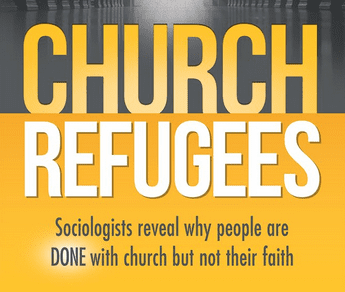
This is from Josh Packard and Ashleigh Hope’s book about The Dones — the formerly active and now no longer in attendance at church, a book called Church Refugees (p. 53).
How do you respond to that complaint by “Daniel”?
Packard and Hope offer a fair and important warning-observation, after admitting that no organization exists without structure, without some kind of institutionalization … yet…:
Sociologically, we know from over a century of studying these kinds of organizations that at some point, the bureaucracy takes over, and much activity in the organization ends up being geared toward its survival (54).
They weren’t frustrated by the existence of structure; they were frustrated when they felt the structure actively prevented them from doing the work they felt called to do. They were frustrated when they found themselves constantly and solely working to keep the organization going.
Heavily centralized and hierarchical organizations tend to concentrate power and gradually compel all activity inward, stifling innovation, creativity, and opposing ideas (56).
One reason The Dones are done is because they wanted to do the work of the church but found too much or only bureaucracy. They are walking away, not from the work of the church, but church work! Notice the tension in this story about “Katie”:
[Katie] told me about her dream to start an art-therapy group in this inner-city neighborhood where she hves and where her former congregation is located…. At first, she was hoping for some support from her congregation for supplies and materials, but eventually asked simply for space to meet. She showed me emails in which the church leaders expressed concern that her plan didn’t include anything about getting the kids to become regular church members or to accept Jesus into their lives. Katie replied that a large number of the kids in the neighborhood were Muslim and that she didn’t feel comfortable playing the role of evangelizer…. “It just got to the point that it was so painfully obvious to me that the art therapy was making more of a real impact in the world, and was feeding me more spiritually as a group of people committed to relationships than my home congregation had ever done.” (58-59)
Packard and Hope continue with this telling observation:
Katie’s story reveals the tension between a church worried about pouring resources into something that doesn’t have an identifiable return on investment and a congregant who simply wants to act, to be “on the giving side,” as Katie put it. There was nothing in Katie’s plan that was geared to lead directly to more bodies in the pews or dollars in the collection plate (59).
What do you think? Should they have supported her so-called “giving” ministry or not? Notice the language of Packard and Hope: “identifiable return” vs. “act” and “giving side” and “more bodies in the pews or dollars.” This kind of language prejudices the whole discussion: the issue here is what is a church and what is church ministry and what does a church do with its resources. Is the church an NGO? Does a church get to decide how its resources are used in line with its mission and theology? Or..?
We need to move on … many of The Dones experience the church as a corporation with the pastor as at least 51% of power as the CEO. Here is how they put it:
The problem, as they saw it, was that there was no true participation in their churches. People were either doing the things that the person or people in charge wanted done, or they weren’t allowed to do much of anything. There was no freedom to truly shape their own community (61).
So I ask how central the following set of observations is to The Dones?
All of these data have convinced me that there is a truly sizable subset of congregants, and the recently dechurched, who desire to be active participants in a community of believers but aren’t willing to be the mouthpiece of someone else’s vision. They want to be able to make meaningful decisions and participate as equals in their communities. Too often, they say, church staff and pastors are willing to empower lay leaders, paid staff, and volunteers to do meaningless, mundane, and unfulfilling work while the senior pastor retains all of the authority and ability to make creative, meaningful decisions on behalf of the congregation (62).
For most of The Dones their passions for community and ministry and service continue in (1) civic and political engagement, (2) small groups or house churches, or (3) informal but spiritually meaningful gatherings (68-76).
Previous Post

August 2, 2015
Good News from the Week
Next Post
August 3, 2015 Caught in the Malestrom?
Browse Our Archives
Select a Category Acts of the Apostles Adam Advent Anabaptism Angels Anglican Apologetics Atonement Baptism BCP Prayers Bible Biblical Studies Birds Blogging Bloglossary Bonhoeffer Books Calvinism Christianity Church Church History Coffee Colossians Commentary Recs Conversion Creation Creeds Culture Death Ecclesiastes Economics Education Embracing Grace Emergent Emerging Movement Eschatology Essays Ethics Eucharist Evangelicalism Family Fasting Fathers Fellowship of Differents Footsteps Tour Fun and Whimsical Gospel Grace Happiness Heaven Hell Holy Spirit Irenaeus James Jesus Jesus Creed Job Justification Kingdom of God Law Lectures Lent Liberalism Love and Marriage Mabanteneni Manhood Mary Miracles Missio Alliance MissioLife Missional Missional Jesus Movies and Film New Perspective Northern Seminary OneLife Origins Project Orthodox Parables Pastor's Spouse Pastoring and Leading Pastoring and Preaching Patristics Paul Paul-John Tour Pharisees Pietism Political Theology Prayer and Formation Preaching Problems for Faith Psalm 119 Psalms Public Issues Purgatory Religions Resurrection Revelation Romans Rule of JCreed Science and Faith Sermon on the Mount Sports Ten Commandments Theology Third Way Top Ten Lists Translations Uncategorized Universalism University Ministry Way Out Weekly Meanderings Wisdom Women and Ministry Work Worship Writing & Blogging Youth Ministry
Select a Month July 2021 January 2020 December 2019 November 2019 October 2019 September 2019 August 2019 July 2019 June 2019 May 2019 April 2019 March 2019 February 2019 January 2019 December 2018 November 2018 October 2018 September 2018 August 2018 July 2018 June 2018 May 2018 April 2018 March 2018 February 2018 January 2018 December 2017 November 2017 October 2017 September 2017 August 2017 July 2017 June 2017 May 2017 April 2017 March 2017 February 2017 January 2017 December 2016 November 2016 October 2016 September 2016 August 2016 July 2016 June 2016 May 2016 April 2016 March 2016 February 2016 January 2016 December 2015 November 2015 October 2015 September 2015 August 2015 July 2015 June 2015 May 2015 April 2015 March 2015 February 2015 January 2015 December 2014 November 2014 October 2014 September 2014 August 2014 July 2014 June 2014 May 2014 April 2014 March 2014 February 2014 January 2014 December 2013 November 2013 October 2013 September 2013 August 2013 July 2013 June 2013 May 2013 April 2013 March 2013 February 2013 January 2013 December 2012 November 2012 October 2012 September 2012 August 2012 July 2012 June 2012 May 2012 April 2012 March 2012 February 2012 January 2012 December 2011 November 2011 October 2011 September 2011 August 2011 July 2011 June 2011 May 2011 April 2011 March 2011 February 2011 January 2011 December 2010 November 2010 October 2010 September 2010 August 2010 July 2010 June 2010 May 2010 April 2010 March 2010 February 2010 January 2010 December 2009 November 2009 October 2009 September 2009 August 2009 July 2009 June 2009 May 2009 April 2009 March 2009 February 2009 January 2009 December 2008 November 2008 October 2008 September 2008 August 2008 July 2008 June 2008 May 2008 April 2008 March 2008 February 2008 January 2008 December 2007 November 2007 October 2007 September 2007 August 2007 July 2007 June 2007 May 2007 April 2007 March 2007 February 2007 January 2007 December 2006 November 2006 October 2006 September 2006 August 2006 July 2006 June 2006 May 2006 April 2006 March 2006 February 2006 January 2006 December 2005 November 2005 October 2005 September 2005 August 2005 July 2005 June 2005 May 2005 April 2005 0000
Follow Us!
TAKE THE
Religious Wisdom Quiz
Who did God call to lead the Israelites out of Egypt?
Select your answer to see how you score.
Joseph David Aaron Moses
Related posts from Jesus Creed


Weekly Meanderings, 16 March 2019

TRENDING AT PATHEOS Evangelical

How the author of the world's best hymn...
I've been working with John Newton for a while now. This makes...

Long before this Lectio Divina, Psalm 130 - the song - started...

What About the Trees? Another Living Parable
After I finished writing the last article about falling leaves as a...

Why Classical Education Is a Conversation, Not a...
Come and Read: Joy in Classical Education When I was a little...

Falling Leaves: A Living Parable on Letting Go
I’ve spent the vast majority of my life in the southeast corner...

Cornell University has received a great deal of negative publicity and intense...
view all Evangelical blogs
Ad-Free & Subscriber Log-In Subscription Support
- About Us
- 2026 Calendar
- Videos
- Podcasts
- Library of World Religions
- Faith In Media Tracker
- Advertise With Us
- Write for Us
- Privacy Policy
- Terms of Service
- Do Not Sell My Data
- Contact Us
- Radiant Digital
- Manage Newsletter Subscriptions
- Unsubscribe From Notifications
- Sitemap
Copyright 2008-2026, Patheos. All rights reserved.
Subscription Support Ad-Free & Subscriber Log-In
Follow Patheos