
BuddhistCatholicContemplativeEvangelicalGeneral ChristianHinduJewishLatter-day SaintMuslimNew VisionsProgressive Christian
Beliefs
- Buddhist
- Catholic
- Contemplative
- Evangelical
- General Christian
- Hindu
- Jewish
- Latter-day Saint
- More Voices
- Muslim
- New Visions
- Pagan
- Progressive Christian
Topics
- Religion News
- Food and Religion
- Sports and Religion
- Religious Art
- Religious Music and Entertainment
- Religious Events
- History and Religion
- Style and Religion
- Politics and Religion
- Women in Religion
- Recreation Outdoors and Religion
- Business Finance and Religion
- Careers Workplace and Religion
- Education and Religion
- Family Parenting and Religion
- Health Fitness and Religion
- Home and Religion
- Relationships and Religion
- Technology and Religion
- Travel and Religion
Columnists
- Buddhist Columnists
- Business Finance and Religion Columnists
- Careers Workplace and Religion Columnists
- Catholic Columnists
- Contemplative Columnists
- Education and Religion Columnists
- Evangelists Columnists
- Family Parenting and Religion Columnists
- General Christian Columnists
- Health Fitness and Religion Columnists
- Hindu Columnists
- History and Religion Columnists
- Home and Religion Columnists
- Jewish Columnists
- More Voices Columnists
- Latter Day Columnists
- Muslim Columnists
- New Visions Columnists
- Nonreligious Columnists
- Pagan Columnists
- Politics and Religion Columnists
- Progressive Columnists
- Recreation Outdoors and Religion Columnists
- Relationships and Religion Columnists
- Religion News Columnists
- Religious Art Columnists
- Religious Events Columnists
- Religious Music and Entertainment Columnists
- Sports and Religion Columnists
- Style and Religion Columnists
- Technology and Religion Columnists
- Travel and Religion Columnists
- Women in Religion Columnists
Resource Library
- 2026 Calendar
- Library of World Religions
- The 100 Most Holy Places on Earth
- Patheos Answers
- Podcasts
- Videos
- Faith Leaders Database
- Anglican Episcopalian
- Bahai
- Baptist
- Buddhism
- Christianity
- Confucianism
- Eastern Orthodoxy
- Hinduism
- Holiness and Pentecostal
- ISKCON
- Islam
- Judaism
- Lutheran
- Methodist
- The Church of Jesus Christ of Latter-day Saints
- New Age
- Paganism
- Presbytarian and Reformed
- Protestantism
- Religion Behind the Scenes
- Roman Catholic
- Scientology
- Shia Islam
- Sikhism
- Sufism
- Sunni Islam
- Taoism
- Zen
- See all religions
Research Tools
 Ad-Free & Subscriber Log-In Subscription Support
Ad-Free & Subscriber Log-In Subscription Support
Follow Patheos 

- Trending:
- Forgiveness
- |
- Marriage
- |
- Consciousness
- |
- Death Penalty
- |
- Election
- |
- Halloween
 Jesus Creed
- Home
- Evangelical
- Church Refugees 1: Ethan’s Story
Church Refugees 1: Ethan’s Story
Last updated on: July 22, 2015 at 12:05 am by Scot McKnight
Church Refugees 1: Ethan’s Story 2015-07-19T15:09:57-05:00 Scot McKnight
Patheos Explore the world's faith through different perspectives on religion and spirituality! Patheos has the views of the prevalent religions and spiritualities of the world.
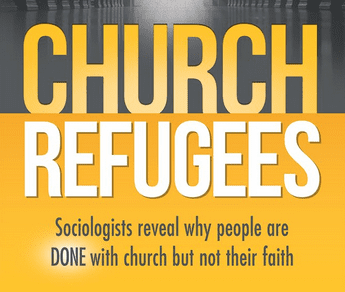 The essence of “church refugees,” or the “dechurching of the former intensely involved church leaders,” is “they’re finding ways to be the church outside of the institution” (27).
I quote from Josh Packard and Ashleigh Hope’s Church Refugees as I set off on a series on this book, one that has solid and rigorous sociological data at the core. I teach at Northern Seminary, and we prepare people for ministries in churches, so I am doubly curious about church refugees — most importantly, why they are leaving and what can be done about it. (Not that I think there’s a fix.) Here are some important introductory observations and citations from the opening chapter in this book.
We are not dealing here with the perennially cynical or with the marginalized or the lazy but with leader-types:
The story that emerged from the data is that people with access to alternative ways of reaching their goals of community and social engagement are opting out of church. In our society, this is typically white people for issues of social class, not because of heritage, tradition, or ethnicity. White people in the U.S. have much greater access to social institutions and systems of power, so when they leave the church, they can find other ways of getting things done. Also, white people generally have much more social and cultural capital than other groups, making it more possible for them to realize their goals without a supporting institution (10-11).
Here are the four major themes of the church refugees, the dechurched, the Dones:
They wanted community.. .and got judgment.
They wanted to affect the life of the church.. .and got bureaucracy.
They wanted conversation.. .and got doctrine.
They wanted meaningful engagement with the world… and got moral prescription.
And what happens to them when they leave (nothing):
If Ashleigh and I could communicate one thing about the demographics of the Dones, it would be that this is an issue of talents and energy, not of numbers. While we have strong suspicions about the rising numbers of Dones, this is, ultimately, not a story of numbers. It’s a story of what happens when an organization invests in training and discipling scores of people and yet does very little to retain them or reengage them when they leave (11).
Nor are these refugees occasional church goers and little more than disaffected pew sitters. These are engaged folks who have consciously chosen to do it another way:
This book is about a wholly different kind of churchgoer. It’s about people who make explicit and intentional decisions to leave the church and organized religion. We call these people the dechurched or the Dones: They’re done with church. They’re tired and fed up with church. They’re dissatisfied with the structure, social message, and politics of the institutional church, and they’ve decided they and their spiritual lives are better off lived outside of organized religion. As one of our respondents put it, “I guess the church just sort of churched the church out of me” (14).
They become church refugees in order to survive spiritually:
They feel they’ve been forced to leave a place they consider home because they feel a kind of spiritual persecution and it would be dangerous, spiritually, for them to remain. They tell stories of frustration, humiliation, judgment, embarrassment, and fear that caused them to leave the church. They remark time and again that they worked diligently for reform within the church but felt the church was exclusively focused on its own survival and resistant to change. If they stayed, they would risk further estrangement from their spiritual selves, from God, and from a religion they still believe in (15).
The church, they feel, is keeping them from God. According to them, the church, not God, is the problem, and they’ve stayed in the church long past the point that it ceased to be fulfilling or even sustaining (16).
Furthermore, they flee the church not because they hate the church. They have, in fact, worked tirelessly on behalf of the church. They flee for their own spiritual safety, to reconnect with a God they feel has been made distant to them by the structure of religion as practiced in organizations (16).
Two broader trends are at least at work: a loss of trust in religious leaders and institutions, and alongside this is an increasing sense that the local church’s message is irrelevant to daily life. Community is a desire as much as ever, but not one that is institutional. The numbers of Dones do not threaten the vastness of churchgoers but the Dones may well indicate the condition of the church in the USA.
The Dones are not so much angry as they are uninterested in what churches are doing. Churches is not where their kind of spiritual life can flourish. But what is most notable about the Dones is their activistic approach to life: they are, in fact, perfect candidates for the church life but find the church life not relevant to their kind of spiritual activism.
But they are telling an important story:
They’re the ones who, prior to leaving, showed up at worship every week and tithed. They organized and participated in small-group activities, Bible studies, worship planning, church councils, elder teams, and a plethora of other activities and services that are the lifeblood of churches big and small. They were the keepers of organizational history and played a significant role in defining institutional identity (21-22).
And here is Ethan’s story that illustrates Packard and Hope’s Refugee (23-24):
So I did campus ministry for years. I learned how to preach, I learned youth ministry, learned biblical counseling, and when I got out I went back to my old church, and they hired me as their youth pastor. Then I did assistant pastoring for three and a half years there, and I ran a youth drop-in center that was sponsored by United Way, where we tutored kids and had organized basketball, volleyball, field trips, and that type of thing. I did youth group for the church, and I led worship, and I led weddings, burials, and that sort of thing. For years did all of that.
When I left after a scandal with the head pastor cheating on his wife, we attended another church a few towns over, and was helping with the youth group there, and then they offered me a position. For the next six years, I was an associate pastor, and we did all the adult Christian education, children’s ministry, led worship, pretty much a little of everything. From there it was on to Florida following my wife’s job and on to another church which dissolved because the elders were stealing church money, and then out to Colorado, where we got involved again. We just can’t help getting involved when we have talents to offer and we see a need, I guess.
Since 2010, though, when we finally left the church, we’ve just done house church where we create and do things with, others rather than for them. I’m done with the top-down, institutional church. I thought we could fix it from within, but we got beat up pretty bad. I know we didn’t always handle things the best way, but at the same time, we kept showing up and volunteering because we felt the church was God’s home.
I don’t think that’s the case anymore. The church is wherever God’s work is being done, and too often the way we were treated and the things I saw happen in the institutional church to other people just weren’t in alliance with what we thought God wanted.
But here’s the thing: I don’t think the institutional church is filled with bad people. I think the church in America is an inherently flawed structure that compels people to make poor decisions. You’re basically judged on how well you can preach and the numbers you bring in. / realize the church isn’t perfect and it’s made up of people who aren’t perfect and I’m not perfect either, but the church needs to see that there are things that are broken about the structure, not the people.
Previous Post

July 21, 2015
Coffee Berry Borer Begone!
Browse Our Archives
Select a Category Acts of the Apostles Adam Advent Anabaptism Angels Anglican Apologetics Atonement Baptism BCP Prayers Bible Biblical Studies Birds Blogging Bloglossary Bonhoeffer Books Calvinism Christianity Church Church History Coffee Colossians Commentary Recs Conversion Creation Creeds Culture Death Ecclesiastes Economics Education Embracing Grace Emergent Emerging Movement Eschatology Essays Ethics Eucharist Evangelicalism Family Fasting Fathers Fellowship of Differents Footsteps Tour Fun and Whimsical Gospel Grace Happiness Heaven Hell Holy Spirit Irenaeus James Jesus Jesus Creed Job Justification Kingdom of God Law Lectures Lent Liberalism Love and Marriage Mabanteneni Manhood Mary Miracles Missio Alliance MissioLife Missional Missional Jesus Movies and Film New Perspective Northern Seminary OneLife Origins Project Orthodox Parables Pastor's Spouse Pastoring and Leading Pastoring and Preaching Patristics Paul Paul-John Tour Pharisees Pietism Political Theology Prayer and Formation Preaching Problems for Faith Psalm 119 Psalms Public Issues Purgatory Religions Resurrection Revelation Romans Rule of JCreed Science and Faith Sermon on the Mount Sports Ten Commandments Theology Third Way Top Ten Lists Translations Uncategorized Universalism University Ministry Way Out Weekly Meanderings Wisdom Women and Ministry Work Worship Writing & Blogging Youth Ministry
Select a Month July 2021 January 2020 December 2019 November 2019 October 2019 September 2019 August 2019 July 2019 June 2019 May 2019 April 2019 March 2019 February 2019 January 2019 December 2018 November 2018 October 2018 September 2018 August 2018 July 2018 June 2018 May 2018 April 2018 March 2018 February 2018 January 2018 December 2017 November 2017 October 2017 September 2017 August 2017 July 2017 June 2017 May 2017 April 2017 March 2017 February 2017 January 2017 December 2016 November 2016 October 2016 September 2016 August 2016 July 2016 June 2016 May 2016 April 2016 March 2016 February 2016 January 2016 December 2015 November 2015 October 2015 September 2015 August 2015 July 2015 June 2015 May 2015 April 2015 March 2015 February 2015 January 2015 December 2014 November 2014 October 2014 September 2014 August 2014 July 2014 June 2014 May 2014 April 2014 March 2014 February 2014 January 2014 December 2013 November 2013 October 2013 September 2013 August 2013 July 2013 June 2013 May 2013 April 2013 March 2013 February 2013 January 2013 December 2012 November 2012 October 2012 September 2012 August 2012 July 2012 June 2012 May 2012 April 2012 March 2012 February 2012 January 2012 December 2011 November 2011 October 2011 September 2011 August 2011 July 2011 June 2011 May 2011 April 2011 March 2011 February 2011 January 2011 December 2010 November 2010 October 2010 September 2010 August 2010 July 2010 June 2010 May 2010 April 2010 March 2010 February 2010 January 2010 December 2009 November 2009 October 2009 September 2009 August 2009 July 2009 June 2009 May 2009 April 2009 March 2009 February 2009 January 2009 December 2008 November 2008 October 2008 September 2008 August 2008 July 2008 June 2008 May 2008 April 2008 March 2008 February 2008 January 2008 December 2007 November 2007 October 2007 September 2007 August 2007 July 2007 June 2007 May 2007 April 2007 March 2007 February 2007 January 2007 December 2006 November 2006 October 2006 September 2006 August 2006 July 2006 June 2006 May 2006 April 2006 March 2006 February 2006 January 2006 December 2005 November 2005 October 2005 September 2005 August 2005 July 2005 June 2005 May 2005 April 2005 0000
Follow Us!
TAKE THE
Religious Wisdom Quiz
In Revelation, how many elders sit on thrones around God's throne?
Select your answer to see how you score.
Seven Seventy Twelve Twenty-four
Related posts from Jesus Creed


The Gospel of With Us and Through Us

Northern Seminary Announces: Nijay Gupta Joins Faculty

The Gundrys and Me: Ruth Tucker
TRENDING AT PATHEOS Evangelical

The REST of Your Life: A Creative Wrestles...
This week I had a conversation with a good friend from church....

How the author of the world's best hymn...
I've been working with John Newton for a while now. This makes...

Long before this Lectio Divina, Psalm 130 - the song - started...

What About the Trees? Another Living Parable
After I finished writing the last article about falling leaves as a...

Why Classical Education Is a Conversation, Not a...
Come and Read: Joy in Classical Education When I was a little...

Cornell University has received a great deal of negative publicity and intense...
view all Evangelical blogs
Ad-Free & Subscriber Log-In Subscription Support
- About Us
- 2026 Calendar
- Videos
- Podcasts
- Library of World Religions
- Faith In Media Tracker
- Advertise With Us
- Write for Us
- Privacy Policy
- Terms of Service
- Do Not Sell My Data
- Contact Us
- Radiant Digital
- Manage Newsletter Subscriptions
- Unsubscribe From Notifications
- Sitemap
Copyright 2008-2026, Patheos. All rights reserved.
Subscription Support Ad-Free & Subscriber Log-In
Follow Patheos