
BuddhistCatholicContemplativeEvangelicalGeneral ChristianHinduJewishLatter-day SaintMuslimNew VisionsProgressive Christian
Beliefs
- Buddhist
- Catholic
- Contemplative
- Evangelical
- General Christian
- Hindu
- Jewish
- Latter-day Saint
- More Voices
- Muslim
- New Visions
- Pagan
- Progressive Christian
Topics
- Religion News
- Food and Religion
- Sports and Religion
- Religious Art
- Religious Music and Entertainment
- Religious Events
- History and Religion
- Style and Religion
- Politics and Religion
- Women in Religion
- Recreation Outdoors and Religion
- Business Finance and Religion
- Careers Workplace and Religion
- Education and Religion
- Family Parenting and Religion
- Health Fitness and Religion
- Home and Religion
- Relationships and Religion
- Technology and Religion
- Travel and Religion
Columnists
- Buddhist Columnists
- Business Finance and Religion Columnists
- Careers Workplace and Religion Columnists
- Catholic Columnists
- Contemplative Columnists
- Education and Religion Columnists
- Evangelists Columnists
- Family Parenting and Religion Columnists
- General Christian Columnists
- Health Fitness and Religion Columnists
- Hindu Columnists
- History and Religion Columnists
- Home and Religion Columnists
- Jewish Columnists
- More Voices Columnists
- Latter Day Columnists
- Muslim Columnists
- New Visions Columnists
- Nonreligious Columnists
- Pagan Columnists
- Politics and Religion Columnists
- Progressive Columnists
- Recreation Outdoors and Religion Columnists
- Relationships and Religion Columnists
- Religion News Columnists
- Religious Art Columnists
- Religious Events Columnists
- Religious Music and Entertainment Columnists
- Sports and Religion Columnists
- Style and Religion Columnists
- Technology and Religion Columnists
- Travel and Religion Columnists
- Women in Religion Columnists
Resource Library
- 2026 Calendar
- Library of World Religions
- The 100 Most Holy Places on Earth
- Patheos Answers
- Podcasts
- Videos
- Faith Leaders Database
- Anglican Episcopalian
- Bahai
- Baptist
- Buddhism
- Christianity
- Confucianism
- Eastern Orthodoxy
- Hinduism
- Holiness and Pentecostal
- ISKCON
- Islam
- Judaism
- Lutheran
- Methodist
- The Church of Jesus Christ of Latter-day Saints
- New Age
- Paganism
- Presbytarian and Reformed
- Protestantism
- Religion Behind the Scenes
- Roman Catholic
- Scientology
- Shia Islam
- Sikhism
- Sufism
- Sunni Islam
- Taoism
- Zen
- See all religions
Research Tools
 Ad-Free & Subscriber Log-In Subscription Support
Ad-Free & Subscriber Log-In Subscription Support
Follow Patheos 

- Trending:
- Forgiveness
- |
- Marriage
- |
- Consciousness
- |
- Death Penalty
- |
- Election
- |
- Halloween
 Jesus Creed
- Home
- Evangelical
- A Matter of Interpretation (RJS)
A Matter of Interpretation (RJS)
Last updated on: July 21, 2015 at 5:46 am by RJS
A Matter of Interpretation (RJS) 2015-07-05T19:03:26-05:00 RJS
Patheos Explore the world's faith through different perspectives on religion and spirituality! Patheos has the views of the prevalent religions and spiritualities of the world.
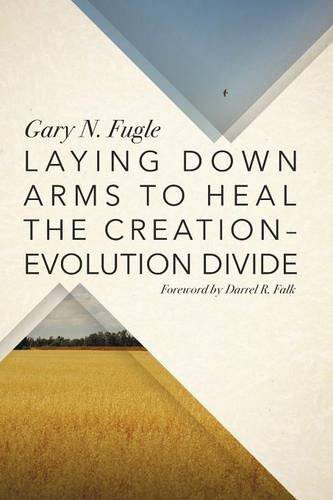 Part II of Gary N. Fugle’s new book Laying Down Arms to Heal the Creation-Evolution Divide looks at prominent questions that concern many Christians arising from the evidence for the age of the earth (4.5 billion years) and by evolutionary biology. Gary Fugle (Ph.D. UC Santa Barbara) is a Christian who spent many years as a biology professor (now retired) at Butte College in Oroville, near Chico California. He has heard all the typical “Christian” (i.e. spontaneous creationist) responses to evolutionary biology, some needing serious reflection, others somewhat concerning. I will focus primarily on the chapter 4 (What Can the Natural World Tell Us?) and summarize only briefly chapter 5 (God Wouldn’t Do It That Way) and chapter 6 (Foundational Views in Christian Faith). I recommend the chapters in their entirety to those interested in this discussion.
A God of Deception? The earth looks old, very old. Of this there is no real doubt or disagreement. One way that Christians reconcile this appearance of age with the age inferred from Genesis – a six day creation and counting the years in the genealogies – is to postulate a mature creation. Fugle sees two significant problems with this approach.
First, it means that nothing can be truly known about the past. For some conservative Christians, this leads to a clean and simple conclusion that the Bible is the only reliable source for knowledge about historic events. But it also suggests that all or a large part of many scientific disciplines, including cosmology, astronomy, physics, geology, and pre-biblical archaeology, are based merely on illusion. (p. 34)
A second and perhaps more crucial implication of the false appearance argument is what it suggests about God, the Creator. It implies that his creation is full of deception – not just a little, but detailed and elaborate deception.
… According to Psalm 19:1-2, “The heavens declare the glory of God, the skies proclaim the work of his hands. Day after day they pour forth speech; night after night they display knowledge” (my emphasis). Christians are called to trust in a God who is wholly truthful and faithful, not one who would create a deceptively fake image of reality in his natural creation. The important implication is that God reveals truth both in the Bible and in nature. (p. 35)
The old earth progressive creation view can escape many of these problems, but there is still an an appearance of evolution embedded, for example, in the genomes of diverse life forms. These are not obvious to a casual observer, but are convincing to the vast majority of trained biologists, both Christian and non-Christians. They are also convincing to most of us trained in other areas who are familiar with genetic data.
A Matter of Interpretation. Fugle understands the high authority of the Bible in Christian thought and life. He agrees with it. The issue isn’t the authority of scripture. It is important to distinguish between the authority of scripture and the authority of a particular interpretation of scripture.
There is a crucial distinction here between the inerrancy of Scripture itself and the supposed inerrancy of any particular interpretation of Scripture. If there are good natural evidences to support evolution, or a very old age for the earth, then to claim we should defer to a young-earth interpretation of the Bible is really an emotional appeal inappropriately fortified by reference to our high view of Scripture. A young-earth creationist interpretation is not equivalent to the Bible itself. (p. 38)
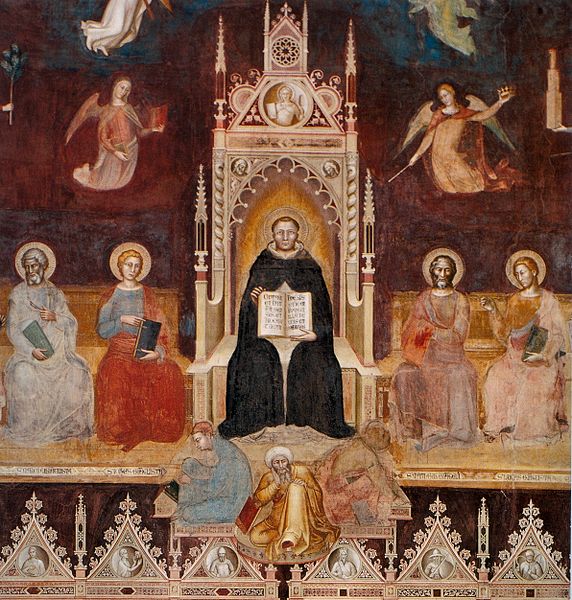 This is a key point – and Fugle backs it up by reference to church leaders and thinkers including Augustine, Thomas Aquinas, John Calvin, Charles Hodge. He quotes Thomas Aquinas, Summa Theologica First Part, Question 68, Article I, Answer.
Two rules are to be observed, as Augustine teaches. The first is, to hold the truth of Scripture without wavering. The second is that since Holy Scripture can be explained in a multiplicity of senses, one should adhere to a particular explanation, only in such measure as to be ready to abandon it, if it be proved with certainty to be false; lest Holy Scripture be exposed to the ridicule of unbelievers, and obstacles be placed to their believing.
Neither Thomas Aquinas or Augustine were closet evolutionists – they both held views consistent with their respective thirteenth century and fifth century contexts. But the two rules are ones we can affirm still today, even when some of our conclusions based on increasing knowledge of God’s creation change.
Presuppositions exist – but don’t explain away the data. It is common for spontaneous creationists to claim that it is the naturalistic presuppositions of scientists that lead to evolutionary theory. The implication is that knowledge from from the Bible is infallible, but knowledge derived from observation of the natural world is intrinsically fallible. That human interpretations are fallible goes without saying. But this doesn’t really get us anywhere. As Fugle points out:
We cannot logically reject an open study of natural information because we understand humans are fallible and then ignore the necessary correlate that it is the same fallible humans who are attempting to interpret the Bible. If we cannot be trusted with correct interpretations of science, why should we think we can be interpreted with interpretations of the biblical text? Some Christians may claim that the Holy Spirit will open our eyes to the words of Scripture, but there are no solid grounds for claiming that the Holy Spirit cannot lead believers just as faithfully in interpreting God’s natural creation. (p. 40-41)
While many biologists and other scientists do proceed with atheist, agnostic, and naturalist presuppositions most Christian scientists see the same data, listen to the same arguments, and arrive at the same basic conclusions concerning the science itself. There are at times overly ambitious metaphysical conclusions drawn (i.e. science disproves God and there is no purpose or teleology to life) but these do not undermine the basic science.
Time Marches On. The Bible was written many millenia ago. We should not expect the conclusions of modern science to appear in the text. The purpose is not to teach science, but to reveal God’s relationship with his creation and creatures.
The Bible will always inform our scientific view by declaring that there is a sovereign Creator-God behind everything that is studied, but we should not be surprised that science reveals aspects of creation that were not described or hinted at in the biblical texts. … This is not an elevation of general revelation (nature) over special revelation (the Bible); it is an integrated coherent view of God’s message to his people. The proposition is not to compromise one’s devotion to God or to be “blown here and there by every wind of teaching” (Eph 4:14) but to expand one’s understanding of how awesome God is. It is also not to compromise the integrity of the Bible but to fully enhance one’s interpretation of Scripture to include all the glory that God has chosen to reveal. (p. 44)
Bloody, Random, and New. The next two chapters in Laying Down Arms explore the objections that some Christians raise to an evolutionary view of creation. Most notably, that evolution is both red in tooth and claw and random. Fugle works through these objections pointing out that random does not necessarily mean “purposeless.” Random processes can be used to produce great things. He also discusses the “bloody” nature of evolution (by the way, no more violent than the nature we observe around us every day). He points out that there is nothing in the Bible that claims that all death was absent in Eden.
There is also the claim that evolution is new with the implication that if it was good enough for Augustine, Aquinas, or Calvin, it is good enough for us. To address this concern Fugle looks at the foundational views in Christian faith. Although these men were all committed to the Scripture, they held a range of views concerning creation and argued against various views active in their context and culture. It is also true that responses to evolution were varied with both acceptance and rejection in the first hundred years – 1859-1959. (We looked at the variety of reactions among Presbyterians as described in David N. Livingstone’s Dealing with Darwin (Posts))
The only universal Christian doctrine of creation through history has been that God created the heavens and the earth and all that is in them.
Even further, real Christian orthodoxy as demonstrated by leading church theologians has been to wrestle and reevaluate specific interpretations of biblical passages, not to hold fast to single readings. The great thinkers in history were humble to the fact that their conclusions were always subservient to the real truth known only by God. … The strongest Christian tradition has been to actively formulate biblical understandings that coincide with natural revelations. Given our expanding knowledge of the natural world, we should grant that the best interpretations expressed in the past are not necessarily the best interpretations now. In this way, when believers consider the encompassing view of evolutionary creation we are actually following the inspirational lead of great Christian thinkers and foundational theologians in church history. (p. 64-65)
Does God, through the Holy Spirit, protect our interpretation of Scripture but not our interpretation of the natural world?
What does it mean to be humble in our conclusions and confident in our faith?
What are the primary question surrounding evolutionary biology and Christian faith?
If you wish to contact me directly you may do so at rjs4mail[at]att.net
If interested you can subscribe to a full text feed of my posts at Musings on Science and Theology.
Previous Post

July 21, 2015
The Confederate Flag and the Christian: 2 or 3 Questions
Next Post
July 21, 2015 In Green Bank Put it Away
Browse Our Archives
Select a Category Acts of the Apostles Adam Advent Anabaptism Angels Anglican Apologetics Atonement Baptism BCP Prayers Bible Biblical Studies Birds Blogging Bloglossary Bonhoeffer Books Calvinism Christianity Church Church History Coffee Colossians Commentary Recs Conversion Creation Creeds Culture Death Ecclesiastes Economics Education Embracing Grace Emergent Emerging Movement Eschatology Essays Ethics Eucharist Evangelicalism Family Fasting Fathers Fellowship of Differents Footsteps Tour Fun and Whimsical Gospel Grace Happiness Heaven Hell Holy Spirit Irenaeus James Jesus Jesus Creed Job Justification Kingdom of God Law Lectures Lent Liberalism Love and Marriage Mabanteneni Manhood Mary Miracles Missio Alliance MissioLife Missional Missional Jesus Movies and Film New Perspective Northern Seminary OneLife Origins Project Orthodox Parables Pastor's Spouse Pastoring and Leading Pastoring and Preaching Patristics Paul Paul-John Tour Pharisees Pietism Political Theology Prayer and Formation Preaching Problems for Faith Psalm 119 Psalms Public Issues Purgatory Religions Resurrection Revelation Romans Rule of JCreed Science and Faith Sermon on the Mount Sports Ten Commandments Theology Third Way Top Ten Lists Translations Uncategorized Universalism University Ministry Way Out Weekly Meanderings Wisdom Women and Ministry Work Worship Writing & Blogging Youth Ministry
Select a Month July 2021 January 2020 December 2019 November 2019 October 2019 September 2019 August 2019 July 2019 June 2019 May 2019 April 2019 March 2019 February 2019 January 2019 December 2018 November 2018 October 2018 September 2018 August 2018 July 2018 June 2018 May 2018 April 2018 March 2018 February 2018 January 2018 December 2017 November 2017 October 2017 September 2017 August 2017 July 2017 June 2017 May 2017 April 2017 March 2017 February 2017 January 2017 December 2016 November 2016 October 2016 September 2016 August 2016 July 2016 June 2016 May 2016 April 2016 March 2016 February 2016 January 2016 December 2015 November 2015 October 2015 September 2015 August 2015 July 2015 June 2015 May 2015 April 2015 March 2015 February 2015 January 2015 December 2014 November 2014 October 2014 September 2014 August 2014 July 2014 June 2014 May 2014 April 2014 March 2014 February 2014 January 2014 December 2013 November 2013 October 2013 September 2013 August 2013 July 2013 June 2013 May 2013 April 2013 March 2013 February 2013 January 2013 December 2012 November 2012 October 2012 September 2012 August 2012 July 2012 June 2012 May 2012 April 2012 March 2012 February 2012 January 2012 December 2011 November 2011 October 2011 September 2011 August 2011 July 2011 June 2011 May 2011 April 2011 March 2011 February 2011 January 2011 December 2010 November 2010 October 2010 September 2010 August 2010 July 2010 June 2010 May 2010 April 2010 March 2010 February 2010 January 2010 December 2009 November 2009 October 2009 September 2009 August 2009 July 2009 June 2009 May 2009 April 2009 March 2009 February 2009 January 2009 December 2008 November 2008 October 2008 September 2008 August 2008 July 2008 June 2008 May 2008 April 2008 March 2008 February 2008 January 2008 December 2007 November 2007 October 2007 September 2007 August 2007 July 2007 June 2007 May 2007 April 2007 March 2007 February 2007 January 2007 December 2006 November 2006 October 2006 September 2006 August 2006 July 2006 June 2006 May 2006 April 2006 March 2006 February 2006 January 2006 December 2005 November 2005 October 2005 September 2005 August 2005 July 2005 June 2005 May 2005 April 2005 0000
Follow Us!
TAKE THE
Religious Wisdom Quiz
According to 1 Peter, believers are a chosen people, a royal priesthood, and what else?
Select your answer to see how you score.
A holy nation, God's special possession Salt of the earth Ambassadors for Christ A light to the world
Related posts from Jesus Creed


The Gospel of With Us and Through Us

Northern Seminary Announces: Nijay Gupta Joins Faculty

The Gundrys and Me: Ruth Tucker
TRENDING AT PATHEOS Evangelical

The REST of Your Life: A Creative Wrestles...
This week I had a conversation with a good friend from church....

How the author of the world's best hymn...
I've been working with John Newton for a while now. This makes...

Long before this Lectio Divina, Psalm 130 - the song - started...

What About the Trees? Another Living Parable
After I finished writing the last article about falling leaves as a...

Why Classical Education Is a Conversation, Not a...
Come and Read: Joy in Classical Education When I was a little...

Cornell University has received a great deal of negative publicity and intense...
view all Evangelical blogs
Ad-Free & Subscriber Log-In Subscription Support
- About Us
- 2026 Calendar
- Videos
- Podcasts
- Library of World Religions
- Faith In Media Tracker
- Advertise With Us
- Write for Us
- Privacy Policy
- Terms of Service
- Do Not Sell My Data
- Contact Us
- Radiant Digital
- Manage Newsletter Subscriptions
- Unsubscribe From Notifications
- Sitemap
Copyright 2008-2026, Patheos. All rights reserved.
Subscription Support Ad-Free & Subscriber Log-In
Follow Patheos