
BuddhistCatholicContemplativeEvangelicalGeneral ChristianHinduJewishLatter-day SaintMuslimNew VisionsProgressive Christian
Beliefs
- Buddhist
- Catholic
- Contemplative
- Evangelical
- General Christian
- Hindu
- Jewish
- Latter-day Saint
- More Voices
- Muslim
- New Visions
- Pagan
- Progressive Christian
Topics
- Religion News
- Food and Religion
- Sports and Religion
- Religious Art
- Religious Music and Entertainment
- Religious Events
- History and Religion
- Style and Religion
- Politics and Religion
- Women in Religion
- Recreation Outdoors and Religion
- Business Finance and Religion
- Careers Workplace and Religion
- Education and Religion
- Family Parenting and Religion
- Health Fitness and Religion
- Home and Religion
- Relationships and Religion
- Technology and Religion
- Travel and Religion
Columnists
- Buddhist Columnists
- Business Finance and Religion Columnists
- Careers Workplace and Religion Columnists
- Catholic Columnists
- Contemplative Columnists
- Education and Religion Columnists
- Evangelists Columnists
- Family Parenting and Religion Columnists
- General Christian Columnists
- Health Fitness and Religion Columnists
- Hindu Columnists
- History and Religion Columnists
- Home and Religion Columnists
- Jewish Columnists
- More Voices Columnists
- Latter Day Columnists
- Muslim Columnists
- New Visions Columnists
- Nonreligious Columnists
- Pagan Columnists
- Politics and Religion Columnists
- Progressive Columnists
- Recreation Outdoors and Religion Columnists
- Relationships and Religion Columnists
- Religion News Columnists
- Religious Art Columnists
- Religious Events Columnists
- Religious Music and Entertainment Columnists
- Sports and Religion Columnists
- Style and Religion Columnists
- Technology and Religion Columnists
- Travel and Religion Columnists
- Women in Religion Columnists
Resource Library
- 2026 Calendar
- Library of World Religions
- The 100 Most Holy Places on Earth
- Patheos Answers
- Podcasts
- Videos
- Faith Leaders Database
- Anglican Episcopalian
- Bahai
- Baptist
- Buddhism
- Christianity
- Confucianism
- Eastern Orthodoxy
- Hinduism
- Holiness and Pentecostal
- ISKCON
- Islam
- Judaism
- Lutheran
- Methodist
- The Church of Jesus Christ of Latter-day Saints
- New Age
- Paganism
- Presbytarian and Reformed
- Protestantism
- Religion Behind the Scenes
- Roman Catholic
- Scientology
- Shia Islam
- Sikhism
- Sufism
- Sunni Islam
- Taoism
- Zen
- See all religions
Research Tools
 Ad-Free & Subscriber Log-In Subscription Support
Ad-Free & Subscriber Log-In Subscription Support
Follow Patheos 

- Trending:
- Forgiveness
- |
- Marriage
- |
- Consciousness
- |
- Death Penalty
- |
- Election
- |
- Halloween
 Jesus Creed
- Home
- Evangelical
- The New Testament’s Most Undervalued Theologian
The New Testament’s Most Undervalued Theologian
Last updated on: June 8, 2015 at 4:42 am by Scot McKnight
The New Testament’s Most Undervalued Theologian 2015-06-05T22:10:41-05:00 Scot McKnight
Patheos Explore the world's faith through different perspectives on religion and spirituality! Patheos has the views of the prevalent religions and spiritualities of the world.
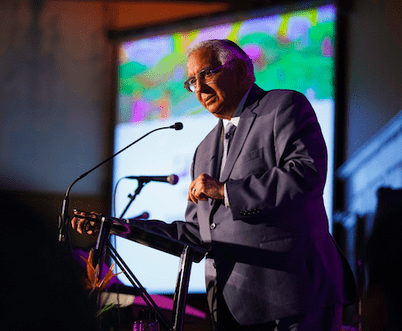 The author of the Gospel of Luke and the Book of Acts is, according to Justo Gonzalez, the most “undervalued” author in the NT. We could quibble — we ignore Jude and the author of Hebrews perhaps more — but he’s right. When it comes to pages penned and discussions about, Luke gets ignored. This is why we need books like this one from Gonzalez: The Story Luke Tells: Luke’s Unique Witness to the Gospel (GR: Eerdmans, 2015).
The Story Luke Tells Us is how books can be written that will be accessible to both students and to church folks. No footnotes but on every page considered judgment about Luke-Acts and the overarching themes these books reveal. He begins in the right place, and I believe a biblically-based systematic theology must begin here (and none to my knowledge do!), with Luke and the history of humankind, then we get chapters on: the history of Israel, the great reversal, gender, salvation, food and drink, worship and the Holy Spirit.
Gonzalez thinks Luke is the author; he thinks may well have been black, and he would not be the first to suggest this:
All of this leads some to think that the Lucius of Cyrene that Acts mentions is the author both of that book itself and of the previous volume, the Gospel of Luke. In that case, there is another detail that we know about Luke: he was from Cyrene, on the north coast of Africa. It is interesting to note that in the list this Lucius of Cyrene appears next to a certain Simeon who is called “Niger” — that is to say, “Simeon the black man.” Since many of the inhabitants of North Africa were of dark complexion, they were often called “Niger.” Could it be then that this Simeon of Niger is the same who appears in the Gospel as Simon of Cyrene? And since Lucius was also from Cyrene, is it possible that he also was darkskinned? And, if Lucius is the same as Luke, will it then turn out to be that this author, the most prolific in the entire New Testament, was of dark complexion? It is impossible to affirm it as a fact, but it is still a possibility…. (xi).
Luke is interested in the order of his narrative; he cares about dates; he wants things to be placed in social and political and religious contexts. Perhaps more, Luke has an expansive scope to his history. From Adam (3:38) he charts a history of humanity, not just of the people of God. Now a very interesting element of Luke’s books: they don’t end. In chronology and geography, the story does not end … we are invited, in a sense, to complete the story Luke begins. What happened to Paul? We don’t know. Where did he go? We don’t know. It is an unfinished story. We are called to write the 29th chapter of Acts.
As a historian of a narrative, not just one who generates facts but one who is drawing us into Acts 29 to participate in God’s story, Luke narrates a story about both Elizabeth and Mary. These two women draw us into the narrative about barren women in the Bible and evoke those stories over and over. Sarah, Rachel, Samson’s mother, and Hannah … all at work in Luke 1-2.This is an interpretive move called typology.
Think Exodus and Jesus leading people out of exile.
Think Adam and Jesus.
Jesus is both counterpoint and culmination. Adam succumbed; Jesus didn’t. Jesus is the Second Adam. The church continued with this typological approach.
He finishes his history theme here:
.And if we take seriously the fact that Luke draws his genealogy all the way back to Adam, one might dare suggest that were we to ask Luke, he would tell us that Jesus is not only the culmination of the history of Israel, but the high point of all human history. Therefore, all those names that Luke gives of rulers and great figures in the world of the Gentiles — Augustus Caesar, Tiberius, Quirinius, Sergius Paulus, Porcius Festus, and the rest — are not only a way of dating events, but also a reminder that the history of Israel takes place within the context of the history of all humanity, and that Jesus Christ, the high point in the history of Israel, is also the culmination of all human history (26-27).
This gives the book of Acts a dimension that we often forget. Acts is not only the history of the expansion of Christianity through the work of Paul and others; it is also the beginning of the process through which Jesus Christ announces and claims his lordship over all history and all humankind. Jut it is necessary to be clear on one point: this is the lordship of Jesus Christ, not the lordship of Christians or even of Christianity (27).
Thus, typology forms us:
Thus, typology is important for two reasons: first, because it underscores that this is the way in which the past helps us to understand Jesus Christ and his work; and, second, because this is the manner in which Jesus Christ and his work lead us to see the past, the present, and the future (27).
Previous Post

June 8, 2015
A New Exodus Out of the American Church (by Jeff Cook)
Next Post
June 8, 2015 Voice Mail -- A Dinosaur?
Browse Our Archives
Select a Category Acts of the Apostles Adam Advent Anabaptism Angels Anglican Apologetics Atonement Baptism BCP Prayers Bible Biblical Studies Birds Blogging Bloglossary Bonhoeffer Books Calvinism Christianity Church Church History Coffee Colossians Commentary Recs Conversion Creation Creeds Culture Death Ecclesiastes Economics Education Embracing Grace Emergent Emerging Movement Eschatology Essays Ethics Eucharist Evangelicalism Family Fasting Fathers Fellowship of Differents Footsteps Tour Fun and Whimsical Gospel Grace Happiness Heaven Hell Holy Spirit Irenaeus James Jesus Jesus Creed Job Justification Kingdom of God Law Lectures Lent Liberalism Love and Marriage Mabanteneni Manhood Mary Miracles Missio Alliance MissioLife Missional Missional Jesus Movies and Film New Perspective Northern Seminary OneLife Origins Project Orthodox Parables Pastor's Spouse Pastoring and Leading Pastoring and Preaching Patristics Paul Paul-John Tour Pharisees Pietism Political Theology Prayer and Formation Preaching Problems for Faith Psalm 119 Psalms Public Issues Purgatory Religions Resurrection Revelation Romans Rule of JCreed Science and Faith Sermon on the Mount Sports Ten Commandments Theology Third Way Top Ten Lists Translations Uncategorized Universalism University Ministry Way Out Weekly Meanderings Wisdom Women and Ministry Work Worship Writing & Blogging Youth Ministry
Select a Month July 2021 January 2020 December 2019 November 2019 October 2019 September 2019 August 2019 July 2019 June 2019 May 2019 April 2019 March 2019 February 2019 January 2019 December 2018 November 2018 October 2018 September 2018 August 2018 July 2018 June 2018 May 2018 April 2018 March 2018 February 2018 January 2018 December 2017 November 2017 October 2017 September 2017 August 2017 July 2017 June 2017 May 2017 April 2017 March 2017 February 2017 January 2017 December 2016 November 2016 October 2016 September 2016 August 2016 July 2016 June 2016 May 2016 April 2016 March 2016 February 2016 January 2016 December 2015 November 2015 October 2015 September 2015 August 2015 July 2015 June 2015 May 2015 April 2015 March 2015 February 2015 January 2015 December 2014 November 2014 October 2014 September 2014 August 2014 July 2014 June 2014 May 2014 April 2014 March 2014 February 2014 January 2014 December 2013 November 2013 October 2013 September 2013 August 2013 July 2013 June 2013 May 2013 April 2013 March 2013 February 2013 January 2013 December 2012 November 2012 October 2012 September 2012 August 2012 July 2012 June 2012 May 2012 April 2012 March 2012 February 2012 January 2012 December 2011 November 2011 October 2011 September 2011 August 2011 July 2011 June 2011 May 2011 April 2011 March 2011 February 2011 January 2011 December 2010 November 2010 October 2010 September 2010 August 2010 July 2010 June 2010 May 2010 April 2010 March 2010 February 2010 January 2010 December 2009 November 2009 October 2009 September 2009 August 2009 July 2009 June 2009 May 2009 April 2009 March 2009 February 2009 January 2009 December 2008 November 2008 October 2008 September 2008 August 2008 July 2008 June 2008 May 2008 April 2008 March 2008 February 2008 January 2008 December 2007 November 2007 October 2007 September 2007 August 2007 July 2007 June 2007 May 2007 April 2007 March 2007 February 2007 January 2007 December 2006 November 2006 October 2006 September 2006 August 2006 July 2006 June 2006 May 2006 April 2006 March 2006 February 2006 January 2006 December 2005 November 2005 October 2005 September 2005 August 2005 July 2005 June 2005 May 2005 April 2005 0000
Follow Us!
TAKE THE
Religious Wisdom Quiz
Where was Paul's hometown?
Select your answer to see how you score.
Damascus Antioch Jerusalem Tarsus
Related posts from Jesus Creed
From Jesus Traditions to the Gospels themselves


Fr. Robert Barron on Reza Aslan's Jesus
Christ Centered Creation! (RJS)
TRENDING AT PATHEOS Evangelical

The REST of Your Life: A Creative Wrestles...
This week I had a conversation with a good friend from church....

How the author of the world's best hymn...
I've been working with John Newton for a while now. This makes...

Long before this Lectio Divina, Psalm 130 - the song - started...

What About the Trees? Another Living Parable
After I finished writing the last article about falling leaves as a...

Why Classical Education Is a Conversation, Not a...
Come and Read: Joy in Classical Education When I was a little...

Cornell University has received a great deal of negative publicity and intense...
view all Evangelical blogs
Ad-Free & Subscriber Log-In Subscription Support
- About Us
- 2026 Calendar
- Videos
- Podcasts
- Library of World Religions
- Faith In Media Tracker
- Advertise With Us
- Write for Us
- Privacy Policy
- Terms of Service
- Do Not Sell My Data
- Contact Us
- Radiant Digital
- Manage Newsletter Subscriptions
- Unsubscribe From Notifications
- Sitemap
Copyright 2008-2026, Patheos. All rights reserved.
Subscription Support Ad-Free & Subscriber Log-In
Follow Patheos