
BuddhistCatholicContemplativeEvangelicalGeneral ChristianHinduJewishLatter-day SaintMuslimNew VisionsProgressive Christian
Beliefs
- Buddhist
- Catholic
- Contemplative
- Evangelical
- General Christian
- Hindu
- Jewish
- Latter-day Saint
- More Voices
- Muslim
- New Visions
- Pagan
- Progressive Christian
Topics
- Religion News
- Food and Religion
- Sports and Religion
- Religious Art
- Religious Music and Entertainment
- Religious Events
- History and Religion
- Style and Religion
- Politics and Religion
- Women in Religion
- Recreation Outdoors and Religion
- Business Finance and Religion
- Careers Workplace and Religion
- Education and Religion
- Family Parenting and Religion
- Health Fitness and Religion
- Home and Religion
- Relationships and Religion
- Technology and Religion
- Travel and Religion
Columnists
- Buddhist Columnists
- Business Finance and Religion Columnists
- Careers Workplace and Religion Columnists
- Catholic Columnists
- Contemplative Columnists
- Education and Religion Columnists
- Evangelists Columnists
- Family Parenting and Religion Columnists
- General Christian Columnists
- Health Fitness and Religion Columnists
- Hindu Columnists
- History and Religion Columnists
- Home and Religion Columnists
- Jewish Columnists
- More Voices Columnists
- Latter Day Columnists
- Muslim Columnists
- New Visions Columnists
- Nonreligious Columnists
- Pagan Columnists
- Politics and Religion Columnists
- Progressive Columnists
- Recreation Outdoors and Religion Columnists
- Relationships and Religion Columnists
- Religion News Columnists
- Religious Art Columnists
- Religious Events Columnists
- Religious Music and Entertainment Columnists
- Sports and Religion Columnists
- Style and Religion Columnists
- Technology and Religion Columnists
- Travel and Religion Columnists
- Women in Religion Columnists
Resource Library
- 2026 Calendar
- Library of World Religions
- The 100 Most Holy Places on Earth
- Patheos Answers
- Podcasts
- Videos
- Faith Leaders Database
- Anglican Episcopalian
- Bahai
- Baptist
- Buddhism
- Christianity
- Confucianism
- Eastern Orthodoxy
- Hinduism
- Holiness and Pentecostal
- ISKCON
- Islam
- Judaism
- Lutheran
- Methodist
- The Church of Jesus Christ of Latter-day Saints
- New Age
- Paganism
- Presbytarian and Reformed
- Protestantism
- Religion Behind the Scenes
- Roman Catholic
- Scientology
- Shia Islam
- Sikhism
- Sufism
- Sunni Islam
- Taoism
- Zen
- See all religions
Research Tools
 Ad-Free & Subscriber Log-In Subscription Support
Follow Patheos 

- Trending:
- Advent
- |
- Forgiveness
- |
- Thanksgiving
- |
- Election
- |
- Seasonal Holidays
- |
- Marriage
 Jesus Creed
- Home
- Evangelical
- This is Why We Need Christians Engaged in Science! (RJS)
This is Why We Need Christians Engaged in Science! (RJS)
Last updated on: May 28, 2015 at 6:24 am by RJS
This is Why We Need Christians Engaged in Science! (RJS) 2015-05-28T06:24:45-05:00 RJS
Patheos Explore the world's faith through different perspectives on religion and spirituality! Patheos has the views of the prevalent religions and spiritualities of the world.
 Ed Stetzer had an interesting post on his blog last week – 3 reasons for Christians to Engage in Science. This post is a reprint of an essay he wrote for a small booklet recently released by the National Association of Evangelicals: When God and Science Meet and available for free download. The booklet includes essays by John Ortberg, Mark Noll, Christopher Wright and more.
Stetzer’s three reasons (read his essay on his blog or in the booklet for his elaboration of these points, bold added):
First, creation speaks to a creator. Because we know there is a creator, we should be the ones most concerned about his creation. …
In Romans 1, Paul points out that attributes of God are made clear in creation. We can know his eternal power and divine nature, because they have been clearly seen since the creation of the world.
If Scripture says creation, and therefore the sciences that explore it, point to God, why would we run away from that? We, above all others, should love, study, explore, examine and care for the creation that provides evidence of God and his character.
Second, dismissing science undermines our witness. But many evangelicals are backing away from science. In a society driven by scientific achievement, it is unwise and counterproductive to our mission for Christians to embrace an anti-science label.
Third, science can better society. … The fact is, as we find better ways to farm, powerful new medicines to heal and more effective ways to power our society, the poor benefit, societies are transformed for the better and the world looks and is more of what God intended it to be.
Christians are to champion the good of their city and society as a whole. Leveraging scientific study and achievement for the betterment of people is an entirely Christian thing to do.
All three of these are great reasons for Christians to engage in science. The pursuit of science brings a sense of wonder, beauty, and awe to many scientists, religious or not. For a Christian in the sciences there is an added wonder and beauty. When we, as scientists, study the “natural” phenomena of the universe, whether in physics, chemistry, paleontology, geology, biology or some other science, we are studying the nature of God’s creation. This can make the pursuit of scientific understanding a form of worship as Dorothy Chappell, Dean of Natural and Social Sciences at Wheaton College, says in her essay:
Scientists can discover, study and contemplate the complexities of the created order while apprehending God’s glory, which remains resplendent throughout the creation; in other words, they can worship and interact with God as they do their own professional work. This represents a profound discipline: doing good science and practicing vibrant faith. A natural outcome that results when scientists explore the mysteries of creation from a biblical worldview is a greater capacity for wonder, awe and humility. These, after all, are the traits of effective scientists and devout Christians. (p. 36, When God and Science Meet)
Stetzer’s third reason is also highlighted in a number of the essays in When God and Science Meet. The pursuit of science is transforming the world for the better. This isn’t to embrace the myth of human moral progress where human effort will produce a perfect society or bring the Kingdom of God. It is simply to state a fact – vaccinations, sanitation, clean water, efficient transportation, medicines, instrumentation for imaging and diagnosis, all of these and many more developments, have made life for many longer, healthier, and safer. “Leveraging scientific study and achievement for the betterment of people is an entirely Christian thing to do.”
Finally his second reason, which is undervalued or misinterpreted by many: Dismissing science, or worse yet distorting and misrepresenting science, undermines our witness as Christians in profound ways. The church needs Christians engaged in science to hold fellow Christians to a high standard and to provide the needed expertise and review. John Ortberg notes in his essay:
I have seen too many young people in too many churches exposed to bad science in the misguided idea that someone was defending the Bible; then they go off to college and find out they were misinformed and they think they have to choose between the Bible and truth. (p. 28)
Bad science does no one any good. Not Christians adults or youth, and certainly not non-Christians who find bad science a reason to dismiss any need to dig deeper and understand Christian faith. We need to pursue the truth.
Christian faith and the study of science are not mutually exclusive pursuits. Taking the Bible seriously does not mean holding to positions clearly contradicted by modern science. The Bible is not a science book. Taking the Bible seriously does call us to stand against the metaphysical conclusions that some draw from science, just as it calls us to stand against the “wisdom of the world” driven by the pursuit of money, sex, and power.
The pursuit of scientific understanding has unearthed a wealth of new information. Information that our predecessors had no knowledge of and did not need to wrestle with … the vastness of the universe, the age of the earth, evolution. The church today does need to wrestle with this data. In order to do this we need people who are conversant in science, who will take the time to explain the data and explore the relationship between the new insights from science and Christian theology. One of the reasons we need Christians to engage in science is to lead the church faithfully into the future.
 And this leads to Adam. If that seems like a sharp left turn, changing the subject, it shouldn’t. Every discussion of science and Christian faith these days seems to return to the question of Adam, human evolution, and common descent. This is an overstatement, but not by much. Many of my posts over the last several years have turned around the discussion of Adam. In general I’ve focused on the biblical and theological issues because, quite frankly, I am convinced by the evidence of common descent. As a result I am deeply interested in the ramifications this has on our understanding of life from a Christian perspective.
Many readers, however, remain unconvinced that a unique couple is disproved by the scientific data. We need Christian scientists with the expertise and patience to explain the scientific data and consensus on a level accessible to non-scientists and to point out both the strengths and the weaknesses of the data and interpretation. I haven’t the patience (or the ready expertise in genetics) to offer a coherent and accessible explanation on common descent and human genetics. Fortunately Dennis Venema, professor of biology at Trinity Western University in Langley, British Columbia, has the patience, expertise and ability. Dennis is in the middle of a long series of excellent posts at Biologos exploring Adam, Eve, and human population genetics.
The last few installments of Adam, Eve, and human population genetics have looked at the arguments Dr. Vern Poythress advanced in his recent short book Did Adam Exist?. Dr. Poythress’s scientific argument leaves much to be desired. He misinterprets the scientific papers he uses to defend his position that common descent is unsupported by the genetic data and that science cannot rule out a bottleneck consisting of one unique human couple as progenitor of the entire human race. Dennis does an nice job of pointing out the problems with Dr. Poythress’s scientific argument. Bad scientific arguments are far too common and do devastating damage to the faith of far too many. (See John Ortberg’s quote again.)
We need Christians like Dennis, engaged in science and with a heart for the church.
Why should Christians engage in science?
Do Stetzer’s reasons ring true? What might you add to the list?
How should Christians respond to the challenges raised?
If you wish to contact me, you may do so at rjs4mail[at]att.net.
If interested you can subscribe to a full text feed of my posts at Musings on Science and Theology.
Previous Post

May 28, 2015
Guidance: That Frustrating Paul
Next Post
May 28, 2015 Is Faith Unintelligent? (Donald Nwankwo)
Browse Our Archives
Select a Category Acts of the Apostles Adam Advent Anabaptism Angels Anglican Apologetics Atonement Baptism BCP Prayers Bible Biblical Studies Birds Blogging Bloglossary Bonhoeffer Books Calvinism Christianity Church Church History Coffee Colossians Commentary Recs Conversion Creation Creeds Culture Death Ecclesiastes Economics Education Embracing Grace Emergent Emerging Movement Eschatology Essays Ethics Eucharist Evangelicalism Family Fasting Fathers Fellowship of Differents Footsteps Tour Fun and Whimsical Gospel Grace Happiness Heaven Hell Holy Spirit Irenaeus James Jesus Jesus Creed Job Justification Kingdom of God Law Lectures Lent Liberalism Love and Marriage Mabanteneni Manhood Mary Miracles Missio Alliance MissioLife Missional Missional Jesus Movies and Film New Perspective Northern Seminary OneLife Origins Project Orthodox Parables Pastor's Spouse Pastoring and Leading Pastoring and Preaching Patristics Paul Paul-John Tour Pharisees Pietism Political Theology Prayer and Formation Preaching Problems for Faith Psalm 119 Psalms Public Issues Purgatory Religions Resurrection Revelation Romans Rule of JCreed Science and Faith Sermon on the Mount Sports Ten Commandments Theology Third Way Top Ten Lists Translations Uncategorized Universalism University Ministry Way Out Weekly Meanderings Wisdom Women and Ministry Work Worship Writing & Blogging Youth Ministry
Select a Month July 2021 January 2020 December 2019 November 2019 October 2019 September 2019 August 2019 July 2019 June 2019 May 2019 April 2019 March 2019 February 2019 January 2019 December 2018 November 2018 October 2018 September 2018 August 2018 July 2018 June 2018 May 2018 April 2018 March 2018 February 2018 January 2018 December 2017 November 2017 October 2017 September 2017 August 2017 July 2017 June 2017 May 2017 April 2017 March 2017 February 2017 January 2017 December 2016 November 2016 October 2016 September 2016 August 2016 July 2016 June 2016 May 2016 April 2016 March 2016 February 2016 January 2016 December 2015 November 2015 October 2015 September 2015 August 2015 July 2015 June 2015 May 2015 April 2015 March 2015 February 2015 January 2015 December 2014 November 2014 October 2014 September 2014 August 2014 July 2014 June 2014 May 2014 April 2014 March 2014 February 2014 January 2014 December 2013 November 2013 October 2013 September 2013 August 2013 July 2013 June 2013 May 2013 April 2013 March 2013 February 2013 January 2013 December 2012 November 2012 October 2012 September 2012 August 2012 July 2012 June 2012 May 2012 April 2012 March 2012 February 2012 January 2012 December 2011 November 2011 October 2011 September 2011 August 2011 July 2011 June 2011 May 2011 April 2011 March 2011 February 2011 January 2011 December 2010 November 2010 October 2010 September 2010 August 2010 July 2010 June 2010 May 2010 April 2010 March 2010 February 2010 January 2010 December 2009 November 2009 October 2009 September 2009 August 2009 July 2009 June 2009 May 2009 April 2009 March 2009 February 2009 January 2009 December 2008 November 2008 October 2008 September 2008 August 2008 July 2008 June 2008 May 2008 April 2008 March 2008 February 2008 January 2008 December 2007 November 2007 October 2007 September 2007 August 2007 July 2007 June 2007 May 2007 April 2007 March 2007 February 2007 January 2007 December 2006 November 2006 October 2006 September 2006 August 2006 July 2006 June 2006 May 2006 April 2006 March 2006 February 2006 January 2006 December 2005 November 2005 October 2005 September 2005 August 2005 July 2005 June 2005 May 2005 April 2005 0000
Follow Us!
TAKE THE
Religious Wisdom Quiz
What does "Beersheba" mean?
Select your answer to see how you score.
House of the King Blessed Field Well of the Oath Valley of Water
Related posts from Jesus Creed

Wise Words (from a long time ago)

Heaven Promise Livestream Event
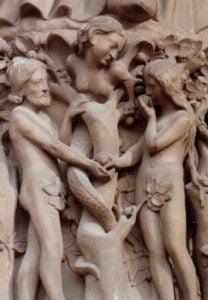

Bethel College Tightens Creation Statement
TRENDING AT PATHEOS Evangelical

When you hear the word riches, what comes to mind? For most...

Don’t Miss the Parents: A Creative Christmas Meditation
As we enter the Advent Season, I see many people trying to...

Making Stones Into Bread: Choosing the “Right” Work
I was on my online arts ministry Zoom meeting with the International...

Ukraine’s exhausted Christians face fifth winter of war
By Julian Lukins The full-scale war in Ukraine is taking “a serious...

Russell Brand's Conviction is not anti-Christian Persecution
How do we shed the reputation that the Church is OK with...

Have you ever caught yourself saying, “I’ll do it tomorrow,” or “Now...
view all Evangelical blogs
Ad-Free & Subscriber Log-In Subscription Support
- About Us
- 2026 Calendar
- Videos
- Podcasts
- Library of World Religions
- Faith In Media Tracker
- Advertise With Us
- Write for Us
- Privacy Policy
- Terms of Service
- Do Not Sell My Data
- Contact Us
- Radiant Digital
- Manage Newsletter Subscriptions
- Unsubscribe From Notifications
- Sitemap
Copyright 2008-2026, Patheos, part of the Radiant Digital network of media brands. All rights reserved.
Subscription Support Ad-Free & Subscriber Log-In
Follow Patheos