
BuddhistCatholicContemplativeEvangelicalGeneral ChristianHinduJewishLatter-day SaintMuslimNew VisionsProgressive Christian
Beliefs
- Buddhist
- Catholic
- Contemplative
- Evangelical
- General Christian
- Hindu
- Jewish
- Latter-day Saint
- More Voices
- Muslim
- New Visions
- Pagan
- Progressive Christian
Topics
- Religion News
- Food and Religion
- Sports and Religion
- Religious Art
- Religious Music and Entertainment
- Religious Events
- History and Religion
- Style and Religion
- Politics and Religion
- Women in Religion
- Recreation Outdoors and Religion
- Business Finance and Religion
- Careers Workplace and Religion
- Education and Religion
- Family Parenting and Religion
- Health Fitness and Religion
- Home and Religion
- Relationships and Religion
- Technology and Religion
- Travel and Religion
Columnists
- Buddhist Columnists
- Business Finance and Religion Columnists
- Careers Workplace and Religion Columnists
- Catholic Columnists
- Contemplative Columnists
- Education and Religion Columnists
- Evangelists Columnists
- Family Parenting and Religion Columnists
- General Christian Columnists
- Health Fitness and Religion Columnists
- Hindu Columnists
- History and Religion Columnists
- Home and Religion Columnists
- Jewish Columnists
- More Voices Columnists
- Latter Day Columnists
- Muslim Columnists
- New Visions Columnists
- Nonreligious Columnists
- Pagan Columnists
- Politics and Religion Columnists
- Progressive Columnists
- Recreation Outdoors and Religion Columnists
- Relationships and Religion Columnists
- Religion News Columnists
- Religious Art Columnists
- Religious Events Columnists
- Religious Music and Entertainment Columnists
- Sports and Religion Columnists
- Style and Religion Columnists
- Technology and Religion Columnists
- Travel and Religion Columnists
- Women in Religion Columnists
Resource Library
- 2026 Calendar
- Library of World Religions
- The 100 Most Holy Places on Earth
- Patheos Answers
- Podcasts
- Videos
- Faith Leaders Database
- Anglican Episcopalian
- Bahai
- Baptist
- Buddhism
- Christianity
- Confucianism
- Eastern Orthodoxy
- Hinduism
- Holiness and Pentecostal
- ISKCON
- Islam
- Judaism
- Lutheran
- Methodist
- The Church of Jesus Christ of Latter-day Saints
- New Age
- Paganism
- Presbytarian and Reformed
- Protestantism
- Religion Behind the Scenes
- Roman Catholic
- Scientology
- Shia Islam
- Sikhism
- Sufism
- Sunni Islam
- Taoism
- Zen
- See all religions
Research Tools
 Ad-Free & Subscriber Log-In Subscription Support
Ad-Free & Subscriber Log-In Subscription Support
Follow Patheos 

- Trending:
- Forgiveness
- |
- Marriage
- |
- Consciousness
- |
- Death Penalty
- |
- Election
- |
- Halloween
 Jesus Creed
- Home
- Evangelical
- A Chosen People!? (RJS)
A Chosen People!? (RJS)
Last updated on: May 7, 2015 at 6:10 am by RJS
A Chosen People!? (RJS) 2015-05-07T06:10:44-05:00 RJS
Patheos Explore the world's faith through different perspectives on religion and spirituality! Patheos has the views of the prevalent religions and spiritualities of the world.
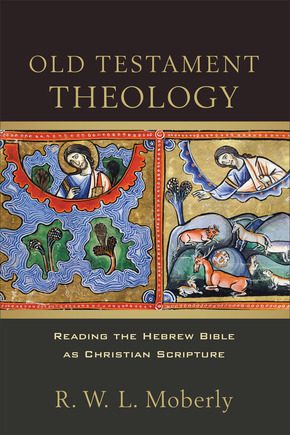 The second chapter of R. W. L. Moberly’s Old Testament Theology: Reading the Hebrew Bible as Christian Scripture turns to an issue that raises many questions about Judaism and Christianity – the status of Israel as a chosen people. Two related, but distinct, questions are raised in this chapter – the first is the exclusive nature of the chosen, and the second is the hērem warfare of Deuteronomy and Joshua. These are both important questions, but the first can (chosen) get lost in the second (war). We will look at the questions in two separate posts.
The claim that Israel is a chosen people runs through the Old and New Testaments, especially the Old Testament. But this claim of particularity is disturbing for many. To illustrate the tension Moberly quotes Walter Brueggemann from a conversation with Carolyn Sharp:
You know, deep in the night, I think about the whole scandal of particularity: about the chosenness of Israel and the chosenness of Jesus and the chosenness of the Church. It’s kind of chilling to think that that’s how we’ve made our faith claim. I’m haunted by that stuff. (p. 42)
The question of hell is a part of this scandal of particularity. The chosen go to heaven, the rest go to hell, even (according to some) the child enslaved, beaten, used and abused to death. As one not among the chosen hell is a deserved fate. Hell is primarily a New Testament concept, rather than an Old Testament concept, but the scandal or blessing of particularity runs deep through the story.
The election of Israel begins with Genesis 12 when God calls Abram and is made explicit in Deuteronomy 7:
For you are a people holy to the Lord your God. The Lord your God has chosen you out of all the peoples on the face of the earth to be his people, his treasured possession. The Lord did not set his affection on you and choose you because you were more numerous than other peoples, for you were the fewest of all peoples. But it was because the Lord loved you and kept the oath he swore to your ancestors that he brought you out with a mighty hand and redeemed you from the land of slavery, from the power of Pharaoh king of Egypt.
The election of Israel is grounded in a covenant with their ancestors and reflects a faithful love – as we hear in Deuteronomy 10.
To the Lord your God belong the heavens, even the highest heavens, the earth and everything in it. Yet the Lord set his affection on your ancestors and loved them, and he chose you, their descendants, above all the nations—as it is today. Circumcise your hearts, therefore, and do not be stiff-necked any longer.
Moberly reflects on this election of Israel by God and the sense of wonder and devotion to God that it should bring to the people. God’s election of Israel reflects his love of Israel and this is an end in itself. “It is justified in the way that love is justified – and love is its own justification. … Fundamentally, however, love transcends rationalizations.” (p. 46)
Not an Instrumental Election. Christians often view the election of Israel as instrumental – to bring light to the nations and save us all. Moberly quotes Rob Bell and Daniel Block as examples of what he calls canonical or instructive re-readings or misreadings of the texts concerning the election of Israel.
Interestingly both Bell and Block … shy away from YHWH’s election of Israel as an end in and of itself by depicting such a notion pejoratively (“just so they’ll feel good about themselves”; “that he might merely lavish his attention on her as if she were a pet kitten or a china dish on a shelf”). It is curious that they are unable to here articulate the nature of love of one to another as a wondrous good, of value in itself, even though I imagine that they would have no difficulty doing so in other contexts. (p. 48)
God’s love for and election of Israel is not merely instrumental any more than a man’s love for his wife, a woman’s for her husband, or a parent’s for their children is instrumental. Do you really love your spouse simply to bring blessing to the world at large? The image of Israel in the prophets is not a disobedient employee, but an adulterous spouse. Moberly continues:
This may be connected to a failure also to think through the nature of the blessing that Israel is to mediate to others (on the common Christian reading of Genesis 12:3b). For should not reception of that blessing entail a realization on the part of people in other nations that God loves them for themselves? If not, then in what does the blessing consist? Even if that love brings with it a call to serve, that service is a corollary to being loved, not the core of being loved. So too, the Israelites are loved for themselves, prior to any impact for good that they may have on others. (p. 48)
As Christians we are also God’s chosen people, the body and bride of Christ. Is this another instrumental election? Or is it an election of love? Depending on your theology you may believe this election to be universal or not, but it certainly isn’t merely instrumental. Election should inspire wonder and devotion.
Is Election Tribal and Unjust? Moberly notes that the exclusive nature of Israel’s election has come under attack. To some it represents the failing of many religions. To think that one is particularly loved by God is a warrant for abuse and oppression. Put yourself in the place of the Canaanites, the Moabites, the Egyptians or the Philistines. Is the election of Israel just? Moberly brings a number of different scholars troubled by the exclusivity of the election of Israel into the discussion. He quotes David Clines “If you adopt the point of view of the Egyptians or the Canaanites, God is not experienced as a saving God, and the only words you hear addressed to you are words of reproach and threat.” (p. 50) From the point of view of the Native Americans dispossessed from the land or those under colonial rule around the world, the idea of a chosen people and manifest destiny presents a real threat and offers little hope.
Putting aside for the moment the issue of conquest and hērem (we’ll get to it in the next post), Moberly notes that Israel was the under dog, not the top dog. Much of the abuse of the concept of a chosen people comes from those in a position of power, using the Bible in a self-serving manner. This is not the posture found in the Bible. God gives his people victory “when they are small and weak and facing apparently overwhelming odds.” (p. 51)
The particularity of election is not an easy question – perhaps the embodiment of a vocation to be the people of God, if faithful, is a blessing to the nations and a conduit for the blessing of God. God does not shower blessings solely on Israel. Although we are told “Esau I hated,” yet God did bestow blessings on Esau. There is a complexity to the narrative of Scripture, and an underlying expectation that if the other nations did repent and turn to God he would show favor to them as well. (Consider the tale of Jonah for example. Or Ruth the Moabite woman who became the mother of Obed, grandmother of Jesse, great grandmother of David despite the fact that we read in Deuteronomy 23 “no Ammonite or Moabite or any of their descendants may enter the assembly of the Lord, not even in the tenth generation.” ) This isn’t to attempt to poke holes in Scripture, but to note that God welcomed those who turned to him. This included Ruth a Moabite woman listed in the the genealogy of Jesus (Matthew 1).
The Mystery of Grace. Moberly concludes this section on election:
On any reckoning, however, the wonder of being loved is surely not other than the mystery of grace; it is non-negotiable as a fundamental element in Jewish and Christian faiths. … [T]he question of how best one should relate the particular concerns of divine love to universal concerns of divine justice is complex and resists easy answers. For the present, my argument is simply that divine election, insofar as it expresses the mysterious grace of God, is something without which neither Jewish not Christian faiths can survive in recognizable forms. For to lose this would be to lose the particular grace that gives faith its basic meaning and rationale. (p. 52)
The exclusivity of election is troubling, but the mystery of grace and the expansiveness of love inspire awe.
Is election inherently unjust?
Was Israel’s election “merely” instrumental?
Why was Israel chosen by God? What does this mean for election within Christianity?
If you wish to contact me, you may do so at rjs4mail[at]att.net.
If interested you can subscribe to a full text feed of my posts at Musings on Science and Theology.
Previous Post

May 7, 2015
The Positive Side of Holiness, Frequently Ignored
Next Post
May 7, 2015 Genetics and Telomeres
Browse Our Archives
Select a Category Acts of the Apostles Adam Advent Anabaptism Angels Anglican Apologetics Atonement Baptism BCP Prayers Bible Biblical Studies Birds Blogging Bloglossary Bonhoeffer Books Calvinism Christianity Church Church History Coffee Colossians Commentary Recs Conversion Creation Creeds Culture Death Ecclesiastes Economics Education Embracing Grace Emergent Emerging Movement Eschatology Essays Ethics Eucharist Evangelicalism Family Fasting Fathers Fellowship of Differents Footsteps Tour Fun and Whimsical Gospel Grace Happiness Heaven Hell Holy Spirit Irenaeus James Jesus Jesus Creed Job Justification Kingdom of God Law Lectures Lent Liberalism Love and Marriage Mabanteneni Manhood Mary Miracles Missio Alliance MissioLife Missional Missional Jesus Movies and Film New Perspective Northern Seminary OneLife Origins Project Orthodox Parables Pastor's Spouse Pastoring and Leading Pastoring and Preaching Patristics Paul Paul-John Tour Pharisees Pietism Political Theology Prayer and Formation Preaching Problems for Faith Psalm 119 Psalms Public Issues Purgatory Religions Resurrection Revelation Romans Rule of JCreed Science and Faith Sermon on the Mount Sports Ten Commandments Theology Third Way Top Ten Lists Translations Uncategorized Universalism University Ministry Way Out Weekly Meanderings Wisdom Women and Ministry Work Worship Writing & Blogging Youth Ministry
Select a Month July 2021 January 2020 December 2019 November 2019 October 2019 September 2019 August 2019 July 2019 June 2019 May 2019 April 2019 March 2019 February 2019 January 2019 December 2018 November 2018 October 2018 September 2018 August 2018 July 2018 June 2018 May 2018 April 2018 March 2018 February 2018 January 2018 December 2017 November 2017 October 2017 September 2017 August 2017 July 2017 June 2017 May 2017 April 2017 March 2017 February 2017 January 2017 December 2016 November 2016 October 2016 September 2016 August 2016 July 2016 June 2016 May 2016 April 2016 March 2016 February 2016 January 2016 December 2015 November 2015 October 2015 September 2015 August 2015 July 2015 June 2015 May 2015 April 2015 March 2015 February 2015 January 2015 December 2014 November 2014 October 2014 September 2014 August 2014 July 2014 June 2014 May 2014 April 2014 March 2014 February 2014 January 2014 December 2013 November 2013 October 2013 September 2013 August 2013 July 2013 June 2013 May 2013 April 2013 March 2013 February 2013 January 2013 December 2012 November 2012 October 2012 September 2012 August 2012 July 2012 June 2012 May 2012 April 2012 March 2012 February 2012 January 2012 December 2011 November 2011 October 2011 September 2011 August 2011 July 2011 June 2011 May 2011 April 2011 March 2011 February 2011 January 2011 December 2010 November 2010 October 2010 September 2010 August 2010 July 2010 June 2010 May 2010 April 2010 March 2010 February 2010 January 2010 December 2009 November 2009 October 2009 September 2009 August 2009 July 2009 June 2009 May 2009 April 2009 March 2009 February 2009 January 2009 December 2008 November 2008 October 2008 September 2008 August 2008 July 2008 June 2008 May 2008 April 2008 March 2008 February 2008 January 2008 December 2007 November 2007 October 2007 September 2007 August 2007 July 2007 June 2007 May 2007 April 2007 March 2007 February 2007 January 2007 December 2006 November 2006 October 2006 September 2006 August 2006 July 2006 June 2006 May 2006 April 2006 March 2006 February 2006 January 2006 December 2005 November 2005 October 2005 September 2005 August 2005 July 2005 June 2005 May 2005 April 2005 0000
Follow Us!
TAKE THE
Religious Wisdom Quiz
True or False: Paul instructed Philemon to receive Onesimus back as more than a slave, as a dear brother.
Select your answer to see how you score.
TRUE FALSE
Related posts from Jesus Creed

It's American for our Politicians to Reference the...



The Thrust of the Biblical Plot (RJS)
TRENDING AT PATHEOS Evangelical

How the author of the world's best hymn...
I've been working with John Newton for a while now. This makes...

Long before this Lectio Divina, Psalm 130 - the song - started...

What About the Trees? Another Living Parable
After I finished writing the last article about falling leaves as a...

Why Classical Education Is a Conversation, Not a...
Come and Read: Joy in Classical Education When I was a little...

Falling Leaves: A Living Parable on Letting Go
I’ve spent the vast majority of my life in the southeast corner...

Cornell University has received a great deal of negative publicity and intense...
view all Evangelical blogs
Ad-Free & Subscriber Log-In Subscription Support
- About Us
- 2026 Calendar
- Videos
- Podcasts
- Library of World Religions
- Faith In Media Tracker
- Advertise With Us
- Write for Us
- Privacy Policy
- Terms of Service
- Do Not Sell My Data
- Contact Us
- Radiant Digital
- Manage Newsletter Subscriptions
- Unsubscribe From Notifications
- Sitemap
Copyright 2008-2026, Patheos. All rights reserved.
Subscription Support Ad-Free & Subscriber Log-In
Follow Patheos