
BuddhistCatholicContemplativeEvangelicalGeneral ChristianHinduJewishLatter-day SaintMuslimNew VisionsProgressive Christian
Beliefs
- Buddhist
- Catholic
- Contemplative
- Evangelical
- General Christian
- Hindu
- Jewish
- Latter-day Saint
- More Voices
- Muslim
- New Visions
- Pagan
- Progressive Christian
Topics
- Religion News
- Food and Religion
- Sports and Religion
- Religious Art
- Religious Music and Entertainment
- Religious Events
- History and Religion
- Style and Religion
- Politics and Religion
- Women in Religion
- Recreation Outdoors and Religion
- Business Finance and Religion
- Careers Workplace and Religion
- Education and Religion
- Family Parenting and Religion
- Health Fitness and Religion
- Home and Religion
- Relationships and Religion
- Technology and Religion
- Travel and Religion
Columnists
- Buddhist Columnists
- Business Finance and Religion Columnists
- Careers Workplace and Religion Columnists
- Catholic Columnists
- Contemplative Columnists
- Education and Religion Columnists
- Evangelists Columnists
- Family Parenting and Religion Columnists
- General Christian Columnists
- Health Fitness and Religion Columnists
- Hindu Columnists
- History and Religion Columnists
- Home and Religion Columnists
- Jewish Columnists
- More Voices Columnists
- Latter Day Columnists
- Muslim Columnists
- New Visions Columnists
- Nonreligious Columnists
- Pagan Columnists
- Politics and Religion Columnists
- Progressive Columnists
- Recreation Outdoors and Religion Columnists
- Relationships and Religion Columnists
- Religion News Columnists
- Religious Art Columnists
- Religious Events Columnists
- Religious Music and Entertainment Columnists
- Sports and Religion Columnists
- Style and Religion Columnists
- Technology and Religion Columnists
- Travel and Religion Columnists
- Women in Religion Columnists
Resource Library
- 2026 Calendar
- Library of World Religions
- The 100 Most Holy Places on Earth
- Patheos Answers
- Podcasts
- Videos
- Faith Leaders Database
- Anglican Episcopalian
- Bahai
- Baptist
- Buddhism
- Christianity
- Confucianism
- Eastern Orthodoxy
- Hinduism
- Holiness and Pentecostal
- ISKCON
- Islam
- Judaism
- Lutheran
- Methodist
- The Church of Jesus Christ of Latter-day Saints
- New Age
- Paganism
- Presbytarian and Reformed
- Protestantism
- Religion Behind the Scenes
- Roman Catholic
- Scientology
- Shia Islam
- Sikhism
- Sufism
- Sunni Islam
- Taoism
- Zen
- See all religions
Research Tools
 Ad-Free & Subscriber Log-In Subscription Support
Ad-Free & Subscriber Log-In Subscription Support
Follow Patheos 

- Trending:
- Forgiveness
- |
- Marriage
- |
- Consciousness
- |
- Death Penalty
- |
- Election
- |
- Halloween
 Jesus Creed
- Home
- Evangelical
- Making the Invisible Visible: The Test Question for Your Church
Making the Invisible Visible: The Test Question for Your Church
Last updated on: April 15, 2015 at 7:09 am by Scot McKnight
Making the Invisible Visible: The Test Question for Your Church 2015-04-15T07:09:30-05:00 Scot McKnight
Patheos Explore the world's faith through different perspectives on religion and spirituality! Patheos has the views of the prevalent religions and spiritualities of the world.
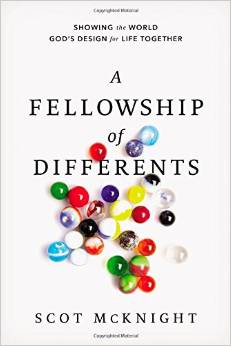 We tend to measure the “success” of a church by numbers. I propose in A Fellowship of Differents another way of measuring whether or not our church measures up to the kind of success that the Bible uses —
The success of a church is first determined by how many invisible people become visible to those not like them.
Asked as a question, Who is invisible in your church?
To the degree folks are invisible, we don’t have the right view of the church or the right view of the Christian life. So, let’s explore who is most invisible today. Here are some examples:
Widows. Listen to how Miriam Neff, a widow, tells her story:
I am part of the fastest growing demographic in the United States. We are targeted by new-home builders and surveyed by designers. We are a lucrative niche for health and beauty products, and financial planners invite us to dinners. It’s no wonder the marketers are after us: 800,000 join our ranks every year.
Who are we? We are the invisible among you—the widows.
Studies show that widows lose 75 percent of their friendship network when they lose a spouse. Sixty percent of us experience serious health issues in that first year. One third of us meet the criteria for clinical depression in the first month after our spouse’s death, and half of us remain clinically depressed a year later. Most experience financial decline. One pastor described us by saying we move from the front row of the church to the back, and then out the door. We move from serving and singing in choir to solitude and silent sobbing, and then on to find a place where we belong.
We could go on, you get the picture. Are widows visible or invisible in your church?
What about children? Are they wall flowers and decorations and isolated and segregated or they are part of your church? What about young adults? Are they segregated or are they being brought to the table? What about seniors? Are they sitting up front or in the back (on their way out the door with the widows)?
What about races? How many races are present in your church? Are their Asian Christians in your church? Do you know they are the fastest growing ethnic group in the USA and that nearly 50% identify themselves as Christians? Are they invisible to you? Can you name some Asian Christian leaders? I can say the same about Latin and Mexican Americans? Any names come to mind? (We’ll ignore my own heritage, for the moment, the Scottish.) Measure that against your community. Is your church representative of the community or more mono-ethnic?
What about women? How involved are women in your church? How are women involved? Are they at the table where decisions are made? Or do men make the decision and women do the work? In the words of Carolyn Custis James, who called her book about women Half the Church, “It is no small matter that women comprise half the church. In many countries women make up a significantly higher percentage of believers – 80 percent in China and 90 percent in Japan…. maybe these high percentages of women should make us wonder what God is doing, for he often forges significant inroads for the gospel by beginning with somen… When you stop to think of it, in sheer numbers, the potential we possess for expanding the kingdom is staggering.” Is your church unleashing the spiritual power of women? Is their voice heard?
What about the poor? How many poor people, unemployed people, financially struggling people are in your church? Are they even willing to let those facts be known? (If not, why not?)
What about inner city vs. suburban? In the USA it has become a sign of special devotion to stake a claim for Jesus by dwelling amongst the “least of the these” by church planting in the inner city. The implication is that the suburban folks are just too compromised with the wealth of this world to care. The other side of this one is that some in the suburban churches either don’t know about the inner city or they just don’t care. So, let’s think about this together: Do we need to make the inner city folks visible in our churches? Do some inner city folks need to make the suburban folks visible? As Osheta Moore says it so well, “geography does not indicate fidelity.”
What about faith strugglers? How many folks in your church are struggling with the truth of the Bible, with science and faith, with the atonement, with hell, with what the Old Testament says about God? Do you know? Are they free to inform you? What would happen if their problems became visible?
What about the non-university educated? Is your church designed by a college graduate (almost certainly) and seminary graduate (good chance)? Does it appeal to college graduates? (Probably). What about those who don’t give a rip about college but like to cut wood or do landscaping or paint or work on cars … and you can fill in with more vocations that are just as noble in our world. Does your church know them when it makes plans?
What about gays and lesbians? Let’s ignore the debates about what the Bible teaches and ask this question: Are they able to be honest about their sexual orientation? Or do they catch the message the gospel is not for them? Does your church want redemption or exclusion?
What about introverts? Is your church designed by extroverts (almost certainly) and engaging for extroverts (almost certainly) but not introverts (very likely)?
What about those … well, how to put this: some people have managed somehow to have a history that has collected one nonsensical episode after another while others seem to have walked straight in the script of the American dream – high school, sports, college, graduate school, good job, family, good children starring on the soccer teams. Joseph Epstein speaks of such people as “men and women who have drawn lucky numbers in life’s lottery.” We know what he means, so what about mixing different walks of life? Is your church only for the “successful and scripted” and those with lucky numbers?
What about those suffering from sexual abuse or dysfunctional families or depression or anxiety or post traumatic syndrome? Or is your church for the mentally healthy extrovert?
The apostle Paul laid down one of the most brilliant lines in the history of mankind, a set of lines that reveal God’s grand social experiment called “church,” a set of lines that reveals what God wants the church to be and therefore how the Christian life is to be understood. Paul said, and I will reformat the lines so you see how central the grand experiment, the church, was for Paul:
There is neither Jew nor Greek [ethnic],
Neither slave nor free [social class, socio-economics]
Nor is there male and female [sex or gender].
Why is there no ethnic, class and sex ordering of life?
For you are all one in Christ Jesus.
The church is the grand experiment of God where differents get connected, where unlikes form a fellowship, and were the formerly segregated are integrated. They are to be one – not scattered all over the city – and they are one in Christ Jesus, in the salad bowl that holds the differents together.
There are different cultures, and there are different socio-economic classes, and there are different genders, and there are different sexual orientations, and there are different educations and incomes and kinds of work done and preferences in music and art and worship style and sermon length. All together, at the table, in the salad bowl, thrashing it out with one another. That thrashing it out is what the church is about and that is what the Christian life is all about: learning to love one another, by the power of God’s grace, so we can flourish as the people of God in this world. The purpose of the church is to be the kingdom in the present world and the Christian life is all about learning to live into that kingdom reality in the here and now.
Previous Post

April 14, 2015
Bring Back the Girls!
Next Post
April 15, 2015 Basset Hounds, Lament, and Easter (by Glenn Pemberton)
Browse Our Archives
Select a Category Acts of the Apostles Adam Advent Anabaptism Angels Anglican Apologetics Atonement Baptism BCP Prayers Bible Biblical Studies Birds Blogging Bloglossary Bonhoeffer Books Calvinism Christianity Church Church History Coffee Colossians Commentary Recs Conversion Creation Creeds Culture Death Ecclesiastes Economics Education Embracing Grace Emergent Emerging Movement Eschatology Essays Ethics Eucharist Evangelicalism Family Fasting Fathers Fellowship of Differents Footsteps Tour Fun and Whimsical Gospel Grace Happiness Heaven Hell Holy Spirit Irenaeus James Jesus Jesus Creed Job Justification Kingdom of God Law Lectures Lent Liberalism Love and Marriage Mabanteneni Manhood Mary Miracles Missio Alliance MissioLife Missional Missional Jesus Movies and Film New Perspective Northern Seminary OneLife Origins Project Orthodox Parables Pastor's Spouse Pastoring and Leading Pastoring and Preaching Patristics Paul Paul-John Tour Pharisees Pietism Political Theology Prayer and Formation Preaching Problems for Faith Psalm 119 Psalms Public Issues Purgatory Religions Resurrection Revelation Romans Rule of JCreed Science and Faith Sermon on the Mount Sports Ten Commandments Theology Third Way Top Ten Lists Translations Uncategorized Universalism University Ministry Way Out Weekly Meanderings Wisdom Women and Ministry Work Worship Writing & Blogging Youth Ministry
Select a Month July 2021 January 2020 December 2019 November 2019 October 2019 September 2019 August 2019 July 2019 June 2019 May 2019 April 2019 March 2019 February 2019 January 2019 December 2018 November 2018 October 2018 September 2018 August 2018 July 2018 June 2018 May 2018 April 2018 March 2018 February 2018 January 2018 December 2017 November 2017 October 2017 September 2017 August 2017 July 2017 June 2017 May 2017 April 2017 March 2017 February 2017 January 2017 December 2016 November 2016 October 2016 September 2016 August 2016 July 2016 June 2016 May 2016 April 2016 March 2016 February 2016 January 2016 December 2015 November 2015 October 2015 September 2015 August 2015 July 2015 June 2015 May 2015 April 2015 March 2015 February 2015 January 2015 December 2014 November 2014 October 2014 September 2014 August 2014 July 2014 June 2014 May 2014 April 2014 March 2014 February 2014 January 2014 December 2013 November 2013 October 2013 September 2013 August 2013 July 2013 June 2013 May 2013 April 2013 March 2013 February 2013 January 2013 December 2012 November 2012 October 2012 September 2012 August 2012 July 2012 June 2012 May 2012 April 2012 March 2012 February 2012 January 2012 December 2011 November 2011 October 2011 September 2011 August 2011 July 2011 June 2011 May 2011 April 2011 March 2011 February 2011 January 2011 December 2010 November 2010 October 2010 September 2010 August 2010 July 2010 June 2010 May 2010 April 2010 March 2010 February 2010 January 2010 December 2009 November 2009 October 2009 September 2009 August 2009 July 2009 June 2009 May 2009 April 2009 March 2009 February 2009 January 2009 December 2008 November 2008 October 2008 September 2008 August 2008 July 2008 June 2008 May 2008 April 2008 March 2008 February 2008 January 2008 December 2007 November 2007 October 2007 September 2007 August 2007 July 2007 June 2007 May 2007 April 2007 March 2007 February 2007 January 2007 December 2006 November 2006 October 2006 September 2006 August 2006 July 2006 June 2006 May 2006 April 2006 March 2006 February 2006 January 2006 December 2005 November 2005 October 2005 September 2005 August 2005 July 2005 June 2005 May 2005 April 2005 0000
Follow Us!
TAKE THE
Religious Wisdom Quiz
Where was Jesus born?
Select your answer to see how you score.
Jerusalem Capernaum Bethlehem Nazareth
Related posts from Jesus Creed
The End Of A Very Interesting Letter

Rethinking Evangelism Through The Reformation

It's American for our Politicians to Reference the...

TRENDING AT PATHEOS Evangelical

The REST of Your Life: A Creative Wrestles...
This week I had a conversation with a good friend from church....

How the author of the world's best hymn...
I've been working with John Newton for a while now. This makes...

Long before this Lectio Divina, Psalm 130 - the song - started...

What About the Trees? Another Living Parable
After I finished writing the last article about falling leaves as a...

Why Classical Education Is a Conversation, Not a...
Come and Read: Joy in Classical Education When I was a little...

Cornell University has received a great deal of negative publicity and intense...
view all Evangelical blogs
Ad-Free & Subscriber Log-In Subscription Support
- About Us
- 2026 Calendar
- Videos
- Podcasts
- Library of World Religions
- Faith In Media Tracker
- Advertise With Us
- Write for Us
- Privacy Policy
- Terms of Service
- Do Not Sell My Data
- Contact Us
- Radiant Digital
- Manage Newsletter Subscriptions
- Unsubscribe From Notifications
- Sitemap
Copyright 2008-2026, Patheos. All rights reserved.
Subscription Support Ad-Free & Subscriber Log-In
Follow Patheos