
BuddhistCatholicContemplativeEvangelicalGeneral ChristianHinduJewishLatter-day SaintMuslimNew VisionsProgressive Christian
Beliefs
- Buddhist
- Catholic
- Contemplative
- Evangelical
- General Christian
- Hindu
- Jewish
- Latter-day Saint
- More Voices
- Muslim
- New Visions
- Pagan
- Progressive Christian
Topics
- Religion News
- Food and Religion
- Sports and Religion
- Religious Art
- Religious Music and Entertainment
- Religious Events
- History and Religion
- Style and Religion
- Politics and Religion
- Women in Religion
- Recreation Outdoors and Religion
- Business Finance and Religion
- Careers Workplace and Religion
- Education and Religion
- Family Parenting and Religion
- Health Fitness and Religion
- Home and Religion
- Relationships and Religion
- Technology and Religion
- Travel and Religion
Columnists
- Buddhist Columnists
- Business Finance and Religion Columnists
- Careers Workplace and Religion Columnists
- Catholic Columnists
- Contemplative Columnists
- Education and Religion Columnists
- Evangelists Columnists
- Family Parenting and Religion Columnists
- General Christian Columnists
- Health Fitness and Religion Columnists
- Hindu Columnists
- History and Religion Columnists
- Home and Religion Columnists
- Jewish Columnists
- More Voices Columnists
- Latter Day Columnists
- Muslim Columnists
- New Visions Columnists
- Nonreligious Columnists
- Pagan Columnists
- Politics and Religion Columnists
- Progressive Columnists
- Recreation Outdoors and Religion Columnists
- Relationships and Religion Columnists
- Religion News Columnists
- Religious Art Columnists
- Religious Events Columnists
- Religious Music and Entertainment Columnists
- Sports and Religion Columnists
- Style and Religion Columnists
- Technology and Religion Columnists
- Travel and Religion Columnists
- Women in Religion Columnists
Resource Library
- 2026 Calendar
- Library of World Religions
- The 100 Most Holy Places on Earth
- Patheos Answers
- Podcasts
- Videos
- Faith Leaders Database
- Anglican Episcopalian
- Bahai
- Baptist
- Buddhism
- Christianity
- Confucianism
- Eastern Orthodoxy
- Hinduism
- Holiness and Pentecostal
- ISKCON
- Islam
- Judaism
- Lutheran
- Methodist
- The Church of Jesus Christ of Latter-day Saints
- New Age
- Paganism
- Presbytarian and Reformed
- Protestantism
- Religion Behind the Scenes
- Roman Catholic
- Scientology
- Shia Islam
- Sikhism
- Sufism
- Sunni Islam
- Taoism
- Zen
- See all religions
Research Tools
 Ad-Free & Subscriber Log-In Subscription Support
Ad-Free & Subscriber Log-In Subscription Support
Follow Patheos 

- Trending:
- Forgiveness
- |
- Marriage
- |
- Consciousness
- |
- Death Penalty
- |
- Election
- |
- Halloween
 Jesus Creed
- Home
- Evangelical
- Hope is Our Foundation (RJS)
Hope is Our Foundation (RJS)
Last updated on: March 24, 2015 at 5:17 am by RJS
Hope is Our Foundation (RJS) 2015-03-22T16:18:29-05:00 RJS
Patheos Explore the world's faith through different perspectives on religion and spirituality! Patheos has the views of the prevalent religions and spiritualities of the world.
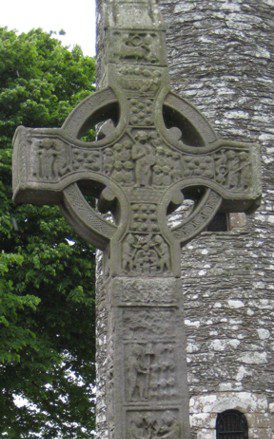 Christianity is a religion founded on hope precisely because it is founded in God and his work in the world through Jesus, the Messiah of God. The resurrection is the clearest example of this hope, but it is far from the only example in scripture. John Polkinghorne outlines New Testament insights into Christian hope and the theological foundation of this hope in chapters seven and eight of his book The God of Hope and the End of the World.
First – relevant New Testament passages. Jesus leaves no doubt about the reality of the final resurrection or of the continued existence of the people of God. As an example, consider the reply to the Sadducees reported in Mark 12.
Now about the dead rising—have you not read in the Book of Moses, in the account of the burning bush, how God said to him, ‘I am the God of Abraham, the God of Isaac, and the God of Jacob’? He is not the God of the dead, but of the living. You are badly mistaken!”
This hope permeates Paul’s writing as well. From 1 Thessalonians, thought by most to be the earliest of the letters contained in the New Testament, to Romans, which (excepting the pastoral) is thought to be his last. His thinking developed over this time, from an expectation of imminent consummation to a realization that this would be a rather longer period of time, but his hope in resurrection never faltered. Polkinghorne summarizes from Romans:
The rest of the New Testament testifies to the belief that in the risen Christ the believer has been given a new and enduring life. ‘Therefore we have been buried with him by baptism, so that, just as Christ was raised from the dead by the glory of the father, so too we might walk in newness of life. For if we have been united with him in a death like his, we will certainly be united with him in a resurrection like his.’ (Romans 6:4-5). Once again, it is trust in the faithfulness of God that is the ground of this hope. … It is the Spirit already at work within us who is the testimony to life beyond the grave. ‘If the Spirit of him who raised Jesus from the dead dwells in you, he who raised Jesus from the dead will give life to your mortal bodies also through his Spirit who dwells in you’ (Romans 8:11). Schwöbel comments that ‘it is the Spirit of God who bridges the eschatological tension between the already and not yet’. (p. 83-84)
Hope permeates as well the Gospel of John, the letters of John and Peter, and Revelation. The tension between already and not yet is, Polkinghorne says a little further on, “an intrinsic component of our eschatological thinking.” (p. 89) Throughout the New Testament Jesus is both the One who has come and the One who is to come.
Next – Theological Foundations of Hope. Polkinghorne quotes Jürgen Moltmann: ‘From first to last, and not merely in the epilogue, Christianity is eschatology, is hope, forward looking and forward moving, and therefore also revolutionary and transforming the present.’ (p. 93 quoting from Moltmann’s Theology of Hope) Hope is invested in the future, but it is not a cheap hope that fails to take note of the reality of the ups and downs of history. Atrocities persist, past, present, and presumably future. What is the ground of true hope?
There is only one possible source: the eternal faithfulness of the God who is Creator and Redeemer of history. Here Christianity relies heavily on its Jewish roots. It is only God who can bring new life and raise the dead, whose Spirit breathes life into dry bones and makes them live (Ezekiel 37:9-10). Hope lies in divine chesed, God’s steadfast love. (p. 95)
An impersonal creator or divine cause is insufficient to the task.
To sustain true hope it must be possible to speak of a God who is powerful and active, not simply holding creation in being, but also interacting with its history, the one who ‘gives life to the dead and calls into existence the things that do not exist’ (Romans 4:17). This same God must be the one whose loving concern for individual creatures is such that the divine power will be brought into play to bring about these creatures’ everlasting good. The God and Father of our Lord Jesus Christ is just such a God. (p. 95)
Forgiveness is a part of our hope for the future, a forgiveness that is true today and leads to the future. But this is a forgiveness in which we must participate. The receiving and giving of forgiveness are linked and mutually necessary. Matthew 6:14-15, Matthew 18:35, and James 2:13 cannot be brushed aside.
The reality of resurrection in the New Testament is theologically necessary for Christian hope. Progressive Christian views that relegate Christian hope to “the attainment of a life lived with God now and not in some future state of blessedness beyond death” are insufficient to the task. Such a view is void of any genuine hope for one whose life is cut tragically short by accident, violence, or disease. It is devoid of genuine hope for the one who suffers even to death for the gospel of Christ. Yes we should work today to right the wrongs of the world. But this is not ultimately where our hope lies. Polkinghorne sums up: “We shall all die with unfinished business and incompleteness in our lives. There must be more to hope for.” (p. 99)
Christian hope is in a physical and individual resurrection. We will not be preserved simply in the eternal memory of God, a view I first came across in John Haught’s book Making Sense of Evolution. Polkinghorne responds to this idea noting that a memory is a static thing and thus devoid of any real hope because it removes the reality of the individual and of redemption from the picture. In contrast: “actual eschatological fulfillment demands for each of us a completion that can be attained only if we have a continuing and developing personal relationship with God post mortem.” (p. 100) A true hope must include future development and growth.
Finally, we embrace the true hope for future in the sacraments of baptism, buried and raised with Christ (Romans 6), and the bread and wine … ‘For whenever you eat this bread and drink this cup, you proclaim the Lord’s death until he comes.’ (1 Cor. 11:26) We embrace in the true hope for the future the conviction that nothing good will be lost and that our strivings today will bear everlasting fruit.
God is the God of hope because God is the God of the past, present and future. The risen Christ is the one who is ‘the first and the last, and the living one. I was dead, and I see, I am alive for ever, and I have the keys of Death and Death’s Domain’ (Revelation 1:17-18). Those who embrace hope place themselves in the hands of the Lord of the open future. To do so is an act of total commitment to the One who is faithful. (p. 101-102)
A worthy meditation leading into Palm Sunday, Holy Week and Easter.
Is Christianity a religion founded on hope?
How should this hope inform our actions today?
If you wish to contact me, you may do so at rjs4mail[at]att.net.
If interested you can subscribe to a full text feed of my posts at Musings on Science and Theology.
Previous Post

March 24, 2015
Is "Trinity" Use-less? (Geoff Holsclaw)
Next Post
March 24, 2015 Richard Beck on "Progressive Purity" (with Rachel Held Evans)
Browse Our Archives
Select a Category Acts of the Apostles Adam Advent Anabaptism Angels Anglican Apologetics Atonement Baptism BCP Prayers Bible Biblical Studies Birds Blogging Bloglossary Bonhoeffer Books Calvinism Christianity Church Church History Coffee Colossians Commentary Recs Conversion Creation Creeds Culture Death Ecclesiastes Economics Education Embracing Grace Emergent Emerging Movement Eschatology Essays Ethics Eucharist Evangelicalism Family Fasting Fathers Fellowship of Differents Footsteps Tour Fun and Whimsical Gospel Grace Happiness Heaven Hell Holy Spirit Irenaeus James Jesus Jesus Creed Job Justification Kingdom of God Law Lectures Lent Liberalism Love and Marriage Mabanteneni Manhood Mary Miracles Missio Alliance MissioLife Missional Missional Jesus Movies and Film New Perspective Northern Seminary OneLife Origins Project Orthodox Parables Pastor's Spouse Pastoring and Leading Pastoring and Preaching Patristics Paul Paul-John Tour Pharisees Pietism Political Theology Prayer and Formation Preaching Problems for Faith Psalm 119 Psalms Public Issues Purgatory Religions Resurrection Revelation Romans Rule of JCreed Science and Faith Sermon on the Mount Sports Ten Commandments Theology Third Way Top Ten Lists Translations Uncategorized Universalism University Ministry Way Out Weekly Meanderings Wisdom Women and Ministry Work Worship Writing & Blogging Youth Ministry
Select a Month July 2021 January 2020 December 2019 November 2019 October 2019 September 2019 August 2019 July 2019 June 2019 May 2019 April 2019 March 2019 February 2019 January 2019 December 2018 November 2018 October 2018 September 2018 August 2018 July 2018 June 2018 May 2018 April 2018 March 2018 February 2018 January 2018 December 2017 November 2017 October 2017 September 2017 August 2017 July 2017 June 2017 May 2017 April 2017 March 2017 February 2017 January 2017 December 2016 November 2016 October 2016 September 2016 August 2016 July 2016 June 2016 May 2016 April 2016 March 2016 February 2016 January 2016 December 2015 November 2015 October 2015 September 2015 August 2015 July 2015 June 2015 May 2015 April 2015 March 2015 February 2015 January 2015 December 2014 November 2014 October 2014 September 2014 August 2014 July 2014 June 2014 May 2014 April 2014 March 2014 February 2014 January 2014 December 2013 November 2013 October 2013 September 2013 August 2013 July 2013 June 2013 May 2013 April 2013 March 2013 February 2013 January 2013 December 2012 November 2012 October 2012 September 2012 August 2012 July 2012 June 2012 May 2012 April 2012 March 2012 February 2012 January 2012 December 2011 November 2011 October 2011 September 2011 August 2011 July 2011 June 2011 May 2011 April 2011 March 2011 February 2011 January 2011 December 2010 November 2010 October 2010 September 2010 August 2010 July 2010 June 2010 May 2010 April 2010 March 2010 February 2010 January 2010 December 2009 November 2009 October 2009 September 2009 August 2009 July 2009 June 2009 May 2009 April 2009 March 2009 February 2009 January 2009 December 2008 November 2008 October 2008 September 2008 August 2008 July 2008 June 2008 May 2008 April 2008 March 2008 February 2008 January 2008 December 2007 November 2007 October 2007 September 2007 August 2007 July 2007 June 2007 May 2007 April 2007 March 2007 February 2007 January 2007 December 2006 November 2006 October 2006 September 2006 August 2006 July 2006 June 2006 May 2006 April 2006 March 2006 February 2006 January 2006 December 2005 November 2005 October 2005 September 2005 August 2005 July 2005 June 2005 May 2005 April 2005 0000
Follow Us!
TAKE THE
Religious Wisdom Quiz
In which garden did Jesus pray before His arrest?
Select your answer to see how you score.
Eden Gethsemane Golgotha Paradise
Related posts from Jesus Creed

The Thrust of the Biblical Plot (RJS)
If You Don't Get the Future Wright
Human Experience and Our Hope for the Future...
Revolution in Eschatology Today?
TRENDING AT PATHEOS Evangelical

The REST of Your Life: A Creative Wrestles...
This week I had a conversation with a good friend from church....

How the author of the world's best hymn...
I've been working with John Newton for a while now. This makes...

Long before this Lectio Divina, Psalm 130 - the song - started...

What About the Trees? Another Living Parable
After I finished writing the last article about falling leaves as a...

Why Classical Education Is a Conversation, Not a...
Come and Read: Joy in Classical Education When I was a little...

Cornell University has received a great deal of negative publicity and intense...
view all Evangelical blogs
Ad-Free & Subscriber Log-In Subscription Support
- About Us
- 2026 Calendar
- Videos
- Podcasts
- Library of World Religions
- Faith In Media Tracker
- Advertise With Us
- Write for Us
- Privacy Policy
- Terms of Service
- Do Not Sell My Data
- Contact Us
- Radiant Digital
- Manage Newsletter Subscriptions
- Unsubscribe From Notifications
- Sitemap
Copyright 2008-2026, Patheos. All rights reserved.
Subscription Support Ad-Free & Subscriber Log-In
Follow Patheos