
BuddhistCatholicContemplativeEvangelicalGeneral ChristianHinduJewishLatter-day SaintMuslimNew VisionsProgressive Christian
Beliefs
- Buddhist
- Catholic
- Contemplative
- Evangelical
- General Christian
- Hindu
- Jewish
- Latter-day Saint
- More Voices
- Muslim
- New Visions
- Pagan
- Progressive Christian
Topics
- Religion News
- Food and Religion
- Sports and Religion
- Religious Art
- Religious Music and Entertainment
- Religious Events
- History and Religion
- Style and Religion
- Politics and Religion
- Women in Religion
- Recreation Outdoors and Religion
- Business Finance and Religion
- Careers Workplace and Religion
- Education and Religion
- Family Parenting and Religion
- Health Fitness and Religion
- Home and Religion
- Relationships and Religion
- Technology and Religion
- Travel and Religion
Columnists
- Buddhist Columnists
- Business Finance and Religion Columnists
- Careers Workplace and Religion Columnists
- Catholic Columnists
- Contemplative Columnists
- Education and Religion Columnists
- Evangelists Columnists
- Family Parenting and Religion Columnists
- General Christian Columnists
- Health Fitness and Religion Columnists
- Hindu Columnists
- History and Religion Columnists
- Home and Religion Columnists
- Jewish Columnists
- More Voices Columnists
- Latter Day Columnists
- Muslim Columnists
- New Visions Columnists
- Nonreligious Columnists
- Pagan Columnists
- Politics and Religion Columnists
- Progressive Columnists
- Recreation Outdoors and Religion Columnists
- Relationships and Religion Columnists
- Religion News Columnists
- Religious Art Columnists
- Religious Events Columnists
- Religious Music and Entertainment Columnists
- Sports and Religion Columnists
- Style and Religion Columnists
- Technology and Religion Columnists
- Travel and Religion Columnists
- Women in Religion Columnists
Resource Library
- 2026 Calendar
- Library of World Religions
- The 100 Most Holy Places on Earth
- Patheos Answers
- Podcasts
- Videos
- Faith Leaders Database
- Anglican Episcopalian
- Bahai
- Baptist
- Buddhism
- Christianity
- Confucianism
- Eastern Orthodoxy
- Hinduism
- Holiness and Pentecostal
- ISKCON
- Islam
- Judaism
- Lutheran
- Methodist
- The Church of Jesus Christ of Latter-day Saints
- New Age
- Paganism
- Presbytarian and Reformed
- Protestantism
- Religion Behind the Scenes
- Roman Catholic
- Scientology
- Shia Islam
- Sikhism
- Sufism
- Sunni Islam
- Taoism
- Zen
- See all religions
Research Tools
 Ad-Free & Subscriber Log-In Subscription Support
Ad-Free & Subscriber Log-In Subscription Support
Follow Patheos 

- Trending:
- Forgiveness
- |
- Marriage
- |
- Consciousness
- |
- Death Penalty
- |
- Election
- |
- Halloween
 Jesus Creed
- Home
- Evangelical
- Human Experience and Our Hope for the Future (RJS)
Human Experience and Our Hope for the Future (RJS)
Last updated on: March 13, 2015 at 9:58 pm by RJS
Human Experience and Our Hope for the Future (RJS) 2015-03-13T21:58:22-05:00 RJS
Patheos Explore the world's faith through different perspectives on religion and spirituality! Patheos has the views of the prevalent religions and spiritualities of the world.
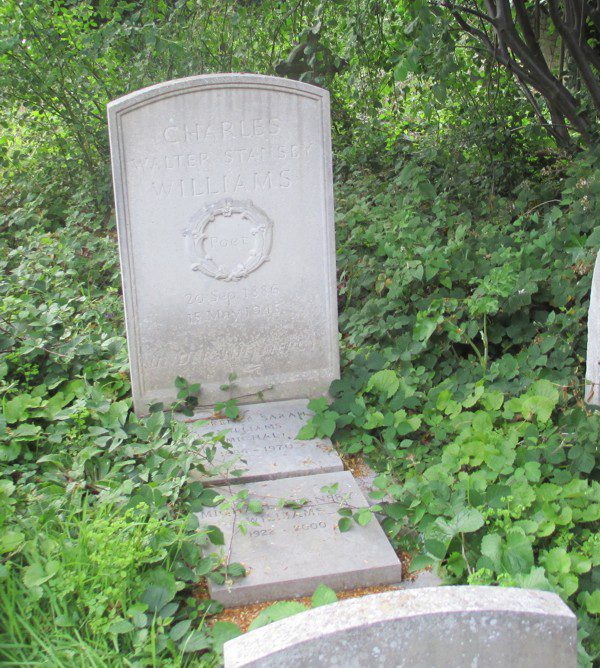
 A couple of weeks ago we began a series of posts looking at John Polkinghorne’s book The God of Hope and the End of the World. After looking at insights into hope and the end of the world from the realm of science (see the previous post: The End of the World), Polkinghorne turns to human sciences and human hope for the future. How do humans hang onto hope in the face of certain death? We all know, on one level, that we will die eventually however much we ignore the fact. And yet we continue to hope and to cultivate hope. The picture to the right is a churchyard I enjoyed walking through while in Oxford last summer.
Hope is not optimism, based on predictions for the future, or wishful thinking unconstrained by probabilities. “True hope ‘thrives on a sense of what is inaugurated and possible, but always still coming into being.'” (p. 29) The future has begun, but is not yet – and this is the hope not seen that we trust in and strive for. Faith in the future is a deep human conviction. Polkinghorne reflects:
I believe that this intuition of hope is a significant and essential aspect of what it is to be human. It is not just a survival technique for whistling in the dark to keep our spirits up, but it is an encounter with the reality in which we live. (p. 31)
There are signals of transcendence that point us toward a reality deeper than surface appearances. Here he refers to Peter Berger’s book A Rumor of Angels with examples of transcendence. “Humans possess a significant intuition that in the end all shall be well.” Human experience points beyond the mere present. Art can provide a window through which we “glimpse a sight of an everlasting reality underlying the flux of the changing world.” And “… the hope of a reality beyond transience.” (p. 34)
It seems likely that ever since the Neanderthals began to bury their dead in a fetal position (significant of new birth) and coloured with red ochre (significant of blood and new life), there has been some intuition that death is not the last word in relation to human destiny. (p. 36)
 Cultural context. One important element of transcendence and this human intuition for hope is seen in human history and culture. The past is not merely a collection of facts and events. It is a continuum into the present and on into the future.
Hot memory … is the way in which the past remains still active in the present. It carries into our generation the traditions and insights that formed a community whole life is spread out over history, and of which we are but the most recent members. … [I]t offers dynamic participation in a still unfolding historical process, where the insights of the past are available as corrections to the limited perspectives of the present. (p. 42)
The textual canon of the Hebrew Bible and the New Testament through its compiling and interpretation “intertwines the thought of many generations.” In our culture the textual canon need not be limited to Scripture – great books and shared stories extend beyond this. However, the Scripture has played a lasting role in Western culture. A liturgical year (secular or sacred) and the regular weekly and yearly celebrations also connect us with the past.
We are more than animals. We are self-conscious, God-conscious, history-conscious, and future-conscious in a way that even chimpanzees and bonobos, our nearest animal cousins, are not.
We may share 99.5 percent of our DNA with chimpanzees, but that small difference is part of a very significant difference, just as the much smaller difference in DNA between myself and Mozart is part of a highly significant difference between an off-key whistler and a musical genius. The credibility of eschatological hope depends not only on belief in a faithful Creator but also on belief in the unique value of each human being. Right thinking eschatologically requires right thinking anthropologically. (p. 45)
Hope is a human characteristic and, Polkinghorne argues, a human intuition into a deeper reality that transcends the merely material investigated in science. Our intuition points us beyond a reductionist secular materialism. Deep down inside we know that there is something more than chemistry and physics and genes making us who we are.
Hope based on an inaugurated eschatology is the foundation of a moral view that supports and enables the costly demands of fidelity and duty. … Hope … deliver[s] us from the tyranny of the present, the feeling of need to grab as much as we can before all opportunity passes away for ever. We are enabled to live our lives not in the spirit of carpe diem, but sub specie aeternitatis (in light of eternity). (p. 49)
Hope is natural to humans, an integral part of who we are. Hope makes us human. It is in our very nature to have a hope for the future. Some may argue that this hope is an evolutionary fiction that enhanced the survival of our genes – a purely natural explanation. But Polkinghorne suggests that this hope springs from a genuine deeper reality. Our hope is a response to reality. We can have a justified hope for the future. All is not futile and meaningless.
None of this takes us directly to the God of hope or a Christian understanding of the end of the world and the age to come. For that we need to turn to the bible and to Christian theological insight. And this is where Polkinghorne turns in the next two sections of his book and where we will turn in the next post.
Do you agree that a human intuition for transcendence is an indication of a deeper reality beyond the merely natural?
Is it significant that a hope for the future goes back in our history – even back to Neanderthal society?
Is it the ability to recall the past and hope for the future that makes us truly human as a species?
How should we live? sub specie aeternitatis (in light of eternity) or carpe diem (seize the day)
If you wish to contact me directly you may do so at rjs4mail [at] att.net.
If interested you can subscribe to a full text feed of my posts at Musings on Science and Theology.
Previous Post

January 29, 2015
Rethinking Heaven (NT Wright)
Next Post
January 29, 2015 New Kippa
Browse Our Archives
Select a Category Acts of the Apostles Adam Advent Anabaptism Angels Anglican Apologetics Atonement Baptism BCP Prayers Bible Biblical Studies Birds Blogging Bloglossary Bonhoeffer Books Calvinism Christianity Church Church History Coffee Colossians Commentary Recs Conversion Creation Creeds Culture Death Ecclesiastes Economics Education Embracing Grace Emergent Emerging Movement Eschatology Essays Ethics Eucharist Evangelicalism Family Fasting Fathers Fellowship of Differents Footsteps Tour Fun and Whimsical Gospel Grace Happiness Heaven Hell Holy Spirit Irenaeus James Jesus Jesus Creed Job Justification Kingdom of God Law Lectures Lent Liberalism Love and Marriage Mabanteneni Manhood Mary Miracles Missio Alliance MissioLife Missional Missional Jesus Movies and Film New Perspective Northern Seminary OneLife Origins Project Orthodox Parables Pastor's Spouse Pastoring and Leading Pastoring and Preaching Patristics Paul Paul-John Tour Pharisees Pietism Political Theology Prayer and Formation Preaching Problems for Faith Psalm 119 Psalms Public Issues Purgatory Religions Resurrection Revelation Romans Rule of JCreed Science and Faith Sermon on the Mount Sports Ten Commandments Theology Third Way Top Ten Lists Translations Uncategorized Universalism University Ministry Way Out Weekly Meanderings Wisdom Women and Ministry Work Worship Writing & Blogging Youth Ministry
Select a Month July 2021 January 2020 December 2019 November 2019 October 2019 September 2019 August 2019 July 2019 June 2019 May 2019 April 2019 March 2019 February 2019 January 2019 December 2018 November 2018 October 2018 September 2018 August 2018 July 2018 June 2018 May 2018 April 2018 March 2018 February 2018 January 2018 December 2017 November 2017 October 2017 September 2017 August 2017 July 2017 June 2017 May 2017 April 2017 March 2017 February 2017 January 2017 December 2016 November 2016 October 2016 September 2016 August 2016 July 2016 June 2016 May 2016 April 2016 March 2016 February 2016 January 2016 December 2015 November 2015 October 2015 September 2015 August 2015 July 2015 June 2015 May 2015 April 2015 March 2015 February 2015 January 2015 December 2014 November 2014 October 2014 September 2014 August 2014 July 2014 June 2014 May 2014 April 2014 March 2014 February 2014 January 2014 December 2013 November 2013 October 2013 September 2013 August 2013 July 2013 June 2013 May 2013 April 2013 March 2013 February 2013 January 2013 December 2012 November 2012 October 2012 September 2012 August 2012 July 2012 June 2012 May 2012 April 2012 March 2012 February 2012 January 2012 December 2011 November 2011 October 2011 September 2011 August 2011 July 2011 June 2011 May 2011 April 2011 March 2011 February 2011 January 2011 December 2010 November 2010 October 2010 September 2010 August 2010 July 2010 June 2010 May 2010 April 2010 March 2010 February 2010 January 2010 December 2009 November 2009 October 2009 September 2009 August 2009 July 2009 June 2009 May 2009 April 2009 March 2009 February 2009 January 2009 December 2008 November 2008 October 2008 September 2008 August 2008 July 2008 June 2008 May 2008 April 2008 March 2008 February 2008 January 2008 December 2007 November 2007 October 2007 September 2007 August 2007 July 2007 June 2007 May 2007 April 2007 March 2007 February 2007 January 2007 December 2006 November 2006 October 2006 September 2006 August 2006 July 2006 June 2006 May 2006 April 2006 March 2006 February 2006 January 2006 December 2005 November 2005 October 2005 September 2005 August 2005 July 2005 June 2005 May 2005 April 2005 0000
Follow Us!
TAKE THE
Religious Wisdom Quiz
Where was Jesus placed after He died?
Select your answer to see how you score.
A temple A cave of fire A tomb A pyramid
Related posts from Jesus Creed

The Thrust of the Biblical Plot (RJS)

If You Don't Get the Future Wright
Revolution in Eschatology Today?
TRENDING AT PATHEOS Evangelical

The REST of Your Life: A Creative Wrestles...
This week I had a conversation with a good friend from church....

How the author of the world's best hymn...
I've been working with John Newton for a while now. This makes...

Long before this Lectio Divina, Psalm 130 - the song - started...

What About the Trees? Another Living Parable
After I finished writing the last article about falling leaves as a...

Why Classical Education Is a Conversation, Not a...
Come and Read: Joy in Classical Education When I was a little...

Cornell University has received a great deal of negative publicity and intense...
view all Evangelical blogs
Ad-Free & Subscriber Log-In Subscription Support
- About Us
- 2026 Calendar
- Videos
- Podcasts
- Library of World Religions
- Faith In Media Tracker
- Advertise With Us
- Write for Us
- Privacy Policy
- Terms of Service
- Do Not Sell My Data
- Contact Us
- Radiant Digital
- Manage Newsletter Subscriptions
- Unsubscribe From Notifications
- Sitemap
Copyright 2008-2026, Patheos. All rights reserved.
Subscription Support Ad-Free & Subscriber Log-In
Follow Patheos