
BuddhistCatholicContemplativeEvangelicalGeneral ChristianHinduJewishLatter-day SaintMuslimNew VisionsProgressive Christian
Beliefs
- Buddhist
- Catholic
- Contemplative
- Evangelical
- General Christian
- Hindu
- Jewish
- Latter-day Saint
- More Voices
- Muslim
- New Visions
- Pagan
- Progressive Christian
Topics
- Religion News
- Food and Religion
- Sports and Religion
- Religious Art
- Religious Music and Entertainment
- Religious Events
- History and Religion
- Style and Religion
- Politics and Religion
- Women in Religion
- Recreation Outdoors and Religion
- Business Finance and Religion
- Careers Workplace and Religion
- Education and Religion
- Family Parenting and Religion
- Health Fitness and Religion
- Home and Religion
- Relationships and Religion
- Technology and Religion
- Travel and Religion
Columnists
- Buddhist Columnists
- Business Finance and Religion Columnists
- Careers Workplace and Religion Columnists
- Catholic Columnists
- Contemplative Columnists
- Education and Religion Columnists
- Evangelists Columnists
- Family Parenting and Religion Columnists
- General Christian Columnists
- Health Fitness and Religion Columnists
- Hindu Columnists
- History and Religion Columnists
- Home and Religion Columnists
- Jewish Columnists
- More Voices Columnists
- Latter Day Columnists
- Muslim Columnists
- New Visions Columnists
- Nonreligious Columnists
- Pagan Columnists
- Politics and Religion Columnists
- Progressive Columnists
- Recreation Outdoors and Religion Columnists
- Relationships and Religion Columnists
- Religion News Columnists
- Religious Art Columnists
- Religious Events Columnists
- Religious Music and Entertainment Columnists
- Sports and Religion Columnists
- Style and Religion Columnists
- Technology and Religion Columnists
- Travel and Religion Columnists
- Women in Religion Columnists
Resource Library
- 2026 Calendar
- Library of World Religions
- The 100 Most Holy Places on Earth
- Patheos Answers
- Podcasts
- Videos
- Faith Leaders Database
- Anglican Episcopalian
- Bahai
- Baptist
- Buddhism
- Christianity
- Confucianism
- Eastern Orthodoxy
- Hinduism
- Holiness and Pentecostal
- ISKCON
- Islam
- Judaism
- Lutheran
- Methodist
- The Church of Jesus Christ of Latter-day Saints
- New Age
- Paganism
- Presbytarian and Reformed
- Protestantism
- Religion Behind the Scenes
- Roman Catholic
- Scientology
- Shia Islam
- Sikhism
- Sufism
- Sunni Islam
- Taoism
- Zen
- See all religions
Research Tools
 Ad-Free & Subscriber Log-In Subscription Support
Follow Patheos 

- Trending:
- Advent
- |
- Forgiveness
- |
- Thanksgiving
- |
- Election
- |
- Seasonal Holidays
- |
- Marriage
 Jesus Creed
- Home
- Evangelical
- The End of the World (RJS)
The End of the World (RJS)
Last updated on: March 13, 2015 at 9:59 pm by RJS
The End of the World (RJS) 2015-03-13T21:59:06-05:00 RJS
Patheos Explore the world's faith through different perspectives on religion and spirituality! Patheos has the views of the prevalent religions and spiritualities of the world.
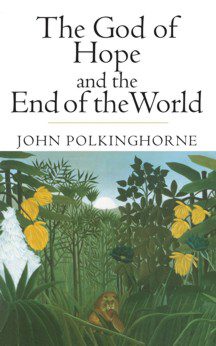 There are a number of topics worth some thought and discussion – topics where our current understanding of science plays a role at some level. The questions of origins and of miracles top the list, but the nature or possibility of an “Age to Come” with new heavens and a new earth also raises questions. There seems no way under the current scientific laws for any future hope to remain. The robust conversation around Richard Middleton’s new book A New Heaven and a New Earth: Reclaiming Biblical Eschatology highlights the kinds of questions that are raised. One exchange in the comments highlights the kinds of questions that can be raised (I’ve only picked out relevant bits):
P: The question of animals becomes merely the tip of an ice-berg. Does heaven or the new creation have spatial dimensions? Is there are up or down? Is there matter? Gravity? Energy? Are there objects?
If Jesus walks through the wall, how come he doesn’t also fall through the floor?
If the answer to any of the above questions is “no”, then the eschatological environment is something so ridiculously unlike anything we know or can imagine then the whole lot is up for grabs, and becomes (it would seem to me) not worth pondering at all.
If there ARE even basic attributes like place and cause&effect then the environment starts to need almost all of the things we have in our universe.
R: Most descriptions of new creation in the Bible look like this world renewed (without sin). But I do struggle to understand Paul’s notion of an “immortal” or “incorruptible” body, or his idea that “flesh and blood” cannot inherit God’s kingdom. So some sort of radical transformation is coming.
P: As far as cell decay and disease goes, biological “immortality” is less of a difficult issue for me. I wouldn’t be surprised if the next couple of hundred years of medical science enable much of this anyways. Gene and cell therapies might get us there, at least this can be conceived as possible.
My real issue with immortality is related more to the wider environment. Let’s say you fell of a cliff in the “new creation”, would the body suffer impact injury? Does an immortal body bleed? Does it need food and water? Does it need oxygen? If it doesn’t need oxygen and cannot lose blood, then suddenly a whole bunch of systems and features become redundant….
Is there pain? If not pain, what about frustrations – can a resurrected person be frustrated? Does my foot stumble on a stone when I walk?
To me, these environmental concerns make a future “immortal”, or “non-environmentally dependent” body seem too far fetched and unimaginable.
I’m not as hopeful that medical science will solve the problems of cell decay and disease, but perhaps. At least there is some kind of imaginable path toward biological immortality because biological systems are continually renewing themselves and we may be able to sustain these processes over life spans longer than 100 years. The question of a fall off of a cliff is a good one of a very different sort. In fact, Iain Provan uses this example in his book Seriously Dangerous Religion to describe how the Old Testament portrayal of the original creation did not envision a total absence of pain and suffering. Cliffs are part of good creation. Gravity is a part of God’s creation and impact from a height causes physical damage. The pain and suffering that arise from the Fall are a consequence of the human embrace of evil rather than these physical aspects of the world.
The laws of thermodynamics at work in an expanding universe raise another set of questions. It appears that eventually life as we know it will cease to exist because the clumps of matter and energy that support life will cease to exist, and medical science and biological immortality cannot solve this problem.
What are we to make of the age to come? Over a series of posts I will turn to a book by John Polkinghorne The God of Hope and the End of the World to focus a discussion on the nature of the New Creation from the perspective of a scientist and a theologian. This isn’t a new book, it was published in 2002, but I only recently came across it. The book contains three sections – I. Scientific and Cultural Prologue, II. Biblical Resources, and III. Theological Approaches. Each of these is worth some discussion, starting today with the scientific prologue.
The history of the universe has been characterized by an evolving fruitfulness.
The universe as we know it today emerged from the fiery singularity of the big bang, some 15 billion years ago. Initially that world was extremely simple, being no more than an almost uniformly expanding ball of energy. In the course of its long evolutionary history, the universe has become structured and diversified to a very high degree. (p. 3)
Although the universe appears to have been lifeless for the first eleven billion years of its existence, there is a real sense in which it was pregnant with the possibility of life from the very beginning. (p. 4)
Evolutionary history seems to unfold through the interplay of two contrasting tendencies: ‘chance’ (by which is meant the particularity of historical contingency, that this happens rather than that), and ‘necessity’ (by which is meant the general lawful regular environment within which the process is played out, the reliability of the world). (p. 5)
While chance may have played a role in the precise form diverse life forms assume (five fingers rather than four; hair, feathers, or spines), necessity controls the range of possible forms and the niches that they fill. There are laws of chemistry and physics in play. Periodic rare events have played a role in the way life has developed as well, asteroid collisions for example. Threats remain that could potentially reshape, or even doom our planet. The eventual demise of our sun is a virtual certainty, although this should be billions of years in the future. Even if life, including human life, spreads to other planets, outliving the sun, the demise of the universe also seems certain. … Possibly in a fiery crash, but more likely it appears into an essentially uniform expanse of low grade radiation, no planets, no stars, no life.
‘As far as science is right in describing the future. …’ But theology claims that what is ultimate is not physical process but the will and purpose of God the Creator. God’s final intentions will no more be frustrated by cosmic death on a timescale of billions of years than they are by human death on a timescale of tens of years. The ultimate future does not belong to scientific extrapolation but to divine faithfulness. (p. 12)
Polkinghorne then turns to consider what insights we may draw from natural sciences concerning elements of continuity and discontinuity in the age to come. He sees process, relationality, information, and mathematics as important considerations.
This universe is a world of temporal process and, if we believe in the consistency of the divine Creator, we should not expect that its successor will be so radically different that it is, by contrast, a world of timeless existence. It too will surely have its developing history, though a history characterized by persisting fulfilment rather than transient coming-to-be. (p. 15-16)
Relationality is interesting. One thing we’ve learned from quantum physics is the inherent relationality in the structure of the universe. “It appears that even the subatomic world can not properly be treated atomistically.” (p. 16) Reductionist approaches are always limited. The universe is not constructed of a number of isolated particles or beings but there are intrinsic interrelations. “For eschatological thinking, this emphasis on relationality implies the inadequacy of a purely individual concept of human destiny.” (p. 17) The remainder of creation is not simply a backdrop before which the human drama is played out – to be discarded as we move on to the next act in the human drama. We are in relationship with all of creation.
Information and mathematics are a bit more abstract – but information makes us who we are and the mathematics that so beautifully describes the physical world is an element of reality independent of the existence of the universe.
Natural science cannot provide answers for the age to come, New Heavens and New Earth, but can provide some constraints for consideration (perhaps). Polkinghorne concludes this section:
If the paradox is to receive a resolution, it will be beyond the reach of science on its own. We shall have to explore whether theology can take us further by being both humble enough to learn what it can from science and bold enough to hold firm to its own sources of insight and understanding. (p. 27)
What does science have to tell us about the age to come?
What is beyond the reach of science?
If you wish to contact me directly you may do so at rjs4mail [at] att.net.
If interested you can subscribe to a full text feed of my posts at Musings on Science and Theology.
Previous Post

January 15, 2015
Surprised by King Jesus
Next Post
January 16, 2015 On Losing Faith
Browse Our Archives
Select a Category Acts of the Apostles Adam Advent Anabaptism Angels Anglican Apologetics Atonement Baptism BCP Prayers Bible Biblical Studies Birds Blogging Bloglossary Bonhoeffer Books Calvinism Christianity Church Church History Coffee Colossians Commentary Recs Conversion Creation Creeds Culture Death Ecclesiastes Economics Education Embracing Grace Emergent Emerging Movement Eschatology Essays Ethics Eucharist Evangelicalism Family Fasting Fathers Fellowship of Differents Footsteps Tour Fun and Whimsical Gospel Grace Happiness Heaven Hell Holy Spirit Irenaeus James Jesus Jesus Creed Job Justification Kingdom of God Law Lectures Lent Liberalism Love and Marriage Mabanteneni Manhood Mary Miracles Missio Alliance MissioLife Missional Missional Jesus Movies and Film New Perspective Northern Seminary OneLife Origins Project Orthodox Parables Pastor's Spouse Pastoring and Leading Pastoring and Preaching Patristics Paul Paul-John Tour Pharisees Pietism Political Theology Prayer and Formation Preaching Problems for Faith Psalm 119 Psalms Public Issues Purgatory Religions Resurrection Revelation Romans Rule of JCreed Science and Faith Sermon on the Mount Sports Ten Commandments Theology Third Way Top Ten Lists Translations Uncategorized Universalism University Ministry Way Out Weekly Meanderings Wisdom Women and Ministry Work Worship Writing & Blogging Youth Ministry
Select a Month July 2021 January 2020 December 2019 November 2019 October 2019 September 2019 August 2019 July 2019 June 2019 May 2019 April 2019 March 2019 February 2019 January 2019 December 2018 November 2018 October 2018 September 2018 August 2018 July 2018 June 2018 May 2018 April 2018 March 2018 February 2018 January 2018 December 2017 November 2017 October 2017 September 2017 August 2017 July 2017 June 2017 May 2017 April 2017 March 2017 February 2017 January 2017 December 2016 November 2016 October 2016 September 2016 August 2016 July 2016 June 2016 May 2016 April 2016 March 2016 February 2016 January 2016 December 2015 November 2015 October 2015 September 2015 August 2015 July 2015 June 2015 May 2015 April 2015 March 2015 February 2015 January 2015 December 2014 November 2014 October 2014 September 2014 August 2014 July 2014 June 2014 May 2014 April 2014 March 2014 February 2014 January 2014 December 2013 November 2013 October 2013 September 2013 August 2013 July 2013 June 2013 May 2013 April 2013 March 2013 February 2013 January 2013 December 2012 November 2012 October 2012 September 2012 August 2012 July 2012 June 2012 May 2012 April 2012 March 2012 February 2012 January 2012 December 2011 November 2011 October 2011 September 2011 August 2011 July 2011 June 2011 May 2011 April 2011 March 2011 February 2011 January 2011 December 2010 November 2010 October 2010 September 2010 August 2010 July 2010 June 2010 May 2010 April 2010 March 2010 February 2010 January 2010 December 2009 November 2009 October 2009 September 2009 August 2009 July 2009 June 2009 May 2009 April 2009 March 2009 February 2009 January 2009 December 2008 November 2008 October 2008 September 2008 August 2008 July 2008 June 2008 May 2008 April 2008 March 2008 February 2008 January 2008 December 2007 November 2007 October 2007 September 2007 August 2007 July 2007 June 2007 May 2007 April 2007 March 2007 February 2007 January 2007 December 2006 November 2006 October 2006 September 2006 August 2006 July 2006 June 2006 May 2006 April 2006 March 2006 February 2006 January 2006 December 2005 November 2005 October 2005 September 2005 August 2005 July 2005 June 2005 May 2005 April 2005 0000
Follow Us!
TAKE THE
Religious Wisdom Quiz
What does "Beersheba" mean?
Select your answer to see how you score.
House of the King Blessed Field Well of the Oath Valley of Water
Related posts from Jesus Creed


The Gospel of With Us and Through Us

Northern Seminary Announces: Nijay Gupta Joins Faculty

The Gundrys and Me: Ruth Tucker
TRENDING AT PATHEOS Evangelical

When you hear the word riches, what comes to mind? For most...

Don’t Miss the Parents: A Creative Christmas Meditation
As we enter the Advent Season, I see many people trying to...

Making Stones Into Bread: Choosing the “Right” Work
I was on my online arts ministry Zoom meeting with the International...

Ukraine’s exhausted Christians face fifth winter of war
By Julian Lukins The full-scale war in Ukraine is taking “a serious...

Russell Brand's Conviction is not anti-Christian Persecution
How do we shed the reputation that the Church is OK with...

Have you ever caught yourself saying, “I’ll do it tomorrow,” or “Now...
view all Evangelical blogs
Ad-Free & Subscriber Log-In Subscription Support
- About Us
- 2026 Calendar
- Videos
- Podcasts
- Library of World Religions
- Faith In Media Tracker
- Advertise With Us
- Write for Us
- Privacy Policy
- Terms of Service
- Do Not Sell My Data
- Contact Us
- Radiant Digital
- Manage Newsletter Subscriptions
- Unsubscribe From Notifications
- Sitemap
Copyright 2008-2026, Patheos, part of the Radiant Digital network of media brands. All rights reserved.
Subscription Support Ad-Free & Subscriber Log-In
Follow Patheos