
BuddhistCatholicContemplativeEvangelicalGeneral ChristianHinduJewishLatter-day SaintMuslimNew VisionsProgressive Christian
Beliefs
- Buddhist
- Catholic
- Contemplative
- Evangelical
- General Christian
- Hindu
- Jewish
- Latter-day Saint
- More Voices
- Muslim
- New Visions
- Pagan
- Progressive Christian
Topics
- Religion News
- Food and Religion
- Sports and Religion
- Religious Art
- Religious Music and Entertainment
- Religious Events
- History and Religion
- Style and Religion
- Politics and Religion
- Women in Religion
- Recreation Outdoors and Religion
- Business Finance and Religion
- Careers Workplace and Religion
- Education and Religion
- Family Parenting and Religion
- Health Fitness and Religion
- Home and Religion
- Relationships and Religion
- Technology and Religion
- Travel and Religion
Columnists
- Buddhist Columnists
- Business Finance and Religion Columnists
- Careers Workplace and Religion Columnists
- Catholic Columnists
- Contemplative Columnists
- Education and Religion Columnists
- Evangelists Columnists
- Family Parenting and Religion Columnists
- General Christian Columnists
- Health Fitness and Religion Columnists
- Hindu Columnists
- History and Religion Columnists
- Home and Religion Columnists
- Jewish Columnists
- More Voices Columnists
- Latter Day Columnists
- Muslim Columnists
- New Visions Columnists
- Nonreligious Columnists
- Pagan Columnists
- Politics and Religion Columnists
- Progressive Columnists
- Recreation Outdoors and Religion Columnists
- Relationships and Religion Columnists
- Religion News Columnists
- Religious Art Columnists
- Religious Events Columnists
- Religious Music and Entertainment Columnists
- Sports and Religion Columnists
- Style and Religion Columnists
- Technology and Religion Columnists
- Travel and Religion Columnists
- Women in Religion Columnists
Resource Library
- 2026 Calendar
- Library of World Religions
- The 100 Most Holy Places on Earth
- Patheos Answers
- Podcasts
- Videos
- Faith Leaders Database
- Anglican Episcopalian
- Bahai
- Baptist
- Buddhism
- Christianity
- Confucianism
- Eastern Orthodoxy
- Hinduism
- Holiness and Pentecostal
- ISKCON
- Islam
- Judaism
- Lutheran
- Methodist
- The Church of Jesus Christ of Latter-day Saints
- New Age
- Paganism
- Presbytarian and Reformed
- Protestantism
- Religion Behind the Scenes
- Roman Catholic
- Scientology
- Shia Islam
- Sikhism
- Sufism
- Sunni Islam
- Taoism
- Zen
- See all religions
Research Tools
 Ad-Free & Subscriber Log-In Subscription Support
Ad-Free & Subscriber Log-In Subscription Support
Follow Patheos 

- Trending:
- Forgiveness
- |
- Marriage
- |
- Consciousness
- |
- Death Penalty
- |
- Election
- |
- Halloween
 Jesus Creed
- Home
- Evangelical
- America and Religious Freedom: Two Stories
America and Religious Freedom: Two Stories
Last updated on: May 3, 2014 at 12:15 am by Scot McKnight
America and Religious Freedom: Two Stories 2014-05-02T20:21:04-05:00 Scot McKnight
Patheos Explore the world's faith through different perspectives on religion and spirituality! Patheos has the views of the prevalent religions and spiritualities of the world.
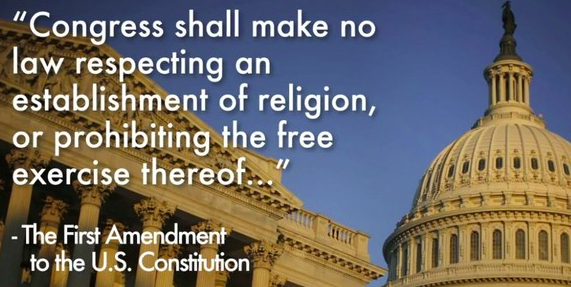 Listen carefully to the culture war in the USA and you will hear two stories of America’s religious freedom. A friend (Carl) pointed me to a book by Steven D. Smith, The Rise and Decline of American Religious Freedom, that exquisitely outlines these two stories, and I hope you’ll give this post a good read and consideration. I am finding his proposal, or his “revised story,” something compelling enough for me to being to rethink how we talk about church and state, the culture wars and American religious freedom — the whole Christian and the public sector debate.
Before I get to Smith’s book, however, I call your attention to Steven P. Miller’s new book, The Age of Evangelicalism: America’s Born-Again Years. If you want an event-by-event account of the evangelical relationship to the State, this book is it — richly documented, balanced in judgment, and wide in scope, Miller’s book makes the case that evangelicalism’s influence has had its day and that the Age of Evangelicalism (1970s and beyond), when evangelicalism’s major concerns were major political concerns, is more or less the ending of a movement, not the stepping stone to more and more influence or power. As I read through Miller’s book I experienced the various postures and hopes and rants of evangelicals ever since I began to follow these postures, hopes and rants — from Carter and Reagan and Schaeffer and Falwell all the way up to Obama and the resurgence of the evangelical progressive/left. Miller’s book more or less fits into the Standard Story of Smith’s book, though Miller’s not interested in that Story (Standard or Revised) but in the seeming arrival of evangelicalism as a major player only to discover it has lost its steam.
I begin with his sketch of the Standard Story, which has five parts.
1. Americans are innovators as a result of the Enlightenment. That is, America is a “lively experiment” (1). Americans inherited Christendom with its Inquisition and Bloody Mary incidents, and the colonies/States had an “audacious new vision and a bold break with the past” (2).
2. The First Amendment was a monumental, meaning-full contribution to the history of ideas and culture. It was a sweeping commitment to keep government from intruding on religion and equality of religion/s.
3. The Fall, or what he calls “the long, dark interlude” or “this long relapse.” American failed to live up to the First Amendment and reverted to the older Christendom model, to the unEnlightenment ways of sponsoring one faith — Protestantism.
4. The modern court-led realization. But the in the middle of the 20th Century SCOTUS realized the mistakes and began to rectify the problems created in the long, dark interlude by being activist about realizing the First Amendment’s vision.
5. The conservatives of today are seeking to undo the court-led realization of the First Amendment and sending us back to the long, dark interlude. Hence, we are in danger of theocracy and genuine freedom is jeopardized.
This Standard Story is winsome to many, not least to judges and lawyers and jurists who see themselves as creating a new way of freedom. And it all begins to sound like the story of racism that is being undone.
But Smith: “Aggregated, the standard themes add up to a story that is, if not flatly false, at least fundamentally misleading” (6). He thinks court-led interventions are undermining religious freedom.
Then we go to his Revised Story, but not in the sense of revisionism but in the sense of “more accurately revised to…”. Five parts once again.
1. American religious freedom is mostly a Christian, with some paganism, idea. Yes there was something new in the USA but there was something powerfully continuous with the past, and that past was more Christian than anything else. In other words, don’t give the Enlightenment too much credit!
2. The First Amendment was unpretentious, uncontested, undebated. It was designed to affirm the jurisdictional status quo, not to map a new way of life. The point was to affirm the rights of States and to keep the Federal govt from intruding on States rights to determine religion. There would be no national church. Remember, a number of States virtually had a State religion.
3. There was no Fall; until the 1950s or so America experienced a more or less inhabitation of the First Amendment. He calls the relationship of State and Religion the “American settlement” (9). It was separation of church from state, not religion from government and it was about freedom of conscience, and the modus operandi of the USA during this time was “open contestation” (9). Of what? Providentialist readings of history and secularist readings. It was a mass of people of different faiths opening contesting one another without diminishing the unity of the nation. That is, it was e pluribus unum.
4. Dissolution and denial came in the middle of the 20th Century when the SCOTUS opted to enshrine into law the secularist reading of American history and law. The principle of open contestation was denied. It’s decisions are undermining religious freedom.
5. Religious freedom is in jeopardy. The historical reasons for toleration and open contestation are religious enough to be virtually banned from the conversation. There is then, he thinks — and he points to the Obama administration — some clear violations of religious freedoms at work today in the SCOTUS and cultural, standard story vision. The threat is from the so-called religious egalitarians, not the religious conservatives.
Discuss.
Previous Post

May 3, 2014
Weekly Meanderings, 3 May 2014
Next Post
May 3, 2014 The Future of America
Browse Our Archives
Select a Category Acts of the Apostles Adam Advent Anabaptism Angels Anglican Apologetics Atonement Baptism BCP Prayers Bible Biblical Studies Birds Blogging Bloglossary Bonhoeffer Books Calvinism Christianity Church Church History Coffee Colossians Commentary Recs Conversion Creation Creeds Culture Death Ecclesiastes Economics Education Embracing Grace Emergent Emerging Movement Eschatology Essays Ethics Eucharist Evangelicalism Family Fasting Fathers Fellowship of Differents Footsteps Tour Fun and Whimsical Gospel Grace Happiness Heaven Hell Holy Spirit Irenaeus James Jesus Jesus Creed Job Justification Kingdom of God Law Lectures Lent Liberalism Love and Marriage Mabanteneni Manhood Mary Miracles Missio Alliance MissioLife Missional Missional Jesus Movies and Film New Perspective Northern Seminary OneLife Origins Project Orthodox Parables Pastor's Spouse Pastoring and Leading Pastoring and Preaching Patristics Paul Paul-John Tour Pharisees Pietism Political Theology Prayer and Formation Preaching Problems for Faith Psalm 119 Psalms Public Issues Purgatory Religions Resurrection Revelation Romans Rule of JCreed Science and Faith Sermon on the Mount Sports Ten Commandments Theology Third Way Top Ten Lists Translations Uncategorized Universalism University Ministry Way Out Weekly Meanderings Wisdom Women and Ministry Work Worship Writing & Blogging Youth Ministry
Select a Month July 2021 January 2020 December 2019 November 2019 October 2019 September 2019 August 2019 July 2019 June 2019 May 2019 April 2019 March 2019 February 2019 January 2019 December 2018 November 2018 October 2018 September 2018 August 2018 July 2018 June 2018 May 2018 April 2018 March 2018 February 2018 January 2018 December 2017 November 2017 October 2017 September 2017 August 2017 July 2017 June 2017 May 2017 April 2017 March 2017 February 2017 January 2017 December 2016 November 2016 October 2016 September 2016 August 2016 July 2016 June 2016 May 2016 April 2016 March 2016 February 2016 January 2016 December 2015 November 2015 October 2015 September 2015 August 2015 July 2015 June 2015 May 2015 April 2015 March 2015 February 2015 January 2015 December 2014 November 2014 October 2014 September 2014 August 2014 July 2014 June 2014 May 2014 April 2014 March 2014 February 2014 January 2014 December 2013 November 2013 October 2013 September 2013 August 2013 July 2013 June 2013 May 2013 April 2013 March 2013 February 2013 January 2013 December 2012 November 2012 October 2012 September 2012 August 2012 July 2012 June 2012 May 2012 April 2012 March 2012 February 2012 January 2012 December 2011 November 2011 October 2011 September 2011 August 2011 July 2011 June 2011 May 2011 April 2011 March 2011 February 2011 January 2011 December 2010 November 2010 October 2010 September 2010 August 2010 July 2010 June 2010 May 2010 April 2010 March 2010 February 2010 January 2010 December 2009 November 2009 October 2009 September 2009 August 2009 July 2009 June 2009 May 2009 April 2009 March 2009 February 2009 January 2009 December 2008 November 2008 October 2008 September 2008 August 2008 July 2008 June 2008 May 2008 April 2008 March 2008 February 2008 January 2008 December 2007 November 2007 October 2007 September 2007 August 2007 July 2007 June 2007 May 2007 April 2007 March 2007 February 2007 January 2007 December 2006 November 2006 October 2006 September 2006 August 2006 July 2006 June 2006 May 2006 April 2006 March 2006 February 2006 January 2006 December 2005 November 2005 October 2005 September 2005 August 2005 July 2005 June 2005 May 2005 April 2005 0000
Follow Us!
TAKE THE
Religious Wisdom Quiz
A Samaritan stopped to help a wounded man after a priest and a Levite passed by. Where was the man traveling from and to?
Select your answer to see how you score.
From Galilee to Judea From Jerusalem to Jericho From Bethany to Jerusalem From Samaria to Nazareth
Related posts from Jesus Creed


The Gospel of With Us and Through Us

Northern Seminary Announces: Nijay Gupta Joins Faculty

The Gundrys and Me: Ruth Tucker
TRENDING AT PATHEOS Evangelical

The REST of Your Life: A Creative Wrestles...
This week I had a conversation with a good friend from church....

How the author of the world's best hymn...
I've been working with John Newton for a while now. This makes...

Long before this Lectio Divina, Psalm 130 - the song - started...

What About the Trees? Another Living Parable
After I finished writing the last article about falling leaves as a...

Why Classical Education Is a Conversation, Not a...
Come and Read: Joy in Classical Education When I was a little...

Cornell University has received a great deal of negative publicity and intense...
view all Evangelical blogs
Ad-Free & Subscriber Log-In Subscription Support
- About Us
- 2026 Calendar
- Videos
- Podcasts
- Library of World Religions
- Faith In Media Tracker
- Advertise With Us
- Write for Us
- Privacy Policy
- Terms of Service
- Do Not Sell My Data
- Contact Us
- Radiant Digital
- Manage Newsletter Subscriptions
- Unsubscribe From Notifications
- Sitemap
Copyright 2008-2026, Patheos. All rights reserved.
Subscription Support Ad-Free & Subscriber Log-In
Follow Patheos