
BuddhistCatholicContemplativeEvangelicalGeneral ChristianHinduJewishLatter-day SaintMuslimNew VisionsProgressive Christian
Beliefs
- Buddhist
- Catholic
- Contemplative
- Evangelical
- General Christian
- Hindu
- Jewish
- Latter-day Saint
- More Voices
- Muslim
- New Visions
- Pagan
- Progressive Christian
Topics
- Religion News
- Food and Religion
- Sports and Religion
- Religious Art
- Religious Music and Entertainment
- Religious Events
- History and Religion
- Style and Religion
- Politics and Religion
- Women in Religion
- Recreation Outdoors and Religion
- Business Finance and Religion
- Careers Workplace and Religion
- Education and Religion
- Family Parenting and Religion
- Health Fitness and Religion
- Home and Religion
- Relationships and Religion
- Technology and Religion
- Travel and Religion
Columnists
- Buddhist Columnists
- Business Finance and Religion Columnists
- Careers Workplace and Religion Columnists
- Catholic Columnists
- Contemplative Columnists
- Education and Religion Columnists
- Evangelists Columnists
- Family Parenting and Religion Columnists
- General Christian Columnists
- Health Fitness and Religion Columnists
- Hindu Columnists
- History and Religion Columnists
- Home and Religion Columnists
- Jewish Columnists
- More Voices Columnists
- Latter Day Columnists
- Muslim Columnists
- New Visions Columnists
- Nonreligious Columnists
- Pagan Columnists
- Politics and Religion Columnists
- Progressive Columnists
- Recreation Outdoors and Religion Columnists
- Relationships and Religion Columnists
- Religion News Columnists
- Religious Art Columnists
- Religious Events Columnists
- Religious Music and Entertainment Columnists
- Sports and Religion Columnists
- Style and Religion Columnists
- Technology and Religion Columnists
- Travel and Religion Columnists
- Women in Religion Columnists
Resource Library
- 2026 Calendar
- Library of World Religions
- The 100 Most Holy Places on Earth
- Patheos Answers
- Podcasts
- Videos
- Faith Leaders Database
- Anglican Episcopalian
- Bahai
- Baptist
- Buddhism
- Christianity
- Confucianism
- Eastern Orthodoxy
- Hinduism
- Holiness and Pentecostal
- ISKCON
- Islam
- Judaism
- Lutheran
- Methodist
- The Church of Jesus Christ of Latter-day Saints
- New Age
- Paganism
- Presbytarian and Reformed
- Protestantism
- Religion Behind the Scenes
- Roman Catholic
- Scientology
- Shia Islam
- Sikhism
- Sufism
- Sunni Islam
- Taoism
- Zen
- See all religions
Research Tools
 Ad-Free & Subscriber Log-In Subscription Support
Follow Patheos 

- Trending:
- Advent
- |
- Forgiveness
- |
- Thanksgiving
- |
- Election
- |
- Seasonal Holidays
- |
- Marriage
 Jesus Creed
- Home
- Evangelical
- Anointed? 7 … What Makes a Leader? (RJS)
Anointed? 7 … What Makes a Leader? (RJS)
Last updated on: December 6, 2011 at 6:43 pm by RJS
Anointed? 7 … What Makes a Leader? (RJS) 2011-12-06T18:43:24-06:00 RJS
Patheos Explore the world's faith through different perspectives on religion and spirituality! Patheos has the views of the prevalent religions and spiritualities of the world.
 The post today will wrap up our discussion of The Anointed: Evangelical Truth in a Secular Age by Randall Stephens and Karl Giberson. In this book Stephens and Giberson examine several different facets of American evangelicalism to explore the manner in which “America’s populist ideals, anti-intellectualism, and religious free market, along with the concept of anointing – being chosen by God to speak for him like the biblical prophets” influence a broad range of evangelical and fundamentalist beliefs and practices.
The theme that ties the book together is an analysis of the informal criteria generally used to “anoint” leaders within evangelicalism. Chapter six, Made in America, focuses explicitly on this topic. Stephens and Giberson open the chapter with a discussion of three leaders – Jerry Falwell, Oral Roberts, and Pat Robertson – and use this, along with a consideration of the individuals described in the earlier chapters as a starting point to look at the way in which leaders emerge within American evangelicalism and fundamentalism.
Throughout the post-1960’s era Falwell, Roberts, and Robertson were public symbols of the capacity of the parallel culture of American evangelicalism to anoint leaders using criteria internal to that culture – fidelity to the Bible, inspirational preaching, confident assertion of a special relationship to God.
…
The parallel culture of evangelicalism is like a country without monarchs or politicians. It must produce its own leaders, which it does, through informal processes. These leaders, both great and small, build constituencies more or less skilfully, but they generally employ similar strategies – finding themes around which to rally their followers, playing on common fears, identifying out-groups to demonize, and projecting confidence. (p. 232-233)
What does it take to become a successful leader within evangelicalism?
Which of these characteristics should we value in our leaders?
Which are problems that damage the church?
At times the discussion by Stephens and Giberson seems overly cynical – but there are important ideas here that need to be considered carefully. The question of “anointed leadership” is central to their discussion and in this chapter this concept is defined most clearly.
The anointing phenomenon is deeply rooted in good old-fashioned American anti-intellectualism. It is supported by some specifically evangelical characteristics. And it is completed with the charisma and ingenuity of the individual leader. The phenomenon exploits these energies, combining them synergistically to make the whole more than the sum of its parts. (p. 234)
Experienced and trained scholars and thinkers who write with care and with nuance cannot make much of an impact against the charismatic emphasis on common fears and “common sense” readings that appeal to broad crowds. The basic features of charismatic leadership are not, by any means, unique to American evangelicals. But without institutional structure, with an approach that assumes anything worth knowing or necessary for understanding should be obvious to all without much work or study, and with the comfort of belonging to a group, American evangelicalism is a fertile field for this form of leadership – both for better and for worse.
There are several important characteristics that feed into the way we look to, listen to, and evaluate both Christian and secular leaders.
We look for someone like us. Stephens and Giberson point out the importance of identification. One particularly interesting example here is the push-back in some quarters against childhood immunization. This is not an evangelical issue – it is a much broader societal issue. A study led by Dan Kahan of Yale University Law School found that this cultural identification is often the deciding factor.
We seek various “cultural clues” that connect us to the expert as a shortcut for determining veracity. Someone just like us is more likely to tell us the truth, we intuit, than is a famous egghead from a far-off university with whom we have nothing in common.
“To figure out what sorts of factual information we can reasonably rely on,” Kahan explains, “we nake use of all manner of cultural cues, many of which relate to the authority and trustworthiness of others, including people who hold themselves forth as experts.” If the mantle of “expertise” is flexible enough that anyone can wear it, then authority can be had by simply making the right connections with one’s audience. (p. 244-245)
Like all of the factors that come into play when looking for clues the trustworthiness of an authority or one who claims authority, these cultural clues are part of human nature. They are not wrong, but they are best used with an element of critical thinking. I posted a while back on some ways to evaluate: Who Can We Trust?
To what extent should in-group identification play a role when evaluating authorities?
The presence of a common enemy. Modern evangelicalism, and, for that matter, much of human civilization both secular and religious, is formed by the threat of common enemies. We have built within us the natural tendency for in-group identification and defense against the out-group. Although I disagreed to an extent with the way Stephens and Giberson portrayed James Dobson, it is certainly true that Ham, Barton, Dobson, Lindsey, LaHaye, and most other well known evangelical or fundamentalist leaders are characterized most significantly by what or who they stand against. Ken Ham’s entire approach is dominated by military rhetoric and culture war conflict mentality. This isn’t only an issue on the fringe however. James Dobson focused on the family because of the range of forces he saw standing against the Christian family. Harold Ockenga wrote in 1947 “Darkness has engulfed our age.” …”Sin, fear, hate, doubt, distrust, and despair characterize the dominant mood of this age.” (p. 255) We are, it seems, in the midst of a battle between the small faithful remnant and the forces of secularism, liberalism, and Satan.
The discussion of the relationship of science and the Christian faith is laced through and through with culture war rhetoric. I fully realize that this isn’t a failing of evangelicals and fundamentalists alone. It is equally apparent in the rhetoric of Dawkins, Dennett and Harris, to name but a few. But I am much more concerned with the effect it has within the church, than on the battles fought outside. The culture of fear causes Christians to turn on fellow Christians in the desire to remain among the faithful. We eat our young, our middle aged, and sometimes our elders. (One recent example here. I could point to many more.)
How are we to know when the threat is real?
When is it more accurate to say, quoting the inestimable Walt Kelly, “We have met the enemy and he is us”?
Calling. Within the Christian subculture calling plays a significant role in the evaluation of authority. Leaders are called by God to stand for truth and for the gospel. Most leaders feel themselves called to this role within the church – and this sense of calling ranges from pastors and teachers to college administrators, seminary presidents, and evangelists. Those with a sense of calling include leaders of parachurch organizations from Answers in Genesis to World Vision.
Raised with in this culture, I would certainly refer to my desire to write and interact with the questions of science and Christian faith as a calling. Stephens and Giberson note that this culture of calling is sincere and heartfelt. While “successful Christian leaders wield a constellation of strategies masterfully … Most believe in the authenticity of their mission, as near as can be determined. (p. 266)” In fact, the incidents of proven insincerity and manipulation are few and far between.
We are a called people – but what is the sign that a leader has been ordained and called by God?
How are we to know that he, or she, is faithfully carrying out that calling?
Moving Forward. “Anointed” evangelical leaders rising through an informal accreditation process – a process where rhetoric, charisma, and the ability to persuade count for more than reason or study – have a great deal of influence within the church and within the evangelical subculture. They have an influence, so Stephens and Giberson suggest, that far exceeds that of most local church pastors and of Christian scholars.
The ability of evangelical leaders to combine the persuasive powers of a great preacher with the credibility of an academic generates enormous intellectual authority. As purveyors of ideas, they are thus more powerful than either preachers or academics. In particular, this unique combination makes them much more effective than their more academic evangelical counterparts. (p. 267)
This is not likely to change any time in the near future – nor is it clear that it should change. Stephens and Giberson conclude their book with an ambiguous observation.
The DNA of the parallel culture of evangelicalism is wound from two very different strands – an ancient religious tradition and a secular world increasingly dominated by science and influenced by forces outside of conservative Christianity. … The timeless ancient Book will be forever asked to speak to a constantly changing world, and prophets will of necessity arise to be anointed to make that happen. Those leaders must be skilled in appropriating both the spiritual authority of the Christian tradition and the secular authority of the present culture – whatever its changing epistemological priorities – will provide that intellectual authority and be anointed to lead. (p. 269)
We would benefit if Christians leaders, including preachers and pastors on the front lines, thought hard about the ways that leaders and authorities arise and are validated. We would also benefit if more Christian scholars wrote “for the church” as Scot is wont to say. Perhaps most importantly, we would benefit if more Christian scholars wrote in a way accessible to the average evangelical pastor. Francis Collins’s books The Language of God and The Language of Science and Faith (with Karl Giberson) are great examples, but only a start.
What characteristics should qualify one for leadership?
If you are a pastor or preacher – who do you look to for expert advice?
How do you evaluate evangelical authorities?
If you wish to contact me directly you may do so at rjs4mail[at]att.net.
If interested you can subscribe to a full text feed of my posts at Musings on Science and Theology.
Previous Post

December 6, 2011
Simply Jesus 7
Next Post
December 6, 2011 Biblical vs. Deistic Economics
Browse Our Archives
Select a Category Acts of the Apostles Adam Advent Anabaptism Angels Anglican Apologetics Atonement Baptism BCP Prayers Bible Biblical Studies Birds Blogging Bloglossary Bonhoeffer Books Calvinism Christianity Church Church History Coffee Colossians Commentary Recs Conversion Creation Creeds Culture Death Ecclesiastes Economics Education Embracing Grace Emergent Emerging Movement Eschatology Essays Ethics Eucharist Evangelicalism Family Fasting Fathers Fellowship of Differents Footsteps Tour Fun and Whimsical Gospel Grace Happiness Heaven Hell Holy Spirit Irenaeus James Jesus Jesus Creed Job Justification Kingdom of God Law Lectures Lent Liberalism Love and Marriage Mabanteneni Manhood Mary Miracles Missio Alliance MissioLife Missional Missional Jesus Movies and Film New Perspective Northern Seminary OneLife Origins Project Orthodox Parables Pastor's Spouse Pastoring and Leading Pastoring and Preaching Patristics Paul Paul-John Tour Pharisees Pietism Political Theology Prayer and Formation Preaching Problems for Faith Psalm 119 Psalms Public Issues Purgatory Religions Resurrection Revelation Romans Rule of JCreed Science and Faith Sermon on the Mount Sports Ten Commandments Theology Third Way Top Ten Lists Translations Uncategorized Universalism University Ministry Way Out Weekly Meanderings Wisdom Women and Ministry Work Worship Writing & Blogging Youth Ministry
Select a Month July 2021 January 2020 December 2019 November 2019 October 2019 September 2019 August 2019 July 2019 June 2019 May 2019 April 2019 March 2019 February 2019 January 2019 December 2018 November 2018 October 2018 September 2018 August 2018 July 2018 June 2018 May 2018 April 2018 March 2018 February 2018 January 2018 December 2017 November 2017 October 2017 September 2017 August 2017 July 2017 June 2017 May 2017 April 2017 March 2017 February 2017 January 2017 December 2016 November 2016 October 2016 September 2016 August 2016 July 2016 June 2016 May 2016 April 2016 March 2016 February 2016 January 2016 December 2015 November 2015 October 2015 September 2015 August 2015 July 2015 June 2015 May 2015 April 2015 March 2015 February 2015 January 2015 December 2014 November 2014 October 2014 September 2014 August 2014 July 2014 June 2014 May 2014 April 2014 March 2014 February 2014 January 2014 December 2013 November 2013 October 2013 September 2013 August 2013 July 2013 June 2013 May 2013 April 2013 March 2013 February 2013 January 2013 December 2012 November 2012 October 2012 September 2012 August 2012 July 2012 June 2012 May 2012 April 2012 March 2012 February 2012 January 2012 December 2011 November 2011 October 2011 September 2011 August 2011 July 2011 June 2011 May 2011 April 2011 March 2011 February 2011 January 2011 December 2010 November 2010 October 2010 September 2010 August 2010 July 2010 June 2010 May 2010 April 2010 March 2010 February 2010 January 2010 December 2009 November 2009 October 2009 September 2009 August 2009 July 2009 June 2009 May 2009 April 2009 March 2009 February 2009 January 2009 December 2008 November 2008 October 2008 September 2008 August 2008 July 2008 June 2008 May 2008 April 2008 March 2008 February 2008 January 2008 December 2007 November 2007 October 2007 September 2007 August 2007 July 2007 June 2007 May 2007 April 2007 March 2007 February 2007 January 2007 December 2006 November 2006 October 2006 September 2006 August 2006 July 2006 June 2006 May 2006 April 2006 March 2006 February 2006 January 2006 December 2005 November 2005 October 2005 September 2005 August 2005 July 2005 June 2005 May 2005 April 2005 0000
Follow Us!
TAKE THE
Religious Wisdom Quiz
What does "Shalom" mean in Hebrew?
Select your answer to see how you score.
Joy Peace Love Blessing
Related posts from Jesus Creed
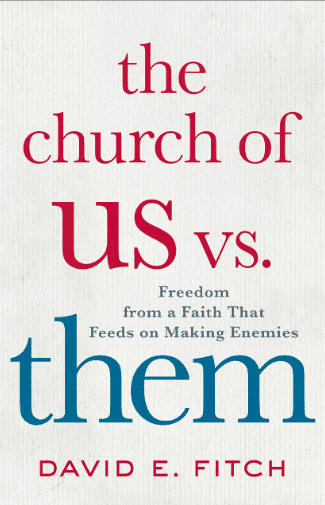
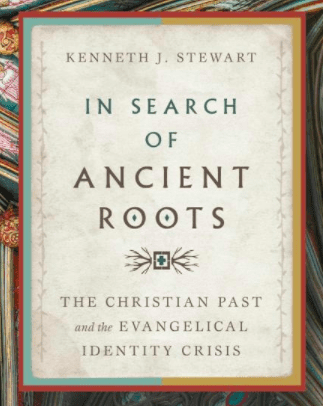
Which Evangelicalism Have You Abandoned?

The Soul of Evangelicalism: What Will Become of...

Evangelicalism's Impulse to Restore
TRENDING AT PATHEOS Evangelical

When you hear the word riches, what comes to mind? For most...

Don’t Miss the Parents: A Creative Christmas Meditation
As we enter the Advent Season, I see many people trying to...

Making Stones Into Bread: Choosing the “Right” Work
I was on my online arts ministry Zoom meeting with the International...

Ukraine’s exhausted Christians face fifth winter of war
By Julian Lukins The full-scale war in Ukraine is taking “a serious...

Russell Brand's Conviction is not anti-Christian Persecution
How do we shed the reputation that the Church is OK with...

Have you ever caught yourself saying, “I’ll do it tomorrow,” or “Now...
view all Evangelical blogs
Ad-Free & Subscriber Log-In Subscription Support
- About Us
- 2026 Calendar
- Videos
- Podcasts
- Library of World Religions
- Faith In Media Tracker
- Advertise With Us
- Write for Us
- Privacy Policy
- Terms of Service
- Do Not Sell My Data
- Contact Us
- Radiant Digital
- Manage Newsletter Subscriptions
- Unsubscribe From Notifications
- Sitemap
Copyright 2008-2026, Patheos, part of the Radiant Digital network of media brands. All rights reserved.
Subscription Support Ad-Free & Subscriber Log-In
Follow Patheos