
BuddhistCatholicContemplativeEvangelicalGeneral ChristianHinduJewishLatter-day SaintMuslimNew VisionsProgressive Christian
Beliefs
- Buddhist
- Catholic
- Contemplative
- Evangelical
- General Christian
- Hindu
- Jewish
- Latter-day Saint
- More Voices
- Muslim
- New Visions
- Pagan
- Progressive Christian
Topics
- Religion News
- Food and Religion
- Sports and Religion
- Religious Art
- Religious Music and Entertainment
- Religious Events
- History and Religion
- Style and Religion
- Politics and Religion
- Women in Religion
- Recreation Outdoors and Religion
- Business Finance and Religion
- Careers Workplace and Religion
- Education and Religion
- Family Parenting and Religion
- Health Fitness and Religion
- Home and Religion
- Relationships and Religion
- Technology and Religion
- Travel and Religion
Columnists
- Buddhist Columnists
- Business Finance and Religion Columnists
- Careers Workplace and Religion Columnists
- Catholic Columnists
- Contemplative Columnists
- Education and Religion Columnists
- Evangelists Columnists
- Family Parenting and Religion Columnists
- General Christian Columnists
- Health Fitness and Religion Columnists
- Hindu Columnists
- History and Religion Columnists
- Home and Religion Columnists
- Jewish Columnists
- More Voices Columnists
- Latter Day Columnists
- Muslim Columnists
- New Visions Columnists
- Nonreligious Columnists
- Pagan Columnists
- Politics and Religion Columnists
- Progressive Columnists
- Recreation Outdoors and Religion Columnists
- Relationships and Religion Columnists
- Religion News Columnists
- Religious Art Columnists
- Religious Events Columnists
- Religious Music and Entertainment Columnists
- Sports and Religion Columnists
- Style and Religion Columnists
- Technology and Religion Columnists
- Travel and Religion Columnists
- Women in Religion Columnists
Resource Library
- 2026 Calendar
- Library of World Religions
- The 100 Most Holy Places on Earth
- Patheos Answers
- Podcasts
- Videos
- Faith Leaders Database
- Anglican Episcopalian
- Bahai
- Baptist
- Buddhism
- Christianity
- Confucianism
- Eastern Orthodoxy
- Hinduism
- Holiness and Pentecostal
- ISKCON
- Islam
- Judaism
- Lutheran
- Methodist
- The Church of Jesus Christ of Latter-day Saints
- New Age
- Paganism
- Presbytarian and Reformed
- Protestantism
- Religion Behind the Scenes
- Roman Catholic
- Scientology
- Shia Islam
- Sikhism
- Sufism
- Sunni Islam
- Taoism
- Zen
- See all religions
Research Tools
 Ad-Free & Subscriber Log-In Subscription Support
Ad-Free & Subscriber Log-In Subscription Support
Follow Patheos 

- Trending:
- Forgiveness
- |
- Marriage
- |
- Consciousness
- |
- Death Penalty
- |
- Election
- |
- Halloween
 Jesus Creed
- Home
- Evangelical
- More Thoughts on Penal Substitution 1
More Thoughts on Penal Substitution 1
Last updated on: April 17, 2006 at 5:01 am by Scot McKnight
More Thoughts on Penal Substitution 1 2006-04-17T05:01:25-05:00 Scot McKnight
Patheos Explore the world's faith through different perspectives on religion and spirituality! Patheos has the views of the prevalent religions and spiritualities of the world.
In light of my work on a book on atonement and then, on top of that, the CT article I wandered into, it might be good to look at some terms. My big point in many of my comments over the last few months is this: penal substitution, as a categorical theory for atonement, is inadequate. Terms:
Identification: this is the sine qua non of atonement. In some sense, Jesus comes to earth (I’m assuming that we have a high enough christology to think Jesus was intentionally sent by the Father; those who think he was not divine cannot have a theory of atonement beyond Abelard.) to identify with us. He becomes one of us. All atonement theories assume that in Christ we have the Son of God who identifies with us. The Son identifies as a result of the Father’s sending.
Substitution: the central feature of this term is that Jesus did something for us by being there “instead of us.” Something happens to him that, because it happens to him, does not happen to us — and what happened to him, because it happened to him, eliminates the need for that happening to us. I think the best word for what happened to him is “death.” Paul says he became sin so we might become the righteousness of God. He died for us. He undergoes the kind of death we don’t have to — namely, what we sometimes call “spiritual death.” If death is the final end of sin (which is what Paul argues over and over in Romans, esp. 6–8), then going to “death” for us is to go “all the way down” for us.
Theologically, for any of these terms to be thoroughly Christian, there has to be the entire Godhead at work, and not a system wherein the Father and Son (and Spirit) are divided or against one another. This may seem obvious; it is not always to keep in balance. It is fine to distinguish the work of the Son, but that work can’t be set over against the Father. All of the atoning work is established as an overflow of the trinitarian love and grace.
Now not all who believe in substitution believe also in penal substitution, though the line some draw here is usually one of semantics rather than actual substance. But, penal substitution focuses (and I’ll deal with this tomorrow) on Jesus’ substitution “instead of us” in his suffering the punishment of God/Father (but be careful not to divide the persons against one another). That is, we have the God’s wrath (penal) directed at sin and sinners, and Jesus steps in, suffers/absorbs that wrath “instead of us” so we are relieved or let off the hook. But once again: for a genuinely trinitarian penal substitution, we must not divide the persons of the Trinity: this, too, springs from Father, Son, and Spirit.
Nearly all who believe in penal substitution use the term propitiation for what they mean. Oddly enough, while this term was used more often a few decades back, today it seems to be penal substitution that has taken on the load. Propitiation means “to pacify the wrath of God.” That is, Jesus’ death is the just exacting of God’s punishment against sin and sinners — and by dying, the wrath of God is spent on Jesus. Therefore, there is no wrath left for humans. Therefore, they are relieved of this wrath. They are shielded from God’s wrath by Christ’s protection at the initiative of the trinitarian God.
The wrath of God came under severe review in England decades back. First, CH Dodd wrote a chapter that argued a case for wrath being impersonal, and it was Dodd whose view became famous. But, for my read of the idea, it was AT Hanson’s book on the wrath of God in the Bible, which argued over and over that wrath is impersonal, that really set the tone for this viewpoint (it is the way God has made that world that bad deeds result in bad consequences; that is wrath; but wrath should not be understood for Christians as an emotion on God’s part but the impersonal and inevitable result of doing bad things). Leon Morris countered the work of Dodd and Hanson with his dissertation, The Apostolic Preaching of the Cross, as well as few other publications, and argued that wrath is both personal and central to the concept of propitiation in the NT and, therefore, wrath is central to atonement. Many evangelicals have followed Morris; many have not, and the first group of “many” often don’t know about the others, and the first group of “many” sometimes ignore the studies of the latter.
Most anchor all statements of wrath in the justice of God; this is a mistake if that is all that is done. Wrath derives from the love of God who is Jealous; the love of God who is jealous to protect the sanctity and integrity of love and relationship. Justice preserves wrath. Here again we have to be careful not to divide attributes within God.
Representation: Exclusive and Inclusive: Vincent Taylor made the term “representation” more prominent, though it had been used all along. What Taylor also did was distinguish this term from substitution, and with this distinction created with the word “representation” a “soft substitutionary” theory. One need not, however, follow Taylor in all ways to use this term. However you cut the pie, “representation” is involved in nearly every theory of atonement. In my book, Jesus and His Death, I make the distinction between exclusive representation, which for me is virtually equivalent to “instead of” substitution and involves Jesus’ accepting the punishment of others (death), and inclusive representation, which involves our co-crucifixion and co-resurrection. Together, these two parts of representation are what is meant by “substitution” and they can together also include penal substitution. Again, representation occurs as the intent of the Father, Son, and Spirit.
Satisfaction: This is the Anselmian theory, which is more often misunderstood than understood though it is always getting whacked by critics, and it means that sin dishonored God and there had to be either punishment (hell) or satisfaction (compensation as justice). Jesus, the God-Man, is that person and his death satisfied the honor of God. Inherent to satisfaction, though nowhere thoroughly developed in Anselm, is a borderline penal theory, though he opts for satisfaction as an alternative to punishment. It was Luther and Calvin that developed the penal substitution theory; Luther did not want the term “satisfaction” being used. But I see it is present in his Lectures on Romans in his glosses on Romans 3:25.
Recapitulation: In essence, this patristic view is that Jesus became what we are so that we could become what he is; what he assumed, he healed; what is not assumed, is not healed. Jesus recapitulated the life of Adam, this time perfectly, and his life recapitulates the life of all humans. All humans are ‘summed up’ in Jesus Christ. The strength of this view is two-fold: (1) it embraces the incarnation and (2) it is general and big enough to enfold within it all the ideas connected to substitution, even if those developments (like penal) are not fully developed by the fathers. This is the view of Irenaeus and Athanasius, as well as others. In my view, this is the only theory that is comprehensive enough to include all theories.
Exemplarist: this will sound harsh to some, but I don’t think this is a theory of atonement at all; it is a theory that Jesus is the demonstration of God’s love that evokes in humans repentance and surrender to Jesus Christ. Well and good; but there is no way this term adequately explains the NT evidence on atonement. I give one example: though I learned a lot from J. Denny Weaver’s book, The Nonviolent Atonement, his failure to to grapple at all with Romans 3:21-26 reveals that he uses a model (non-violence) to explain all evidence. His intent is to argue for a non-violent way of reading atonement language in the Bible. The exemplarist theory is true: Jesus is our example (1 Pet 2:18-25 proves it); but the exemplarist theory doesn’t explain the heart of what atonement is all about — rectifying humans before God, reconciling humans before God, whatever, in light of the sin problem.
Tomorrow: Why I think penal substitution is not the best expression for an evangelical or post-evangelical theory of the atonement.
Previous Post

April 17, 2006
Candle Book
Next Post
April 17, 2006 Finally, a book that explains postmodernity
Browse Our Archives
Select a Category Acts of the Apostles Adam Advent Anabaptism Angels Anglican Apologetics Atonement Baptism BCP Prayers Bible Biblical Studies Birds Blogging Bloglossary Bonhoeffer Books Calvinism Christianity Church Church History Coffee Colossians Commentary Recs Conversion Creation Creeds Culture Death Ecclesiastes Economics Education Embracing Grace Emergent Emerging Movement Eschatology Essays Ethics Eucharist Evangelicalism Family Fasting Fathers Fellowship of Differents Footsteps Tour Fun and Whimsical Gospel Grace Happiness Heaven Hell Holy Spirit Irenaeus James Jesus Jesus Creed Job Justification Kingdom of God Law Lectures Lent Liberalism Love and Marriage Mabanteneni Manhood Mary Miracles Missio Alliance MissioLife Missional Missional Jesus Movies and Film New Perspective Northern Seminary OneLife Origins Project Orthodox Parables Pastor's Spouse Pastoring and Leading Pastoring and Preaching Patristics Paul Paul-John Tour Pharisees Pietism Political Theology Prayer and Formation Preaching Problems for Faith Psalm 119 Psalms Public Issues Purgatory Religions Resurrection Revelation Romans Rule of JCreed Science and Faith Sermon on the Mount Sports Ten Commandments Theology Third Way Top Ten Lists Translations Uncategorized Universalism University Ministry Way Out Weekly Meanderings Wisdom Women and Ministry Work Worship Writing & Blogging Youth Ministry
Select a Month July 2021 January 2020 December 2019 November 2019 October 2019 September 2019 August 2019 July 2019 June 2019 May 2019 April 2019 March 2019 February 2019 January 2019 December 2018 November 2018 October 2018 September 2018 August 2018 July 2018 June 2018 May 2018 April 2018 March 2018 February 2018 January 2018 December 2017 November 2017 October 2017 September 2017 August 2017 July 2017 June 2017 May 2017 April 2017 March 2017 February 2017 January 2017 December 2016 November 2016 October 2016 September 2016 August 2016 July 2016 June 2016 May 2016 April 2016 March 2016 February 2016 January 2016 December 2015 November 2015 October 2015 September 2015 August 2015 July 2015 June 2015 May 2015 April 2015 March 2015 February 2015 January 2015 December 2014 November 2014 October 2014 September 2014 August 2014 July 2014 June 2014 May 2014 April 2014 March 2014 February 2014 January 2014 December 2013 November 2013 October 2013 September 2013 August 2013 July 2013 June 2013 May 2013 April 2013 March 2013 February 2013 January 2013 December 2012 November 2012 October 2012 September 2012 August 2012 July 2012 June 2012 May 2012 April 2012 March 2012 February 2012 January 2012 December 2011 November 2011 October 2011 September 2011 August 2011 July 2011 June 2011 May 2011 April 2011 March 2011 February 2011 January 2011 December 2010 November 2010 October 2010 September 2010 August 2010 July 2010 June 2010 May 2010 April 2010 March 2010 February 2010 January 2010 December 2009 November 2009 October 2009 September 2009 August 2009 July 2009 June 2009 May 2009 April 2009 March 2009 February 2009 January 2009 December 2008 November 2008 October 2008 September 2008 August 2008 July 2008 June 2008 May 2008 April 2008 March 2008 February 2008 January 2008 December 2007 November 2007 October 2007 September 2007 August 2007 July 2007 June 2007 May 2007 April 2007 March 2007 February 2007 January 2007 December 2006 November 2006 October 2006 September 2006 August 2006 July 2006 June 2006 May 2006 April 2006 March 2006 February 2006 January 2006 December 2005 November 2005 October 2005 September 2005 August 2005 July 2005 June 2005 May 2005 April 2005 0000
Follow Us!
TAKE THE
Religious Wisdom Quiz
How many books does the Old Testament have?
Select your answer to see how you score.
51 39 50 41
Related posts from Jesus Creed

New Birth Transcending Atonement Theories
The Biggest Problem For Atonement Theories?
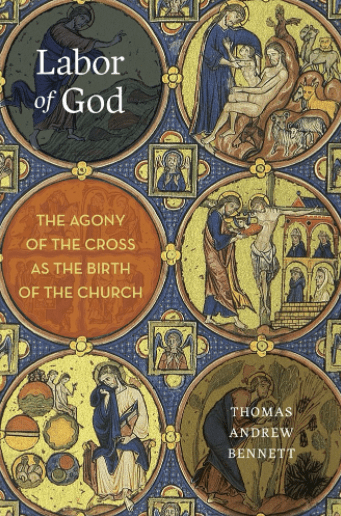
"God In Labor" in Christian Theology
TRENDING AT PATHEOS Evangelical

The REST of Your Life: A Creative Wrestles...
This week I had a conversation with a good friend from church....

How the author of the world's best hymn...
I've been working with John Newton for a while now. This makes...

Long before this Lectio Divina, Psalm 130 - the song - started...

What About the Trees? Another Living Parable
After I finished writing the last article about falling leaves as a...

Why Classical Education Is a Conversation, Not a...
Come and Read: Joy in Classical Education When I was a little...

Cornell University has received a great deal of negative publicity and intense...
view all Evangelical blogs
Ad-Free & Subscriber Log-In Subscription Support
- About Us
- 2026 Calendar
- Videos
- Podcasts
- Library of World Religions
- Faith In Media Tracker
- Advertise With Us
- Write for Us
- Privacy Policy
- Terms of Service
- Do Not Sell My Data
- Contact Us
- Radiant Digital
- Manage Newsletter Subscriptions
- Unsubscribe From Notifications
- Sitemap
Copyright 2008-2026, Patheos. All rights reserved.
Subscription Support Ad-Free & Subscriber Log-In
Follow Patheos