
BuddhistCatholicContemplativeEvangelicalGeneral ChristianHinduJewishLatter-day SaintMuslimNew VisionsProgressive Christian
Beliefs
- Buddhist
- Catholic
- Contemplative
- Evangelical
- General Christian
- Hindu
- Jewish
- Latter-day Saint
- More Voices
- Muslim
- New Visions
- Pagan
- Progressive Christian
Topics
- Religion News
- Food and Religion
- Sports and Religion
- Religious Art
- Religious Music and Entertainment
- Religious Events
- History and Religion
- Style and Religion
- Politics and Religion
- Women in Religion
- Recreation Outdoors and Religion
- Business Finance and Religion
- Careers Workplace and Religion
- Education and Religion
- Family Parenting and Religion
- Health Fitness and Religion
- Home and Religion
- Relationships and Religion
- Technology and Religion
- Travel and Religion
Columnists
- Buddhist Columnists
- Business Finance and Religion Columnists
- Careers Workplace and Religion Columnists
- Catholic Columnists
- Contemplative Columnists
- Education and Religion Columnists
- Evangelists Columnists
- Family Parenting and Religion Columnists
- General Christian Columnists
- Health Fitness and Religion Columnists
- Hindu Columnists
- History and Religion Columnists
- Home and Religion Columnists
- Jewish Columnists
- More Voices Columnists
- Latter Day Columnists
- Muslim Columnists
- New Visions Columnists
- Nonreligious Columnists
- Pagan Columnists
- Politics and Religion Columnists
- Progressive Columnists
- Recreation Outdoors and Religion Columnists
- Relationships and Religion Columnists
- Religion News Columnists
- Religious Art Columnists
- Religious Events Columnists
- Religious Music and Entertainment Columnists
- Sports and Religion Columnists
- Style and Religion Columnists
- Technology and Religion Columnists
- Travel and Religion Columnists
- Women in Religion Columnists
Resource Library
- 2026 Calendar
- Library of World Religions
- The 100 Most Holy Places on Earth
- Patheos Answers
- Podcasts
- Videos
- Faith Leaders Database
- Anglican Episcopalian
- Bahai
- Baptist
- Buddhism
- Christianity
- Confucianism
- Eastern Orthodoxy
- Hinduism
- Holiness and Pentecostal
- ISKCON
- Islam
- Judaism
- Lutheran
- Methodist
- The Church of Jesus Christ of Latter-day Saints
- New Age
- Paganism
- Presbytarian and Reformed
- Protestantism
- Religion Behind the Scenes
- Roman Catholic
- Scientology
- Shia Islam
- Sikhism
- Sufism
- Sunni Islam
- Taoism
- Zen
- See all religions
Research Tools
 Ad-Free & Subscriber Log-In Subscription Support
Follow Patheos 

- Trending:
- Advent
- |
- Forgiveness
- |
- Thanksgiving
- |
- Election
- |
- Seasonal Holidays
- |
- Marriage

- Home
- Catholic
- Family, Parenting and Religion
- What’s The Problem With Embryo Genetic Screening?
What’s The Problem With Embryo Genetic Screening?
Last updated on: April 5, 2025 at 12:42 pm by Jennifer Fitz
What’s The Problem With Embryo Genetic Screening? 2025-04-05T12:42:43-05:00 Jennifer Fitz
Patheos Explore the world's faith through different perspectives on religion and spirituality! Patheos has the views of the prevalent religions and spiritualities of the world.
There’s been growing publicity about using genetic screening of embryos as a way to avoid serious genetic conditions. For families who have suffered with devastating inherited diseases, it’s understandable that parents would want to find a way to spare their children that plight. So what’s wrong with using embryo screening?
Embryo screening is already here.
In vitro fertilization centers are already offering genetic screening as an add-on service, so this technology is not merely hypothetical. Here’s how it works:
- Eggs and sperm are harvested from whoever the biological parents will be.
- Conception takes place in vitro (in the lab, not the mother’s body), as for all IVF.
- The newly conceived embryos are allowed to grow for several days.
- A sample cell or cells from each embryo are removed and analyzed.
- Embryos which show undesired genes (or lack desired genes) are discarded.
- The remaining embryos continue to mature until they are ready for implantation.
There are various technical choices concerning how many days old the embryos are at the time of testing, what cells are biopsied for study, and what screening technologies are used to look for which genes. Wikipedia gives a deeper dive if you’d like to get more scientific detail.
Problem #1: An embryo is a human being.
Conception occurs when the father’s sperm cell fertilizes the mother’s egg. Biologically, this is the one single transitional moment from “just a cell” to “new human being.” This is why fertility centers sometimes offer “your baby’s first photo” and it’s a picture of your baby as an embryo.
There is no other point in human development when we can say that previously there was no human being, and now there is one. Here’s an overview from the American College of Pediatricians on this aspect of the science.
Now an embryo is tiny and vulnerable. If this were a naturally-conceived pregnancy, at the stage the embryos are being selected you probably wouldn’t get a positive home pregnancy test, so you wouldn’t know for certain your baby was already there, growing inside you. If you miscarried at this stage, you’d most likely think you were having just a normal period.
So it’s very easy to just not be fully aware that these embryos being screened in the lab are your actual, already-conceived children. For many people, it’s hard to have a strong emotional connection to their newly-conceived child — especially one still living in the laboratory, instead of in your womb where you wish it could be.
But still, all those embryos going up for screening are, in fact, your children. Given the right opportunities, any one of them could grow up to be a full-term baby you get to hold in your arms.
Embryo selection doesn’t sort sperm and egg cells that could combine to create your new child. Embryo selection is picking through your children who have already been conceived. You are already a parent before the screening process ever begins.
Problem #2: All your children are worthy of life and love.
No parent wants their child to suffer. We are fortunate to live in a time when more and more genetic diseases can now be treated through technologies that treat the underlying mechanism for the disorder, in some cases giving what were once “death sentence” disease patients a normal, healthy lifespan.
Unfortunately, not all genetic diseases yet have those dramatic cures on offer.
There is no denying that living with such an illness or parenting a child with such in illness can be painful, exhausting, and overwhelming.
But the thing is: It’s still your child.
It’s still the little person God has put into your life to love sacrificially.
You don’t “fix” your child’s problem by getting rid of your child. Your child’s life isn’t made “better” by having no life at all.
All your children, the healthy ones and the sick ones, deserve to experience the comfort and joy of being held in your arms and loved by you, for however long their fragile life allows.
Problem #3: Your children deserve your unconditional love.
One of the devastating impacts of disease and disability is the fear of being a burden, of being no longer worthy, of being too much of a drag on the happiness of others.
For the surviving child or children of embryo screening, the message is clear: If you had been sick like your brothers and sisters were, we wouldn’t have kept you.
This puts tremendous pressure on the surviving child. It’s a frank realization that his or her worth as a human being was always conditioned on being “good enough”. But sooner or later, none of us are good enough.
Now I don’t think most parents struggling with infertility actually think of their children this way. I think that most parents using embryo screening are thinking: I can’t implant all these embryos, so I have to make a hard decision about who will have the best odds of survival.
The catch being that this horrible survival scenario isn’t a famine or a raging fire or some psychopathic Nazi tormenting an anguished family. It’s a situation of the parents’ own making.
You don’t have to conceive excess embryos, and you most certainly don’t have subject them to a screening process. Your children will grow up to know this. They may recognize your good intentions, but they will know for a fact that they were only allowed to live because they met certain conditions you placed on them.
This is not something you want to do.
What are you other options?
Couples struggling with infertility are in a difficult situation. Restorative reproductive medicine is the option to investigate, but that’s a different conversation.
Regardless of how your child is conceived, today’s central question is: How do I protect my child from suffering?
The answer is that we do all that we can to help our children live a good life, surrounded by love, regardless of the inevitable bad things that will sooner or later afflict us all.
This takes courage. It requires loving our kids with the love that says: I will give you all that I can, and I will seek out as much as help as I can, to get us through this as best I can, and I will be with you through it all.
Even if I can’t be there physically, or even if I can’t actually help you the way that I wish I could, I’m still there for you in any way I can be.
That’s what parenting is.
You don’t have to do this alone.
There are so many people out there living good, happy, full lives despite themselves or their child having a serious congenital disease. Here are three examples to get you started:
- My late, dear friend Emily DeArdo, who had cystic fibrosis, and wrote frequently about how people like her with genetic diseases deserve to live.
- Kelly Mantoan, mother of two sons with spinal muscular atrophy (SMA), who writes frankly about all the realities of life as a parent of children with serious, lifespan-limiting, progressive disabilities.
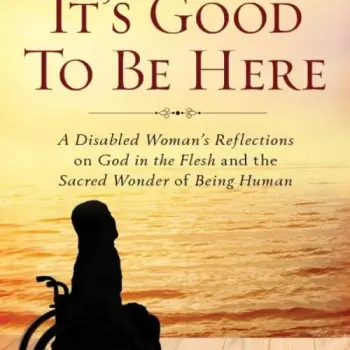
- Christina Chase, whose beautiful book It’s Good to Be Here is on my shortlist of must-read books for anyone struggling with purpose, meaning, and suffering.
And there are so, so many others. Life is difficult, but we don’t have to despair. There is goodness and worth and beauty in the life of every one of your children, no matter how fragile.
More Voices
Family, Parenting and Religion
Health, Fitness and Religion
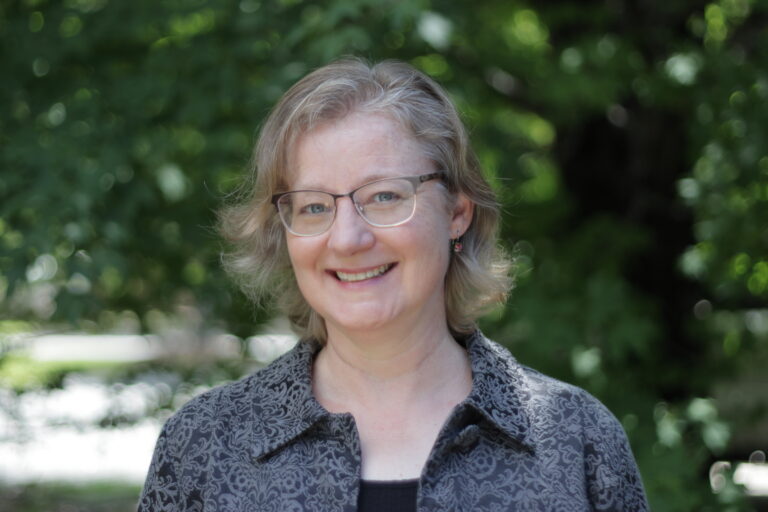
About Jennifer Fitz
Jennifer Fitz was born with an Apgar Score of zero, but has recovered considerably since that time. Combox is on Twitter @JenFitz_Reads and on Bluesky @jenfitzreads. You can read more about the author here.
Previous Post

March 27, 2025
Are You Trapped in a Catholic Clique?
Next Post

May 10, 2025 What's in the Encyclical that Inspired Pope Leo's Name?
Browse Our Archives
Select a Category Books Catechesis Catholic Q&A Chastity Church Craziness Come See Me Talk Disability & Chronic Illness Economics Evangelization Facepalm Forgiveness Good Things History Homeschooling Human Rights It's All Catholic Listen to Me Survey Series Liturgical Living Marriage Modesty Not Satire. But almost. Rant-o-Rama Sacred Art & Music Satire South Carolina Spark Clutter Stick that Corner Suffering Thinking Topics Writing Stuff
Select a Month November 2026 October 2026 September 2026 July 2026 June 2026 January 2026 December 2025 September 2025 July 2025 June 2025 May 2025 April 2025 March 2025 November 2024 August 2024 July 2024 June 2024 May 2024 April 2024 February 2024 January 2024 December 2023 October 2023 September 2023 August 2023 July 2023 June 2023 May 2023 April 2023 March 2023 February 2023 January 2023 December 2022 November 2022 October 2022 September 2022 August 2022 July 2022 May 2022 April 2022 March 2022 February 2022 January 2022 December 2021 November 2021 October 2021 September 2021 August 2021 July 2021 June 2021 May 2021 January 2021 December 2020 November 2020 October 2020 September 2020 August 2020 July 2020 June 2020 May 2020 April 2020 March 2020 February 2020 January 2020 October 2019 September 2019 August 2019 May 2019 April 2019 February 2019 September 2018 August 2018 July 2018 June 2018 May 2018 April 2018 March 2018 February 2018 January 2018 December 2017 November 2017 October 2017 September 2017 August 2017 June 2017 May 2017 April 2017 March 2017 February 2017 January 2017 December 2016 November 2016 October 2016 September 2016 August 2016 July 2016 May 2016 April 2016 March 2016 February 2016 January 2016 December 2015 November 2015 October 2015 September 2015 August 2015 July 2015 June 2015 May 2015 April 2015 March 2015 February 2015 January 2015 December 2014 November 2014 October 2014 September 2014 August 2014 July 2014 June 2014 May 2014 April 2014 March 2014 February 2014
Follow Us!
TAKE THE
Religious Wisdom Quiz
How did Jesus provide for the temple tax?
Select your answer to see how you score.
He multiplied bread Found in a tree A coin in a fish's mouth He borrowed from Judas
Related posts from Sticking the Corners

Jesus: Best Friend or Herald of Doom?

Is a 'Catholic Lifestyle' a Real Thing?

AI Detection and the Sin of Slander
TRENDING AT PATHEOS Catholic

God and the Contingency of This World
The great Catholic philosopher Aquinas and the great Lutheran philosopher Leibniz developed...

Pope Francis and The Devil – A Pagan...
According to his private diaries, Pope Francis saw visions of the devil...

Rock N' Roll-- Morphing into/for a New Generation...
Well, should we be grateful, or is rock n' roll just dead? ...

Ansley Gordon Brings Faith and Fresh Stories to...
For screenwriter and actress Ansley Gordon, Christmas has always been about more...

Chris Pratt on Veterans, Faith, “The Way of...
For Chris Pratt, service is not something that ends when a person...

Chapter 5, Sarah: The Quest for Safety in...
Open and Relational Theology & Social Psychology About this series: This series...
view all Catholic blogs
Ad-Free & Subscriber Log-In Subscription Support
- About Us
- 2026 Calendar
- Videos
- Podcasts
- Library of World Religions
- Faith In Media Tracker
- Advertise With Us
- Write for Us
- Privacy Policy
- Terms of Service
- Do Not Sell My Data
- Contact Us
- Radiant Digital
- Manage Newsletter Subscriptions
- Unsubscribe From Notifications
- Sitemap
Copyright 2008-2026, Patheos, part of the Radiant Digital network of media brands. All rights reserved.
Subscription Support Ad-Free & Subscriber Log-In
Follow Patheos