
BuddhistCatholicContemplativeEvangelicalGeneral ChristianHinduJewishLatter-day SaintMuslimNew VisionsProgressive Christian
Beliefs
- Buddhist
- Catholic
- Contemplative
- Evangelical
- General Christian
- Hindu
- Jewish
- Latter-day Saint
- More Voices
- Muslim
- New Visions
- Pagan
- Progressive Christian
Topics
- Religion News
- Food and Religion
- Sports and Religion
- Religious Art
- Religious Music and Entertainment
- Religious Events
- History and Religion
- Style and Religion
- Politics and Religion
- Women in Religion
- Recreation Outdoors and Religion
- Business Finance and Religion
- Careers Workplace and Religion
- Education and Religion
- Family Parenting and Religion
- Health Fitness and Religion
- Home and Religion
- Relationships and Religion
- Technology and Religion
- Travel and Religion
Columnists
- Buddhist Columnists
- Business Finance and Religion Columnists
- Careers Workplace and Religion Columnists
- Catholic Columnists
- Contemplative Columnists
- Education and Religion Columnists
- Evangelists Columnists
- Family Parenting and Religion Columnists
- General Christian Columnists
- Health Fitness and Religion Columnists
- Hindu Columnists
- History and Religion Columnists
- Home and Religion Columnists
- Jewish Columnists
- More Voices Columnists
- Latter Day Columnists
- Muslim Columnists
- New Visions Columnists
- Nonreligious Columnists
- Pagan Columnists
- Politics and Religion Columnists
- Progressive Columnists
- Recreation Outdoors and Religion Columnists
- Relationships and Religion Columnists
- Religion News Columnists
- Religious Art Columnists
- Religious Events Columnists
- Religious Music and Entertainment Columnists
- Sports and Religion Columnists
- Style and Religion Columnists
- Technology and Religion Columnists
- Travel and Religion Columnists
- Women in Religion Columnists
Resource Library
- 2026 Calendar
- Library of World Religions
- The 100 Most Holy Places on Earth
- Patheos Answers
- Podcasts
- Videos
- Faith Leaders Database
- Anglican Episcopalian
- Bahai
- Baptist
- Buddhism
- Christianity
- Confucianism
- Eastern Orthodoxy
- Hinduism
- Holiness and Pentecostal
- ISKCON
- Islam
- Judaism
- Lutheran
- Methodist
- The Church of Jesus Christ of Latter-day Saints
- New Age
- Paganism
- Presbytarian and Reformed
- Protestantism
- Religion Behind the Scenes
- Roman Catholic
- Scientology
- Shia Islam
- Sikhism
- Sufism
- Sunni Islam
- Taoism
- Zen
- See all religions
Research Tools
 Ad-Free & Subscriber Log-In Subscription Support
Follow Patheos 

- Trending:
- Advent
- |
- Forgiveness
- |
- Thanksgiving
- |
- Election
- |
- Seasonal Holidays
- |
- Marriage

- Home
- Catholic
- Religion News
- Should the Catholic Church Be Involved in Politics?
Should the Catholic Church Be Involved in Politics?
Last updated on: November 8, 2024 at 6:00 pm by Jennifer Fitz
Should the Catholic Church Be Involved in Politics? 2024-11-08T18:00:29-05:00 Jennifer Fitz
Patheos Explore the world's faith through different perspectives on religion and spirituality! Patheos has the views of the prevalent religions and spiritualities of the world.
Saw a curious poll on Twitter asking: Should the Catholic Church stay out of politics?
It’s an interesting one because the answer is pretty straightforward, at least where Catholics are following Catholic teaching and Church law.
Let’s take it apart and make sense of the questions within the question.
What is “the Catholic Church”?
We can define “the Catholic Church” in any number of ways:
- Every person, living or dead, who is united in faith with the Catholic Church. This is actually the most accurate definition.
- Catholic leaders generally speaking, which might include a wide variety of lay people in various positions of authority across both secular and religious organizations.
- Catholic clergy (deacons, priests, bishops) and religious (monks, nuns, etc.).
- Catholic clergy who hold positions at a certain high level of leadership, you decide how much authority is needed to qualify.
Alternately, we might look to physical structures when talking about Catholic Church involvement in politics. For example, are we speaking of:
- Parish church buildings used as polling places?
- Church-owned facilities used to hold meetings of political impact, such as an open community discussion on how to best prevent police violence or feed the homeless?
Or we might speak of movements and organizations, such as:
- Catholic groups participating in a March for Life (a political protest movement).
- Representatives of a pertinent Catholic organization, which might include officials from a local diocese, testifying at a legislative hearing or filing a friend-of-the-court brief.
- Catholic organizations sponsoring political candidates.
When we talk about political involvement of “The Church” we need to be clear about who exactly we’re talking about, and in what capacity they are operating.
What is “politics”?
Being “involved in politics” can mean all kinds of things, from the most basic rights of citizens to the active managing of political power. Examples:
- Voting.
- Discussing existing government policies or proposed reforms.
- Putting out a yard sign for a favored candidate.
- Running for office.
- Advising elected or appointed government officials.
Here’s a story of a way my local parish is involved in “politics.” There exists in our town a community-wide forum that meets once a year to come to a consensus on the most pressing issues affecting the well-being of the city. This forum includes (among others) houses of worship of all faiths, and our parish solicits volunteers to be part of the discussion.
The larger body, full of representatives from the entire community, chooses a major cause to focus on for the year ahead. It will be something that local officials and community organizations can work on together, such as making sure the homeless have adequate shelter in cold weather.
Once the annual goal is chosen, this community group works with City Council and local non-profits to try to meet the goal.
This is unquestionably “political” in a certain sense. But also: It’s just part of caring about your community and finding ways to help the people most in need in your local area.
It would be bizarre to not include houses of worship in this gathering of community leaders, given that the types of problems this citywide initiative address are often already being dealt with by active, pre-existing ministries of various religious organizations. Coordinating across community groups makes everyone’s work more effective.
Does the Catholic Church set limits on political involvement?
Interestingly, for all that some people worry “The Catholic Church” is trying to get political, actually the Church itself sets firm boundaries on its own involvement in political matters. Here’s a reader-friendly summary from Canon Law Made Easy: “Can Priests Hold Public Office?”
The specific rule is Canon 285.3 (scroll down at the link): “§3. Clerics are forbidden to assume public offices which entail a participation in the exercise of civil power.”
So no, your local priest or bishop is not allowed to run for public office. That’s a Church rule, which is perfect, since it would be a violation of the US Constitution to set limits based on religion concerning who can and cannot hold public office.
Should Catholics be involved in politics?
So, coming back to our original question: “Should the Catholic Church be involved in politics?” As we’ve seen, this can mean so many different things.
Here’s how the Catholic Church in the United States answers that in practice, and I think these are good answers:
Citizenship has no religious test. Individual Catholics should exercise their full rights as citizens, including the right to vote, to express political opinions, to hold public office, and to campaign for desired policy changes.
–> We do, however, limit priests and bishops from holding public office, not because the US government requires it, but because that is the practice of our religion.
Catholic organizations should support and serve the community. Most of the time this is focused on the various ministries we carry out, such as feeding the hungry, no different from other religious or secular community groups.
However there are times when a Catholic-run ministry might have expertise that should be contributed to public policy discussions. For example, an administrator at a Catholic-run addiction treatment center would reasonably take part in a legislative hearing on insurance laws for rehabilitation funding — same as other non-Catholic treatment center leaders would rightly weigh in on pertinent proposals.
Catholic organizations should stick to the law on political versus charitable works.
The US tax code, for example, sets specific requirements for qualifying as a charitable organization for tax purposes, and which kinds of organizations can be involved in lobbying or political campaigns. Very obviously, Catholic organizations should follow the law on this.
Catholic organizations live in the world ruled by national, state, and local law.
Public policy affects everyone. My local parish school has to follow laws concerning fire safety codes, sidewalk easements, and of course educational laws. It would be silly to say that the school must remain silent and passive concerning the regulations it is required to follow.
That doesn’t mean the school should be “political” but it does mean that if there is an issue directly affecting the school, it’s reasonable that school administrators would reach out to local officials where appropriate. City council and the state legislator can’t do their jobs if they don’t know how their proposed regulations would affect local citizens.
Catholic clergy are responsible for teaching the Catholic faith to church members.
I recently saw one of the Priests of Twitter delete a tweet, per the instruction of his local bishop, in which the priest had expressed his plan to vote for a particular candidate.
Both in respect for not crossing any lines with regard to the local church’s status as a non-political organization and in keeping with the Church’s stance on the separation of clergy from secular political affairs, this made sense, even though the priest was only speaking in his capacity as a private citizen.
In contrast, it is rightly the job of deacons, priests, and bishops to teach the principles of the Catholic faith. This includes things like the doctrine of the Trinity, which has little bearing on the governing of a secular republic, but also things like the importance of caring for the poor or visiting prisoners.
Catholics will in turn use that information to make decisions on what policies and candidates to support. Is this “political”? Well, yes, Rerum Novarum has a lot to say about just wages and the right management of businesses. It’s very blatantly about public policy on some very key issues.
It is, however, also just common sense decency. You don’t need to be Catholic to know that it’s wrong to profiteer off the most vulnerable, or that the government should get involved when necessary to protect human rights but also not try to micromanage everyone’s lives.
So, coming back to the big question: Should the Catholic Church be involved in politics?
Our answer is that to be Catholic is to care about your neighbor. The Church herself has set a boundary to keep clergy out of politics, but Catholics are citizens like anyone else, and we’re responsible for doing what we can to alleviate suffering and help others.
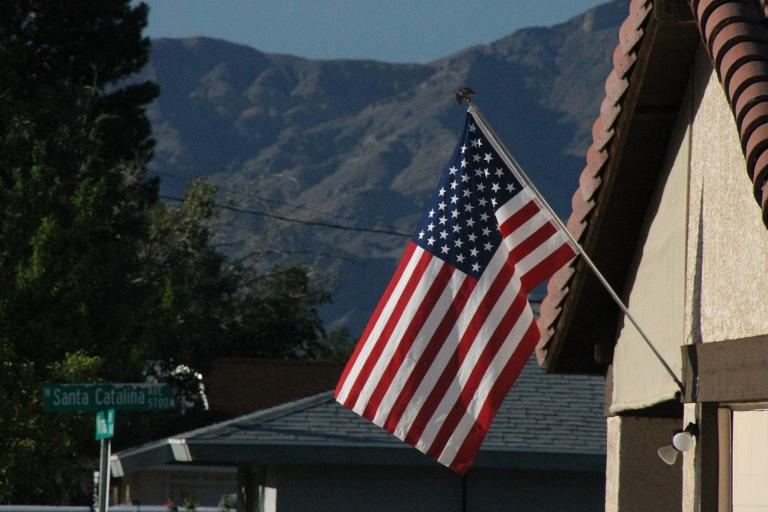
Photo of an American flag on a house in Las Vegas, NV, by Noah Wulf, CC 4.0

More Voices
Religion News
Politics and Religion
separation of church and state
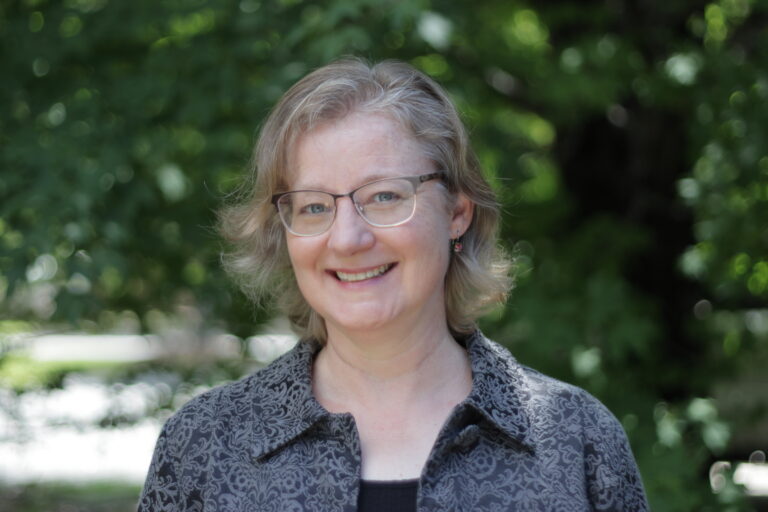
About Jennifer Fitz
Jennifer Fitz is hopelessly American in her thinking about Church & State, and frankly she has no plans to change that. Evangelization stuff at the 'stack, on Twitter @JenFitz_Reads. You can read more about the author here.
Previous Post

August 24, 2024
Should Christian Families Play Travel Sports?
Next Post
March 3, 2025 Should You Give Up the Internet for Lent?
Browse Our Archives
Select a Category Books Catechesis Catholic Q&A Chastity Church Craziness Come See Me Talk Disability & Chronic Illness Economics Evangelization Facepalm Forgiveness Good Things History Homeschooling Human Rights It's All Catholic Listen to Me Survey Series Liturgical Living Marriage Modesty Not Satire. But almost. Rant-o-Rama Sacred Art & Music Satire South Carolina Spark Clutter Stick that Corner Suffering Thinking Topics Writing Stuff
Select a Month November 2026 October 2026 September 2026 July 2026 June 2026 January 2026 December 2025 September 2025 July 2025 June 2025 May 2025 April 2025 March 2025 November 2024 August 2024 July 2024 June 2024 May 2024 April 2024 February 2024 January 2024 December 2023 October 2023 September 2023 August 2023 July 2023 June 2023 May 2023 April 2023 March 2023 February 2023 January 2023 December 2022 November 2022 October 2022 September 2022 August 2022 July 2022 May 2022 April 2022 March 2022 February 2022 January 2022 December 2021 November 2021 October 2021 September 2021 August 2021 July 2021 June 2021 May 2021 January 2021 December 2020 November 2020 October 2020 September 2020 August 2020 July 2020 June 2020 May 2020 April 2020 March 2020 February 2020 January 2020 October 2019 September 2019 August 2019 May 2019 April 2019 February 2019 September 2018 August 2018 July 2018 June 2018 May 2018 April 2018 March 2018 February 2018 January 2018 December 2017 November 2017 October 2017 September 2017 August 2017 June 2017 May 2017 April 2017 March 2017 February 2017 January 2017 December 2016 November 2016 October 2016 September 2016 August 2016 July 2016 May 2016 April 2016 March 2016 February 2016 January 2016 December 2015 November 2015 October 2015 September 2015 August 2015 July 2015 June 2015 May 2015 April 2015 March 2015 February 2015 January 2015 December 2014 November 2014 October 2014 September 2014 August 2014 July 2014 June 2014 May 2014 April 2014 March 2014 February 2014
Follow Us!
TAKE THE
Religious Wisdom Quiz
What did Jesus say to calm the storm?
Select your answer to see how you score.
"Cease, wind!" "Do not be afraid." "Let there be calm." "Peace, be still!"
Related posts from Sticking the Corners

AI Detection and the Sin of Slander
Medical Gaslighting and Assisted Suicide
What's in the Encyclical that Inspired Pope Leo's...
TRENDING AT PATHEOS Catholic

James Ishmael Ford's books on Zen
James Ishmael Ford's Official Website provides the most complete annotated list of...
The Trouble with Taking Chesterton Literally
Guest writer: Pilgrim. On paradox, human nature and the art of seeing...
Somewhere right now, someone is sitting in a parked car with a...

Just as the emergence of leaves on the fig tree signals the...
Belief and Disbelief in Christ's Presence in Holy...
A study found that only 29% of Catholics believe that the bread...

Blue Christmas: Making Room for Grief at Church
A Blue Christmas service makes room for grief, remembrance, and hope. Explore...
view all Catholic blogs
Ad-Free & Subscriber Log-In Subscription Support
- About Us
- 2026 Calendar
- Videos
- Podcasts
- Library of World Religions
- Faith In Media Tracker
- Advertise With Us
- Write for Us
- Privacy Policy
- Terms of Service
- Do Not Sell My Data
- Contact Us
- Radiant Digital
- Manage Newsletter Subscriptions
- Unsubscribe From Notifications
- Sitemap
Copyright 2008-2026, Patheos, part of the Radiant Digital network of media brands. All rights reserved.
Subscription Support Ad-Free & Subscriber Log-In
Follow Patheos