
BuddhistCatholicContemplativeEvangelicalGeneral ChristianHinduJewishLatter-day SaintMuslimNew VisionsProgressive Christian
Beliefs
- Buddhist
- Catholic
- Contemplative
- Evangelical
- General Christian
- Hindu
- Jewish
- Latter-day Saint
- More Voices
- Muslim
- New Visions
- Pagan
- Progressive Christian
Topics
- Religion News
- Food and Religion
- Sports and Religion
- Religious Art
- Religious Music and Entertainment
- Religious Events
- History and Religion
- Style and Religion
- Politics and Religion
- Women in Religion
- Recreation Outdoors and Religion
- Business Finance and Religion
- Careers Workplace and Religion
- Education and Religion
- Family Parenting and Religion
- Health Fitness and Religion
- Home and Religion
- Relationships and Religion
- Technology and Religion
- Travel and Religion
Columnists
- Buddhist Columnists
- Business Finance and Religion Columnists
- Careers Workplace and Religion Columnists
- Catholic Columnists
- Contemplative Columnists
- Education and Religion Columnists
- Evangelists Columnists
- Family Parenting and Religion Columnists
- General Christian Columnists
- Health Fitness and Religion Columnists
- Hindu Columnists
- History and Religion Columnists
- Home and Religion Columnists
- Jewish Columnists
- More Voices Columnists
- Latter Day Columnists
- Muslim Columnists
- New Visions Columnists
- Nonreligious Columnists
- Pagan Columnists
- Politics and Religion Columnists
- Progressive Columnists
- Recreation Outdoors and Religion Columnists
- Relationships and Religion Columnists
- Religion News Columnists
- Religious Art Columnists
- Religious Events Columnists
- Religious Music and Entertainment Columnists
- Sports and Religion Columnists
- Style and Religion Columnists
- Technology and Religion Columnists
- Travel and Religion Columnists
- Women in Religion Columnists
Resource Library
- 2026 Calendar
- Library of World Religions
- The 100 Most Holy Places on Earth
- Patheos Answers
- Podcasts
- Videos
- Faith Leaders Database
- Anglican Episcopalian
- Bahai
- Baptist
- Buddhism
- Christianity
- Confucianism
- Eastern Orthodoxy
- Hinduism
- Holiness and Pentecostal
- ISKCON
- Islam
- Judaism
- Lutheran
- Methodist
- The Church of Jesus Christ of Latter-day Saints
- New Age
- Paganism
- Presbytarian and Reformed
- Protestantism
- Religion Behind the Scenes
- Roman Catholic
- Scientology
- Shia Islam
- Sikhism
- Sufism
- Sunni Islam
- Taoism
- Zen
- See all religions
Research Tools
 Ad-Free & Subscriber Log-In Subscription Support
Ad-Free & Subscriber Log-In Subscription Support
Follow Patheos 

- Trending:
- Forgiveness
- |
- Marriage
- |
- Consciousness
- |
- Death Penalty
- |
- Election
- |
- Halloween

- Home
- Catholic
- Family, Parenting and Religion
- What Does Catholicism Say About The Alabama Embryo Ruling?
What Does Catholicism Say About The Alabama Embryo Ruling?
Last updated on: February 27, 2024 at 2:40 pm by Jennifer Fitz
What Does Catholicism Say About The Alabama Embryo Ruling? 2024-02-27T14:40:44-05:00 Jennifer Fitz
Patheos Explore the world's faith through different perspectives on religion and spirituality! Patheos has the views of the prevalent religions and spiritualities of the world.
What does the Catholic Church have to say about the recent Alabama Supreme Court ruling on embryos and wrongful death of minors lawsuits? Today I want to run through several aspects of the case that touch on the Catholic faith, from legal questions to very personal family planning decisions.
Every aspect of this case is highly emotionally charged, and my goal here is to sort out truth from hyperbole. You may not be comfortable with the Church’s stance on a given aspect of the case (even if you’re Catholic), but the only way to know where you agree and disagree is to start by understanding correctly what the Church actually teaches.
What are the key aspects of this ruling?
The two cases being considered involve three families whose frozen embryos were destroyed due to negligence by their IVF clinic. The parents have attempted to get compensation for their loss under the Alabama Wrongful Death of a Minor Act.
Click here for the link to the full text of the decision, which is fairly readable. Here’s a summary of Justice Mitchell’s key points:
- The Supreme Court of Alabama can only rule on questions or concepts that it has been specifically asked to treat.
- The Supreme Court is limited in its decisions to interpreting what the law of the State of Alabama actually is, according to the plain meaning of the legislative texts.
- Even if the justices themselves might prefer the law to say something other than what it does, they can’t create interpretations to conform to their wishes; it’s the job of the legislature to reform the law.
- The plain meaning of Alabama law as currently written includes stored embryos in the definition of “minor children” for the purposes of the specific civil law statute in question in this pair of cases.
This last point is important, because the decision specifically explores the differences between civil and criminal law, and explains why it’s often (rightly) possible to get compensation for damages in a civil case even if the situation doesn’t rise to the level of bringing about a conviction for related criminal charges.
This makes sense! There are many situations where we might accidentally or carelessly bring about some harm that in justice we should try to make amends and restore our neighbor as much as possible, but in which a criminal charge would be going too far — it would be an injustice to send someone to jail (or worse) given the circumstances and/or level of evidence.
This distinction is very important in wading through reactions. This ruling treats civil law, so anyone saying that “IVF has been criminalized!” is just not being honest. This ruling does say that the law as written allows parents of frozen embryos to sue for civil compensation under the Alabama Wrongful Death of a Minor Act.
Who is affected by this ruling?
This ruling concerns Alabama state law. Other states may have similar laws but which either explicitly carve out exceptions for IVF, or which create exceptions indirectly.
And, narrowing it down further, what this ruling did was send the case back down to a lower court for trial. Justice Mitchell’s opinion laid out multiple aspects of the case that the Supreme Court was unable to rule on because it was not asked by either party to do so. Thus while the Alabama Supreme Court ruled that the Wrongful Death of a Minor Act could apply in this case, it did not make any decision about whether the IVF clinic actually owed damages.
Justice Mitchell’s decisions pointed out one very important aspect of the case that, in the new trial, may have a strong bearing on whether new precedents will be set concerning civil liability for IVF clinics:
During oral argument in these cases, the defendants suggested that the plaintiffs may be either contractually or equitably barred from pursuing wrongful-death claims.
In particular, the defendants pointed out that all the plaintiffs signed contracts with the Center in which their embryonic children were, in many respects, treated as nonhuman property: the Fondes elected in their contract to automatically “destroy” any embryos that had remained frozen longer than five years; the LePages chose to donate similar embryos to medical researchers whose projects would “result in the destruction of the embryos”; and the Aysennes agreed to allow any “abnormal embryos” created through IVF to be experimented on for “research” purposes and then “discarded.”
The defendants contended at oral argument that these provisions are fundamentally incompatible with the plaintiffs’ wrongful-death claims. . . . The trial court remains free to consider these and any other outstanding issues on remand.
In what ways is this ruling “Catholic”?
Here are two aspects of Catholic teaching that are consistent with this ruling:
Subsidiarity. In sticking strictly within the bounds of what the state Supreme Court has the right to decide, this ruling respects the principle of not overreaching in authority.
Dignity of human life from conception. As it happens (whether the judges agree with the law or not — their job isn’t to approve the law but to rule according to the law as written), Alabama state law is in many ways in accord with Catholic teaching on the reality that human life is sacred, that our lives begin at conception, and that our worth as a person isn’t determined by our age, ability, or usefulness.
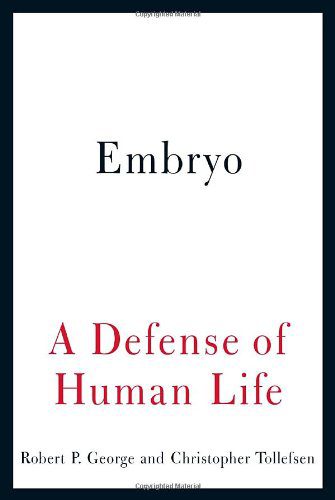
–> To better understand the philosophical underpinnings of this belief, whether from a religious or secular point of view, the book you want is Embryo: A Defense of Human Life by Robert P. George and Christopher Tollefsen.
All that said, there are details of this case that bring to light some areas where Catholic teaching is quite distinctive. Let’s look at that next.
What is the Catholic position on embryonic human life?
The Catholic position is rooted in biological fact: The defining moment when a human being comes into existence is at conception. That would be fertilization of the ovum (not a human being) by the sperm cell (also not a human being).
The Church takes an interest in this scientific question because the implications are so far-reaching. Unlike a utilitarian philosophy, which judges the worth of a person based on his or her usefulness, Catholicism holds that all human beings have equal rights and dignity.
Thus, for example, genetically screening embryos to select a child who doesn’t have an undesired trait, and in the process killing those who don’t meet spec, is morally abhorrent.
This position is in no way unique to Catholicism — many religions, as well as many non-religious people — agree that we shouldn’t kill people just because they have a particular illness or disability.
Likewise, it is absolutely unacceptable to participate in any way in discarding frozen embryos just because they are no longer wanted, nor to use stored embryos for scientific research or technological developments that knowingly, intentionally involve killing the embryo.
–> In contrast, we could imagine a scenario where an embryo from an ectopic pregnancy, which is certain to die if it remains implanted in the mother, might morally be transferred to an experimental artificial womb, if the hope is that the child will survive — perhaps to be experimentally re-implanted into the mother’s uterus. Even though there’s high likelihood the procedure would not succeed, the intention is not to kill the child; it is an attempt, however long the odds, to save the child’s life.
And remember that in all cases, it is morally acceptable to remove the embryo or fetus from the mother’s body if indeed necessary to save the mother’s life. We can’t actively kill the baby as in abortion, but surgical or vaginal delivery of the intact child is morally acceptable, even if the baby is far too young (such as in ectopic pregnancy) to survive outside the womb.
Is IVF okay as long as no embryos are destroyed?
This is a completely different question, and one on which Catholicism has far less company. Many Christians (and others) who recognize the embryo’s inherent dignity as a human being do, nonetheless, allow IVF as long as a sincere attempt is made to implant and bring to term all embryos conceived in this way.
Here’s the Catholic position on IVF in a nutshell:
Most important: Every child conceived by IVF is a gift of God, precious and equal in dignity to all other humans.
More difficult to understand: Nonetheless, the sexual act itself has a sacredness that needs to be respected. Conception should occur within an act of intercourse between faithfully, lovingly married husband and wife.
This second point is a hard teaching. We can point to many cases where IVF is attempted by loving, faithfully married husband and wife who are only trying to solve their fertility problem.
These cases are fundamentally different from surrogacy or donor cases where the right of the child to know and be reared by its own parents is intentionally denied by design, and which in some cases even amount to full-on trafficking. We need to acknowledge that.
We need to recognize that not every instance of IVF has the same level of moral problems.
Nonetheless, Catholicism does teach that couples should not use IVF.
We should also recognize that even though in many cases couples will be able to conceive by seeking alternate forms of fertility treatment, that won’t always be true.
Isn’t the strict rule against IVF counter to the pro-life ethic?
To be pro-life is to respect the dignity of all human beings. Often (not always) our respect for the sacredness of the gift of human life leads married couples to have another child, even when doing so involves a certain amount of sacrifice or hardship.
(And there is no denying that IVF involves sacrifice and hardship!)
Likewise, respect for human life means that when a child is conceived in a way that isn’t ideal, such as an out-of-wedlock pregnancy, or even in a way that is overwhelmingly and entirely evil, such as rape, we nonetheless treasure the child. The child might be the only good thing in the whole horrible situation, but the child is good.
We seek to help the mother through the serious hardships her pregnancy involves, and we seek to support her in whatever choice she makes about whether to rear the child herself or to seek a good adoptive family for her child.
When appropriate (such as an ordinary out-of-wedlock pregnancy), we seek to help the father to also foster a right relationship with his child. The best way to do that will depend on the unique circumstances of the situation.
All that said, being pro-life is not about maximizing human population via any means available. For couples suffering from infertility, the pro-life choices are to:
- Help them conceive using morally acceptable means if possible. If that is not possible then to . . .
- Provide support and accompaniment as they find other ways to live out their God-given vocation, whether that be through adoption, fostering, or some completely different ministry.
What if a Catholic has used IVF anyway?
Well, that’s in the past. You can’t change the past.
Furthermore, even though few people can understand the pain of infertility, any honest Catholic will admit that frankly we’ve been tempted by far less, and have frequently fallen short of the mark.
That doesn’t mean IVF is no big deal. What it means is that you move on. Your past makes its mark on your life, but it doesn’t define who you are now, nor who you will become.
If you knew it was wrong when you did it? Take it to Confession. You chose to do something you knew not to do, and you’re sorry, and you want to live differently going forward. Receive God’s forgiveness and healing.
If you didn’t even know it was wrong when you did it? Then you didn’t know. In order to be culpable of a sin you have to know it’s a sin! Now you do know, and your life will be different as a result.
If you aren’t clear in your mind about where you were, mentally, at the time? Just bring it up in Confession. God knows your heart, and He is ready to embrace you, and love you, and welcome you into a relationship of peace and joy.
God bless.
More Voices
Family, Parenting and Religion
Politics and Religion
About Jennifer Fitz
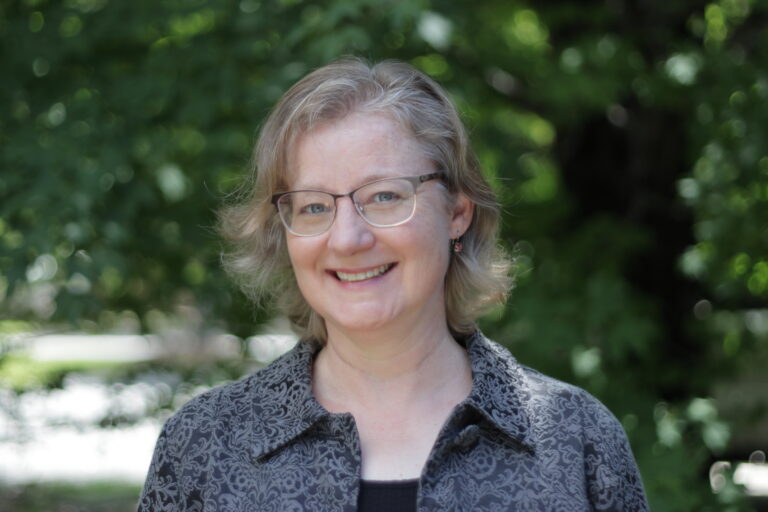
Jennifer Fitz writes about pro-life stuff you might not like hearing, but remember: It's your life too. You matter. You mattered when you were an embryo, and you've never stopped mattering since. You can read more about the author here.
Previous Post
February 13, 2024
Idea for a Valentine's Ash Wednesday
Next Post

April 23, 2024 How are Ownership and Stewardship Different?
Browse Our Archives
Select a Category Books Catechesis Catholic Q&A Chastity Church Craziness Come See Me Talk Disability & Chronic Illness Economics Evangelization Facepalm Forgiveness Good Things History Homeschooling Human Rights It's All Catholic Listen to Me Survey Series Liturgical Living Marriage Modesty Not Satire. But almost. Rant-o-Rama Sacred Art & Music Satire South Carolina Spark Clutter Stick that Corner Suffering Thinking Topics Writing Stuff
Select a Month September 2026 July 2026 June 2026 January 2026 December 2025 September 2025 July 2025 June 2025 May 2025 April 2025 March 2025 November 2024 August 2024 July 2024 June 2024 May 2024 April 2024 February 2024 January 2024 December 2023 October 2023 September 2023 August 2023 July 2023 June 2023 May 2023 April 2023 March 2023 February 2023 January 2023 December 2022 November 2022 October 2022 September 2022 August 2022 July 2022 May 2022 April 2022 March 2022 February 2022 January 2022 December 2021 November 2021 October 2021 September 2021 August 2021 July 2021 June 2021 May 2021 January 2021 December 2020 November 2020 October 2020 September 2020 August 2020 July 2020 June 2020 May 2020 April 2020 March 2020 February 2020 January 2020 October 2019 September 2019 August 2019 May 2019 April 2019 February 2019 September 2018 August 2018 July 2018 June 2018 May 2018 April 2018 March 2018 February 2018 January 2018 December 2017 November 2017 October 2017 September 2017 August 2017 June 2017 May 2017 April 2017 March 2017 February 2017 January 2017 December 2016 November 2016 October 2016 September 2016 August 2016 July 2016 May 2016 April 2016 March 2016 February 2016 January 2016 December 2015 November 2015 October 2015 September 2015 August 2015 July 2015 June 2015 May 2015 April 2015 March 2015 February 2015 January 2015 December 2014 November 2014 October 2014 September 2014 August 2014 July 2014 June 2014 May 2014 April 2014 March 2014 February 2014
Follow Us!
TAKE THE
Religious Wisdom Quiz
What does "Ichabod" mean?
Select your answer to see how you score.
Blessed son No glory God's gift Holy child
Related posts from Sticking the Corners

Misogynist Clericalism Strikes Again
What's The Problem With Embryo Genetic Screening?

Should You Give Up the Internet for Lent?
TRENDING AT PATHEOS Catholic

Janie Learns the Way of the Cross: A...
Teaching children about Jesus' Passion can be challenging. Many parents and educators...

Looking For Good Catholic Writing - October 2026
He alone extends the heavens, and he walks upon the waves of...

In "Irreplaceable," our book on vocation and technology, Trevor Sutton and I...

I was strolling through the top floor of the brand new Parthenon...

What Does Gêvâh Mean For Kimberley Guifoyle &...
This week, a lot of the news is focused on Kimberly Guilfoyle....

INNER CIRCLE: Profound Mystery (Of Christ In All...
Ephesians 5:31-32 “For this reason, a man will leave his father and...
view all Catholic blogs
Ad-Free & Subscriber Log-In Subscription Support
- About Us
- 2026 Calendar
- Videos
- Podcasts
- Library of World Religions
- Faith In Media Tracker
- Advertise With Us
- Write for Us
- Privacy Policy
- Terms of Service
- Do Not Sell My Data
- Contact Us
- Radiant Digital
- Manage Newsletter Subscriptions
- Unsubscribe From Notifications
- Sitemap
Copyright 2008-2026, Patheos. All rights reserved.
Subscription Support Ad-Free & Subscriber Log-In
Follow Patheos