
BuddhistCatholicContemplativeEvangelicalGeneral ChristianHinduJewishLatter-day SaintMuslimNew VisionsProgressive Christian
Beliefs
- Buddhist
- Catholic
- Contemplative
- Evangelical
- General Christian
- Hindu
- Jewish
- Latter-day Saint
- More Voices
- Muslim
- New Visions
- Pagan
- Progressive Christian
Topics
- Religion News
- Food and Religion
- Sports and Religion
- Religious Art
- Religious Music and Entertainment
- Religious Events
- History and Religion
- Style and Religion
- Politics and Religion
- Women in Religion
- Recreation Outdoors and Religion
- Business Finance and Religion
- Careers Workplace and Religion
- Education and Religion
- Family Parenting and Religion
- Health Fitness and Religion
- Home and Religion
- Relationships and Religion
- Technology and Religion
- Travel and Religion
Columnists
- Buddhist Columnists
- Business Finance and Religion Columnists
- Careers Workplace and Religion Columnists
- Catholic Columnists
- Contemplative Columnists
- Education and Religion Columnists
- Evangelists Columnists
- Family Parenting and Religion Columnists
- General Christian Columnists
- Health Fitness and Religion Columnists
- Hindu Columnists
- History and Religion Columnists
- Home and Religion Columnists
- Jewish Columnists
- More Voices Columnists
- Latter Day Columnists
- Muslim Columnists
- New Visions Columnists
- Nonreligious Columnists
- Pagan Columnists
- Politics and Religion Columnists
- Progressive Columnists
- Recreation Outdoors and Religion Columnists
- Relationships and Religion Columnists
- Religion News Columnists
- Religious Art Columnists
- Religious Events Columnists
- Religious Music and Entertainment Columnists
- Sports and Religion Columnists
- Style and Religion Columnists
- Technology and Religion Columnists
- Travel and Religion Columnists
- Women in Religion Columnists
Resource Library
- 2026 Calendar
- Library of World Religions
- The 100 Most Holy Places on Earth
- Patheos Answers
- Podcasts
- Videos
- Faith Leaders Database
- Anglican Episcopalian
- Bahai
- Baptist
- Buddhism
- Christianity
- Confucianism
- Eastern Orthodoxy
- Hinduism
- Holiness and Pentecostal
- ISKCON
- Islam
- Judaism
- Lutheran
- Methodist
- The Church of Jesus Christ of Latter-day Saints
- New Age
- Paganism
- Presbytarian and Reformed
- Protestantism
- Religion Behind the Scenes
- Roman Catholic
- Scientology
- Shia Islam
- Sikhism
- Sufism
- Sunni Islam
- Taoism
- Zen
- See all religions
Research Tools
 Ad-Free & Subscriber Log-In Subscription Support
Ad-Free & Subscriber Log-In Subscription Support
Follow Patheos 

- Trending:
- Forgiveness
- |
- Marriage
- |
- Consciousness
- |
- Death Penalty
- |
- Election
- |
- Halloween

- Home
- Catholic
- Can a Catholic Affirm the Nashville Statement?
Can a Catholic Affirm the Nashville Statement?
Last updated on: September 8, 2017 at 12:37 pm by Jennifer Fitz
Can a Catholic Affirm the Nashville Statement? 2017-09-08T12:37:40-05:00 Jennifer Fitz
Patheos Explore the world's faith through different perspectives on religion and spirituality! Patheos has the views of the prevalent religions and spiritualities of the world.
The Nashville Statement is a set of fourteen affirmations and denials concerning Christianity and human sexuality, composed by evangelical Protestants. You can read the Nashville Statement here. As the Babylon Bee observes, it doesn’t contain any new information. There are two points on which Catholics should disagree. Article 12 states:
WE AFFIRM that the grace of God in Christ gives both merciful pardon and transforming power, and that this pardon and power enable a follower of Jesus to put to death sinful desires and to walk in a manner worthy of the Lord.
This is very close to Catholic teaching, but appears to be slightly off. Catholics acknowledge the existence of concupiscence, the tendency to be attracted to sin even after we have been washed free of original sin by baptism. You can read about it in The Cathechism of the Catholic Church here, here, and here. Concerning sins of the flesh:
2514 St. John distinguishes three kinds of covetousness or concupiscence: lust of the flesh, lust of the eyes, and pride of life.301 In the Catholic catechetical tradition, the ninth commandment forbids carnal concupiscence; the tenth forbids coveting another’s goods.
2515 Etymologically, “concupiscence” can refer to any intense form of human desire. Christian theology has given it a particular meaning: the movement of the sensitive appetite contrary to the operation of the human reason. The apostle St. Paul identifies it with the rebellion of the “flesh” against the “spirit.”302 Concupiscence stems from the disobedience of the first sin. It unsettles man’s moral faculties and, without being in itself an offense, inclines man to commit sins.303
2516 Because man is a composite being, spirit and body, there already exists a certain tension in him; a certain struggle of tendencies between “spirit” and “flesh” develops. But in fact this struggle belongs to the heritage of sin. It is a consequence of sin and at the same time a confirmation of it. It is part of the daily experience of the spiritual battle . . .
Catholics agree with the Nashville Statement that by God’s grace we are set free from sin. The disagreement is if the Nashville Statement means to suggest that every person who wishes to be entirely pure will become so in this life.
Catholics acknowledge the obvious: This doesn’t always happen. Most of us know otherwise commendable Christians who died still not entirely free from all sin, as far as anyone could tell (what happened in those final moments after consciousness ceased, we cannot say). That’s why we believe in Purgatory, the process of being made, by God’s grace, completely free from all impurity, and therefore able to enter Heaven.
1030 All who die in God’s grace and friendship, but still imperfectly purified, are indeed assured of their eternal salvation; but after death they undergo purification, so as to achieve the holiness necessary to enter the joy of heaven.
1031 The Church gives the name Purgatory to this final purification of the elect, which is entirely different from the punishment of the damned.606 The Church formulated her doctrine of faith on Purgatory especially at the Councils of Florence and Trent. The tradition of the Church, by reference to certain texts of Scripture, speaks of a cleansing fire:607
As for certain lesser faults, we must believe that, before the Final Judgment, there is a purifying fire. He who is truth says that whoever utters blasphemy against the Holy Spirit will be pardoned neither in this age nor in the age to come. From this sentence we understand that certain offenses can be forgiven in this age, but certain others in the age to come.608
1032 This teaching is also based on the practice of prayer for the dead, already mentioned in Sacred Scripture: “Therefore [Judas Maccabeus] made atonement for the dead, that they might be delivered from their sin.”609 From the beginning the Church has honored the memory of the dead and offered prayers in suffrage for them, above all the Eucharistic sacrifice, so that, thus purified, they may attain the beatific vision of God.610
Catholics do firmly deny with the Nashville Statement the second half of Article 12:
WE DENY that the grace of God in Christ is insufficient to forgive all sexual sins and to give power for holiness to every believer who feels drawn into sexual sin.
Moving on to our second disagreement. The nuances of Article 13 are similarly problematic:
WE AFFIRM that the grace of God in Christ enables sinners to forsake transgender self-conceptions and by divine forbearance to accept the God-ordained link between one’s biological sex and one’s self-conception as male or female.
We do joyfully affirm the power of God’s grace. But if you are just having a horrible time trying to shake off your gender dysphoria, we acknowledge that perfectly earnest Christians do sometimes get caught up in mental illness that goes uncured by either natural or supernatural assistance. So if you are a Christian who struggles — even to the point of death — with anorexia, body integration identity disorder, gender dysphoria, depression, or any other mental illness that alters your ability to think rationally, that doesn’t mean you somehow failed as a Christian and are condemned to eternal damnation.
Mental illness reduces culpability for sin, and purgatory, see above, is a necessary reality precisely because we know that people do sometimes die still quite miserably wretched. Some people even die of wretchedness directly, and yet they can be saved.
Catholics do agree with the second half of Article 13:
WE DENY that the grace of God in Christ sanctions self-conceptions that are at odds with God’s revealed will.
Beyond that, the statement is in agreement with the Catholic faith. A future statement might better clarify these two points. In the meantime, Catholics should refrain from signing The Nashville Statement. Be assured you can sign off on The Catechism of the Catholic Church, which covers all the same ground on the important bits.

Previous Post

August 28, 2017
Generation Bodies-R-Us
Next Post
September 6, 2017 "Price Gouging" and Catholic Social Teaching
Browse Our Archives
Select a Category Books Catechesis Catholic Q&A Chastity Church Craziness Come See Me Talk Disability & Chronic Illness Economics Evangelization Facepalm Forgiveness Good Things History Homeschooling Human Rights It's All Catholic Listen to Me Survey Series Liturgical Living Marriage Modesty Not Satire. But almost. Rant-o-Rama Sacred Art & Music Satire South Carolina Spark Clutter Stick that Corner Suffering Thinking Topics Writing Stuff
Select a Month September 2026 July 2026 June 2026 January 2026 December 2025 September 2025 July 2025 June 2025 May 2025 April 2025 March 2025 November 2024 August 2024 July 2024 June 2024 May 2024 April 2024 February 2024 January 2024 December 2023 October 2023 September 2023 August 2023 July 2023 June 2023 May 2023 April 2023 March 2023 February 2023 January 2023 December 2022 November 2022 October 2022 September 2022 August 2022 July 2022 May 2022 April 2022 March 2022 February 2022 January 2022 December 2021 November 2021 October 2021 September 2021 August 2021 July 2021 June 2021 May 2021 January 2021 December 2020 November 2020 October 2020 September 2020 August 2020 July 2020 June 2020 May 2020 April 2020 March 2020 February 2020 January 2020 October 2019 September 2019 August 2019 May 2019 April 2019 February 2019 September 2018 August 2018 July 2018 June 2018 May 2018 April 2018 March 2018 February 2018 January 2018 December 2017 November 2017 October 2017 September 2017 August 2017 June 2017 May 2017 April 2017 March 2017 February 2017 January 2017 December 2016 November 2016 October 2016 September 2016 August 2016 July 2016 May 2016 April 2016 March 2016 February 2016 January 2016 December 2015 November 2015 October 2015 September 2015 August 2015 July 2015 June 2015 May 2015 April 2015 March 2015 February 2015 January 2015 December 2014 November 2014 October 2014 September 2014 August 2014 July 2014 June 2014 May 2014 April 2014 March 2014 February 2014
Follow Us!
TAKE THE
Religious Wisdom Quiz
How many loaves in the feeding miracle?
Select your answer to see how you score.
5 7 12 3
Related posts from Sticking the Corners

Is a 'Catholic Lifestyle' a Real Thing?

AI Detection and the Sin of Slander

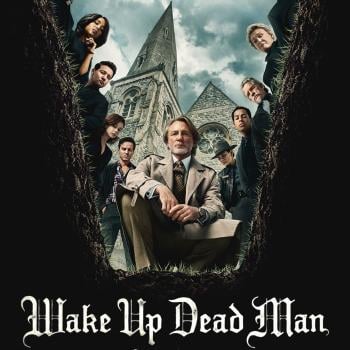
How Catholic is Wake Up Dead Man?
TRENDING AT PATHEOS Catholic

Nearly every morning, I make the drive to Detroit with my high-school-age...

The Real AI Story Is Adoption Without Trust
Artificial intelligence has crossed a political threshold. It is no longer a...

A new article, written by Jeff Lindsay and Gale L. Pooley,...

Swimfan: Forgotten Aughts Pleasures
This is a recovery effort. In 2002, My Big Fat Greek Wedding...

Top Three Anti-Catholic Lies About Catholicism
This is my initial transcript for the video, "THE 3 WORST...

Pope Leo Celebrates Mass for Nurses & Docs...
I don't have any idea how he did it, but Pope Leo...
view all Catholic blogs
Ad-Free & Subscriber Log-In Subscription Support
- About Us
- 2026 Calendar
- Videos
- Podcasts
- Library of World Religions
- Faith In Media Tracker
- Advertise With Us
- Write for Us
- Privacy Policy
- Terms of Service
- Do Not Sell My Data
- Contact Us
- Radiant Digital
- Manage Newsletter Subscriptions
- Unsubscribe From Notifications
- Sitemap
Copyright 2008-2026, Patheos. All rights reserved.
Subscription Support Ad-Free & Subscriber Log-In
Follow Patheos