
BuddhistCatholicContemplativeEvangelicalGeneral ChristianHinduJewishLatter-day SaintMuslimNew VisionsProgressive Christian
Beliefs
- Buddhist
- Catholic
- Contemplative
- Evangelical
- General Christian
- Hindu
- Jewish
- Latter-day Saint
- More Voices
- Muslim
- New Visions
- Pagan
- Progressive Christian
Topics
- Religion News
- Food and Religion
- Sports and Religion
- Religious Art
- Religious Music and Entertainment
- Religious Events
- History and Religion
- Style and Religion
- Politics and Religion
- Women in Religion
- Recreation Outdoors and Religion
- Business Finance and Religion
- Careers Workplace and Religion
- Education and Religion
- Family Parenting and Religion
- Health Fitness and Religion
- Home and Religion
- Relationships and Religion
- Technology and Religion
- Travel and Religion
Columnists
- Buddhist Columnists
- Business Finance and Religion Columnists
- Careers Workplace and Religion Columnists
- Catholic Columnists
- Contemplative Columnists
- Education and Religion Columnists
- Evangelists Columnists
- Family Parenting and Religion Columnists
- General Christian Columnists
- Health Fitness and Religion Columnists
- Hindu Columnists
- History and Religion Columnists
- Home and Religion Columnists
- Jewish Columnists
- More Voices Columnists
- Latter Day Columnists
- Muslim Columnists
- New Visions Columnists
- Nonreligious Columnists
- Pagan Columnists
- Politics and Religion Columnists
- Progressive Columnists
- Recreation Outdoors and Religion Columnists
- Relationships and Religion Columnists
- Religion News Columnists
- Religious Art Columnists
- Religious Events Columnists
- Religious Music and Entertainment Columnists
- Sports and Religion Columnists
- Style and Religion Columnists
- Technology and Religion Columnists
- Travel and Religion Columnists
- Women in Religion Columnists
Resource Library
- 2026 Calendar
- Library of World Religions
- The 100 Most Holy Places on Earth
- Patheos Answers
- Podcasts
- Videos
- Faith Leaders Database
- Anglican Episcopalian
- Bahai
- Baptist
- Buddhism
- Christianity
- Confucianism
- Eastern Orthodoxy
- Hinduism
- Holiness and Pentecostal
- ISKCON
- Islam
- Judaism
- Lutheran
- Methodist
- The Church of Jesus Christ of Latter-day Saints
- New Age
- Paganism
- Presbytarian and Reformed
- Protestantism
- Religion Behind the Scenes
- Roman Catholic
- Scientology
- Shia Islam
- Sikhism
- Sufism
- Sunni Islam
- Taoism
- Zen
- See all religions
Research Tools
 Ad-Free & Subscriber Log-In Subscription Support
Ad-Free & Subscriber Log-In Subscription Support
Follow Patheos 

- Trending:
- Forgiveness
- |
- Marriage
- |
- Consciousness
- |
- Death Penalty
- |
- Election
- |
- Halloween

- Home
- Progressive Christian
- Religion News
- The Marginalized and Oppressed: Who Do You Say That I Am?
The Marginalized and Oppressed: Who Do You Say That I Am?
Last updated on: August 23, 2026 at 2:00 pm by Jeff Hood
The Marginalized and Oppressed: Who Do You Say That I Am? 2026-08-23T14:00:06-06:00 Jeff Hood
Patheos Explore the world's faith through different perspectives on religion and spirituality! Patheos has the views of the prevalent religions and spiritualities of the world.
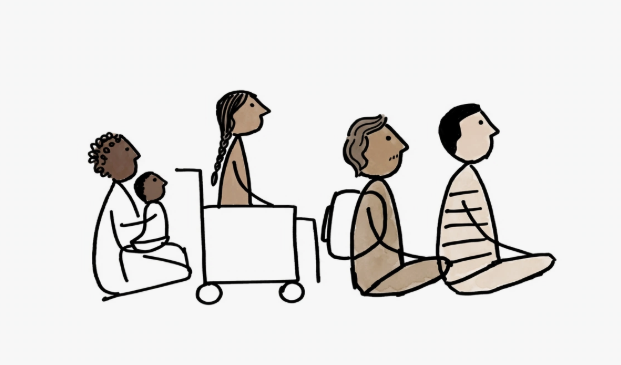
Who do you say that I am?
Who Do You Say That I Am? – Matthew 16:13-20
Jesus asks his disciples who people say he is. Then he turns the question toward them: “But who do you say that I am?” Peter answers that Jesus is the Christ, the Son of the living God. Jesus tells Peter that this recognition has been revealed by God. Upon this confession, Jesus says he will build his church, and the powers of death will not overcome it. He gives Peter the keys of the kingdom, declaring that what is bound on earth will be bound in heaven and what is released on earth will be released in heaven.
Jesus does not begin with doctrine. He begins with a question that exposes the distance between public rumor and personal confession: “Who do people say that the Son of Man is?” After the safe answers are offered, he presses further: “But who do you say that I am?” Peter’s reply, “You are the Christ, the Son of the living God,” is not the product of clever analysis. It is revelation. And upon that confession Jesus builds a church that the powers of death will not overcome.
Any proper reading refuses to leave that question safely in the past or permanently in the mouths of the already-powerful. It hears the same question rising again from below. The marginalized and oppressed, those whose lives are daily shaped by economic exclusion, racial violence, gender-based harm, colonial residue, and the slow death of being treated as disposable, turn toward the church and the privileged and ask, with the same force Jesus once used: Who do you say that I am?
When the Question Comes From Below
When the poor, the racialized, the displaced, the incarcerated, the undocumented, the queer, the disabled, and the economically crushed ask this question, they are not requesting a theological abstraction. They are demanding to know whether the confession of Jesus as Christ still has content. They are testing whether the church that claims to be built on the rock of Peter’s words actually recognizes the living Christ where he said he would be found: among the least of these.
I have sat with people who know that the state has decided the date and hour when their lives will end. I have listened to men on death row talk about their mothers, their children, their fears, their regrets, their faith, and sometimes their complete lack of faith. I have watched people whom society has reduced to a crime become, in the course of a conversation, simply human again. Not symbols. Not cases. Not headlines. Human beings.
That experience has changed the way I hear this passage.
To answer, “You are the Christ,” while remaining indifferent to those whose bodies bear the marks of crucifixion is to empty the confession of its power. The question from the margins forces a reckoning. Do we see the image of God in those the world discards? Do we recognize the Son of the living God in the faces that empire tries to render invisible? Or do we still answer with the safer categories of our time: charity case, threat, statistic, political problem, cultural controversy, problem to be managed?
A Black mother whose son was killed by the state stands before a church that preaches, “Jesus is Lord,” and asks, “If Jesus is Lord, why is your silence louder than your solidarity?” At the border, a migrant family hears you singing of the God who brings down the powerful and lifts up the lowly, and they ask, “Who do you say that I am? Neighbor, or invader?” An Indigenous community whose land is still being extracted looks at those who proclaim that the earth belongs to the Lord and asks, “Steward of creation, or obstacle to progress?”
A woman surviving domestic violence does not need your doctrine. She needs to know whether her pain is too inconvenient to name. The worker whose labor is stolen by systems that worship profit, the worker who is told that rest is a luxury, asks the congregation that speaks of justice, “Human being made for dignity, or disposable input?”
And the prisoner asks another question that Christians should find almost impossible to escape: If Christ is present among the condemned, what does it mean when we decide that some people are no longer worthy of our attention, our mercy, or even their lives?
In each case, the question is the same. Does your confession of Jesus as the Christ actually reconfigure how you see me, stand with me, and risk something for my freedom? Or is the confession still a private spiritual possession that leaves the structures of death untouched?
This is where the church comes under interrogation.
When the oppressed ask, “Who do you say that I am?” they are doing something remarkably close to what Jesus did at Caesarea Philippi. They are refusing the comfortable distance of second-hand answers. They are demanding a personal and costly response. Public opinion will offer its usual replies: social problem, political issue, cultural controversy, individual failure. The deeper demand remains: Who do you say that we are?
I have learned that there is a profound difference between talking about human dignity and sitting across from someone whose dignity the state has already declared negotiable. Theology sounds different when the person in front of you knows that an execution chamber is waiting for him. The words we use in churches suddenly acquire weight. “Image of God” is no longer a phrase in a sermon. It becomes a question of whether you can look directly at another human being and refuse to let the worst thing they have ever done become the entirety of who they are.
Who Do You Say that I Am? : When Theology Has to Become Flesh
The answer cannot remain at the level of sentiment. It must become concrete. To answer that the oppressed are bearers of the image of God, that Christ is encountered among the crucified peoples of history, is to accept that the church’s fidelity is measured by its proximity to their struggle. The “rock” is not only Peter’s words but the lived solidarity those words require. The keys of the kingdom are not ornamental symbols. They are meant to unlock chains: debt, incarceration, exclusion from healthcare, denial of land, criminalization of existence, and the economic systems that turn human beings into commodities.
The promise that the gates of the netherworld will not prevail is not merely a guarantee of institutional survival. It is a promise that communities built on the recognition of Christ among the crucified peoples of history will endure. When the marginalized ask the question, they are inviting the church into that promise. They are also exposing its absence.
And there is a cost to answering.
Jesus ordered silence after Peter’s confession because the title “Christ,” separated from the way of the cross, can become propaganda. The same danger remains. Easy answers to the question posed by the oppressed, “Of course you are beloved,” “Of course Jesus is with you,” cost nothing if they are not followed by rearranged priorities, redistributed resources, risked reputation, and concrete resistance.
A true answer looks like churches that open their buildings as sanctuary. It looks like institutions willing to move money from institutional maintenance toward mutual aid. It looks like Christians who refuse to baptize the language of empire or dress domination in the vocabulary of righteousness. It looks like communities willing to allow the voices of the poor to interrogate their theology rather than insisting that theology interrogate the poor.
It also means being willing to sit with the person everyone else has already abandoned.
That may be one of the simplest tests of Christian faith. Who are we willing to sit beside when there is nothing to gain from doing so? Whose story are we willing to hear when hearing it makes us uncomfortable? Whose humanity are we willing to defend when defending it costs us something?
I have found that the condemned can teach the church something about this. Not because suffering automatically makes someone holy. It does not. Not because every person on death row is innocent. They are not. But because when you sit long enough with someone whom society has reduced to a single word, you begin to understand how easily all of us can participate in the reduction of human beings into categories.
Murderer.
Illegal.
Addict.
Criminal.
Poor.
Dangerous.
Unwanted.
And eventually those categories become permission not to see.
Who Do You Say that I Am? : The Question That Builds or Unmasks the Church
“Who do you say that I am?” remains the hinge of the passage. When the marginalized ask it of us, the church is either built more firmly on the rock or revealed as sand. The answer cannot be borrowed from tradition. It cannot be borrowed from public consensus. It must be given in the present tense and in the presence of those whose lives are at stake.
Only then does the confession retain its power to liberate, both the oppressed from the structures that crush them and the rest of us from the captivity of indifference.
The living God still reveals the identity of the Son. That revelation continues to arrive through the questions of those the world has decided do not matter. Their question is the same as Jesus’: Who do you say that I am? Everything that follows, the church, the keys, the resistance to the gates of death, depends upon how we answer.
The question, then, is no longer safely contained in the pages of Matthew. It has escaped the page. It is standing in front of us.
A woman whose body has been violated is asking it.
A prisoner facing execution is asking it.
A migrant sleeping beneath a bridge is asking it.
A child whose neighborhood has been abandoned is asking it.
A family whose loved one was taken by violence is asking it.
A person whose poverty has been treated as a moral failure is asking it.
They are not asking whether we know the right theology.
They are asking whether our theology has made us capable of seeing them.
“Who do you say that I am?”
If we answer, “You are beloved,” but leave them alone in their suffering, what have we confessed?
If we answer, “You bear the image of God,” but tolerate the systems that crush that image, what have we confessed?
If we answer, “Christ is present among you,” but refuse to follow Christ into the places where suffering is happening, what have we confessed?
Perhaps the most frightening possibility is that the church can say the right words about Jesus while failing to recognize Jesus when Jesus appears among the people we have been taught to fear, ignore, criminalize, or discard.
Peter recognized Jesus and still misunderstood the cross.
We can make the same mistake.
We can confess Christ with our lips while rejecting Christ with our lives.
That is why the question from the oppressed is not an interruption of Christian theology. It is an examination of it. It asks whether our confession has become flesh. It asks whether “Jesus is Lord” means anything when the principalities and powers are demanding our silence. It asks whether the church exists merely to preserve itself or whether it exists to stand where Christ stands, among the crucified, the forgotten, and the condemned.
And perhaps this is where the gates of hell become visible.
They are not only somewhere in the future. They are here.
They are wherever human beings are treated as disposable. Wherever poverty is accepted as inevitable. Wherever incarceration is treated as destiny. Wherever violence is called order. Wherever exclusion is called righteousness. Wherever death is accepted as an acceptable price for maintaining the comfort of the powerful.
I have seen what it means when that last sentence stops being theology and becomes a room.
An execution chamber is a room where a human being is reduced, in the eyes of the state, to a problem that must be solved by death. I have stood close enough to executions to know that there is nothing abstract about the machinery of death. There is a body. There is a face. There is a final breath. There is a room full of people who will eventually walk away while one person cannot.
And that is why I cannot read Matthew 16 as though it is merely a question about doctrine.
The church does not defeat the gates of death by talking about them.
It confronts them by refusing to cooperate with them.
So the question remains.
Who do you say that I am?
But perhaps, after all these centuries, we should hear the question differently.
Perhaps Christ is asking us to look at the people standing before us and answer.
Who do you say they are?
Because the answer we give about them may reveal far more about what we actually believe about Jesus than any creed we recite on Sunday.
And if we cannot recognize the image of God in the person society has condemned, then perhaps the problem is not that God has hidden.
Perhaps the problem is that we have learned to look away.
The living Christ is still asking the question.
The oppressed are still asking the question.
And the church is still being built…or unmasked…by the answer.
Catholic
Politics and Religion
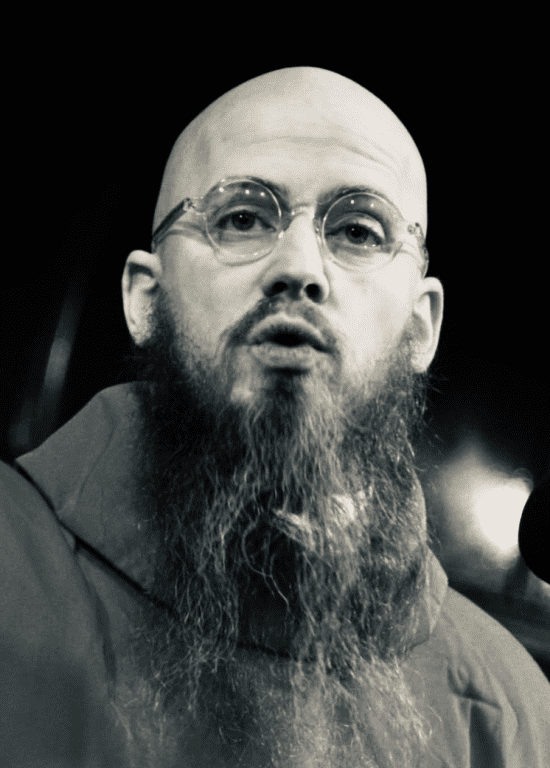
About The Rev. Dr. Jeff Hood
The Rev. Dr. Jeff Hood is a Catholic priest (Old Catholic), theologian, and nationally recognized activist based in North Little Rock, Arkansas. A spiritual advisor to death row inmates across the country, Dr. Hood has accompanied more people to their executions than any other advisor in the U.S., including the first-ever nitrogen hypoxia execution in 2024. His work sits at the intersection of justice, radical compassion, and public theology. Dr. Hood holds advanced degrees from Auburn, Emory, Southern Baptist Theological Seminary, University of Alabama, Creighton, and Brite Divinity School, among others. He also earned a PhD in metaphysical theology and founded The New Theology School, where he serves as Dean and Professor of Prophetic Theology. Author of over 100 books—including the award-winning The Courage to Be Queer—Dr. Hood’s writings and activism have been featured in The New York Times, Rolling Stone, NPR, CNN, and more. A frequent collaborator with men on death row, he sees theology as a shared, liberative act. Dr. Hood has served on the leadership teams of organizations like the Texas Coalition to Abolish the Death Penalty and the Fellowship of Reconciliation. His activism has earned multiple awards, including recognition from PFLAG and the Next Generation Action Network. On July 7, 2016, Dr. Hood led the Dallas protest against police brutality that ended in tragedy. His actions that night saved lives, and his story is now archived in the Dallas Public Library. A father of five, husband to Emily, and friend to the incarcerated, Dr. Hood rejects institutionalism in favor of a theology rooted in people, presence, and prophetic witness. You can read more about the author here.
Previous Post
August 15, 2026
When Jesus Sinned : Lessons From a So-Called Dog
Next Post

August 29, 2026 Rehumanizing Christa Pike: On the Consequences of Evil
Recent Comments
"'God’s Sheep on the Sidewalk' is immensely thought-provoking and conscience-stirring. Thanks. "The people out there ..."
God’s Sheep: The Ones Who Sleep ..."
"Greetings, Jeff, and bless you for your relentlessly regular fierce posts and your profound commitments ..."
Between: On the Person and Character ..."
"God as the Between, thoughts:As a child we were taught, in the blue or green ..."
Between: On the Person and Character ..."
"Sometimes we make it harder than it is. Not saying things don't bring us to ..."
Get Behind Me, Satan: A Death ..."
Browse Our Archives
Select a Category Danny & Jeff fresh writings latest poetics north texas fellowship of reconciliation Sermon theology from death row Thoughts Uncategorized
Select a Month October 2026 September 2026 August 2026 July 2026 June 2026 May 2026 April 2026 March 2026 February 2026 January 2026 December 2025 November 2025 October 2025 September 2025 August 2025 June 2025 May 2025 April 2025 March 2025 January 2025 December 2024 November 2024 October 2024 August 2024 July 2024 June 2024 May 2024 April 2024 March 2024 February 2024 January 2024 December 2023 November 2023 October 2023 September 2023 July 2023 May 2023 April 2023 March 2023 February 2023 January 2023 December 2022 November 2022 October 2022 September 2022 August 2022 July 2022 June 2022 May 2022 April 2022 March 2022 February 2022 January 2022 December 2021 November 2021 October 2021 September 2021 July 2021 June 2021 May 2021 April 2021 March 2021 February 2021 January 2021 December 2020 November 2020 October 2020 September 2020 August 2020 July 2020 June 2020 May 2020 April 2020 March 2020 February 2020 January 2020 December 2019 November 2019 October 2019 September 2019 August 2019 July 2019 May 2019 March 2019 February 2019 January 2019 December 2018 November 2018 October 2018 September 2018 August 2018 July 2018 June 2018 May 2018 April 2018 March 2018 February 2018 January 2018 December 2017 November 2017 October 2017 September 2017 August 2017 July 2017 June 2017 May 2017 April 2017 March 2017 February 2017 January 2017 December 2016 October 2016 September 2016 August 2016 July 2016 June 2016 May 2016 April 2016 March 2016 February 2016 January 2016 December 2015 November 2015 October 2015 September 2015 August 2015 July 2015 June 2015 May 2015 April 2015 March 2015 February 2015 January 2015 December 2014 November 2014 October 2014 September 2014 August 2014 July 2014 June 2014 May 2014 April 2014 March 2014 February 2014 January 2014 December 2013 November 2013 October 2013 September 2013 August 2013 July 2013 June 2013 May 2013 April 2013 March 2013
Follow Us!
TAKE THE
Religious Wisdom Quiz
What does Proverbs instruct to trust in with all your heart?
Select your answer to see how you score.
Rulers Money The Lord Yourself
Related posts from Jeff Hood

GOD Will Wipe Away the Tears from Every...

Why Can't Anyone Say Evil? On the Execution...

God's Sheep: The Ones Who Sleep Outside the...

Keeping the Word : Living the Word :...
TRENDING AT PATHEOS Progressive Christian

I was strolling through the top floor of the brand new Parthenon...

What Does Gêvâh Mean For Kimberley Guifoyle &...
This week, a lot of the news is focused on Kimberly Guilfoyle....

INNER CIRCLE: Profound Mystery (Of Christ In All...
Ephesians 5:31-32 “For this reason, a man will leave his father and...

Do Not Rejoice When Your Enemy Falls: The...
Turning an execution into a public spectacle is a disturbing expression of...

'The Chosen' S6 Trailer: The Passion Gets Very...
Not many watching 'The Chosen' worry about spoilers, but just because they...

The purpose-driven labor priest
A labor activist reads Rick Warren and it gets me wondering about...
view all Progressive Christian blogs
What Are Your Thoughts?leave a comment
Ad-Free & Subscriber Log-In Subscription Support
- About Us
- 2026 Calendar
- Videos
- Podcasts
- Library of World Religions
- Faith In Media Tracker
- Advertise With Us
- Write for Us
- Privacy Policy
- Terms of Service
- Do Not Sell My Data
- Contact Us
- Radiant Digital
- Manage Newsletter Subscriptions
- Unsubscribe From Notifications
- Sitemap
Copyright 2008-2026, Patheos. All rights reserved.
Subscription Support Ad-Free & Subscriber Log-In
Follow Patheos