
BuddhistCatholicContemplativeEvangelicalGeneral ChristianHinduJewishLatter-day SaintMuslimNew VisionsProgressive Christian
Beliefs
- Buddhist
- Catholic
- Contemplative
- Evangelical
- General Christian
- Hindu
- Jewish
- Latter-day Saint
- More Voices
- Muslim
- New Visions
- Pagan
- Progressive Christian
Topics
- Religion News
- Food and Religion
- Sports and Religion
- Religious Art
- Religious Music and Entertainment
- Religious Events
- History and Religion
- Style and Religion
- Politics and Religion
- Women in Religion
- Recreation Outdoors and Religion
- Business Finance and Religion
- Careers Workplace and Religion
- Education and Religion
- Family Parenting and Religion
- Health Fitness and Religion
- Home and Religion
- Relationships and Religion
- Technology and Religion
- Travel and Religion
Columnists
- Buddhist Columnists
- Business Finance and Religion Columnists
- Careers Workplace and Religion Columnists
- Catholic Columnists
- Contemplative Columnists
- Education and Religion Columnists
- Evangelists Columnists
- Family Parenting and Religion Columnists
- General Christian Columnists
- Health Fitness and Religion Columnists
- Hindu Columnists
- History and Religion Columnists
- Home and Religion Columnists
- Jewish Columnists
- More Voices Columnists
- Latter Day Columnists
- Muslim Columnists
- New Visions Columnists
- Nonreligious Columnists
- Pagan Columnists
- Politics and Religion Columnists
- Progressive Columnists
- Recreation Outdoors and Religion Columnists
- Relationships and Religion Columnists
- Religion News Columnists
- Religious Art Columnists
- Religious Events Columnists
- Religious Music and Entertainment Columnists
- Sports and Religion Columnists
- Style and Religion Columnists
- Technology and Religion Columnists
- Travel and Religion Columnists
- Women in Religion Columnists
Resource Library
- 2026 Calendar
- Library of World Religions
- The 100 Most Holy Places on Earth
- Patheos Answers
- Podcasts
- Videos
- Faith Leaders Database
- Anglican Episcopalian
- Bahai
- Baptist
- Buddhism
- Christianity
- Confucianism
- Eastern Orthodoxy
- Hinduism
- Holiness and Pentecostal
- ISKCON
- Islam
- Judaism
- Lutheran
- Methodist
- The Church of Jesus Christ of Latter-day Saints
- New Age
- Paganism
- Presbytarian and Reformed
- Protestantism
- Religion Behind the Scenes
- Roman Catholic
- Scientology
- Shia Islam
- Sikhism
- Sufism
- Sunni Islam
- Taoism
- Zen
- See all religions
Research Tools
 Ad-Free & Subscriber Log-In Subscription Support
Ad-Free & Subscriber Log-In Subscription Support
Follow Patheos 

- Trending:
- Forgiveness
- |
- Marriage
- |
- Consciousness
- |
- Death Penalty
- |
- Election
- |
- Halloween

- Home
- Progressive Christian
- Religion News
- The Burning Heart: The Crusher of Injustice
The Burning Heart: The Crusher of Injustice
Last updated on: April 18, 2026 at 9:14 pm by Jeff Hood
The Burning Heart: The Crusher of Injustice 2026-04-18T21:14:18-06:00 Jeff Hood
Patheos Explore the world's faith through different perspectives on religion and spirituality! Patheos has the views of the prevalent religions and spiritualities of the world.
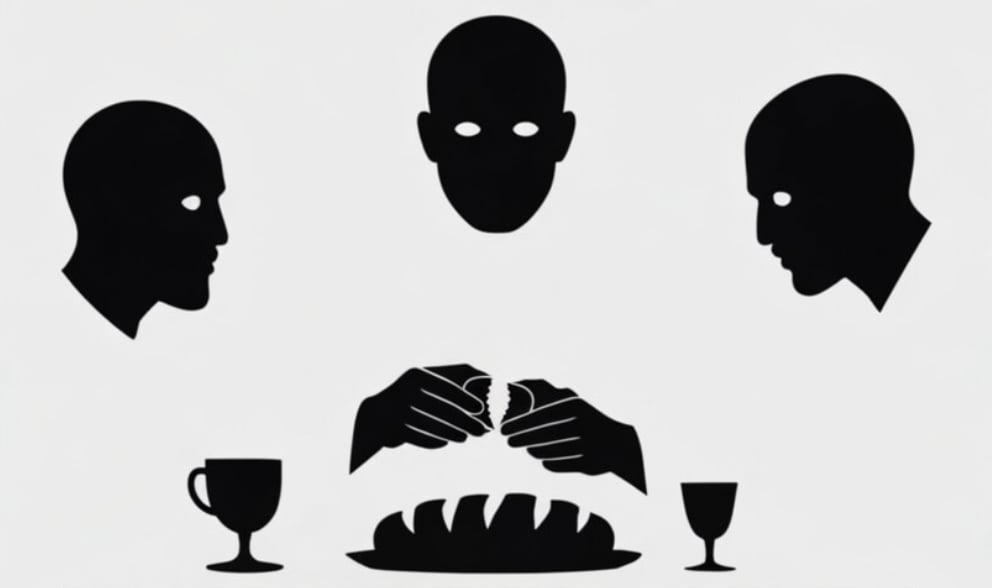
Emmaus
Luke 24:13-35. On The Road to Emmaus.
The Burning Heart: The Language of the Crushed
They were walking away. Not in cowardice but in the particular exhaustion of people who have watched the machine win again. Two disciples on a road, putting miles between themselves and Jerusalem, which is to say between themselves and the site of yet another public execution carried out by an occupying power to remind the occupied what order looks like and who maintains it. They had hoped this one would be different. He wasn’t. The empire had spoken. The cross was Rome’s punctuation mark at the end of every sentence that began with the word liberation.
This is what political domination requires beyond the violence itself. The violence is the message, but the true goal is the internalization of the message…the moment the defeated begin to agree with their defeat, to narrate it back to themselves as inevitability, to stop imagining that the world could be arranged differently. We were hoping, they say. Past tense. The most politically significant verb tense in the language of the crushed. We were hoping he would be the one to redeem Israel. Redeem is not a soft word. It is the language of release from captivity, of debt cancellation, of the Year of Jubilee when land stolen through generations of exploitation was returned to those from whom it was taken. They were hoping for structural change. For the reversal of an arrangement that had been grinding ordinary people since before any of them were born. And the empire had answered that hope the way empires always answer it: with a cross on a hill outside the city, visible to everyone, legible to everyone, meaning the same thing it always meant. This is what we do to people like him. This is what we do to hope like yours.
The road to Emmaus is not a spiritual retreat. It is a political defeat wearing the face of a walk.
The Burning Heart and the Counter History
What meets them on that road is not what power would expect or invent. Power, when it tells stories about itself, imagines its opponents defeated and silent or defeated and converted. What actually happens is stranger and more dangerous. A figure falls into step beside them and begins to ask questions. Not to lecture. Not to correct. To ask. What are you discussing? What has happened? Tell me. And they do. They recite the whole of it…the arrest, the kangaroo court, the execution, the hopes that did not survive it. They are talking to what they believe is a stranger and they are telling him exactly how thoroughly Rome has won.
And he does not agree. He does not validate the empire’s verdict. He opens the scriptures and begins to trace a different account of history…one in which the prophets have been reading the grain of the universe correctly all along, in which the movement toward liberation has never been stopped by the violence done to it, only driven underground, only forced to find new forms, only apparently defeated before it surfaces again elsewhere. He is not offering consolation. He is offering a counter history. He is saying: you have been reading events through the empire’s framework. Read them again.
The powerful have always understood that controlling the narrative of what is possible is more important than controlling territory. If you can convince the occupied that their occupation is natural, the normal condition of things, the inevitable result of their own deficiencies, then you do not need to station soldiers on every corner. The people will police themselves. This is why every liberation movement has begun not with a weapon but with a story…a counter story, a different account of reality, a refusal to accept the powerful’s description of the world as the accurate one. What the stranger does on the road is tell a counter story. He walks them backward through the prophets and forward through history and asks them to see that the cross is not the end of the sentence. It is not even punctuation. It is the empire revealing, in its desperation, what it is most afraid of.
The Limit of the Story
But the counter story is not enough. This is the confession the text makes that we are slow to hear. He has walked with them for hours. He has opened the whole of scripture to them. Their hearts are burning. And still they do not recognize him. The burning is real but recognition has not yet come, because you cannot see the new world from inside the old world’s categories, no matter how clearly someone describes it to you. The mind can be convinced and the heart can be stirred and the eyes still remain closed. Something else is required.
The Burning Heart and The Table of the New World
They reach the village and he moves to continue on. They urge him to stay. It is evening. Come in. And what happens at that table is not a sacrament in the thin, religious sense of the word. It is the eruption of an entirely different world order into the middle of the existing one. He takes bread. He blesses it. He breaks it. He gives it to them.
Four verbs. An entire political economy overturned in a gesture.
Empire organizes the world around taking and keeping. Resources flow upward. The few accumulate what the many produce. Bread is a commodity before it is a food…subject to the same arrangements of power that govern everything else, who grows it, who owns the land it grows on, who sets the price, who goes without. Hunger is not a failure of the system. It is how the system works. It is the mechanism by which the many are kept dependent, compliant, afraid. Empire does not merely crucify bodies. It organizes bread.
At the table in Emmaus every one of those verbs runs the other direction. He takes…and immediately gives away what he has taken. He blesses…declaring this grain, this ordinary stuff of survival, to belong to a different economy than the one outside the door. He breaks…the gesture that makes sharing possible, that refuses the fantasy of the intact loaf hoarded by the one who owns it. And the bread moves outward. Outward and into hands that are hungry. Not upward. Not inward. Out. The kingdom of God is not coming to set this right. It is here, enacting it, in the only way a new world has ever arrived: by being practiced before it is believed.
Their eyes are opened. Of course their eyes are opened. You cannot see the new world from inside the old world’s arrangements. But the moment you enact the new world’s logic…the moment you sit at a table where the bread is broken and everyone eats, where no one goes without so that another can have more, where the food moves by gift rather than by transaction…in that moment you are no longer inside the old world. You are inside the new one. And from inside it, everything looks different. The defeat on the hill outside the city looks different. The empty tomb looks different. History itself looks different. The new world is not a vision. It is a practice. And the practice is what opens the eyes.
The Burning Heart is Actually Present
The church has argued for centuries about what it means to say that Christ is present in the bread and the wine. The argument is real and the stakes are real, but something tends to get lost in it: the most radical word in the sentence is not “Christ” or “bread” or “wine” but “present.” Present. Not represented. Not commemorated. Not symbolized. Present…the way a person is present when they are in the room with you, the way a fact is present when it is actually true, the way a world is present when you are living inside it rather than dreaming about it from outside. When the bread is broken and the cup is poured at that table in Emmaus, the new world does not become a sign pointing toward itself. It arrives. It is here. The bread and the wine are not windows looking out at the kingdom of God. They are the kingdom of God, momentarily but really inhabiting the available material…the grain, the vine, the hands, the hunger, the table…the way the risen Christ inhabits them: fully, actually, without remainder. The body given. The blood poured out. Both of them present, both of them political, both of them the new world made edible and drinkable and real.
This is the claim that makes every empire nervous. Empires can manage symbols. They can co opt ceremonies, empty out rituals, let the population keep its rites as long as the rites remain decorative…as long as what happens at the altar stays at the altar and does not suggest anything about what should happen to the economy, the land, the distribution of bread outside the door. What empires cannot manage is actual presence. A community that genuinely believes the new world is really present in the shared meal is a community that has seen the new world with their own eyes, touched it with their own hands, eaten it with their own mouths. You cannot convince people to stop believing in what they have already tasted. You cannot tell people that a different world is impossible when they have just been inside one.
Then he vanishes. And this too is not absence. It is transformation. He has become what happens when the bread is broken in that spirit. He is not gone from the table…he is the table, the breaking, the giving, the logic of communion made material. He lives now wherever the new world’s economy is practiced against the grain of the old world’s arrangements. Wherever someone refuses to hoard what others need. Wherever the meal is organized around the question of who is hungry rather than who can pay. Wherever the logic of gift displaces the logic of extraction. That is where the risen Christ is. Not in the sky. At the table. In the breaking.
The Burning Heart
They set out immediately and returned to Jerusalem. But before they do, before the miles and the urgency and the report to the eleven, they say something to each other in that room where the bread was broken and the presence vanished. They say: were not our hearts burning within us while he spoke to us on the way? The burning heart. Not a feeling. The experience of the new world pressing itself against the boundaries of what you had accepted as permanent…something alive and loose in history that was already burning before the empire built its first cross and will be burning long after the last one falls. The burning begins on the road with the counter story. It becomes a fire at the table when the counter story becomes a counter practice. And fire does not exist for itself. Fire is for the burning of things that must be burned…the arrangements, the narratives, the systems that organize the world around the hoarding of bread and the crucifixion of those who insist on sharing it.
The eucharist is not a ritual performed inside the church to help believers feel close to God. It is the regular, repeated, embodied practice of the new world inside the shell of the old one. It is the community saying, with their bodies and their bread, that the empire’s economy is not the final economy. That another arrangement is not only possible but already real, already practiced, already breaking through. Every time the bread is broken and everyone eats, the new world announces itself. Every time the table is set with the logic of enough for everyone, the resurrection happens again. Not as metaphor. As fact.
The Burning Heart: Set Out at Once
And then there is only one thing left. They set out at once. At night. Back uphill to Jerusalem. Seven miles. Because the burning heart is a political energy, not a private one and the new world practiced at the table is not for the people at the table alone. They go back to the city where the execution happened. Back to the gathered community. Back to the work. Because the table is not the destination. It is the fuel. You come to it defeated and you leave it on fire, carrying in your body the memory of a meal organized by different logic, the knowledge in your hands of what it feels like to break bread and give it away, the unextinguishable conviction that the world the empire insists is permanent is not permanent at all, that another world has already begun, is already here, is already breaking through in every shared meal and every refused crucifixion and every stubborn return to the city where the powers thought they had won.
The restoration of all things does not begin in the halls of power. It begins at a table in a village at the end of a road walked by the defeated. It begins with bread taken and blessed and broken and given, with wine poured out and passed around, with eyes opened to what has always been true and is now, finally, visible. It continues in every community that refuses the empire’s economy and practices the table’s instead…that organizes itself around who is hungry rather than who can pay, that breaks what it has rather than hoarding what it keeps.
Indeed, the burning heart makes all things new.
Catholic
Politics and Religion
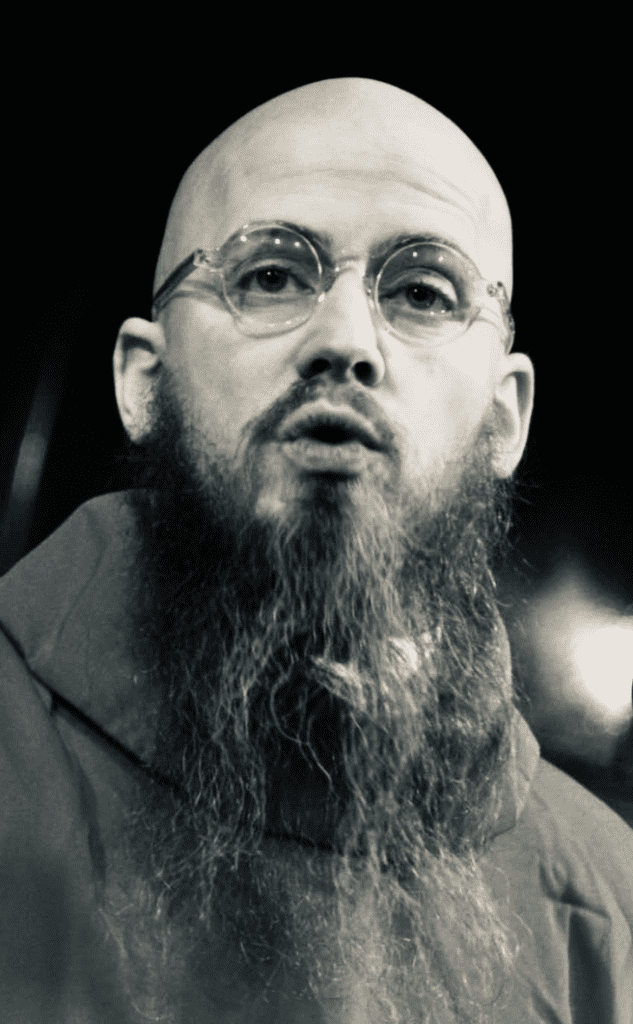
About The Rev. Dr. Jeff Hood
The Rev. Dr. Jeff Hood is a Catholic Priest (Old Catholic) and nationally recognized theologian and spiritual advisor to death row inmates nationwide. He has accompanied eleven men to their executions, including the first and eighth nitrogen hypoxia executions. Widely regarded as the leading spiritual voice on the death penalty, his work has been profiled in outlets ranging from the New York Times to a Rolling Stone documentary, The Spiritual Advisor. For his service and scholarship, he was nominated for the 2025 Nobel Peace Prize. You can read more about the author here.
Previous Post

April 17, 2026
The Monster: The Archetype of Evil and The Death Penalty
Next Post

April 24, 2026 Known Before You Were Formed: The Gospel Case for Trans Kids
Recent Comments
"'God’s Sheep on the Sidewalk' is immensely thought-provoking and conscience-stirring. Thanks. "The people out there ..."
God’s Sheep: The Ones Who Sleep ..."
"Greetings, Jeff, and bless you for your relentlessly regular fierce posts and your profound commitments ..."
Between: On the Person and Character ..."
"God as the Between, thoughts:As a child we were taught, in the blue or green ..."
Between: On the Person and Character ..."
"Sometimes we make it harder than it is. Not saying things don't bring us to ..."
Get Behind Me, Satan: A Death ..."
Browse Our Archives
Select a Category Danny & Jeff fresh writings latest poetics north texas fellowship of reconciliation Sermon theology from death row Thoughts Uncategorized
Select a Month October 2026 September 2026 August 2026 July 2026 June 2026 May 2026 April 2026 March 2026 February 2026 January 2026 December 2025 November 2025 October 2025 September 2025 August 2025 June 2025 May 2025 April 2025 March 2025 January 2025 December 2024 November 2024 October 2024 August 2024 July 2024 June 2024 May 2024 April 2024 March 2024 February 2024 January 2024 December 2023 November 2023 October 2023 September 2023 July 2023 May 2023 April 2023 March 2023 February 2023 January 2023 December 2022 November 2022 October 2022 September 2022 August 2022 July 2022 June 2022 May 2022 April 2022 March 2022 February 2022 January 2022 December 2021 November 2021 October 2021 September 2021 July 2021 June 2021 May 2021 April 2021 March 2021 February 2021 January 2021 December 2020 November 2020 October 2020 September 2020 August 2020 July 2020 June 2020 May 2020 April 2020 March 2020 February 2020 January 2020 December 2019 November 2019 October 2019 September 2019 August 2019 July 2019 May 2019 March 2019 February 2019 January 2019 December 2018 November 2018 October 2018 September 2018 August 2018 July 2018 June 2018 May 2018 April 2018 March 2018 February 2018 January 2018 December 2017 November 2017 October 2017 September 2017 August 2017 July 2017 June 2017 May 2017 April 2017 March 2017 February 2017 January 2017 December 2016 October 2016 September 2016 August 2016 July 2016 June 2016 May 2016 April 2016 March 2016 February 2016 January 2016 December 2015 November 2015 October 2015 September 2015 August 2015 July 2015 June 2015 May 2015 April 2015 March 2015 February 2015 January 2015 December 2014 November 2014 October 2014 September 2014 August 2014 July 2014 June 2014 May 2014 April 2014 March 2014 February 2014 January 2014 December 2013 November 2013 October 2013 September 2013 August 2013 July 2013 June 2013 May 2013 April 2013 March 2013
Follow Us!
TAKE THE
Religious Wisdom Quiz
True or False: Ecclesiastes teaches that there is a time for everything under heaven.
Select your answer to see how you score.
TRUE FALSE
Related posts from Jeff Hood

GOD Will Wipe Away the Tears from Every...

Why Can't Anyone Say Evil? On the Execution...

God's Sheep: The Ones Who Sleep Outside the...

Keeping the Word : Living the Word :...
TRENDING AT PATHEOS Progressive Christian

Janie Learns the Way of the Cross: A...
Teaching children about Jesus' Passion can be challenging. Many parents and educators...

Looking For Good Catholic Writing - October 2026
He alone extends the heavens, and he walks upon the waves of...

In "Irreplaceable," our book on vocation and technology, Trevor Sutton and I...

I was strolling through the top floor of the brand new Parthenon...

What Does Gêvâh Mean For Kimberley Guifoyle &...
This week, a lot of the news is focused on Kimberly Guilfoyle....

INNER CIRCLE: Profound Mystery (Of Christ In All...
Ephesians 5:31-32 “For this reason, a man will leave his father and...
view all Progressive Christian blogs
What Are Your Thoughts?leave a comment
Ad-Free & Subscriber Log-In Subscription Support
- About Us
- 2026 Calendar
- Videos
- Podcasts
- Library of World Religions
- Faith In Media Tracker
- Advertise With Us
- Write for Us
- Privacy Policy
- Terms of Service
- Do Not Sell My Data
- Contact Us
- Radiant Digital
- Manage Newsletter Subscriptions
- Unsubscribe From Notifications
- Sitemap
Copyright 2008-2026, Patheos. All rights reserved.
Subscription Support Ad-Free & Subscriber Log-In
Follow Patheos