
BuddhistCatholicContemplativeEvangelicalGeneral ChristianHinduJewishLatter-day SaintMuslimNew VisionsProgressive Christian
Beliefs
- Buddhist
- Catholic
- Contemplative
- Evangelical
- General Christian
- Hindu
- Jewish
- Latter-day Saint
- More Voices
- Muslim
- New Visions
- Pagan
- Progressive Christian
Topics
- Religion News
- Food and Religion
- Sports and Religion
- Religious Art
- Religious Music and Entertainment
- Religious Events
- History and Religion
- Style and Religion
- Politics and Religion
- Women in Religion
- Recreation Outdoors and Religion
- Business Finance and Religion
- Careers Workplace and Religion
- Education and Religion
- Family Parenting and Religion
- Health Fitness and Religion
- Home and Religion
- Relationships and Religion
- Technology and Religion
- Travel and Religion
Columnists
- Buddhist Columnists
- Business Finance and Religion Columnists
- Careers Workplace and Religion Columnists
- Catholic Columnists
- Contemplative Columnists
- Education and Religion Columnists
- Evangelists Columnists
- Family Parenting and Religion Columnists
- General Christian Columnists
- Health Fitness and Religion Columnists
- Hindu Columnists
- History and Religion Columnists
- Home and Religion Columnists
- Jewish Columnists
- More Voices Columnists
- Latter Day Columnists
- Muslim Columnists
- New Visions Columnists
- Nonreligious Columnists
- Pagan Columnists
- Politics and Religion Columnists
- Progressive Columnists
- Recreation Outdoors and Religion Columnists
- Relationships and Religion Columnists
- Religion News Columnists
- Religious Art Columnists
- Religious Events Columnists
- Religious Music and Entertainment Columnists
- Sports and Religion Columnists
- Style and Religion Columnists
- Technology and Religion Columnists
- Travel and Religion Columnists
- Women in Religion Columnists
Resource Library
- 2026 Calendar
- Library of World Religions
- The 100 Most Holy Places on Earth
- Patheos Answers
- Podcasts
- Videos
- Faith Leaders Database
- Anglican Episcopalian
- Bahai
- Baptist
- Buddhism
- Christianity
- Confucianism
- Eastern Orthodoxy
- Hinduism
- Holiness and Pentecostal
- ISKCON
- Islam
- Judaism
- Lutheran
- Methodist
- The Church of Jesus Christ of Latter-day Saints
- New Age
- Paganism
- Presbytarian and Reformed
- Protestantism
- Religion Behind the Scenes
- Roman Catholic
- Scientology
- Shia Islam
- Sikhism
- Sufism
- Sunni Islam
- Taoism
- Zen
- See all religions
Research Tools
 Ad-Free & Subscriber Log-In Subscription Support
Follow Patheos 

- Trending:
- Advent
- |
- Forgiveness
- |
- Thanksgiving
- |
- Election
- |
- Seasonal Holidays
- |
- Marriage

- Home
- Progressive Christian
- Religion News
- Nitrogen, Steve Marshall’s Defeat & the Soul of the South
Nitrogen, Steve Marshall’s Defeat & the Soul of the South
Last updated on: May 20, 2026 at 10:40 pm by Jeff Hood
Nitrogen, Steve Marshall’s Defeat & the Soul of the South 2026-05-20T22:40:05-06:00 Jeff Hood
Patheos Explore the world's faith through different perspectives on religion and spirituality! Patheos has the views of the prevalent religions and spiritualities of the world.

Steve Marshall
The Theology of Nitrogen: What Steve Marshall ’s Defeat Says About Death, Power & the Soul of the South
Steve Marshall : A Political Collapse Few Expected
There are moments in politics when an election result says more than the candidates themselves ever intended. Alabama Attorney General Steve Marshall’s Senate loss feels like one of those moments. On paper, Marshall should have been one of the strongest candidates in the race. He had statewide name recognition, donor infrastructure, institutional backing and years of credibility with conservative voters. He had built a reputation as one of the most aggressive Republican attorneys general in the country. Yet despite every structural advantage, Marshall finished third in Alabama’s Republican Senate primary behind Trump-endorsed Congressman Barry Moore and former Navy SEAL Jared Hudson, a political newcomer who had never held elected office.
Most political analysis will focus on the obvious explanations. Donald Trump’s endorsement mattered enormously in Alabama Republican politics. Marshall also carried the burden that comes with being a long-time officeholder during an anti-establishment era. Those realities are true. But they are incomplete. There was another force hanging over Marshall’s campaign, something deeper than polling strategy or messaging discipline. Over the last two years Marshall made nitrogen hypoxia executions not merely part of his record but part of his political identity. He became nationally known as the man who transformed Alabama into the testing ground for a new method of killing human beings.
And there is something spiritually corrosive about building public identity around the machinery of death.
The Night Kenneth Smith Died
In January 2024, Alabama executed Kenneth Smith using nitrogen gas, the first known execution of its kind in the United States. Afterward, Marshall stood before cameras and described the execution as “textbook.” He insisted nitrogen hypoxia was “no longer an untested method” but “a proven one.” Then he looked outward toward the rest of the country and invited other states to follow Alabama’s lead. “Alabama has done it, and now so can you, and we stand ready to assist you.”
The statement landed with a kind of eerie triumphalism. It sounded less like the sober language of law enforcement and more like the unveiling of a technological achievement. There was an unmistakable sense of pride in being first. Marshall did not speak like someone reluctantly carrying out a legal duty. He spoke like someone unveiling a political legacy.
But I was there that night.
I entered the execution chamber as Kenneth Smith’s spiritual advisor. I prayed with him moments before the mask was tightened onto his face. Whatever abstractions people use when discussing capital punishment vanish quickly inside that room. The chamber strips away slogans. It strips away rhetoric. It strips away distance. There is only a human body, a human soul and the terrible machinery the state has constructed to extinguish both.
What I witnessed over the next twenty-two minutes is something I will carry for the rest of my life.
Smith remained conscious for several minutes after the nitrogen began flowing. He writhed against the restraints while journalists watched through the observation window. One veteran reporter later called it the most violent execution he had ever seen in Alabama. Other witnesses described the same prolonged struggle. The language that followed from the state insisted the execution had proceeded according to protocol. But protocol is often just another word we use when institutions need to normalize suffering.
The state wanted the public to see control. What many of us witnessed instead was anguish.
Steve Marshall and the False Promise of a “Humane” Execution
There is a temptation among modern governments to treat execution methods as public relations problems rather than moral problems. The language changes every generation but the instinct remains the same. One era reaches for the gallows. Another embraces electrocution. Then lethal injection arrives wrapped in the sterile language of medicine. Now nitrogen hypoxia enters carrying the rhetoric of scientific precision and technological efficiency. Every generation tells itself the same lie: perhaps we have finally discovered a clean way to kill.
But there is no clean way to turn a human being into an object of state disposal.
The deeper spiritual danger is not simply that executions happen. It is that societies slowly train themselves to stop seeing the condemned as human at all. Bureaucracy creates emotional distance. Legal language anesthetizes conscience. Politicians begin discussing death the way executives discuss infrastructure projects. Eventually, entire careers are built around appearing emotionally untouched by the act of killing.
That is where Steve Marshall crossed into dangerous territory.
There is a difference between defending a legal system and spiritually identifying yourself with the mechanics of death itself. Marshall increasingly presented nitrogen hypoxia not as a grim responsibility but as a political accomplishment. Alabama was not merely carrying out executions. Under Marshall’s framing, Alabama was pioneering something. Innovating something. Leading something.
Christianity and the Language of Mercy
Yet scripture consistently warns about what happens to societies that begin glorifying power over mercy.
The Hebrew prophets repeatedly condemned nations that became intoxicated with domination. The Book of Isaiah warns against those who “call evil good and good evil.” The Book of Ezekiel describes leaders whose hearts become hardened through violence. Even in Romans 13, where state authority is acknowledged, the sword is treated as tragic necessity rather than moral spectacle. The New Testament moves still further toward mercy. Christ interrupts executions. Christ stands beside the condemned. Christ Himself is executed by the state while political and religious authorities insist the procedure is justified, orderly and necessary for public stability.
Christianity was born beneath the shadow of state execution.
That should make Christians extraordinarily cautious whenever political leaders begin celebrating new methods of killing.
None of this means Alabama Republicans suddenly became abolitionists. They did not. Support for capital punishment remains strong across much of the South. But politics is not only about policy agreement. Politics also carries emotional and spiritual symbolism. Most Republican voters were not looking for a candidate whose identity revolved around execution technology. They cared about inflation, immigration, border security and national political power. Marshall increasingly became known nationally as “the nitrogen guy,” a label that may have generated cable news attention but created spiritual unease even among people who still supported the death penalty itself.
Because there is something unsettling about watching a politician appear too comfortable around death.
Especially in the South, where Christianity still shapes moral imagination even among many who rarely attend church, voters instinctively recognize the difference between strength and hardness. Southern political culture still carries traces of biblical language whether people consciously realize it or not. Voters may support punishment while recoiling from the appearance of enthusiasm. They may support law and order while becoming uncomfortable when leaders seem eager to transform execution into personal branding.
Steve Marshall : What Alabama’s Voters Rejected
That distinction matters.
Marshall’s deeper political mistake was misunderstanding the spiritual psychology of his own electorate. Alabama conservatives may support capital punishment but many still expect public leaders to approach death with gravity rather than theatrical confidence. They expect sobriety rather than celebration. Even those who believe executions are justified often retain an instinctive discomfort with politicians who appear emotionally invested in the process itself.
Nitrogen hypoxia magnified that discomfort because the method itself already carried disturbing imagery. Lawsuits described it as a human experiment. International human rights officials condemned it publicly. Witness accounts undermined the state’s assurances about peacefulness and efficiency. Every new headline forced voters to revisit images many would rather not dwell upon at all.
And spiritually speaking, that matters because repeated exposure to violence changes both individuals and societies.
Theologians have long understood that what we ritualize eventually shapes us. Nations develop liturgies just as churches do. Some liturgies teach compassion. Others teach domination. Public executions have always functioned as civic rituals designed to communicate state power. Even when hidden behind prison walls, they still shape the moral imagination of the culture surrounding them. The question is never only what executions do to the condemned. The question is what they do to the souls of those carrying them out, defending them and politically profiting from them.
At some point, Steve Marshall stopped sounding like a public official carrying out a legal obligation and started sounding like a man evangelizing a technology of death.
That is a spiritually dangerous place for any society to go.
The irony is that Marshall’s political collapse may reveal something unexpectedly hopeful about the moral instincts still alive inside the South. Alabama Republicans did not reject conservatism. They did not reject toughness. They did not reject the death penalty itself. But they may have rejected something narrower and more unsettling: the transformation of execution into political identity.
Because somewhere deep beneath all the polling data and campaign strategy is a truth older than partisan politics. Human beings know instinctively that death is sacred territory. Even when societies justify killing, they still expect leaders to approach it with trembling hands.
A politician who appears too eager around death eventually alarms people in ways polling cannot fully measure.
Marshall spent years building nitrogen hypoxia into a national political symbol. He believed it projected strength. Perhaps many voters instead saw something colder. Something spiritually hollow. Something that felt less like justice and more like fascination with the machinery itself.
And perhaps that is why his defeat matters beyond Alabama.
Other Republican attorneys general, including Tim Griffin in Arkansas, Liz Murrill in Louisiana and Lynn Fitch in Mississippi, should pay close attention to what happened here. The temptation to build national profiles through execution politics remains strong in parts of the South. The media attention is immediate. The symbolism feels powerful. But Marshall’s defeat suggests there may still be moral boundaries voters do not want crossed, even inside deeply conservative states.
Because eventually the soul recognizes when politics stops speaking about justice and starts speaking the language of death too fluently.
Catholic
Politics and Religion
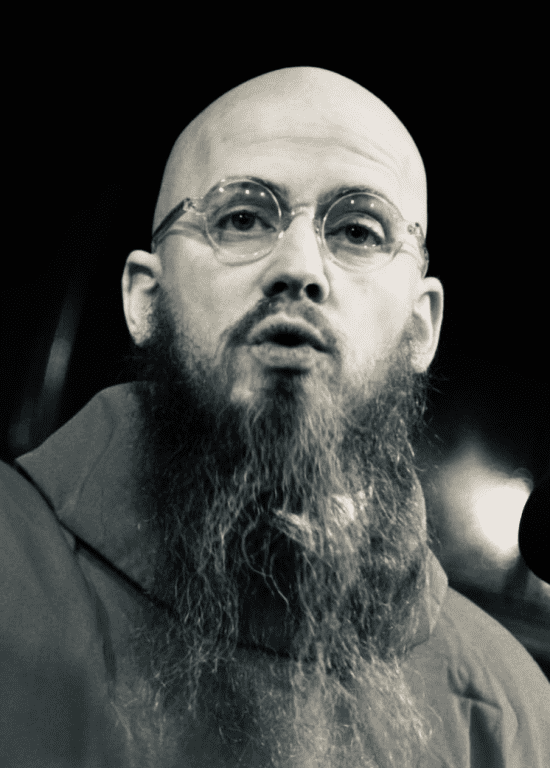
About The Rev. Dr. Jeff Hood
The Rev. Dr. Jeff Hood is a Catholic priest (Old Catholic), theologian, and nationally recognized activist based in North Little Rock, Arkansas. A spiritual advisor to death row inmates across the country, Dr. Hood has accompanied more people to their executions than any other advisor in the U.S., including the first-ever nitrogen hypoxia execution in 2024. His work sits at the intersection of justice, radical compassion, and public theology. Dr. Hood holds advanced degrees from Auburn, Emory, Southern Baptist Theological Seminary, University of Alabama, Creighton, and Brite Divinity School, among others. He also earned a PhD in metaphysical theology and founded The New Theology School, where he serves as Dean and Professor of Prophetic Theology. Author of over 100 books—including the award-winning The Courage to Be Queer—Dr. Hood’s writings and activism have been featured in The New York Times, Rolling Stone, NPR, CNN, and more. A frequent collaborator with men on death row, he sees theology as a shared, liberative act. Dr. Hood has served on the leadership teams of organizations like the Texas Coalition to Abolish the Death Penalty and the Fellowship of Reconciliation. His activism has earned multiple awards, including recognition from PFLAG and the Next Generation Action Network. On July 7, 2016, Dr. Hood led the Dallas protest against police brutality that ended in tragedy. His actions that night saved lives, and his story is now archived in the Dallas Public Library. A father of five, husband to Emily, and friend to the incarcerated, Dr. Hood rejects institutionalism in favor of a theology rooted in people, presence, and prophetic witness. You can read more about the author here.
Previous Post

May 19, 2026
Tony Carruthers : What the State Calls Sane Enough
Next Post

May 23, 2026 Pentecost: The Inbreaking the Empire Didn't Plan For
Recent Comments
"As a white 73-year-old male Texan from multiple generations back (to the original Old 300), ..."
Governor-Elect Gina Hinojosa, Stop Executions in ..."
"All Saints Day is A Happy Feast Day. As per the Beatitudes, "the Kingdom belongs ..."
Liberating All Saints on All Saints ..."
"'God’s Sheep on the Sidewalk' is immensely thought-provoking and conscience-stirring. Thanks. "The people out there ..."
God’s Sheep: The Ones Who Sleep ..."
"Greetings, Jeff, and bless you for your relentlessly regular fierce posts and your profound commitments ..."
Between: On the Person and Character ..."
Browse Our Archives
Select a Category Danny & Jeff fresh writings latest poetics north texas fellowship of reconciliation Sermon theology from death row Thoughts Uncategorized
Select a Month November 2026 October 2026 September 2026 August 2026 July 2026 June 2026 May 2026 April 2026 March 2026 February 2026 January 2026 December 2025 November 2025 October 2025 September 2025 August 2025 June 2025 May 2025 April 2025 March 2025 January 2025 December 2024 November 2024 October 2024 August 2024 July 2024 June 2024 May 2024 April 2024 March 2024 February 2024 January 2024 December 2023 November 2023 October 2023 September 2023 July 2023 May 2023 April 2023 March 2023 February 2023 January 2023 December 2022 November 2022 October 2022 September 2022 August 2022 July 2022 June 2022 May 2022 April 2022 March 2022 February 2022 January 2022 December 2021 November 2021 October 2021 September 2021 July 2021 June 2021 May 2021 April 2021 March 2021 February 2021 January 2021 December 2020 November 2020 October 2020 September 2020 August 2020 July 2020 June 2020 May 2020 April 2020 March 2020 February 2020 January 2020 December 2019 November 2019 October 2019 September 2019 August 2019 July 2019 May 2019 March 2019 February 2019 January 2019 December 2018 November 2018 October 2018 September 2018 August 2018 July 2018 June 2018 May 2018 April 2018 March 2018 February 2018 January 2018 December 2017 November 2017 October 2017 September 2017 August 2017 July 2017 June 2017 May 2017 April 2017 March 2017 February 2017 January 2017 December 2016 October 2016 September 2016 August 2016 July 2016 June 2016 May 2016 April 2016 March 2016 February 2016 January 2016 December 2015 November 2015 October 2015 September 2015 August 2015 July 2015 June 2015 May 2015 April 2015 March 2015 February 2015 January 2015 December 2014 November 2014 October 2014 September 2014 August 2014 July 2014 June 2014 May 2014 April 2014 March 2014 February 2014 January 2014 December 2013 November 2013 October 2013 September 2013 August 2013 July 2013 June 2013 May 2013 April 2013 March 2013
Follow Us!
TAKE THE
Religious Wisdom Quiz
Who is known for teaching that "faith without works is dead"?
Select your answer to see how you score.
Jude Paul James Peter
Related posts from Jeff Hood
Reasons for Restraint: Ricardo Gonzalez, Florida and Dec...

I Was in Prison ... On Matthew 25:35-36
Complete Account of the Botched Execution of Reinaldo...

Grace Remains : On John 15:4a,5b
TRENDING AT PATHEOS Progressive Christian

Reasons for Restraint: Ricardo Gonzalez, Florida and Dec...
The Morning of January 3 I begin with the dead. On the...

I published this column for Thanksgiving 2012 in the Deseret News....

For many years, Catholicism has been caught up in division over the...

'Statements of Faith' never get shorter
Nothing demonstrates a conservative commitment to faith and faithfulness like a "statement...

Michele's Reviews - Future Grace by John Piper
In God's Place, at God's Pace, by Future Grace Impatience is...

Bama Gramma's Blackout Christmas: the Power of Light...
Another Christmas Skit: I have an alter ego: Bama Gramma. She shows...
view all Progressive Christian blogs
What Are Your Thoughts?leave a comment
Ad-Free & Subscriber Log-In Subscription Support
- About Us
- 2026 Calendar
- Videos
- Podcasts
- Library of World Religions
- Faith In Media Tracker
- Advertise With Us
- Write for Us
- Privacy Policy
- Terms of Service
- Do Not Sell My Data
- Contact Us
- Radiant Digital
- Manage Newsletter Subscriptions
- Unsubscribe From Notifications
- Sitemap
Copyright 2008-2026, Patheos, part of the Radiant Digital network of media brands. All rights reserved.
Subscription Support Ad-Free & Subscriber Log-In
Follow Patheos