
BuddhistCatholicContemplativeEvangelicalGeneral ChristianHinduJewishLatter-day SaintMuslimNew VisionsProgressive Christian
Beliefs
- Buddhist
- Catholic
- Contemplative
- Evangelical
- General Christian
- Hindu
- Jewish
- Latter-day Saint
- More Voices
- Muslim
- New Visions
- Pagan
- Progressive Christian
Topics
- Religion News
- Food and Religion
- Sports and Religion
- Religious Art
- Religious Music and Entertainment
- Religious Events
- History and Religion
- Style and Religion
- Politics and Religion
- Women in Religion
- Recreation Outdoors and Religion
- Business Finance and Religion
- Careers Workplace and Religion
- Education and Religion
- Family Parenting and Religion
- Health Fitness and Religion
- Home and Religion
- Relationships and Religion
- Technology and Religion
- Travel and Religion
Columnists
- Buddhist Columnists
- Business Finance and Religion Columnists
- Careers Workplace and Religion Columnists
- Catholic Columnists
- Contemplative Columnists
- Education and Religion Columnists
- Evangelists Columnists
- Family Parenting and Religion Columnists
- General Christian Columnists
- Health Fitness and Religion Columnists
- Hindu Columnists
- History and Religion Columnists
- Home and Religion Columnists
- Jewish Columnists
- More Voices Columnists
- Latter Day Columnists
- Muslim Columnists
- New Visions Columnists
- Nonreligious Columnists
- Pagan Columnists
- Politics and Religion Columnists
- Progressive Columnists
- Recreation Outdoors and Religion Columnists
- Relationships and Religion Columnists
- Religion News Columnists
- Religious Art Columnists
- Religious Events Columnists
- Religious Music and Entertainment Columnists
- Sports and Religion Columnists
- Style and Religion Columnists
- Technology and Religion Columnists
- Travel and Religion Columnists
- Women in Religion Columnists
Resource Library
- 2026 Calendar
- Library of World Religions
- The 100 Most Holy Places on Earth
- Patheos Answers
- Podcasts
- Videos
- Faith Leaders Database
- Anglican Episcopalian
- Bahai
- Baptist
- Buddhism
- Christianity
- Confucianism
- Eastern Orthodoxy
- Hinduism
- Holiness and Pentecostal
- ISKCON
- Islam
- Judaism
- Lutheran
- Methodist
- The Church of Jesus Christ of Latter-day Saints
- New Age
- Paganism
- Presbytarian and Reformed
- Protestantism
- Religion Behind the Scenes
- Roman Catholic
- Scientology
- Shia Islam
- Sikhism
- Sufism
- Sunni Islam
- Taoism
- Zen
- See all religions
Research Tools
 Ad-Free & Subscriber Log-In Subscription Support
Ad-Free & Subscriber Log-In Subscription Support
Follow Patheos 

- Trending:
- Forgiveness
- |
- Marriage
- |
- Consciousness
- |
- Death Penalty
- |
- Election
- |
- Halloween

- Home
- Progressive Christian
- Religion News
- Lactantius Against the Death Penalty: Early Christian Ethics
Lactantius Against the Death Penalty: Early Christian Ethics
Last updated on: September 13, 2025 at 10:38 am by Jeff Hood
Lactantius Against the Death Penalty: Early Christian Ethics 2025-09-13T10:38:08-06:00 Jeff Hood
Patheos Explore the world's faith through different perspectives on religion and spirituality! Patheos has the views of the prevalent religions and spiritualities of the world.

Lactantius / Wikimedia Commons
Lactantius and the Death Penalty: A Radical Moral Witness from the Early Church
It’s hard to even imagine what it must have felt like to stand in that crowd and hear the cheer when the sword dropped. Roman streets hosted spectacles of death…crucifixions, beheadings and other types of public executions staged as both punishment and entertainment. Citizens gathered not only to witness justice…but also to marvel at the power of the state. Life itself was measured by obedience…not by dignity.
Into this world steps the early writings of Lactantius (c. 250–325 AD), a Christian intellectual. He speaks with rare courage. Arguing, “…it is killing itself that is prohibited” (Lactantius, Divine Institutes VI.xx).
It is not enough to ask whether something is legal. Lactantius asks whether it is moral. To obey God when the state demands obedience is no small task. He insists that divine law stands above human convenience, that conscience cannot be muted to accommodate cruelty and that true justice can never be measured by the sword (VI.xx).
Lactantius Amongst Public Executions in Ancient Rome
Picture the Roman forum. Blood dripping from the stones. A crowd cheers. Law is not abstract…it is spectacle. To witness sanctioned death is to risk dulling the soul. Moral desensitization seeps into the citizenry. Life becomes a commodity.
Opposing this was more than a philosophical stance…it was radical courage. To question the state’s right to take life invited suspicion, ostracism and strange speculation. And yet, Lactantius confronts this reality without hesitation. He refuses the comfort of legality. Christians…he insists…cannot participate in or condone the machinery of death (VI.xx).
Philosophical Implications of Roman Law
From a philosophical perspective, the Roman system treats life as instrumental…a means to maintain order rather than an end in itself. You can almost feel the clash here…Rome saw order…Christians saw persons (VI.xx). Thus, the moral challenge is not merely to disobey immoral laws but to resist the societal conditioning that normalizes violence.
Lactantius: Moral Responsibility Beyond Law
Lactantius is uncompromising…
Moral responsibility rises above law. The judge or the accuser or the executioner or the citizen…each is implicated. That’s unsettling, isn’t it? It means none of us can claim innocence just because the law gives us cover. The law may permit…but conscience cannot stand by in the midst of injustice.
Lactantius on The Moral Weight of Witnessing Violence
He goes further…
Even passive witness carries weight. To stand by while another is executed…to watch life extinguished as entertainment…stains the soul. I think about this when I see people glued to a screen…watching violence unfold like it’s just normal. Blood becomes communal corruption.
At the root lies a profound truth…
Legality does not equal morality. Divine law is the standard. Conscience cannot be outsourced to the state.
Philosophical Anticipation of Natural Law
Philosophically, Lactantius anticipates natural law theory…human beings…by virtue of reason and intrinsic dignity…can discern moral truths independent of state decrees. His insistence that even passive complicity carries moral weight challenges legalistic notions of justice and anticipates modern human rights reasoning.
Lactantius Sees Justice as Relational Care
For Lactantius, justice is relational…not retributive.
Justice, he reminds us, is care extended beyond the family or even beyond the self. Vengeance has no place in any of it…
A wise man does not seek revenge…true justice can only be administered by God. (V.xvi)
“Certainly it is justice not to put a man to death, not to take the property of another.” (V.xvi)
To execute a life is to violate these principles. True justice leaves judgment to God…protects the innocent…and refuses to participate in the machinery of vengeance (V.xvi).
Lactantius on The Theological Foundation of Human Dignity
Theologically, human dignity is grounded in the belief that all humans bear the image of God (Imago Dei). Taking a life is not simply a social or political act…it is an affront to the divine imprint in the person and a violation of sacred dignity. Lactantius’ ethical vision is therefore both relational and transcendental…it requires care for others as a reflection of God’s care, and it recognizes that ultimate judgment belongs to God alone.
Lactantius: Morality is Beyond Legality
Lactantius bridges moral philosophy and theology in a profound way. Philosophically, he challenges the assumption that legality justifies action and emphasizes that morality transcends human authority (VI.xx). The act of killing cannot be morally neutral…regardless of social approval or legal sanction.
Divine Justice and Human Fallibility
Theologically, his reasoning is rooted in divine justice and providence. God’s law governs the moral order of the universe and human laws are subordinate. The act of killing violates the sacred moral order and endangers the soul. Witnessing or condoning violence corrupts not only the victim but also the community and the conscience of the observer (VI.20). Moral compromise…even in the name of legality or convenience…undermines human participation in divine justice.
Lactantius also addresses the problem of human fallibility. Humans cannot judge perfectly…our perception of justice is limited. The pursuit of vengeance through execution is therefore not justice…it is human arrogance. True justice is patient, relational and merciful…and leaves ultimate judgment to God alone (V.xvi).
Lactantius Amongst Christian and Secular Thinkers
Among early Christian thinkers, Lactantius is unique. Augustine allowed capital punishment in limited cases. Aquinas recognized the state’s right to execute. Lactantius rejects it outright (VI.20). Nearly two millennia before contemporary abolitionist thought…he anticipated arguments against state-sanctioned death. His clarity and courage make him both prophetic and instructive (V.xvi; VI.xx).
His vision contrasts sharply with prevailing Roman assumptions, which treated violence as civic necessity and spectacle. Where Roman law saw the taking of life as a tool of order, Lactantius saw it as moral failure…a violation of divine law and the sacred dignity of persons. He challenges both ancient and modern readers to reconsider the moral legitimacy of legal violence.
Moral Imperative for Today
The death penalty remains a battleground. Lactantius offers a moral lens that transcends politics…legality is not morality…complicity stains the soul…and true justice is always centered on mercy, care and protection (VI.xx).
He challenges us personally. How often do we turn a blind eye to violence? I do it. We all do. Watching, condoning or remaining silent mirrors the moral corruption he condemned in Rome. Conscience is sacred…and moral responsibility cannot be outsourced to the state (VI.xx).
Lactantius’ critique demands that we examine our laws, our justice systems and our moral engagement. It calls us to resist vengeance, honor life and recognize sacred dignity.
Lactantius and Modern Ethical Thought
Though separated by nearly seventeen centuries, Lactantius’ moral vision resonates deeply with contemporary debates on human rights, criminal justice and capital punishment. Modern philosophers and ethicists grapple with many of the same questions: How can a society justify the deliberate taking of life? What is the moral responsibility of those who witness or participate in state-sanctioned violence? How should divine or natural law inform human law?
Human Rights and Legal Morality
His insistence that legality does not equal morality anticipates modern human rights theory. Thinkers such as John Locke and the framers of international human rights law recognize that human beings possess intrinsic dignity that cannot be overridden by state authority. Lactantius’ reasoning aligns with the principle that life is inviolable…and no legal or political expediency can justify killing (VI.xx).
Theological and Philosophical Resonance
Theologically, his vision anticipates modern Christian ethical teaching…including John Paul II’s consistent condemnation of the death penalty and Pope Francis’ total condemnation of the death penalty (V.xvi; VI.xx). Philosophically, he challenges utilitarian and retributive approaches to justice…emphasizing relational care, mercy and moral responsibility.
Contemporary Lessons from Lactantius
Lactantius challenges society to examine its complicity in normalized violence. Today, executions are often mediated by media, public opinion and political narratives. He reminds us that the moral burden extends to all who condone, witness or remain silent. Justice begins with conscience, not law and morality cannot be outsourced (VI.xx).
Moving Forward with Lactantius
Lactantius’ critique of the death penalty is radical, prophetic and enduring. Condemning a life carries the same weight as ending it. Witnessing state violence stains conscience. Divine law surpasses human law. Justice is care, mercy, protection…not vengeance (VI.xx; V.xvi).
In a world still wrestling with capital punishment, systemic injustice and the fragility of human dignity…his voice demands attention. He is not merely historical. He is contemporary moral guidance. To follow him is to honor life, resist vengeance and leave ultimate judgment to God. Conscience and justice must always reign supreme…not the sword…not revenge. This is the hardest part…trusting God when all of your soul wants vengeance.
Amongst contemporary horrors, Lactantius’ early writings stand as a bridge between early Christian moral thought and contemporary ethics…especially with regard to the death penalty.
*
Note: While Lactantius offers one of the most forceful early Christian condemnations of capital punishment, his later writings show some equivocation. Early in his career, he framed opposition in terms of absolute moral ethics…killing is inherently wrong. Later, he occasionally adopted a situational ethics perspective, suggesting that in rare divinely sanctioned circumstances, violence might be permissible. This distinction highlights the tension between aspiration and situation…the hope for nonviolence and the confusion of the temporal reality.
Catholic
Politics and Religion
ancient Roman Christian opposition to violence
early Christian ethics on capital punishment
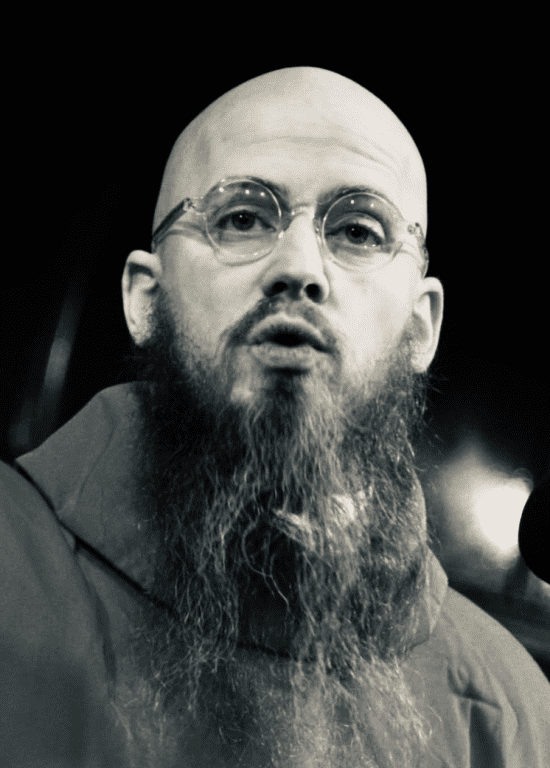
About The Rev. Dr. Jeff Hood
The Rev. Dr. Jeff Hood is a theologian, writer and activist who has spent years ministering to people on death row. As a spiritual advisor and witness to executions, he speaks out against state violence and calls for a society rooted in justice, mercy and the sacredness of life. You can read more about the author here.
Previous Post

September 11, 2025
Saint Mychal Judge: The Eucharist in the Rubble of 9/11
Next Post

September 14, 2025 Apokatastasis: Who Goes to Heaven? What a Stupid Question.
Recent Comments
"'God’s Sheep on the Sidewalk' is immensely thought-provoking and conscience-stirring. Thanks. "The people out there ..."
God’s Sheep: The Ones Who Sleep ..."
"Greetings, Jeff, and bless you for your relentlessly regular fierce posts and your profound commitments ..."
Between: On the Person and Character ..."
"God as the Between, thoughts:As a child we were taught, in the blue or green ..."
Between: On the Person and Character ..."
"Sometimes we make it harder than it is. Not saying things don't bring us to ..."
Get Behind Me, Satan: A Death ..."
Browse Our Archives
Select a Category Danny & Jeff fresh writings latest poetics north texas fellowship of reconciliation Sermon theology from death row Thoughts Uncategorized
Select a Month October 2026 September 2026 August 2026 July 2026 June 2026 May 2026 April 2026 March 2026 February 2026 January 2026 December 2025 November 2025 October 2025 September 2025 August 2025 June 2025 May 2025 April 2025 March 2025 January 2025 December 2024 November 2024 October 2024 August 2024 July 2024 June 2024 May 2024 April 2024 March 2024 February 2024 January 2024 December 2023 November 2023 October 2023 September 2023 July 2023 May 2023 April 2023 March 2023 February 2023 January 2023 December 2022 November 2022 October 2022 September 2022 August 2022 July 2022 June 2022 May 2022 April 2022 March 2022 February 2022 January 2022 December 2021 November 2021 October 2021 September 2021 July 2021 June 2021 May 2021 April 2021 March 2021 February 2021 January 2021 December 2020 November 2020 October 2020 September 2020 August 2020 July 2020 June 2020 May 2020 April 2020 March 2020 February 2020 January 2020 December 2019 November 2019 October 2019 September 2019 August 2019 July 2019 May 2019 March 2019 February 2019 January 2019 December 2018 November 2018 October 2018 September 2018 August 2018 July 2018 June 2018 May 2018 April 2018 March 2018 February 2018 January 2018 December 2017 November 2017 October 2017 September 2017 August 2017 July 2017 June 2017 May 2017 April 2017 March 2017 February 2017 January 2017 December 2016 October 2016 September 2016 August 2016 July 2016 June 2016 May 2016 April 2016 March 2016 February 2016 January 2016 December 2015 November 2015 October 2015 September 2015 August 2015 July 2015 June 2015 May 2015 April 2015 March 2015 February 2015 January 2015 December 2014 November 2014 October 2014 September 2014 August 2014 July 2014 June 2014 May 2014 April 2014 March 2014 February 2014 January 2014 December 2013 November 2013 October 2013 September 2013 August 2013 July 2013 June 2013 May 2013 April 2013 March 2013
Follow Us!
TAKE THE
Religious Wisdom Quiz
Who said: "Let us draw near to God with a sincere heart and with the full assurance that faith brings"?
Select your answer to see how you score.
John Peter James Paul
Related posts from Jeff Hood

GOD Will Wipe Away the Tears from Every...

Why Can't Anyone Say Evil? On the Execution...

God's Sheep: The Ones Who Sleep Outside the...

Keeping the Word : Living the Word :...
TRENDING AT PATHEOS Progressive Christian

The First Eucharistic Controversy: Christ’s Real Presence
For Catholics, the Eucharist is the source and summit of the Christian...

How to Make a Decision When You Can't...
Main point: It’s much more valuable to stay close to God so...

Archdiocese Hosts Military Marriage Retreat in Germany
RASTATT, Germany — The transient military lifestyle, with its frequent deployments and...

Nearly every morning, I make the drive to Detroit with my high-school-age...

The Real AI Story Is Adoption Without Trust
Artificial intelligence has crossed a political threshold. It is no longer a...

A new article, written by Jeff Lindsay and Gale L. Pooley,...
view all Progressive Christian blogs
What Are Your Thoughts?leave a comment
Ad-Free & Subscriber Log-In Subscription Support
- About Us
- 2026 Calendar
- Videos
- Podcasts
- Library of World Religions
- Faith In Media Tracker
- Advertise With Us
- Write for Us
- Privacy Policy
- Terms of Service
- Do Not Sell My Data
- Contact Us
- Radiant Digital
- Manage Newsletter Subscriptions
- Unsubscribe From Notifications
- Sitemap
Copyright 2008-2026, Patheos. All rights reserved.
Subscription Support Ad-Free & Subscriber Log-In
Follow Patheos