
BuddhistCatholicContemplativeEvangelicalGeneral ChristianHinduJewishLatter-day SaintMuslimNew VisionsProgressive Christian
Beliefs
- Buddhist
- Catholic
- Contemplative
- Evangelical
- General Christian
- Hindu
- Jewish
- Latter-day Saint
- More Voices
- Muslim
- New Visions
- Pagan
- Progressive Christian
Topics
- Religion News
- Food and Religion
- Sports and Religion
- Religious Art
- Religious Music and Entertainment
- Religious Events
- History and Religion
- Style and Religion
- Politics and Religion
- Women in Religion
- Recreation Outdoors and Religion
- Business Finance and Religion
- Careers Workplace and Religion
- Education and Religion
- Family Parenting and Religion
- Health Fitness and Religion
- Home and Religion
- Relationships and Religion
- Technology and Religion
- Travel and Religion
Columnists
- Buddhist Columnists
- Business Finance and Religion Columnists
- Careers Workplace and Religion Columnists
- Catholic Columnists
- Contemplative Columnists
- Education and Religion Columnists
- Evangelists Columnists
- Family Parenting and Religion Columnists
- General Christian Columnists
- Health Fitness and Religion Columnists
- Hindu Columnists
- History and Religion Columnists
- Home and Religion Columnists
- Jewish Columnists
- More Voices Columnists
- Latter Day Columnists
- Muslim Columnists
- New Visions Columnists
- Nonreligious Columnists
- Pagan Columnists
- Politics and Religion Columnists
- Progressive Columnists
- Recreation Outdoors and Religion Columnists
- Relationships and Religion Columnists
- Religion News Columnists
- Religious Art Columnists
- Religious Events Columnists
- Religious Music and Entertainment Columnists
- Sports and Religion Columnists
- Style and Religion Columnists
- Technology and Religion Columnists
- Travel and Religion Columnists
- Women in Religion Columnists
Resource Library
- 2026 Calendar
- Library of World Religions
- The 100 Most Holy Places on Earth
- Patheos Answers
- Podcasts
- Videos
- Faith Leaders Database
- Anglican Episcopalian
- Bahai
- Baptist
- Buddhism
- Christianity
- Confucianism
- Eastern Orthodoxy
- Hinduism
- Holiness and Pentecostal
- ISKCON
- Islam
- Judaism
- Lutheran
- Methodist
- The Church of Jesus Christ of Latter-day Saints
- New Age
- Paganism
- Presbytarian and Reformed
- Protestantism
- Religion Behind the Scenes
- Roman Catholic
- Scientology
- Shia Islam
- Sikhism
- Sufism
- Sunni Islam
- Taoism
- Zen
- See all religions
Research Tools
 Ad-Free & Subscriber Log-In Subscription Support
Ad-Free & Subscriber Log-In Subscription Support
Follow Patheos 

- Trending:
- Forgiveness
- |
- Marriage
- |
- Consciousness
- |
- Death Penalty
- |
- Election
- |
- Halloween

- Home
- Progressive Christian
- Religion News
- From 1812: John Murray’s Radical Theology of Hope
From 1812: John Murray’s Radical Theology of Hope
Last updated on: December 24, 2025 at 1:26 am by Jeff Hood
From 1812: John Murray’s Radical Theology of Hope 2025-12-24T01:26:13-06:00 Jeff Hood
Patheos Explore the world's faith through different perspectives on religion and spirituality! Patheos has the views of the prevalent religions and spiritualities of the world.

John Murray / Wikimedia
That Sublime and Never Failing Confidence: John Murray’s Radical Theology of Hope for a Terrified World
John Murray (1741-1815) was born in England to strict Calvinist parents and raised to believe most of humanity was damned. After converting to Universalism, he lost everything and sailed for America in 1770, intending to disappear. Instead, he became the founder of American Universalism, establishing the first Universalist congregation at Gloucester, Massachusetts, and later pastoring the Universalist Society of Boston. A stroke left him paralyzed in 1809. He spent his final years, in his words, ‘helpless as an infant,’ writing the Letters and Sketches of Sermons that would become his testament, still proclaiming that every soul would be gathered home.
A Note on Murray’s Voice: Throughout his Letters and Sketches of Sermons, Murray refers to himself in the third person: ‘the writer,’ ‘his imprisoned spirit,’ ‘he unwaveringly believes.’ This was a common literary convention of the era, particularly in prefaces and personal testimonies. Far from distancing, this style lends a peculiar poignancy to his words: a dying man speaking of himself with dignified restraint, offering his hope as gift rather than confession. All quotations from Murray preserve his original voice.
‘He is especially solicitous to communicate to the sons and daughters of humanity that sublime and never failing confidence upon which his imprisoned spirit, through long days of adversity and through successive nights of sorrow, hath calmly reposed.’
-Letters and Sketches of Sermons (1812)
John Murray’s Dying Gift
By 1812, John Murray was dying. His body had failed him. ‘Helpless as an infant,’ he wrote. Income gone. Medical bills mounting. He had every reason in the world to despair. Instead, he wrote about hope…not the weak hope that whispers ‘maybe.’ Murray wrote about hope so fierce he called it ‘sublime and never failing.’ This hope had carried him through decades of ministry, through years of suffering. And now, with death approaching, it burned bright enough to lead him home.
What Murray offered in his Letters and Sketches of Sermons was not theology for the classroom. It was medicine for terrorized souls. Two centuries later, we still need these words.
The Terror John Murray Confronted
The Christianity of Murray’s day dealt only in fear. The Calvinist establishment taught that God had divided humanity before time began…a small elect chosen for heaven, everyone else destined for eternal conscious torment. And the cruelest part: you could not know which group you belonged to. The best you could do was examine yourself endlessly for ‘signs of election,’ never certain whether your faith was real or demonic counterfeit.
Murray met the casualties everywhere. People with what the era called ‘religious melancholy’…minds broken by doctrines that made God’s love conditional and Christ’s sacrifice insufficient. The gospel, supposedly good news, had become a source of terror. Against this, Murray proclaimed something dangerous: The gospel actually is good news…for everyone without exception.
John Murray Read Scripture Through Love
Murray’s opponents read the same Bible he did. They found warnings of eternal punishment, pronouncements of wrath and declarations of limited atonement. Same text. Different conclusions. How? Murray’s answer…every interpretation requires a framework. The proper framework is God’s self-revelation as love. Start there…God truly is love, not just loving sometimes…and the whole biblical narrative shifts.
The Prophets
Murray read the Hebrew prophets and found a pattern. Judgment, yes. Wrath, yes. But always moving toward restoration. Always. He quoted Jeremiah:
“I have slain in mine anger, and in my fury… Behold, I will bring it health and cure, and I will cure them, and will reveal unto them the abundance of peace and truth. And I will cleanse them from all their iniquity, whereby they have sinned against me, and I will pardon all their iniquities.” (33:5–8; cf. 32:30–42)
The same God who slays in fury brings health and cure. The same God who hides his face reveals peace. Wrath is real. But it serves restoration. Judgment accomplishes transformation, not annihilation.
Murray found this everywhere: Ezekiel’s promise that God would be ‘pacified toward thee for all that thou hast done’…all (16:63). Daniel’s vision of a kingdom where transgression would be ‘finished’ and sin would ‘end’ (9:24). Moses’ portrait of God bearing Israel ‘as a man doth bare his son’ (Deuteronomy 1:31).
Paul
Murray’s strongest case came from Paul. In Romans 11, Paul writes: ‘God hath concluded them all in unbelief, that he might have mercy upon all’ (11:32). Why had God hardened Israel? Why the blindness, the spirit of slumber? The answer: ‘that he might have mercy upon all.’ The hardening was purposeful. Temporary. Serving universal mercy.
And First Corinthians 15: ‘For as in Adam all die, even so in Christ shall all be made alive’ (15:22). Murray would not let his readers miss the parallel. The ‘all’ who die in Adam equals the ‘all’ made alive in Christ. One humanity. First condemned. Then redeemed. The scope of the fall is the scope of the redemption.
John
John’s Gospel declares: ‘Behold the Lamb of God that taketh away the sin of the world’ (1:29). Murray pressed every word. Not some people. Not the elect. The world. Not individual sins but sin itself…the whole condition of human alienation. Christ came to accomplish salvation, not just make it possible. To secure redemption, not just offer it. If Christ died only for some, his work is incomplete, his title as Savior of the world a lie. Scripture says otherwise.
John Murray: God Is Love
Everything Murray wrote rested on one conviction: God is love. Not loving sometimes. Not loving some people. Love itself. If God is love, certain things follow. Love desires the good of the beloved. Love persists through resistance. Love cannot rest until all the beloved are home.
Murray found this love in God’s relationship with Israel. Despite rebellion after rebellion, God never abandoned them. The prophets spoke of divine pathos, wounded love…but always concluded with restoration. A father bearing his son. Not a sovereign tolerating subjects. A parent carrying a child. What parent could be satisfied with some children saved while others perish forever? The suggestion contradicts love’s nature.
Murray pressed the logic. If imperfect earthly parents would move heaven and earth to save a rebellious child, how can we imagine God doing less? Either God lacks the power to save all or lacks the will. Omnipotence eliminates the first. Love eliminates the second.
John Murray: Sovereignty Serves Salvation
Murray did not reject divine sovereignty. He embraced it…with the most robust Reformed language available:
‘With him are the issues of Life and of Death. He will have mercy on whom he will have mercy. When he shuts, no man can open; and if he vouchsafe to open the eyes of the understanding, the power exists not which can draw the obscuring veil of darkness. Omnipotence is the attribute of the Creator, the creature can neither do, nor undo.’
Classic Calvinist language. But Murray reached a different conclusion than Calvin. If God has absolute power to save, and absolute commitment to save all, then all will be saved. Sovereignty guarantees universal salvation. The hardening of some serves mercy to all. Temporary blindness gives way to sight. Present judgment accomplishes future restoration.
Murray did not deny divine wrath. He understood it as love’s expression. God hates sin because God loves sinners and sin destroys what God loves. Anger serves mercy. The slaying in fury gives way to health and cure.
John Murray and Hope in the Fire
What makes Murray’s Letters compelling is where they came from. He wrote as a dying man:
‘Condemned to a lingering and greatly debilitating malady, the writer has become, as far as his bodily organs are involved, helpless as an infant; and while his income is greatly and necessarily abridged, the exigencies annexed to his melancholy situation imperiously accumulate many and heavy expenses.’
From that crucible came radiance: ‘That sublime and never failing confidence upon which his imprisoned spirit, through long days of adversity and through successive nights of sorrow, hath calmly reposed’
Tested hope. Proven hope. Murray stood ‘upon the threshold of another and a better world,’ finding that ‘pecuniary hopes and fears are nearly lost in that blissful futurity.’ When everything else was stripped away…health, income, strength…hope remained.
This is what gave Murray authority. Universal salvation was not an intellectual position he defended. It was comfort he experienced. The difference matters.
Hope as Medicine
Murray was a pastor. He counseled people with religious melancholy. He visited the dying. He corresponded with souls tormented by fear of damnation. He watched false theology produce real damage. Those who believed in conditional salvation lived in uncertainty…constantly self-examining for signs of election, never sure their faith was genuine. Those who trusted in universal restoration rested. Confident that divine love would not fail.
This was not preference. It was observable. Theology centered on conditional love produces anxiety. Theology proclaiming unconditional commitment produces peace. The fruit testifies.
Murray’s purpose was explicit: ‘He is especially solicitous to communicate to the sons and daughters of humanity that sublime and never failing confidence… He unwaveringly believes that every possible felicity is in reserve for his species’. Every possible felicity. For his species. Not some. All.
The Questions
Accept Murray’s conclusions or not, his work forces questions. Do we believe God’s love is unconditional and irresistible? If so, what follows? Can we coherently say God is love while believing most of humanity will burn forever? Or does genuine love necessarily mean determination to save all the beloved?
These are not academic questions. The content of our hope shapes how we live. A gospel of conditional love and uncertain salvation produces fear. A gospel of God’s determined purpose to save all produces peace. Murray lived in that peace. He died in it. His Letters testify.
Benediction
As his Letters concluded, Murray blessed everyone who would read them:
‘He unwaveringly believes that every possible felicity is in reserve for his species; and in humble and devout imitation of his great and adorable Master, while bidding the wandering race farewell, he bestows upon both enemies and friends the ardent benediction of a spirit replete with unbounded love for the children of men, for the offspring of Deity.’
Every person…friend, enemy, believer, skeptic…stood equally as ‘offspring of Deity.’ Beloved children whom God would not lose. Murray blessed in imitation of Christ, who prayed for his executioners and promised paradise to a dying thief (Luke 23:34, 43). Love that embraces enemies. Hope that extends to the most unlikely. Confidence that pronounces blessing on all humanity. Christ’s own spirit. Still available.
In an age of anxiety, John Murray offers peace. In a culture of fear, confidence. In a world where religion traffics in terror, that sublime and never failing hope…tested through long days of adversity and successive nights of sorrow, all the way to the threshold of that better world where all tears are wiped away and God is finally all in all (Revelation 21:4; 1 Corinthians 15:28).
May we hope more fully. Trust more completely. Love more boundlessly. May we live toward that day when God’s love has gathered all things home.
Full text of Letters and Sketches of Sermons can be found here.
Catholic
Politics and Religion
Letters and Sketches of Sermons
About The Rev. Dr. Jeff Hood
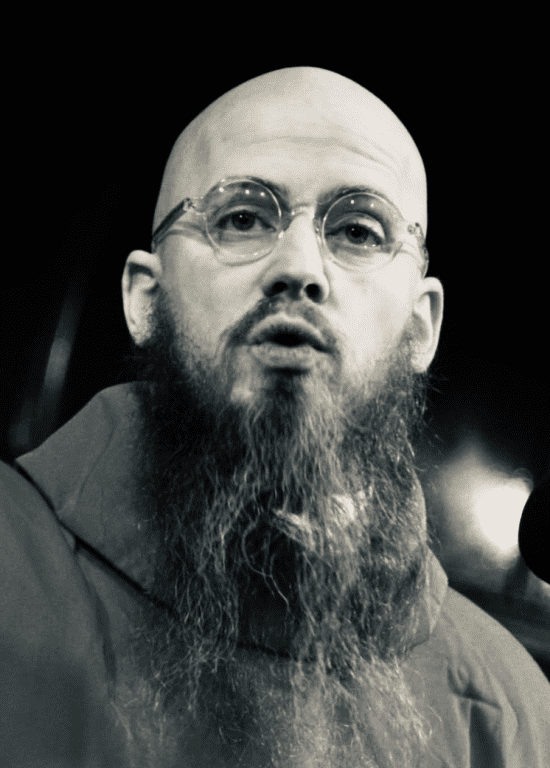
The Rev. Dr. Jeff Hood is a theologian, writer and activist who has spent years ministering to people on death row. As a spiritual advisor and witness to executions, he speaks out against state violence and calls for a society rooted in justice, mercy and the sacredness of life. You can read more about the author here.
Previous Post

December 23, 2025
Healed: A Theological Tribute to Garth Kasimu Baker-Fletcher
Next Post

December 24, 2025 Emmanuel = God With Us = Merry Christmas.
Recent Comments
"'God’s Sheep on the Sidewalk' is immensely thought-provoking and conscience-stirring. Thanks. "The people out there ..."
God’s Sheep: The Ones Who Sleep ..."
"Greetings, Jeff, and bless you for your relentlessly regular fierce posts and your profound commitments ..."
Between: On the Person and Character ..."
"God as the Between, thoughts:As a child we were taught, in the blue or green ..."
Between: On the Person and Character ..."
"Sometimes we make it harder than it is. Not saying things don't bring us to ..."
Get Behind Me, Satan: A Death ..."
Browse Our Archives
Select a Category Danny & Jeff fresh writings latest poetics north texas fellowship of reconciliation Sermon theology from death row Thoughts Uncategorized
Select a Month October 2026 September 2026 August 2026 July 2026 June 2026 May 2026 April 2026 March 2026 February 2026 January 2026 December 2025 November 2025 October 2025 September 2025 August 2025 June 2025 May 2025 April 2025 March 2025 January 2025 December 2024 November 2024 October 2024 August 2024 July 2024 June 2024 May 2024 April 2024 March 2024 February 2024 January 2024 December 2023 November 2023 October 2023 September 2023 July 2023 May 2023 April 2023 March 2023 February 2023 January 2023 December 2022 November 2022 October 2022 September 2022 August 2022 July 2022 June 2022 May 2022 April 2022 March 2022 February 2022 January 2022 December 2021 November 2021 October 2021 September 2021 July 2021 June 2021 May 2021 April 2021 March 2021 February 2021 January 2021 December 2020 November 2020 October 2020 September 2020 August 2020 July 2020 June 2020 May 2020 April 2020 March 2020 February 2020 January 2020 December 2019 November 2019 October 2019 September 2019 August 2019 July 2019 May 2019 March 2019 February 2019 January 2019 December 2018 November 2018 October 2018 September 2018 August 2018 July 2018 June 2018 May 2018 April 2018 March 2018 February 2018 January 2018 December 2017 November 2017 October 2017 September 2017 August 2017 July 2017 June 2017 May 2017 April 2017 March 2017 February 2017 January 2017 December 2016 October 2016 September 2016 August 2016 July 2016 June 2016 May 2016 April 2016 March 2016 February 2016 January 2016 December 2015 November 2015 October 2015 September 2015 August 2015 July 2015 June 2015 May 2015 April 2015 March 2015 February 2015 January 2015 December 2014 November 2014 October 2014 September 2014 August 2014 July 2014 June 2014 May 2014 April 2014 March 2014 February 2014 January 2014 December 2013 November 2013 October 2013 September 2013 August 2013 July 2013 June 2013 May 2013 April 2013 March 2013
Follow Us!
TAKE THE
Religious Wisdom Quiz
What did Jesus use to feed the 5,000?
Select your answer to see how you score.
Five loaves and two fish Grapes and figs A basket of quail Manna from heaven
Related posts from Jeff Hood

GOD Will Wipe Away the Tears from Every...

Why Can't Anyone Say Evil? On the Execution...

God's Sheep: The Ones Who Sleep Outside the...

Keeping the Word : Living the Word :...
TRENDING AT PATHEOS Progressive Christian

Swimfan: Forgotten Aughts Pleasures
This is a recovery effort. In 2002, My Big Fat Greek Wedding...

Top Three Anti-Catholic Lies About Catholicism
This is my initial transcript for the video, "THE 3 WORST...

Pope Leo Celebrates Mass for Nurses & Docs...
I don't have any idea how he did it, but Pope Leo...

The Sermon on the Mount, Part I: Matthew...
The Sermon on the Mount, Part I (Matthew 4:12-5:12) St. Matthew moves...

What's up from Crossway: Reviewing some of their latest A few weeks...

Janie Learns the Way of the Cross: A...
Teaching children about Jesus' Passion can be challenging. Many parents and educators...
view all Progressive Christian blogs
What Are Your Thoughts?leave a comment
Ad-Free & Subscriber Log-In Subscription Support
- About Us
- 2026 Calendar
- Videos
- Podcasts
- Library of World Religions
- Faith In Media Tracker
- Advertise With Us
- Write for Us
- Privacy Policy
- Terms of Service
- Do Not Sell My Data
- Contact Us
- Radiant Digital
- Manage Newsletter Subscriptions
- Unsubscribe From Notifications
- Sitemap
Copyright 2008-2026, Patheos. All rights reserved.
Subscription Support Ad-Free & Subscriber Log-In
Follow Patheos