
BuddhistCatholicContemplativeEvangelicalGeneral ChristianHinduJewishLatter-day SaintMuslimNew VisionsProgressive Christian
Beliefs
- Buddhist
- Catholic
- Contemplative
- Evangelical
- General Christian
- Hindu
- Jewish
- Latter-day Saint
- More Voices
- Muslim
- New Visions
- Pagan
- Progressive Christian
Topics
- Religion News
- Food and Religion
- Sports and Religion
- Religious Art
- Religious Music and Entertainment
- Religious Events
- History and Religion
- Style and Religion
- Politics and Religion
- Women in Religion
- Recreation Outdoors and Religion
- Business Finance and Religion
- Careers Workplace and Religion
- Education and Religion
- Family Parenting and Religion
- Health Fitness and Religion
- Home and Religion
- Relationships and Religion
- Technology and Religion
- Travel and Religion
Columnists
- Buddhist Columnists
- Business Finance and Religion Columnists
- Careers Workplace and Religion Columnists
- Catholic Columnists
- Contemplative Columnists
- Education and Religion Columnists
- Evangelists Columnists
- Family Parenting and Religion Columnists
- General Christian Columnists
- Health Fitness and Religion Columnists
- Hindu Columnists
- History and Religion Columnists
- Home and Religion Columnists
- Jewish Columnists
- More Voices Columnists
- Latter Day Columnists
- Muslim Columnists
- New Visions Columnists
- Nonreligious Columnists
- Pagan Columnists
- Politics and Religion Columnists
- Progressive Columnists
- Recreation Outdoors and Religion Columnists
- Relationships and Religion Columnists
- Religion News Columnists
- Religious Art Columnists
- Religious Events Columnists
- Religious Music and Entertainment Columnists
- Sports and Religion Columnists
- Style and Religion Columnists
- Technology and Religion Columnists
- Travel and Religion Columnists
- Women in Religion Columnists
Resource Library
- 2026 Calendar
- Library of World Religions
- The 100 Most Holy Places on Earth
- Patheos Answers
- Podcasts
- Videos
- Faith Leaders Database
- Anglican Episcopalian
- Bahai
- Baptist
- Buddhism
- Christianity
- Confucianism
- Eastern Orthodoxy
- Hinduism
- Holiness and Pentecostal
- ISKCON
- Islam
- Judaism
- Lutheran
- Methodist
- The Church of Jesus Christ of Latter-day Saints
- New Age
- Paganism
- Presbytarian and Reformed
- Protestantism
- Religion Behind the Scenes
- Roman Catholic
- Scientology
- Shia Islam
- Sikhism
- Sufism
- Sunni Islam
- Taoism
- Zen
- See all religions
Research Tools
 Ad-Free & Subscriber Log-In Subscription Support
Ad-Free & Subscriber Log-In Subscription Support
Follow Patheos 

- Trending:
- Forgiveness
- |
- Marriage
- |
- Consciousness
- |
- Death Penalty
- |
- Election
- |
- Halloween

- Home
- Progressive Christian
- Religion News
- From Kevorian to Schiavo: Ethics at the End of Life
From Kevorian to Schiavo: Ethics at the End of Life
Last updated on: February 7, 2020 at 1:03 am by Jeff Hood
From Kevorian to Schiavo: Ethics at the End of Life 2020-02-07T01:03:59-06:00 Jeff Hood
Patheos Explore the world's faith through different perspectives on religion and spirituality! Patheos has the views of the prevalent religions and spiritualities of the world.
Public / Family Photo
February 7, 2020
From Kevorian to Schiavo: Ethics at the End of Life
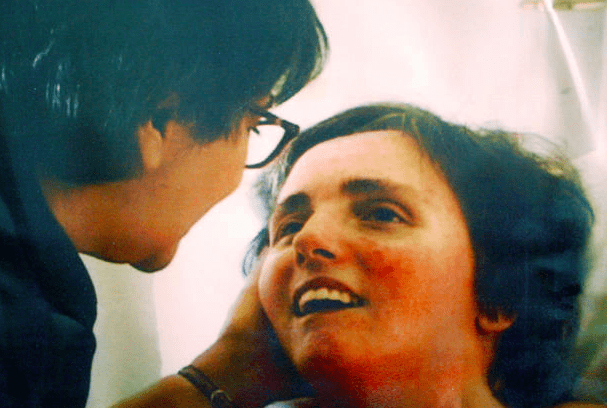
Over the last few weeks, I’ve been thinking about ethical dilemmas that find us at the end of life. Just yesterday, I wrote about Dr. Jack Kevorkian and assisted suicide. Earlier today, I stumbled across this paper about Terri Schiavo that I wrote during my graduate studies in healthcare ethics at Creighton University. Though more of a historical paper, I think it helps further illustrate how agonizing end of life decisions can be. Dr. Kevorkian wanted to help people end their own life. Schiavo never got that choice…other people (with conflicting interests) were tasked with deciding for her. So which side was Jesus on? To answer such a question, you have to determine which side was working to alleviate her pain. When I was suffering…
The Law and Refusal of Care in Dispute:
Terri Schiavo and The Ethical Struggles of a Nation
Introduction:
The complexities of legal cases surrounding refusal of care decisions are monumental. These are desperate situations with desperate actors playing the roles of patient, mother, father, husband, wife, son, daughter, guardian, or advocate. In refusal of care legal opinions, no matter the source, one can feel the raw emotions of judges seeking to represent the ethical and legal interests of the state. In these decisions courts are asked to determine whether a citizen has the right to live or die based on their desire or the desire of another they have entrusted. No refusal of care decision is alike and, as a result, judges are forced to make unique god-like decisions of final fate. There are always going to be different sides and someone is always going to lose, not just a legal decision, but, also, a decision of even greater consequence, the ability to determine the fate of someone loved and fought for. With these complexities and difficulties in mind, the past twenty years has seen no greater publicity, scrutiny, protest, or attention surround a refusal of care decision than the unique case of Teresa Marie “Terri” Schiavo. The ethics of a nation were on full display as Terri Schiavo lay reliant on a feeding tube in a Florida Hospice, unable to communicate her desires, precariously suspended somewhere between life and death. This ethical drama is, indeed, a story of us all.
The Ethical Drama Unfolds:
In the early morning of February 25, 1990, Teresa Marie “Terri” Schiavo, a young vivacious insurance saleswoman, collapsed in a hallway of her St. Petersburg, Florida apartment. Paramedics, responding to her husband Michael’s 911 call, found Mrs. Schiavo unconscious, not breathing, and without a pulse. On the way to the hospital, paramedics were able to resuscitate her, finally, after 30 minutes, restoring oxygen to her brain. After initial emergency treatments to save her life, at Humana Northside Hospital, neurologist Dr. Garcia DeSousa grimly informed Michael Schiavo and gathered family of tremendous damage to Terri’s brain and the need to insert a feeding tube. Within the first six months that followed, Dr. De Sousa, family physician Dr. Victor Gambone, and two other doctors each independently diagnosed Terri Schiavo as being in a persistent vegetative state. The attending doctors estimated Schiavo to be permanently and irreversibly brain-dead. The family, however, refused to give up treatment or hope (Schiavo, 1-50/Schindlers, 1-60).
In November of 1990, Michael Schiavo took his wife to the University of California at San Francisco for experimental nerve stimulation treatment. Doctors and nurses worked with Terri for several months and were, ultimately, unable to stimulate any meaningful brain activity. In January of 1991, Terri returned to Florida and was admitted to the Mediplex Rehabilitation Hospital in Bradenton, Florida. While a patient at this facility, doctors were able to remove all artificial life-sustaining treatments from Schiavo except her feeding tube. This development allowed Terri to go out to the park and other public places with her family. A few months later, in July of 1991, Schiavo was transferred to Saba Palms Skilled Care Facility where she would undergo neurological testing, speech therapy, and occupational therapy (Schiavo, 51-101/Schindlers, 55-85).
Terri’s parents, The Schindlers, enjoyed a loving and productive relationship with their son-in-law, Michael, for the initial years of her stay at Saba Palms. The Schindlers encouraged Michael to get on with his life and start dating again. In the midst of these activities, Michael became Terri’s legal court-appointed guardian and, after a urinary tract infection in mid-1993, instituted a do-not-resuscitate order. The Schindlers, being highly opposed to this action, challenged it on the basis of the state’s duty to protect life. In May of 1998, after years of legal wrangling with The Schindlers, Michael Schiavo filed a legal petition to have Terri’s feeding tube removed. This action began what would become one of the most publicized and controversial protracted legal battles of a new century (Schiavo, 24- 121/Schindlers, 68-92/Fuhrman 167-189).
The Schindlers actively opposed Michael Schiavo’s desire to remove Terri’s feeding tube in court. Due to a lack of a living will, an outside guardian, Richard Pearse, was appointed by a Florida State Court to help determine what Terri Schiavo’s care should or should not be. Pearse determined that there was no possibility for Terri to improve, yet, recommended, based on Florida law, that treatment continue, due to economical conflicts of interest surrounding life insurance and probable inheritances on the part of her legal guardian and husband Michael, until the matter could be properly adjudicated (Schindlers, 125-171/Goodman, 25-78).
In late January of 2000, The Schindlers and Michael Schiavo went to trial to determine what Terri’s wishes were regarding life-prolonging procedures. Testimony was allowed from eighteen different witnesses. Numerous friends of Terri testified that they heard her say on numerous occasions that she would never want this type of life-prolonging treatment. Michael Schiavo claimed that Terri would never have wanted to be placed on a machine if her chances for recovery were miniscule. The Schindlers claimed that their daughter was a devout Roman-Catholic and would never have violated the Church’s teachings on euthanasia by refusing hydration and nutrition. After weeks of testimony, in late February of 2000, Judge George Greer issued a ruling granting Michael’s petition to remove Terri’s feeding tube. The decision also stated that Terri was in a persistent vegetative state, had made prior oral declarations she would not want a feeding tube, and could also not be forcefully orally fed. The decision was later upheld by the Florida Second District Court of Appeals and would come to be known as Schiavo I in later rulings (Caplan 1-255/Goodman 55-150).
The Schindler’s immediately sought injunctive relief from this decision as they challenged Michael Schiavo’s guardianship of their daughter. By this time, although, still legally married to Terri, Michael was in a committed relationship with Jodi Centonze and expecting his first child. Michael argued that he did not divorce his wife because he wanted to ensure her desire to not be kept in a persistent vegetative state was honored. The Schindler’s also argued that Michael stood to gain hundreds of thousands of dollars from Terri’s death. Judge George Greer denied their request and determined April 24, 2001 to be the date Terri’s feeding tube was to be removed. This action, while subsequently carried out, would only be the beginning of a longer protracted legal battle (Schiavo, 101-189/Schindlers, 155-205/Caplan, 1-255).
In late April 2001, The Schindlers filed a motion for relief based on new evidence of Terri’s wishes. Judge George Greer denied the request. The Second District Court of Appeals remanded the case back to Judge Greer to allow The Schindlers to file a new motion. In the mean time, The Schindlers filed a civil suit against Michael Schiavo for perjury, claiming he had lied in the previous proceedings, and Judge Frank Quesada responded by ordering the feeding tube reinserted while the issue was being adjudicated. Michael Schiavo appealed to The Second Court of Appeals to enforce Judge Greer’s previous ruling and was denied. This sequence of events would come to be known as Schiavo IIin later rulings (Caplan, 255-352/Fuhrman, 189-211).
In August of 2001, The Second Court of Appeals remanded the lawsuit to Judge George Greer. The Schindlers were allowed to argue that new medical treatments might be able to restore significant enough cognitive abilities so that Terri Schiavo could decide for herself. The Court also heard new motions challenging Michael Schiavo’s guardianship and asking that Judge Greer recuse himself from the case. Judge Greer denied all three new motions. The Second Court of Appeals upheld two of Greer’s decisions, but ordered a new evidentiary on the claim that Terri might benefit from new medical treatments. This decision would come to be known as Schiavo III in later rulings. The Court of Appeals ordered Judge Greer to direct five neurologists to form a new opinion on the matter: two from The Schindlers, two from Michael Schiavo, and one chosen by the Judge. The new panel determined in a 3-2 vote that new treatments would not be effective in restoring brain function to Terri Schiavo. In late 2002, Judge Greer upheld the panel’s ruling and ordered Schiavo’s feeding tube removed. This decision would come to be known as Schiavo IVin later rulings. The Schindlers were granted injunctive relief by another local judge around the time Terri’s feeding tube was to be removed (Caplan, 255-352/Goodman 1-254).
The beginning of 2003 brought increased publicity to the case and activists began demonstrations outside of Terri Schiavo’s hospice. On September 11, 2003, The Schindlers asked Judge Greer to allow for “eight weeks of new therapy.” The Schindlers also presented evidence that Michael Schiavo had tried to euthanize his wife on several occasions by tampering with her sugar levels during visits. Two nurses also testified that Michael Schiavo remarked, “When is that bitch going to die?” on multiple occasions. Judge Greer, calling them “fantastical,” denied all new motions. On October 15, 2003 Schiavo’s feeding tube was removed after The Schindlers exhausted all of their appeals. Within the week, the Florida Legislature passed “Terri’s Law,” granting Florida Governor Jeb Bush the authority to intervene in the case. Bush immediately ordered the feeding tube to be reinserted. The Florida Supreme Court intervened in late August of 2004 to rule “Terri’s Law” to be unconstitutional. The Schindlers appealed to The U.S. Supreme Court and were denied a hearing about six months later. In February of 2005 The Schindlers filed a motion of relief based on thirty-three affidavits from doctors and nurses recommending further treatment for Terri. Judge Greer formally denied this motion and ordered the feeding tube removed on March 18, 2005 at 1:00pm (Goodman, 155-254/Fuhrman, 189-256).
Following Judge George Greer’s order, Terri Schiavo’s doctors and nurses removed her feeding tube on March 18, 2005 at 1:00pm. The United States House of Representatives subpoenaed both Michael and Terri Schiavo to challenge this action. Jude Greer refused to reinsert the feeding tube to allow for this. On March 20thThe United States Senate responded by unanimously passing a bill to remove the case from Judge Greer’s court to federal court. The United States House of Representatives passed the identical bill ours later. President George W. Bush flew back from Texas to sign the bill into law at 1:11 am on March 21. Over the next few days, all of The Schindlers’ federal petitions were denied and Terri’s feeding tube remained out. The scene outside of Pinellas Park Hospice grew increasingly restless as prominent activists, including both Jesse Jackson and James Dobson, marched to try to save Terri Schiavo’s life. On March 24, 2005, Governor Jeb Bush ordered The Florida Department of Children and Families to take custody of Terri and transfer her to a local hospital for reinsertion of the feeding tube. Judge Greer forbade this action forcing Governor Bush to stand down. The legal battle was over. Teresa Marie “Terri” Schiavo died one week later at Pinellas Park Hospice on March 31, 2005. Michael Schiavo buried her underneath a tombstone that read: “I kept my promise…” (Goodman, 200-259/Schindlers, 200-251/Schiavo, 300-360/Fuhrman, 200-255).
Conclusion:
The Terri Schiavo case drew in a nation as ethical warriors lined up to do battle to fight for the fate of someone unable to fight for their self. Together we collectively watched as a mother and father fought their estranged son-in-law to determine the final fate of their daughter. I can think of no other refusal of care case in history that has so captured the attention of the American citizenry and forced the action of all three branches of the federal government, including The United States Congress, The President of the United States, and The United States Supreme Court. In the passionate responses of the populace and their government a people collectively learned that these refusal of care cases speak not only of the desires of the individual players but, also, to the ethics of our collective self. In Terri Schiavo, her parents, and her husband we saw the best and worst of our selves and took sides based on the role we wanted to play, compassionate life-giver or merciful life-taker. This case speaks not only to a troubled family’s personal battles, but even more so, represents our own individual collective discomfort with the ethics of dying. In Terri Schiavo we all came face to face with a decision we hoped we would never have to make and, collectively, let out a long sigh of relief when the nightmare was over, scared to close our eyes, for fear that such agonizing discomfort might more personally revisit us at a later date.
Sources:
Athur L. Caplan, James J. McCartney, Dominic A. Sisti (2006), *The Case of Terri Schiavo: Ethics at The End of Life,*Amherst, New York: Prometheus Books, 352 pp.
David Gibbs (2008), *Fighting for Dear Life: The Untold Story of Terri Schiavo and What It Means For All of US,*Grand Rapids, Michigan: Baker House Publishing, 288 pp.
Kenneth Goodman (2009), The Case of Terri Schiavo: Ethics, Politics, and Death in the 21stCentury, Oxford, U.K.: Oxford University Press, 259 pp.
Mark Fuhrman (2005), Silent Witness: The Untold Story of Terri Schiavo’s Death, New York, New York: HarperCollins, 255 pp.
Mary and Robert Schindler (2006), A Life That Matters: The Legacy of Terri Schiavo, New York, New York: Warner Books, 251 pp.
Michael Schiavo (2006), Terri: The Truth, New York, New York: Dutton Books, 360 pp.
Previous Post

February 4, 2020
Dr. Jack Kevorkian: Friend of God
Next Post

February 7, 2020 Private Things : Limited Rights : Engagements with Healthcare
Browse Our Archives
Select a Category Danny & Jeff fresh writings latest poetics north texas fellowship of reconciliation Sermon theology from death row Thoughts Uncategorized
Select a Month October 2026 September 2026 August 2026 July 2026 June 2026 May 2026 April 2026 March 2026 February 2026 January 2026 December 2025 November 2025 October 2025 September 2025 August 2025 June 2025 May 2025 April 2025 March 2025 January 2025 December 2024 November 2024 October 2024 August 2024 July 2024 June 2024 May 2024 April 2024 March 2024 February 2024 January 2024 December 2023 November 2023 October 2023 September 2023 July 2023 May 2023 April 2023 March 2023 February 2023 January 2023 December 2022 November 2022 October 2022 September 2022 August 2022 July 2022 June 2022 May 2022 April 2022 March 2022 February 2022 January 2022 December 2021 November 2021 October 2021 September 2021 July 2021 June 2021 May 2021 April 2021 March 2021 February 2021 January 2021 December 2020 November 2020 October 2020 September 2020 August 2020 July 2020 June 2020 May 2020 April 2020 March 2020 February 2020 January 2020 December 2019 November 2019 October 2019 September 2019 August 2019 July 2019 May 2019 March 2019 February 2019 January 2019 December 2018 November 2018 October 2018 September 2018 August 2018 July 2018 June 2018 May 2018 April 2018 March 2018 February 2018 January 2018 December 2017 November 2017 October 2017 September 2017 August 2017 July 2017 June 2017 May 2017 April 2017 March 2017 February 2017 January 2017 December 2016 October 2016 September 2016 August 2016 July 2016 June 2016 May 2016 April 2016 March 2016 February 2016 January 2016 December 2015 November 2015 October 2015 September 2015 August 2015 July 2015 June 2015 May 2015 April 2015 March 2015 February 2015 January 2015 December 2014 November 2014 October 2014 September 2014 August 2014 July 2014 June 2014 May 2014 April 2014 March 2014 February 2014 January 2014 December 2013 November 2013 October 2013 September 2013 August 2013 July 2013 June 2013 May 2013 April 2013 March 2013
Follow Us!
TAKE THE
Religious Wisdom Quiz
What was Moses' father's name?
Select your answer to see how you score.
Arron Abiathar Amram Apollos
Related posts from Jeff Hood

The Image: On the Horror of Capitalism and...

GOD Will Wipe Away the Tears from Every...

Why Can't Anyone Say Evil? On the Execution...

God's Sheep: The Ones Who Sleep Outside the...
TRENDING AT PATHEOS Progressive Christian

Looking at the Largest Orthodox Cathedral on Earth
There is often a considerable amount of anger and, shall we...

The Problem with False Prophets
Miller’s Station UMC| 10/18/26| Anchor Verse: Jeremiah 23: 1, 9-23 I...

Emotion in Early Christianity by Andrew Crislip
Andrew Crislip’s Emotion in Early Christianity examines an often overlooked dimension of...

16 Spiritual Touchstones for a More Grounded Life
After decades of spiritual study, here are 16 principles I try...

Catholic Evangelization: Sharing Your Faith Every Day
Welcome back to the Graceful Awakening mini-series called, “From Faith to Mission.” ...

The Pillar of the Boatmen: the Ancient Monument...
The Pillar of the Boatmen is a Romano-Gaulish sculpture that dates from...
view all Progressive Christian blogs
Ad-Free & Subscriber Log-In Subscription Support
- About Us
- 2026 Calendar
- Videos
- Podcasts
- Library of World Religions
- Faith In Media Tracker
- Advertise With Us
- Write for Us
- Privacy Policy
- Terms of Service
- Do Not Sell My Data
- Contact Us
- Radiant Digital
- Manage Newsletter Subscriptions
- Unsubscribe From Notifications
- Sitemap
Copyright 2008-2026, Patheos. All rights reserved.
Subscription Support Ad-Free & Subscriber Log-In
Follow Patheos