
BuddhistCatholicContemplativeEvangelicalGeneral ChristianHinduJewishLatter-day SaintMuslimNew VisionsProgressive Christian
Beliefs
- Buddhist
- Catholic
- Contemplative
- Evangelical
- General Christian
- Hindu
- Jewish
- Latter-day Saint
- More Voices
- Muslim
- New Visions
- Pagan
- Progressive Christian
Topics
- Religion News
- Food and Religion
- Sports and Religion
- Religious Art
- Religious Music and Entertainment
- Religious Events
- History and Religion
- Style and Religion
- Politics and Religion
- Women in Religion
- Recreation Outdoors and Religion
- Business Finance and Religion
- Careers Workplace and Religion
- Education and Religion
- Family Parenting and Religion
- Health Fitness and Religion
- Home and Religion
- Relationships and Religion
- Technology and Religion
- Travel and Religion
Columnists
- Buddhist Columnists
- Business Finance and Religion Columnists
- Careers Workplace and Religion Columnists
- Catholic Columnists
- Contemplative Columnists
- Education and Religion Columnists
- Evangelists Columnists
- Family Parenting and Religion Columnists
- General Christian Columnists
- Health Fitness and Religion Columnists
- Hindu Columnists
- History and Religion Columnists
- Home and Religion Columnists
- Jewish Columnists
- More Voices Columnists
- Latter Day Columnists
- Muslim Columnists
- New Visions Columnists
- Nonreligious Columnists
- Pagan Columnists
- Politics and Religion Columnists
- Progressive Columnists
- Recreation Outdoors and Religion Columnists
- Relationships and Religion Columnists
- Religion News Columnists
- Religious Art Columnists
- Religious Events Columnists
- Religious Music and Entertainment Columnists
- Sports and Religion Columnists
- Style and Religion Columnists
- Technology and Religion Columnists
- Travel and Religion Columnists
- Women in Religion Columnists
Resource Library
- 2026 Calendar
- Library of World Religions
- The 100 Most Holy Places on Earth
- Patheos Answers
- Podcasts
- Videos
- Faith Leaders Database
- Anglican Episcopalian
- Bahai
- Baptist
- Buddhism
- Christianity
- Confucianism
- Eastern Orthodoxy
- Hinduism
- Holiness and Pentecostal
- ISKCON
- Islam
- Judaism
- Lutheran
- Methodist
- The Church of Jesus Christ of Latter-day Saints
- New Age
- Paganism
- Presbytarian and Reformed
- Protestantism
- Religion Behind the Scenes
- Roman Catholic
- Scientology
- Shia Islam
- Sikhism
- Sufism
- Sunni Islam
- Taoism
- Zen
- See all religions
Research Tools
 Ad-Free & Subscriber Log-In Subscription Support
Ad-Free & Subscriber Log-In Subscription Support
Follow Patheos 

- Trending:
- Forgiveness
- |
- Marriage
- |
- Consciousness
- |
- Death Penalty
- |
- Election
- |
- Halloween

- Home
- Progressive Christian
- Religion News
- Don’t Mistake the Wheat: On Matthew 13:24–30
Don’t Mistake the Wheat: On Matthew 13:24–30
Last updated on: July 18, 2026 at 8:18 pm by Jeff Hood
Don’t Mistake the Wheat: On Matthew 13:24–30 2026-07-18T20:18:06-06:00 Jeff Hood
Patheos Explore the world's faith through different perspectives on religion and spirituality! Patheos has the views of the prevalent religions and spiritualities of the world.
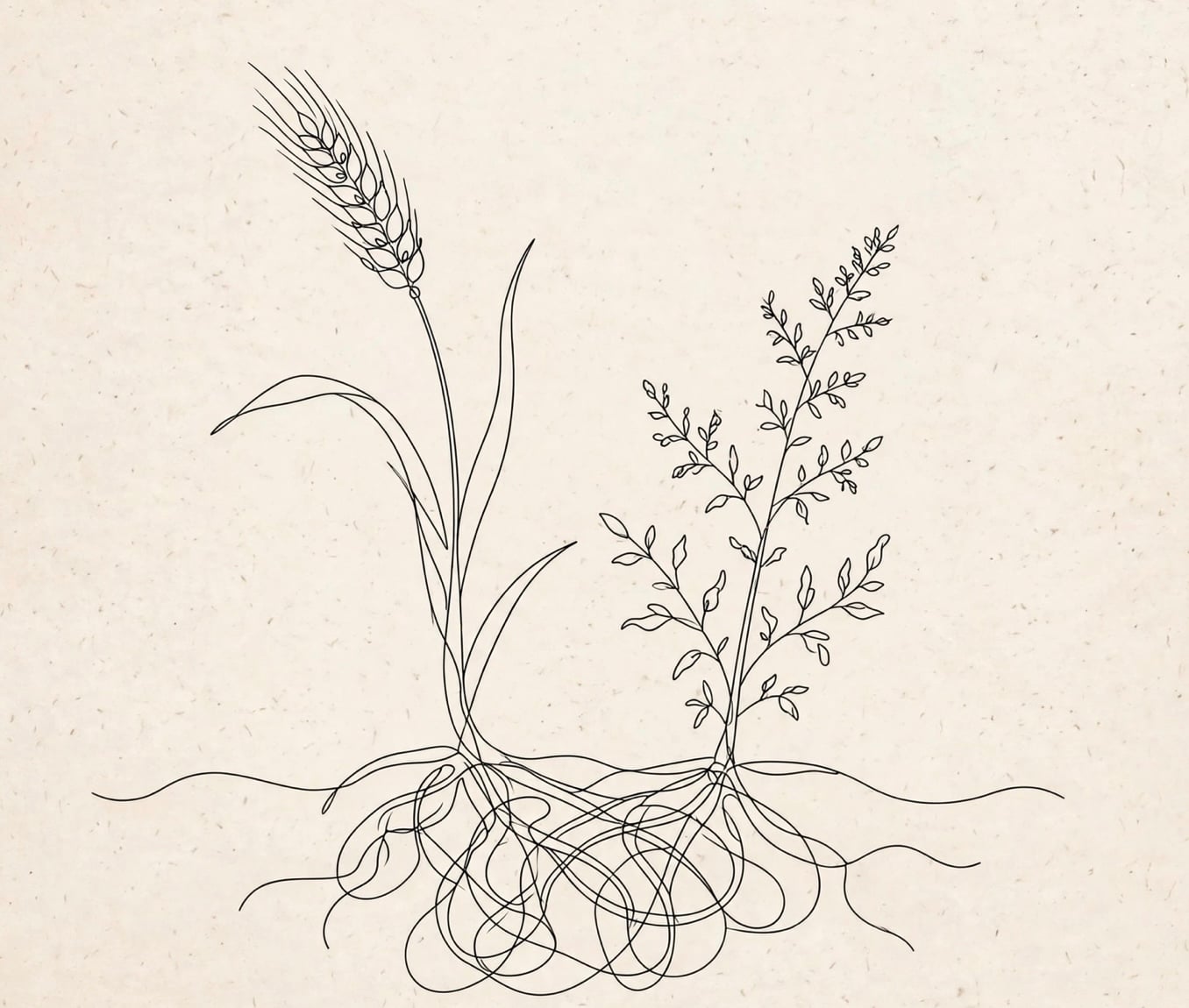
The Wheat
A farmer plants good seed in his field. While everyone’s asleep, an enemy sneaks in and scatters weed seed right through the same ground, then disappears. The wheat comes up…and so do the weeds, right alongside it. The workers come to the farmer, alarmed: didn’t you plant good seed? Where did all this get in from? He tells them plainly: an enemy did this. They want to go pull the weeds out immediately. He stops them — no, because pulling the weeds now means tearing out the wheat with them. Let them grow side by side until harvest. Then, and only then, will the weeds be gathered and burned, and the wheat brought safely into the barn.
-Paraphrase of Matthew 13:24–30
We live in a field full of contradictions. This is where Jesus starts. Not in a pristine field of uniform grain, but in a world where beauty and brutality share the same soil, where love and violence occupy the same neighborhoods, where justice and oppression sit inside the same institutions…sometimes the same courtroom, the same sanctuary. Hope and despair grow root to root, tangled past telling apart at the surface. Jesus does not deny any of this. He does not invent a cleaner field to preach about. The Kingdom he describes arrives in the field we actually live in: contaminated, contested, and real.
Who Planted the Weeds in the Wheat?
Into that field, the servants bring the first hard question: who did this? Jesus refuses the easy answer. He does not say that suffering is simply the way of things, an accident of weather. An enemy has done this. Not every sorrow belongs to this category…illness, grief, and death carry their own harder mystery, one this parable is not trying to solve. But the suffering built by human systems is a different matter, and liberation theology has insisted on this for generations: that suffering is not natural, but produced. White supremacy produces it. Capitalism without conscience produces it. So do patriarchy, militarism, the death penalty, colonialism, and every quieter system that teaches some lives matter less than others. These are not abstractions floating above daily life; they show up in zoning maps, sentencing guidelines, wage gaps, and border policy…wherever a system quietly decides whose life is negotiable. The weeds did not seed themselves in secret. Someone planted them. Oppression, whatever else it is, is organized.
Once that much is clear, the servants reach for the obvious next step: should we pull them up? Here the parable turns from diagnosis to temptation, because violence always volunteers itself first, and it always sounds reasonable. History is crowded with people entirely convinced they were only removing weeds…slaveholders convinced of it, lynch mobs convinced of it, dictators and executioners and inquisitors and the architects of mass deportation all convinced of it. Every generation finds its own vocabulary for calling human beings weeds, and every generation believes its own harvest will be the righteous exception. Every atrocity begins with someone convinced they are performing careful gardening.
The Landowner Says No
This is where the parable becomes genuinely shocking. The landowner says no. Not conditionally, not later…no. Liberation, he insists, cannot be built on collateral damage. “You might uproot the wheat along with them,” he says, and that single sentence collapses the whole logic of purification. The oppressed are always the first casualties of purity campaigns. Whenever governments promise security through force, whenever churches promise holiness through exclusion, whenever movements promise perfection through ideological cleansing, someone vulnerable ends up crushed underneath. “Collateral damage” is the phrase invented to make that arithmetic sound reasonable. The parable refuses the arithmetic altogether. Jesus does not treat the wheat and the weeds as equal risks to be weighed against each other. He values protecting the wheat more than he values destroying the weeds. That ordering changes everything about how justice is allowed to be pursued.
There is a deeper humility folded into this story. We don’t always know which is which. The roots are tangled below the surface, invisible to the servants standing over the field, and if we are honest, just as invisible to us. History keeps proving how often societies label their prophets as criminals. Jesus himself was executed as one. The state looked at him and called him dangerous. God looked at the same man and called him beloved. Liberation theology’s oldest instinct is to distrust any system, political or religious, that claims certainty about who deserves exclusion. Certainty about exclusion is usually the first sign that the wrong harvest is about to happen.
That tangle may not be only a problem of poor eyesight across a crowded field. It may run through each stalk. The servants assume wheat and weeds are two separate populations, sorted from the start. Jesus never actually says that. A harder reading asks whether the same person can carry both complicity and belovedness at once…whether someone crushed by one system can, in another, do the crushing; whether an oppressor remains capable, however unlikely it seems, of repentance. Liberation theology has always insisted that liberation is not only the freeing of the oppressed. It is also the conversion of the oppressor. The harvest, then, is not a sorting of good people from bad people. It is the slower work of naming what in us needs to die, and what deserves protecting until it ripens.
Cultivators of Wheat, Not Weed Inspectors
And yet…notice what actually grows. The wheat. Despite the weeds, despite the enemy, despite every purification campaign ever launched against it, the wheat keeps growing. Oppression never gets the final word in this parable, and it does not get the final word in history either. The Kingdom advances anyway. Communities love anyway. Mothers keep hoping, prisoners keep praying, organizers keep marching, neighbors keep feeding each other without waiting for permission from whoever claims the authority to decide who counts. The Kingdom turns out to be more resilient than anything trying to choke it out.
The cross makes this concrete. Rome believed Jesus was the weed. Rome had its own servants, convinced they were only doing necessary cleansing work, and they nailed him to wood to prove it. God raised him. The resurrection is God’s refusal to ratify the verdict of empire…proof that the very people we condemn may be precisely the ones through whom God is saving the world. Every cross an empire builds with confidence is a warning against premature harvest.
So what does this mean for us? The church is not called to become an expert panel of weed inspectors, sharpening its criteria for who belongs and who doesn’t. The church is called to cultivate wheat…to feed people, protect the vulnerable, stand with the condemned rather than over them, tell the truth about the enemy without becoming the enemy’s method, and love past the point that feels safe or strategic. It means resisting every system that sorts human beings into disposable categories. And it means leaving ultimate judgment to God rather than seizing it for ourselves.
The Kingdom does not ask who deserves to stay. It asks how we keep the wheat alive. Every act of liberation begins there, because every empire, sooner or later, starts calling people weeds. This is not passivity; it is patience with teeth, the discipline of refusing to let fear write the harvest schedule. The gospel’s answer has not changed: not so fast. You may be standing over wheat. And the God who raised the crucified Christ will not allow the vulnerable to be uprooted in the name of righteousness. Our task was never to become better weed-pullers. It is to become better cultivators of life…to keep the wheat fed, watered, and growing, and to trust God, not us, with the harvest.
Catholic
Politics and Religion
Parable of the Wheat and the Weeds
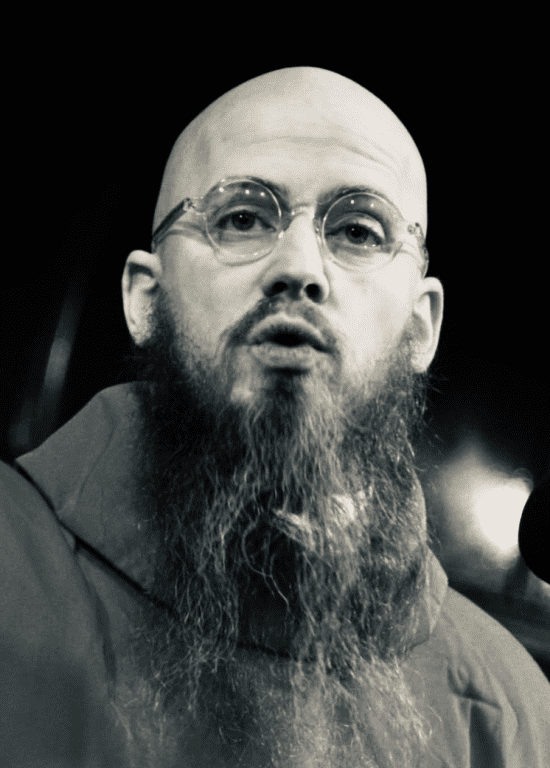
About The Rev. Dr. Jeff Hood
The Rev. Dr. Jeff Hood is a Catholic priest (Old Catholic), theologian, and nationally recognized activist based in North Little Rock, Arkansas. A spiritual advisor to death row inmates across the country, Dr. Hood has accompanied more people to their executions than any other advisor in the U.S., including the first-ever nitrogen hypoxia execution in 2024. His work sits at the intersection of justice, radical compassion, and public theology. Dr. Hood holds advanced degrees from Auburn, Emory, Southern Baptist Theological Seminary, University of Alabama, Creighton, and Brite Divinity School, among others. He also earned a PhD in metaphysical theology and founded The New Theology School, where he serves as Dean and Professor of Prophetic Theology. Author of over 100 books—including the award-winning The Courage to Be Queer—Dr. Hood’s writings and activism have been featured in The New York Times, Rolling Stone, NPR, CNN, and more. A frequent collaborator with men on death row, he sees theology as a shared, liberative act. Dr. Hood has served on the leadership teams of organizations like the Texas Coalition to Abolish the Death Penalty and the Fellowship of Reconciliation. His activism has earned multiple awards, including recognition from PFLAG and the Next Generation Action Network. On July 7, 2016, Dr. Hood led the Dallas protest against police brutality that ended in tragedy. His actions that night saved lives, and his story is now archived in the Dallas Public Library. A father of five, husband to Emily, and friend to the incarcerated, Dr. Hood rejects institutionalism in favor of a theology rooted in people, presence, and prophetic witness. You can read more about the author here.
Previous Post

July 13, 2026
I Will Lose Nothing: Final Words from Dennis Sochor
Next Post
July 27, 2026 They Are Not Afraid of Us: The Death Penalty and Abolition
Recent Comments
"'God’s Sheep on the Sidewalk' is immensely thought-provoking and conscience-stirring. Thanks. "The people out there ..."
God’s Sheep: The Ones Who Sleep ..."
"Greetings, Jeff, and bless you for your relentlessly regular fierce posts and your profound commitments ..."
Between: On the Person and Character ..."
"God as the Between, thoughts:As a child we were taught, in the blue or green ..."
Between: On the Person and Character ..."
"Sometimes we make it harder than it is. Not saying things don't bring us to ..."
Get Behind Me, Satan: A Death ..."
Browse Our Archives
Select a Category Danny & Jeff fresh writings latest poetics north texas fellowship of reconciliation Sermon theology from death row Thoughts Uncategorized
Select a Month October 2026 September 2026 August 2026 July 2026 June 2026 May 2026 April 2026 March 2026 February 2026 January 2026 December 2025 November 2025 October 2025 September 2025 August 2025 June 2025 May 2025 April 2025 March 2025 January 2025 December 2024 November 2024 October 2024 August 2024 July 2024 June 2024 May 2024 April 2024 March 2024 February 2024 January 2024 December 2023 November 2023 October 2023 September 2023 July 2023 May 2023 April 2023 March 2023 February 2023 January 2023 December 2022 November 2022 October 2022 September 2022 August 2022 July 2022 June 2022 May 2022 April 2022 March 2022 February 2022 January 2022 December 2021 November 2021 October 2021 September 2021 July 2021 June 2021 May 2021 April 2021 March 2021 February 2021 January 2021 December 2020 November 2020 October 2020 September 2020 August 2020 July 2020 June 2020 May 2020 April 2020 March 2020 February 2020 January 2020 December 2019 November 2019 October 2019 September 2019 August 2019 July 2019 May 2019 March 2019 February 2019 January 2019 December 2018 November 2018 October 2018 September 2018 August 2018 July 2018 June 2018 May 2018 April 2018 March 2018 February 2018 January 2018 December 2017 November 2017 October 2017 September 2017 August 2017 July 2017 June 2017 May 2017 April 2017 March 2017 February 2017 January 2017 December 2016 October 2016 September 2016 August 2016 July 2016 June 2016 May 2016 April 2016 March 2016 February 2016 January 2016 December 2015 November 2015 October 2015 September 2015 August 2015 July 2015 June 2015 May 2015 April 2015 March 2015 February 2015 January 2015 December 2014 November 2014 October 2014 September 2014 August 2014 July 2014 June 2014 May 2014 April 2014 March 2014 February 2014 January 2014 December 2013 November 2013 October 2013 September 2013 August 2013 July 2013 June 2013 May 2013 April 2013 March 2013
Follow Us!
TAKE THE
Religious Wisdom Quiz
I am bread from heaven that appeared with the morning dew six days a week. What am I?
Select your answer to see how you score.
Manna Heavenly food Bread of angels God's provision
Related posts from Jeff Hood

GOD Will Wipe Away the Tears from Every...

Why Can't Anyone Say Evil? On the Execution...

God's Sheep: The Ones Who Sleep Outside the...

Keeping the Word : Living the Word :...
TRENDING AT PATHEOS Progressive Christian

The Sermon on the Mount, Part I: Matthew...
The Sermon on the Mount, Part I (Matthew 4:12-5:12) St. Matthew moves...

What's up from Crossway: Reviewing some of their latest A few weeks...

Janie Learns the Way of the Cross: A...
Teaching children about Jesus' Passion can be challenging. Many parents and educators...

Looking For Good Catholic Writing - October 2026
He alone extends the heavens, and he walks upon the waves of...

In "Irreplaceable," our book on vocation and technology, Trevor Sutton and I...

I was strolling through the top floor of the brand new Parthenon...
view all Progressive Christian blogs
What Are Your Thoughts?leave a comment
Ad-Free & Subscriber Log-In Subscription Support
- About Us
- 2026 Calendar
- Videos
- Podcasts
- Library of World Religions
- Faith In Media Tracker
- Advertise With Us
- Write for Us
- Privacy Policy
- Terms of Service
- Do Not Sell My Data
- Contact Us
- Radiant Digital
- Manage Newsletter Subscriptions
- Unsubscribe From Notifications
- Sitemap
Copyright 2008-2026, Patheos. All rights reserved.
Subscription Support Ad-Free & Subscriber Log-In
Follow Patheos