
BuddhistCatholicContemplativeEvangelicalGeneral ChristianHinduJewishLatter-day SaintMuslimNew VisionsProgressive Christian
Beliefs
- Buddhist
- Catholic
- Contemplative
- Evangelical
- General Christian
- Hindu
- Jewish
- Latter-day Saint
- More Voices
- Muslim
- New Visions
- Pagan
- Progressive Christian
Topics
- Religion News
- Food and Religion
- Sports and Religion
- Religious Art
- Religious Music and Entertainment
- Religious Events
- History and Religion
- Style and Religion
- Politics and Religion
- Women in Religion
- Recreation Outdoors and Religion
- Business Finance and Religion
- Careers Workplace and Religion
- Education and Religion
- Family Parenting and Religion
- Health Fitness and Religion
- Home and Religion
- Relationships and Religion
- Technology and Religion
- Travel and Religion
Columnists
- Buddhist Columnists
- Business Finance and Religion Columnists
- Careers Workplace and Religion Columnists
- Catholic Columnists
- Contemplative Columnists
- Education and Religion Columnists
- Evangelists Columnists
- Family Parenting and Religion Columnists
- General Christian Columnists
- Health Fitness and Religion Columnists
- Hindu Columnists
- History and Religion Columnists
- Home and Religion Columnists
- Jewish Columnists
- More Voices Columnists
- Latter Day Columnists
- Muslim Columnists
- New Visions Columnists
- Nonreligious Columnists
- Pagan Columnists
- Politics and Religion Columnists
- Progressive Columnists
- Recreation Outdoors and Religion Columnists
- Relationships and Religion Columnists
- Religion News Columnists
- Religious Art Columnists
- Religious Events Columnists
- Religious Music and Entertainment Columnists
- Sports and Religion Columnists
- Style and Religion Columnists
- Technology and Religion Columnists
- Travel and Religion Columnists
- Women in Religion Columnists
Resource Library
- 2026 Calendar
- Library of World Religions
- The 100 Most Holy Places on Earth
- Patheos Answers
- Podcasts
- Videos
- Faith Leaders Database
- Anglican Episcopalian
- Bahai
- Baptist
- Buddhism
- Christianity
- Confucianism
- Eastern Orthodoxy
- Hinduism
- Holiness and Pentecostal
- ISKCON
- Islam
- Judaism
- Lutheran
- Methodist
- The Church of Jesus Christ of Latter-day Saints
- New Age
- Paganism
- Presbytarian and Reformed
- Protestantism
- Religion Behind the Scenes
- Roman Catholic
- Scientology
- Shia Islam
- Sikhism
- Sufism
- Sunni Islam
- Taoism
- Zen
- See all religions
Research Tools
 Ad-Free & Subscriber Log-In Subscription Support
Ad-Free & Subscriber Log-In Subscription Support
Follow Patheos 

- Trending:
- Forgiveness
- |
- Marriage
- |
- Consciousness
- |
- Death Penalty
- |
- Election
- |
- Halloween

- Home
- Progressive Christian
- Religion News
- Reconciliation of Love: Origins of Christian Universalism
Reconciliation of Love: Origins of Christian Universalism
Last updated on: September 24, 2025 at 10:45 pm by Jeff Hood
Reconciliation of Love: Origins of Christian Universalism 2025-09-24T22:45:43-06:00 Jeff Hood
Patheos Explore the world's faith through different perspectives on religion and spirituality! Patheos has the views of the prevalent religions and spiritualities of the world.

Hosea Ballou / Wikimedia Commons
The Story of Christian Universalism: Love That Refuses to Let Go
Whispers of Universal Reconciliation in Christian Universalism
Christian Universalism is the story of love refusing to let go. From the beginning, there were whispers in the gospel that God’s mercy would not stop short of anything less than the reconciliation of all things. The Book of Acts dares to speak of the apokatastasis…the restoration of all things (Acts 3:21).
Origen and the Fire of Mercy
Origen (185-253) was the first to seize this hope with both hands. He saw love as a fire that would purify every soul…not to annihilate but to restore. “God is all in all,” he wrote, insisting that divine mercy was not partial…not temporary…not conditional (Origen, On First Principles).
Gregory of Nyssa: Cosmic Healing
A few generations later, Gregory of Nyssa (c. 335-c. 395) carried the vision further. For him, reconciliation meant nothing less than the undoing of evil itself…a cosmic healing that would not cease until every wound was bound up. “For it is evident that God will, in truth, be ‘in all’ when there shall be no evil in existence” (Gregory of Nyssa, On the Soul and the Resurrection).
Isaac of Nineveh: Even Hell Is Not Beyond Christ’s Love
Centuries later…on the other side of empire…Isaac of Nineveh (c. 613-c. 700) sang the same truth with mystical tenderness. He declared that even hell was not beyond the touch of divine compassion. “As a handful of sand thrown into the great sea, so are the sins of all flesh in comparison with the mind of God” (Isaac, Ascetical Homilies). For Isaac, the reconciliation of love was not speculation but vision…God’s mercy flooding even the deepest pit.
The Church Turns from the Hope of Christian Universalism
The church grew uneasy with these voices…and they were whispered against, condemned and hidden. Fear built walls around hope. But the ember of reconciliation never went out. It smoldered in the shadows of history until…in the eighteenth century…a new world in upheaval gave it breath again. The Enlightenment was shaking old certainties, revolutions were unraveling empires and the thunder of revival preachers echoed into the new world. Out of this ferment rose a chorus of unlikely figures…the pioneers of modern universalism. They were not bishops backed by imperial power…but preachers, healers, mystics and radicals…each in their own strange way bearing witness to the reconciliation of love.
Pioneers of Modern Christian Universalism
James Relly: Union in Christ
James Relly (1722-1778) was among the first. A Welshman with a scandalous gospel, Relly insisted that the union between Christ and humanity was not a possibility but a reality. If all were in Adam, then all were in Christ. “As all mankind were in Adam, so all mankind are in Christ” (Relly, Union). In those few words, he leveled the machinery of conditional salvation. For Relly, the reconciliation of love was already accomplished in Jesus…waiting not to be earned but to be trusted. His vision was too much for polite pulpits…but it planted a seed that would grew wild.
John Murray: Proclaiming Christian Universalism
One who caught Relly’s fire was John Murray (1741-1815). Wounded by loss, he left England for America and brought with him nothing but the conviction that God’s mercy had no limit. In the raw landscape of the colonies, he proclaimed a message that many called heresy…“The salvation of all men… is most certainly the doctrine of God our Savior” (Murray, Letters and Sketches). For Murray, preaching itself became an act of rebellion. He stood before congregations steeped in fear and declared that hell had been undone. Where Relly spoke of reconciliation in Christ, Murray proclaimed it aloud…making it a scandal that could not be ignored.
George de Benneville: Healing with Love
But universalism was never just thunder…it was also tenderness. George de Benneville (1703-1793) embodied that gentler side. A mystic who crossed oceans, he told of descending into the depths of hell only to discover that there too was the presence of God’s mercy. “The Love of God is stronger than all the powers of hell” (de Benneville, Life and Trance). As a physician, he practiced what he preached. Every wound he tended…every life he comforted…was a testimony that the reconciliation of love was not reserved for some distant eternity but was already breaking in wherever compassion took flesh. Where Murray proclaimed reconciliation, de Benneville healed with it.
Elhanan Winchester: Scripture as a Witness
Then came Elhanan Winchester (1751-1797), who turned his fierce attention to Scripture. A Baptist preacher with the voice of a prophet, he refused to surrender the Bible to fearmongers. With boldness, he declared, “The doctrine of the universal restoration is most certainly the doctrine of the Bible” (Winchester, The Universal Restoration). He traced the great arc of Scripture from beginning to end and found not damnation but restoration…not wrath but mercy. In his hands, the Bible ceased to be a weapon and became a witness to reconciliation itself. He built a bridge for ordinary believers…showing them that to trust the Bible was to trust the reconciliation of love.
Hosea Ballou: Theology of Christian Universalism
Still, a movement needs more than proclamation and proof texts. It needs theology deep enough to stand against the currents of fear. That was the work of Hosea Ballou (1771-1852). Ballou tore apart the very heart of retributive Christianity…the doctrine of substitutionary atonement. In A Treatise on Atonement, he wrote, “The doctrine of atonement… is no more or less than the manifestation of the love of God” (Ballou, Treatise). No more could the cross be seen as divine wrath appeased by blood. Instead, the cross revealed what had always been true…love reconciling the world to itself. With Ballou, universalism gained a backbone. He dismantled theologies of cruelty and rebuilt Christian faith on the foundation of reconciliation alone.
Adin Ballou: Living Christian Universalism
But ideas are never enough. The reconciliation of love must take form in how we live, how we resist, how we build communities. This was the genius of Adin Ballou (1803-1890). They there were unrelated, Adin was certainly Hosea’s spiritual heir. For Adin, universalism was not speculation about heaven or hell…it was a mandate for how we treat each other. If God’s love reconciles all, then how can we shed blood or wage war? “The kingdom of Christ excludes revenge, war and violence of every kind” (Adin Ballou, Christian Non-Resistance). He gave universalism an ethic. He insisted that nonviolence, justice and community were not optional extras but the very shape of reconciliation lived out in the present. Where Hosea reconciled theology, Adin reconciled ethics. Together they made universalism into a way of life.
A Continuous Song of Christian Universalism
When we trace this line…from Origen to Gregory to Isaac, from Relly to Murray to de Benneville to Winchester to Hosea Ballou and finally to Adin Ballou…we see not disconnected voices but a continuous song, each note amplifying the hope of love. Origen dared to believe that all would be restored. Gregory declared that evil itself would be undone. Isaac whispered that even hell was not beyond love’s reach. Relly proclaimed union in Christ. Murray carried the proclamation across the sea. De Benneville healed with mercy. Winchester found reconciliation inscribed in the Bible itself. Hosea Ballou tore down false theologies to reveal love at the center. Adin Ballou lived reconciliation as nonviolence, making it flesh. Together they bear one witness…love reconciles all.
Our Inheritance: Living the Reconciliation of Christian Universalism
Embodying Mercy in a Broken World
And so the question turns to us. What will we do with this inheritance? If we believe that God’s love reconciles all, then we cannot stop at speculation. We must live it. The reconciliation of love is not a doctrine to admire but a calling to embody. To trust this gospel means to heal where others wound, to proclaim where others terrify, to resist where others bow and to love where others hate. The pioneers of modern universalism did not risk everything so we could repeat their words like a creed. They risked everything to show us how to live reconciliation in flesh and blood.
The Call to Bold and Courageous Living
This is why their witness matters now. The reconciliation of love demands that we stop imagining hell as a distant place and start noticing the hells around us. And then, like de Benneville binding wounds or Adin Ballou rejecting the sword…we must dare to embody the gospel that hell cannot last, that cruelty cannot win and that love has the final word.
The reconciliation of love is not sentimental. It is not safe. It is scandalous, costly and urgent. It calls us to trust that God has reconciled all in Christ…and to live like it is true, even when the world rages against it. Look around…prisons overflowing with bodies crushed by systems of oppression…borders fortified against the desperate…wars that turn brothers and sisters into enemies…forests burning and seas rising because of human greed…communities broken by fear, hatred and indifference. These are the hells we walk through every day, the ones the pioneers of modern universalism fought to heal with word and deed.
And still, the call comes. To live in a way that proclaims…even in the midst of injustice and violence…that love is stronger, mercy is deeper and reconciliation is inevitable. Origen gave us hope, Gregory shaped its breadth, Isaac whispered of its patience, Relly declared its reality, Murray proclaimed it aloud, De Benneville tended it in the flesh, Winchester anchored it in Scripture, Hosea Ballou made it doctrinally unshakable and Adin Ballou made it an ethical path.
The ember passes to us. The world will not wait. Love will not be postponed. To embrace the reconciliation of love is to step into the fire, to risk every comfort, to confront every injustice and to bear witness that no wound is too deep, no system too corrupt and no heart is too hardened for the mercy of God. This is the gospel we inherit, the task we cannot evade and the hope the world is starving to see made real. The reconciliation of love is here, and it demands that we live it…boldly, courageously, without compromise…until the last tear is wiped away, and every creature rests in the embrace of the One whose name is Love.
*
*If you would like to support the Execution Intervention Project (the organization that financially supports Dr. Hood’s work), click here.
Catholic
Politics and Religion
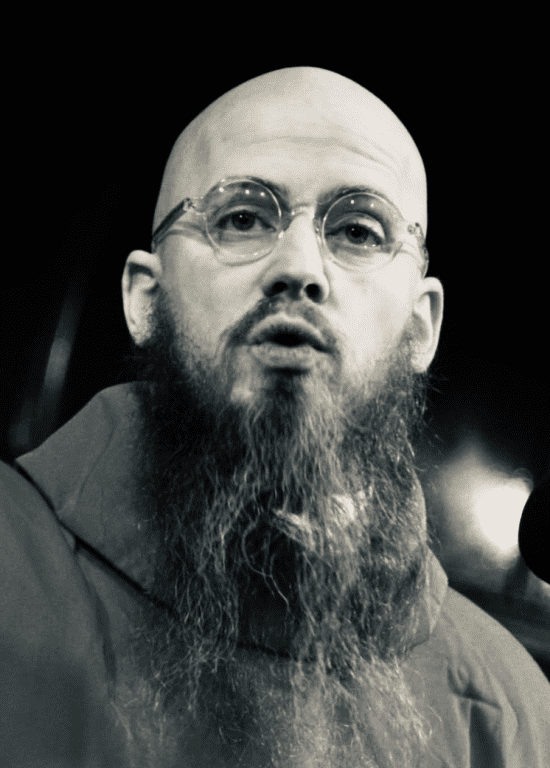
About The Rev. Dr. Jeff Hood
The Rev. Dr. Jeff Hood is a theologian, writer and activist who has spent years ministering to people on death row. As a spiritual advisor and witness to executions, he speaks out against state violence and calls for a society rooted in justice, mercy and the sacredness of life. You can read more about the author here.
Previous Post

September 23, 2025
Alabama's Death Penalty & Anthony Boyd's Explosive Filings
Next Post

September 27, 2025 No One Left Outside: On Lazarus and the Rich Man
Recent Comments
"'God’s Sheep on the Sidewalk' is immensely thought-provoking and conscience-stirring. Thanks. "The people out there ..."
God’s Sheep: The Ones Who Sleep ..."
"Greetings, Jeff, and bless you for your relentlessly regular fierce posts and your profound commitments ..."
Between: On the Person and Character ..."
"God as the Between, thoughts:As a child we were taught, in the blue or green ..."
Between: On the Person and Character ..."
"Sometimes we make it harder than it is. Not saying things don't bring us to ..."
Get Behind Me, Satan: A Death ..."
Browse Our Archives
Select a Category Danny & Jeff fresh writings latest poetics north texas fellowship of reconciliation Sermon theology from death row Thoughts Uncategorized
Select a Month October 2026 September 2026 August 2026 July 2026 June 2026 May 2026 April 2026 March 2026 February 2026 January 2026 December 2025 November 2025 October 2025 September 2025 August 2025 June 2025 May 2025 April 2025 March 2025 January 2025 December 2024 November 2024 October 2024 August 2024 July 2024 June 2024 May 2024 April 2024 March 2024 February 2024 January 2024 December 2023 November 2023 October 2023 September 2023 July 2023 May 2023 April 2023 March 2023 February 2023 January 2023 December 2022 November 2022 October 2022 September 2022 August 2022 July 2022 June 2022 May 2022 April 2022 March 2022 February 2022 January 2022 December 2021 November 2021 October 2021 September 2021 July 2021 June 2021 May 2021 April 2021 March 2021 February 2021 January 2021 December 2020 November 2020 October 2020 September 2020 August 2020 July 2020 June 2020 May 2020 April 2020 March 2020 February 2020 January 2020 December 2019 November 2019 October 2019 September 2019 August 2019 July 2019 May 2019 March 2019 February 2019 January 2019 December 2018 November 2018 October 2018 September 2018 August 2018 July 2018 June 2018 May 2018 April 2018 March 2018 February 2018 January 2018 December 2017 November 2017 October 2017 September 2017 August 2017 July 2017 June 2017 May 2017 April 2017 March 2017 February 2017 January 2017 December 2016 October 2016 September 2016 August 2016 July 2016 June 2016 May 2016 April 2016 March 2016 February 2016 January 2016 December 2015 November 2015 October 2015 September 2015 August 2015 July 2015 June 2015 May 2015 April 2015 March 2015 February 2015 January 2015 December 2014 November 2014 October 2014 September 2014 August 2014 July 2014 June 2014 May 2014 April 2014 March 2014 February 2014 January 2014 December 2013 November 2013 October 2013 September 2013 August 2013 July 2013 June 2013 May 2013 April 2013 March 2013
Follow Us!
TAKE THE
Religious Wisdom Quiz
What is the main theme of the Parable of the Two Sons?
Select your answer to see how you score.
Repentance is easy Obedience is proved by actions Honesty is best Firstborns are favored
Related posts from Jeff Hood

The Image: On the Horror of Capitalism and...

GOD Will Wipe Away the Tears from Every...

Why Can't Anyone Say Evil? On the Execution...

God's Sheep: The Ones Who Sleep Outside the...
TRENDING AT PATHEOS Progressive Christian

Jad Gillies on New Hillsong Worship Songs and...
For worship leader Jad Gillies, Hillsong Worship’s next chapter is not about...

Looking at the Largest Orthodox Cathedral on Earth
There is often a considerable amount of anger and, shall we...

The Problem with False Prophets
Miller’s Station UMC| 10/18/26| Anchor Verse: Jeremiah 23: 1, 9-23 I...

Emotion in Early Christianity by Andrew Crislip
Andrew Crislip’s Emotion in Early Christianity examines an often overlooked dimension of...

16 Spiritual Touchstones for a More Grounded Life
After decades of spiritual study, here are 16 principles I try...

Catholic Evangelization: Sharing Your Faith Every Day
Welcome back to the Graceful Awakening mini-series called, “From Faith to Mission.” ...
view all Progressive Christian blogs
What Are Your Thoughts?leave a comment
Ad-Free & Subscriber Log-In Subscription Support
- About Us
- 2026 Calendar
- Videos
- Podcasts
- Library of World Religions
- Faith In Media Tracker
- Advertise With Us
- Write for Us
- Privacy Policy
- Terms of Service
- Do Not Sell My Data
- Contact Us
- Radiant Digital
- Manage Newsletter Subscriptions
- Unsubscribe From Notifications
- Sitemap
Copyright 2008-2026, Patheos. All rights reserved.
Subscription Support Ad-Free & Subscriber Log-In
Follow Patheos