
BuddhistCatholicContemplativeEvangelicalGeneral ChristianHinduJewishLatter-day SaintMuslimNew VisionsProgressive Christian
Beliefs
- Buddhist
- Catholic
- Contemplative
- Evangelical
- General Christian
- Hindu
- Jewish
- Latter-day Saint
- More Voices
- Muslim
- New Visions
- Pagan
- Progressive Christian
Topics
- Religion News
- Food and Religion
- Sports and Religion
- Religious Art
- Religious Music and Entertainment
- Religious Events
- History and Religion
- Style and Religion
- Politics and Religion
- Women in Religion
- Recreation Outdoors and Religion
- Business Finance and Religion
- Careers Workplace and Religion
- Education and Religion
- Family Parenting and Religion
- Health Fitness and Religion
- Home and Religion
- Relationships and Religion
- Technology and Religion
- Travel and Religion
Columnists
- Buddhist Columnists
- Business Finance and Religion Columnists
- Careers Workplace and Religion Columnists
- Catholic Columnists
- Contemplative Columnists
- Education and Religion Columnists
- Evangelists Columnists
- Family Parenting and Religion Columnists
- General Christian Columnists
- Health Fitness and Religion Columnists
- Hindu Columnists
- History and Religion Columnists
- Home and Religion Columnists
- Jewish Columnists
- More Voices Columnists
- Latter Day Columnists
- Muslim Columnists
- New Visions Columnists
- Nonreligious Columnists
- Pagan Columnists
- Politics and Religion Columnists
- Progressive Columnists
- Recreation Outdoors and Religion Columnists
- Relationships and Religion Columnists
- Religion News Columnists
- Religious Art Columnists
- Religious Events Columnists
- Religious Music and Entertainment Columnists
- Sports and Religion Columnists
- Style and Religion Columnists
- Technology and Religion Columnists
- Travel and Religion Columnists
- Women in Religion Columnists
Resource Library
- 2026 Calendar
- Library of World Religions
- The 100 Most Holy Places on Earth
- Patheos Answers
- Podcasts
- Videos
- Faith Leaders Database
- Anglican Episcopalian
- Bahai
- Baptist
- Buddhism
- Christianity
- Confucianism
- Eastern Orthodoxy
- Hinduism
- Holiness and Pentecostal
- ISKCON
- Islam
- Judaism
- Lutheran
- Methodist
- The Church of Jesus Christ of Latter-day Saints
- New Age
- Paganism
- Presbytarian and Reformed
- Protestantism
- Religion Behind the Scenes
- Roman Catholic
- Scientology
- Shia Islam
- Sikhism
- Sufism
- Sunni Islam
- Taoism
- Zen
- See all religions
Research Tools
 Ad-Free & Subscriber Log-In Subscription Support
Follow Patheos 

- Trending:
- Advent
- |
- Forgiveness
- |
- Thanksgiving
- |
- Election
- |
- Seasonal Holidays
- |
- Marriage

- Home
- Progressive Christian
- Religion News
- Anthony Boyd, Alabama & Execution: Notes on a Revolutionary
Anthony Boyd, Alabama & Execution: Notes on a Revolutionary
Last updated on: September 22, 2025 at 11:51 pm by Jeff Hood
Anthony Boyd, Alabama & Execution: Notes on a Revolutionary 2025-09-22T23:51:49-06:00 Jeff Hood
Patheos Explore the world's faith through different perspectives on religion and spirituality! Patheos has the views of the prevalent religions and spiritualities of the world.

Anthony Boyd
Anthony Boyd & The Death Penalty: The Last Revolutionary
September 22, 2025
If you are holding this book, it is because you care…or at least, because you are willing to look. I am not writing this as a detached observer…or as someone who reports from a safe distance. I am writing this as a man who will be in the execution chamber with Anthony Boyd if he is executed…holding his hand, whispering prayers and witnessing the last moments of a life that has already preached more than most ever will. I have walked the halls of prisons, I have felt despair press against my chest and I have watched courage bloom in the most unlikely places. Anthony Boyd is that courage made flesh.
This book is my attempt to tell his story…not just the story of a man condemned to die…but of a revolutionary leader who fights for everyone on death row. It is a story of hope, of moral resistance and of the power of one life to challenge an entire system. I do not promise easy answers or simple resolutions. I promise honesty, witness and a perspective you will not find in court transcripts or news headlines. If you are willing to see the human behind the sentence, then you are ready to meet Anthony Boyd.
The Rev. Dr. Jeff Hood
Anthony Boyd & The Death Penalty: A Life Condemned, A Life Transformed
A Revolutionary in Chains
I have walked into prisons more times than I can count. There is always a certain smell…sweat, bleach, dust…but beneath it all, there is the scent of despair. You can feel it pressing against the concrete walls. You can feel it in your throat. You can feel it in the silence between clanging doors. I never get used to it. I hope I never do.
When I walk through those gates at Holman Correctional Facility, I know I’m not just walking into a prison. I’m walking into a kind of Golgotha. It is the hill where Alabama drags men to die. I know, because I’ve sat with them. I’ve prayed with them. I’ve listened to their trembling breaths before execution. The state calls it justice. I call it crucifixion.
Anthony Boyd is one of the men waiting. He has been waiting for decades, held under a sentence of death. But Boyd is not like anyone else I’ve met on the row. He is not merely surviving, though surviving alone is a miracle in a place designed to crush. Boyd is leading. He is shaping. He is daring to stand up and organize in the belly of the beast. He is the chairman of the board of directors of Project Hope to Abolish the Death Penalty, a prisoner-led organization that has for decades been the conscience of the fight against the death penalty in Alabama. Imagine that… a condemned man serving as the head of a movement to end the very punishment aimed at his own throat. That is not irony. That is revolution.
When I talk about Anthony Boyd, I’m not talking about some abstract figure. I’m talking about a man who calls me, a man who prays with me, a man who trusts me to be there when Alabama straps him down. I will stand in that chamber with him. That is not an easy sentence to write. I do not know how to describe the weight of such responsibility. To know that one day soon I may be holding his hand and whispering prayers…as the state of Alabama fills his lungs with nitrogen and starves him of breath. To know that I may be the last human face he sees before the machine takes over. How do you prepare for that? How do you steady your voice to sing when you know the song is being drowned by the hiss of gas?
Anthony has prepared me more than I have prepared him. He does not carry himself like a man doomed. He carries himself like a man called. When I listen to him speak about the death penalty, I hear conviction. When I hear him talk about others on the row, I hear compassion. He is a revolutionary…yes…but he is also a pastor in his own right. He fights for others. He teaches the law to men who never believed they could fight back. He carries their cases like burdens on his shoulders. He refuses to be only a victim. He has made himself into a vessel.
What does it mean to watch a man the state wants to kill lead a movement for life? It means contradiction lives in the very heart of Alabama’s system. It means Boyd embodies the failure of the logic of execution. If men can change, if men can lead, if men can heal, then execution is nothing but the destruction of living testimony.
I cannot pretend this book is written from some detached position. I am inside it. I am walking into the chamber. I am holding my friend’s hand. I am bearing witness with him and for him.
Anthony Boyd has become to me…and to many who know him…a Christ figure. I do not mean he is sinless. He would never make such a claim. But I mean he is carrying the weight of others on his back. He is fighting battles for people who cannot fight. He is preparing to die in a way that unmasks the cruelty of the system itself. His life…and perhaps his death…will preach. He is not walking away from that cross. He is walking toward it.
This is not a story about abstract arguments alone. Yes, there are legal questions. Yes, there are moral philosophies. Yes, there are debates about nitrogen hypoxia and the cruelty of death. But at the center of this story is a man. A man who leads. A man who prays. A man who suffers. A man who dares to resist the machinery of death.
When the day comes, if Alabama insists on its ritual of killing, I will be there. Not to bless their violence, but to stand in defiance. I will be there because Anthony asked me to. I will be there because Anthony taught me what courage looks like. And when the gas fills his lungs, I will not see him simply dying. I will see him preaching the last sermon of his life.
A Story Under Shadow
The story of Anthony Boyd’s conviction is tangled in shadows. I hesitate to even touch it, because the system has already declared its verdict, already pressed its seal into his flesh, already assigned him a number that ends with death. But the truth is, I cannot write about Anthony without writing about the shadows that follow him.
The state says that in 1993, Boyd drove a car full of men to a place where a terrible crime was carried out…the killing of a man named Gregory Huguley. The prosecutors insisted he knew, insisted he was part of a conspiracy and insisted that his life must be forfeited. That is the story the jury accepted. That is the story the courts upheld. And yet…when you press against it…the story shifts. Some testimony is inconsistent. Some motives are unclear. Some evidence is fogged by time and by memory.
The death penalty thrives on narratives. Prosecutors weave them, juries cling to them and the media sells them. But human beings are not narratives. They are complicated, broken and often redeemable. Anthony Boyd is not a character in Alabama’s morality play. He is a man. He is a man who has now lived more years behind bars than he ever did outside. He is a man who has organized, studied, prayed and fought. And the shadow of the trial still hangs above him, threatening to collapse into final darkness.
What if the story told at trial was bent? What if the witnesses remembered wrong? What if the jury saw what they wanted to see? What if the state…desperate for closure, eager to show force…rushed to a conclusion that could not carry the weight of truth? I do not have all the answers. But I do know this…a death sentence under such questions is not justice. It is reckless.
In the end, Anthony’s trial cannot be divorced from the larger theater of Alabama’s criminal justice system. This is a state that has executed people with intellectual disabilities. A state that has executed children. A state that has sent men and women to die on the basis of junk science and jailhouse snitches. A state that clings to the death penalty like a relic of a past it cannot let go.
The shadow is not just over Anthony’s trial. It is over the entire system. His case is one thread in a bloody tapestry woven out of error and vengeance.
Anthony Boyd & The Burden of Waiting
If you want to understand death row, you cannot just study the executions. You have to study the waiting. Execution is the punctuation. Waiting is the sentence.
Anthony Boyd has been waiting for more than half of his life. He wakes up every morning to the same walls, the same bars, the same noise of men coughing in their cages. He hears the guards banging doors. He hears the keys rattling. He knows the sound of another man being taken away, the shuffle of footsteps, the heavy silence that follows. He lives with it. He breathes it. It is the rhythm of his existence.
The cruelty of death row is not just that it kills. It is that it kills slowly, piece by piece, day after day. Time is stretched into torture. You are condemned not only to death…but to decades of anticipation. Every knock on the door might be the one. Every letter might contain the date. And while you wait, you watch others go before you.
I have asked Anthony what it feels like to live under that constant shadow. He told me it is like being buried alive in a coffin with a clock ticking above your head. You know the lid will open one day…and when it does…it won’t be for freedom. It will be for the final walk. You train yourself not to think about it, but you can never stop hearing the ticking.
And yet, in the midst of that torment… He creates. He writes. He calls. He organizes. He mentors. He teaches men the law. He prays. He takes the weight of waiting and somehow bends it into action. This is the part of Anthony Boyd that astonishes me…the refusal to let the system define him solely as a condemned man. He is condemned…yes…but he’s also a revolutionary behind bars.
Still, I cannot romanticize this life. Death row is hell. It is sweat that never dries because the prison does not care to fix the heat. It is food so foul it feels like another form of punishment. It is men screaming in the night. It is silence when those screams are suddenly gone. It is the ache of bodies denied touch. It is the erosion of mind and spirit.
Every so often, Anthony’s voice cracks when he speaks of time. He is not made of steel. He is flesh. He is memory. He is longing. He tells me about the years he will never get back. About the children he never raised. About the friends who died outside while he sat inside. About the toll of waiting for death. He says the system punishes twice…once by taking your freedom…and again by forcing you to live for decades with the terror of your own ending.
And yet, here is the contradiction…Anthony has turned waiting into witness. He refuses to let his suffering be wasted. He insists that the world hear from inside the waiting room of death. He insists that the world know what it is to sit under a sentence of execution for thirty years. He insists that his voice matter, even when the state tells him it doesn’t.
The burden of waiting has carved him into something fierce. It has shaped his theology. It has sharpened his vision. It has pressed him closer to the suffering of Christ, who knew what it was to live under the shadow of the cross. And when I talk with Anthony, I realize that his waiting is not passive. It is active resistance. Every breath he takes on death row is a refusal to give the state the last word.
Anthony Boyd: Revolutionary Spirit Fighting the Death Penalty
Anthony Boyd did not set out to become a revolutionary. Prison shapes people…often into silence…sometimes into monsters…occasionally into prophets. In Boyd’s case, the death row cage became his pulpit.
The early years were rough. Angry. Isolated. Full of the raw ache of betrayal, confusion and fear. Like many condemned men, he could have folded in on himself, allowed the sentence to swallow him whole. Instead, he began to study the writings of those who resisted empires before him. From those hours hunched over pages under a dim prison bulb…he emerged sharper, harder and yet softer in the places that mattered.
Anthony became a jailhouse lawyer. Not the kind who peddles cheap motions to desperate men, but the kind who studies the intricacies of the law until he can argue with the best of them. He took on cases for those who had no one else. He drafted appeals for men who could barely read. He taught others how to fight. When he won, the victories were communal. When he lost, the fight itself became the lesson.
The revolution Anthony embodies is not abstract. It is daily. It is carried out in the most degrading of conditions. It is born of sweat and bars and years that blur together. The state wants him silent…he insists on speaking. The state wants him to despair…he insists on hope. The state wants him erased..he insists on legacy.
When I speak with him, I often forget he is on death row. His voice is too alive. His vision too wide. He talks about abolition not as a dream but as a strategy…something within reach if we push hard enough…organize long enough…sacrifice deeply enough. He refuses to let the cage shrink his imagination.
The revolutionary spirit is not just in his words. It is in his posture toward the men around him. He lifts them. He refuses to step on their backs to save himself. He insists that their cases matter as much as his own. It is as though he has taken up a basin and towel in the middle of a place built for destruction. In that way, he is not only revolutionary. He emulates Christ.
Revolutions often begin in small rooms. Anthony Boyd is proof. A cage can become a headquarters. A condemned man can become a leader. A death sentence can become a summons to life.
Anthony Boyd’s Conversations with Esther Brown
Esther Brown is ninety-two years old. Her voice cracks with age, but her conviction is steel. For decades, she has stood as one of the most consistent voices against Alabama’s death penalty. When Project Hope needed an Executive Director, Esther became its link to the outside world. Together, she and the men have built a bridge that has carried the truth of abolition into churches, conferences and living rooms around the state.
Anthony calls her often. Their conversations are not just business…though they do talk strategy, organizing, who to write and what to say. They laugh. They argue. They dream. A man on death row and a woman in her nineties, bound together by a common cause.
When I first heard them on the phone together, I felt like I was eavesdropping on history. Anthony’s voice strong and steady, Esther’s voice wise and weathered. They spoke like comrades who had spent lifetimes in the same struggle. And in many ways, they had. Anthony fights from the inside, Esther fights from the outside…and together they form a single chorus.
Anthony has told me that Esther is one of the reasons he keeps going. She reminds him that the fight is bigger than his cell.
Esther, for her part, often calls Anthony “my son.” She speaks of him with a mixture of affection and awe. At her age, she could have retired from the struggle long ago. Instead, she answers the phone when Anthony calls. She types up the words he dictates. She carries his voice into rooms he cannot enter.
There is something almost biblical about their partnership. Like Moses and Aaron. Like Paul and Timothy. One outside, one inside. One old, one young. One free, one chained. Yet both bound by the same Spirit of resistance.
If you want to understand the human core of abolition in Alabama, listen to Anthony Boyd and Esther Brown talk on the phone. It is the sound of defiance. It is the sound of family. It is the sound of hope surviving in the cracks of despair.
Death Row as the Cross
Death row is not just a punishment. It is a crucifixion stretched across years. The condemned man is nailed not once…but again and again…every time the lights flicker off, every time another execution date is set and every time a neighbor is led away. The cross is carried daily, long before the final walk to the chamber.
Anthony Boyd understands this. He does not sugarcoat the torment. He does not deny the agony. But he has come to see death row as a cross he is called to carry…not because he wants to, not because he deserves to, but because this is where he finds himself and this is where he has choosen to resist.
When I sit with Anthony, I often hear echoes of Christ’s journey to Golgotha. The betrayal. The false witnesses. The mocking. The waiting. The public spectacle. The sense that the state itself has aligned to crush him. And yet…like Christ…Anthony has turned the cross into a witness.
He is not naive. He knows that Alabama may kill him. He knows the machinery rarely malfunctions in the favor of the condemned. But he also knows that if he must die, his death can preach. His cross can expose the brutality of the system. His breath…even as it is stolen from him…can become a sermon.
To describe Anthony Boyd as a Christ figure is not to claim he is divine. It is to claim that he participates in the same pattern of sacrificial witness. He stands before the machinery of empire and refuses to give it legitimacy. He carries the suffering of others on his back. He loves his brothers on the row even as they are mocked and discarded. He keeps faith even when the world tells him he should give up.
Death row is the cross. And Anthony Boyd carries it with a strength that shames the state.
Anthony Boyd & The Death Penalty: Against the Machinery of Death
The Machinery and Its Gears
The death penalty does not fall from the sky. It is constructed. Engineered. A machine assembled piece by piece by lawmakers, prosecutors, judges and voters. Each bolt tightened by fear. Each gear greased with racism. Each switch powered by vengeance.
Anthony Boyd has spent his life inside that machine. He has seen it grind men down into nothing. He has heard its gears whine with the sound of steel doors and the thud of boots in the hallway. He knows its rhythm.
The machinery does not just kill at the end. It kills daily in smaller doses…in solitary confinement, in medical neglect, in endless appeals that promise relief but deliver despair. Every bureaucrat who stamps a paper, every guard who slams a door and every judge who denies a motion…each is part of the machine.
Anthony refuses to accept the inevitability of its movements. He studies the gears. He names them. He calls out the lies of “justice” and “closure” that keep the machine humming. He insists that if people could see the machinery clearly…see its bolts rusted with racism, its gears spinning on blood…they would rise up against it.
It is a prophetic vision: to see the machinery as it is, not as it claims to be. To name the execution chamber not as justice but as ritualized slaughter. To call the gurney not a bed but an altar of state violence. Anthony has made that his task.
The Struggle Inside
Resistance is not only against the system outside…it is also against despair inside.
Anthony once told me that the hardest battles he fights are not against prosecutors or judges but against himself. Against the gnawing temptation to give up. Against the nights when he hears the machine grinding and wonders if it will ever stop. Against the voices that whisper he is already dead.
Death row is designed to destroy a man from the inside out. The steel, the concrete, the endless repetition…they are weapons of psychological warfare. Some men crumble. Some grow cold. Some retreat so far into themselves they are barely human when you look into their eyes.
Anthony fights back by building community. He organizes study groups. He teaches men to read. He listens when they break. He tells jokes when the silence grows too heavy. He refuses to let the cage win.
But even revolutionaries have nights of doubt. He has confessed to me that there are mornings when it’s hard to get out of bed. Afternoons when the legal mail arrives and crushes him. Evenings when another man’s execution leaves the tier in stunned silence. He has learned to let those moments come…to name them and to sit with them…but not to be ruled by them.
The struggle inside is never finished. But Anthony is still standing. That in and of itself is a victory.
Prophets in Prison Uniforms
To see Anthony Boyd in his prison uniform is to confront the absurdity of the system. A man who carries wisdom, courage and vision reduced to a uniform .
Yet that uniform has become prophetic. It marks him not as disposable but as chosen. Like sackcloth in the Bible, it is both humiliation and witness. Anthony wears it like a prophet’s robe.
He is not the only one. Many on the row have voices that cut like scripture. Men who can preach with clarity, who can pray with fire and who can speak truth to power better than most pastors I know. Alabama has locked its prophets in cells and dressed them in unifroms.
The irony is sharp. The state thinks it has caged its worst. In fact, it has gathered some of its most powerful preachers in one place. When they speak, they do so from the depths of empire’s cruelty. Their words do not float from pulpits padded with comfort. They rise from concrete floors stained with blood. That is why their voices matter. That is why they cannot be ignored.
Anthony has often said, “If people want to hear God…they should come to death row.” He is right.
Anthony Boyd’s Theology of Resistance
Anthony’Boyd’s theology is not drawn from textbooks. It is forged in survival, sharpened by injustice and baptized in grief. It is a theology that refuses neutrality. It is a theology that says God stands with the condemned…not with the state.
He rejects the false comfort of a God who blesses executions. He names such a God as an idol, a golden calf dressed in a flag. His God is the one who was executed by the empire, not the one who sat on its throne.
For Anthony, resistance is worship. Filing a motion is prayer. Refusing despair is praise. Teaching another man to read is sacrament. Writing letters to activists is evangelism. Organizing the condemned is liturgy.
This theology leaves no space for complacency. It does not allow pastors to hide behind polite sermons. It does not let politicians mask their violence in scripture. It demands that faith cost something…that believers stand where Christ stands, which is never with the executioner.
Anthony’s theology of resistance is dangerous to the state. Because if enough people believe it, the machinery of death will grind to a halt.
The Witness of the Condemned
The condemned are not simply victims. They are witnesses.
Anthony Boyd has become one of the clearest voices exposing the cruelty of the system. But he insists he is not alone. Every man on the row has a story. Every man carries a sermon. Every man’s survival is a testimony.
I have watched as Anthony lifts those stories out, makes sure they are heard. He does not hog the spotlight. He shares it. He knows that a single voice can be dismissed, but a chorus is harder to ignore.
The witness of the condemned is uncomfortable. It reminds the public that executions are not clean. That behind every “case” is a breathing, thinking and suffering person. That the death penalty is not an abstract debate…but a daily horror inflicted on bodies and souls.
Anthony has chosen to turn his life…even in chains…into witness. His words, his friendships, his teaching and his resistance. All of it preaches. All of it testifies. All of it demands that we stop the killing.
Anthony Boyd & The Death Penalty: The Moral and Spiritual Case
Anthony Boyd Fights for The Inherent Dignity of The Condemned
We live in a world that confuses punishment with erasure. To be condemned is not to be erased…yet society often treats men like Anthony Boyd as if their humanity can be stripped away, layer by layer, until only a number remains.
I have watched him in his cell. I have watched him organize, write and teach. I have seen him laugh, even under the threat of imminent death. I have seen him cry, and in that vulnerability, I have witnessed a depth of humanity most people never encounter. Boyd is fully human…broken, brilliant, flawed, courageous. And in every cell, every hour, every struggle, he insists that humanity cannot be canceled.
The state pretends that execution restores justice. It does not. It destroys. It not only kills a body…it assaults the dignity of all who bear witness. Anthony Boyd…in refusing to allow despair to dominate…demonstrates the radical truth that dignity cannot be stripped by law, by bars, by gas or by fear.
Justice or Vengeance?
People often confuse vengeance with justice. They wear it like a badge and call it law. In Alabama, the machinery calls it “capital punishment,” and the courts nod solemnly. But vengeance does not weigh evidence. Vengeance does not consider transformation. Vengeance does not care if a man has led, taught, healed or reformed.
Anthony Boyd’s life is an argument against vengeance. He is living proof that a man can be condemned…yet still contribute, still change and still elevate others. To execute him is not justice. It is ritualized retaliation. It is the state asserting that power matters more than morality.
We pretend justice is blind, but it is not. Justice can see, but it often chooses what it wants to see. Boyd has chosen to hold the state accountable anyway, even as it ignores him. In his refusal to bow to vengeance, he teaches a lesson that no courtroom ever will…true justice requires mercy, not the shedding of blood.
Transformation is Possible
The possibility of transformation is why executions are immoral. If the state can kill without accounting for growth, redemption or rehabilitation…then it is not pursuing justice. It is pursuing dominance. Anthony Boyd embodies the contradiction…a man condemned as dangerous…yet morally, intellectually and spiritually alive…and profoundly capable of leading others out of despair. To execute him now is to erase not just a life, but a living testament to change.
Anthony Boyd as Christ Figure
Christ was executed under an empire that feared truth. He carried a cross that was not his own invention, a burden imposed by others, yet he bore it with clarity, mercy and purpose. Anthony Boyd is walking a parallel path.
He is condemned by a state that cannot forgive. He is mocked, humiliated and threatened with death. Yet he continues to carry the weight of others…the men on death row, the voiceless, the frightened and the forgotten. His suffering becomes witness…and in that witness…the system’s cruelty is laid bare.
I watch him pray. I watch him teach. I watch him organize. He carries the cross not because he wants to, but because it is placed before him. And like Christ…he transforms suffering into a message…a living sermon for those willing to listen.
Mercy as Revolution
Anthony Boyd has taught me that mercy is not weakness. Mercy is rebellion. Mercy is refusal to participate in cycles of violence. Mercy is courage.
By practicing mercy…by choosing life for others even as the state imposes death…he demonstrates the only path forward for our society. The death penalty is not merely cruel…it is a system designed to destroy hope. Boyd has made hope his weapon.
To honor his life is to honor mercy as revolutionary. To honor his struggle is to refuse the logic of killing. And to bear witness to his life…as I do now…is to insist that mercy can overturn even the most entrenched machinery of death.
Anthony Boyd’s life, his leadership, his resistance and his cross…they are all a challenge. Not just to the state of Alabama…but to every conscience with ears to hear. He insists that we choose life…measured not in vengeance…but in mercy.
Anthony Boyd & The Death Penalty: Beyond
The State’s Power to Kill
The machinery of death is seductive. It promises closure. It promises justice. It promises… But power does not come without cost. And the cost of the state’s authority to kill is incalculable.
Alabama wields this authority like a hammer. It strikes with confidence, indifferent to the moral, philosophical or spiritual consequences. It is a power rooted in fear, sustained by bureaucracy and justified by tradition. The state’s capacity to kill is not evidence of righteousness…it is evidence of control.
Anthony Boyd stands as a reminder that power can be resisted even from within the belly of its own machinery. He has studied the law. He has traced the motions. He has navigated the courts. He has built bridges to the outside world. And still…the state moves forward as if his life is just another cog.
To watch it operate is to witness a cruelty that is systemic, ritualized and normalized. The state claims authority over life…but it cannot claim morality. Authority does not equal righteousness. Anthony Boyd’s presence…his voice, his witness…remind us that the power to kill is not the power to define.
If the state kills Anthony Boyd, it will be not merely the death of a man… but an attempt to silence a movement. To erase decades of leadership, mentorship and hope. To stamp out the fire that has burned quietly, fiercely and steadily behind the walls of Holman.
And yet, the revolution he embodies cannot be extinguished by gas, straps or steel doors. Even if Boyd is executed, the ideas he nurtured, the courage he inspired and the mercy he practiced will outlive him. Every man who learned from him. Every activist who read his letters. Every soul whose hope was lifted — they carry his legacy forward.
A revolutionary death is not a silent one. It echoes. It informs. It challenges. And in Boyd’s case, it is likely to ignite more than the state intends. That is the paradox the state cannot control: life cannot be fully canceled…even when the body is removed.
Resurrection
Even in the face of execution, hope cannot be extinguished. Anthony Boyd has built his life around the possibility of resurrection…not just in the spiritual sense, but in the social, moral and revolutionary sense. His life preaches that the condemned are not dead until we forget them. His leadership teaches that movements cannot be contained by walls or gurneys. His witness affirms that mercy and grace can overturn systems built on blood.
*If you would like to support the Execution Intervention Project (the organization that financially supports Dr. Hood’s work), click here.
Catholic
Politics and Religion
About The Rev. Dr. Jeff Hood
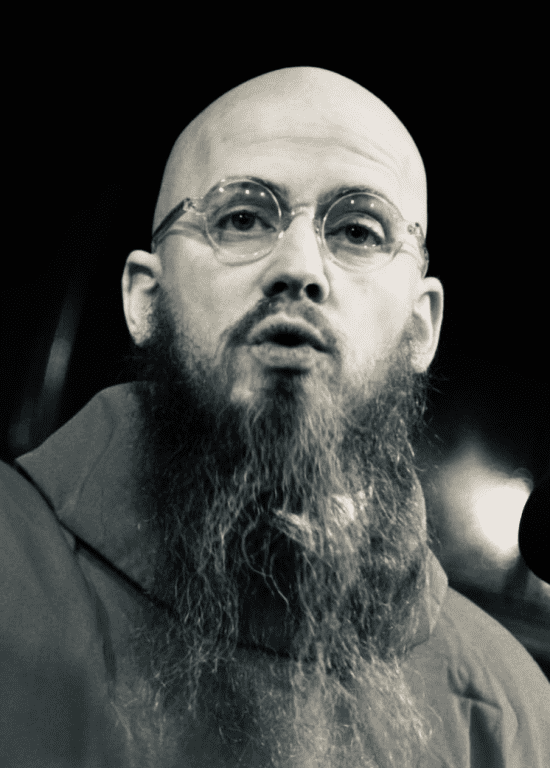
The Rev. Dr. Jeff Hood is a theologian, writer and activist who has spent years ministering to people on death row. As a spiritual advisor and witness to executions, he speaks out against state violence and calls for a society rooted in justice, mercy and the sacredness of life. You can read more about the author here.
Previous Post
September 20, 2025
Mammon or God: Empire or the Cross: Trump or Humanity
Next Post

September 23, 2025 Will Berry: Alabama's Prophet of Forgiveness
Recent Comments
"As a white 73-year-old male Texan from multiple generations back (to the original Old 300), ..."
Governor-Elect Gina Hinojosa, Stop Executions in ..."
"All Saints Day is A Happy Feast Day. As per the Beatitudes, "the Kingdom belongs ..."
Liberating All Saints on All Saints ..."
"'God’s Sheep on the Sidewalk' is immensely thought-provoking and conscience-stirring. Thanks. "The people out there ..."
God’s Sheep: The Ones Who Sleep ..."
"Greetings, Jeff, and bless you for your relentlessly regular fierce posts and your profound commitments ..."
Between: On the Person and Character ..."
Browse Our Archives
Select a Category Danny & Jeff fresh writings latest poetics north texas fellowship of reconciliation Sermon theology from death row Thoughts Uncategorized
Select a Month November 2026 October 2026 September 2026 August 2026 July 2026 June 2026 May 2026 April 2026 March 2026 February 2026 January 2026 December 2025 November 2025 October 2025 September 2025 August 2025 June 2025 May 2025 April 2025 March 2025 January 2025 December 2024 November 2024 October 2024 August 2024 July 2024 June 2024 May 2024 April 2024 March 2024 February 2024 January 2024 December 2023 November 2023 October 2023 September 2023 July 2023 May 2023 April 2023 March 2023 February 2023 January 2023 December 2022 November 2022 October 2022 September 2022 August 2022 July 2022 June 2022 May 2022 April 2022 March 2022 February 2022 January 2022 December 2021 November 2021 October 2021 September 2021 July 2021 June 2021 May 2021 April 2021 March 2021 February 2021 January 2021 December 2020 November 2020 October 2020 September 2020 August 2020 July 2020 June 2020 May 2020 April 2020 March 2020 February 2020 January 2020 December 2019 November 2019 October 2019 September 2019 August 2019 July 2019 May 2019 March 2019 February 2019 January 2019 December 2018 November 2018 October 2018 September 2018 August 2018 July 2018 June 2018 May 2018 April 2018 March 2018 February 2018 January 2018 December 2017 November 2017 October 2017 September 2017 August 2017 July 2017 June 2017 May 2017 April 2017 March 2017 February 2017 January 2017 December 2016 October 2016 September 2016 August 2016 July 2016 June 2016 May 2016 April 2016 March 2016 February 2016 January 2016 December 2015 November 2015 October 2015 September 2015 August 2015 July 2015 June 2015 May 2015 April 2015 March 2015 February 2015 January 2015 December 2014 November 2014 October 2014 September 2014 August 2014 July 2014 June 2014 May 2014 April 2014 March 2014 February 2014 January 2014 December 2013 November 2013 October 2013 September 2013 August 2013 July 2013 June 2013 May 2013 April 2013 March 2013
Follow Us!
TAKE THE
Religious Wisdom Quiz
Multitudes, multitudes in the valley of decision! What is this valley also called?
Select your answer to see how you score.
The valley of Megiddo The valley of Jehoshaphat The valley of Kidron The valley of judgment
Related posts from Jeff Hood

Watch and Pray: On Mark 13:33-37
Reasons for Restraint: Ricardo Gonzalez, Florida and Dec...

I Was in Prison ... On Matthew 25:35-36
Complete Account of the Botched Execution of Reinaldo...
TRENDING AT PATHEOS Progressive Christian

As was predicted many years ago, the Interpreter Foundation's website is...

"Why Do Churches Talk So Much About Money?"
If you were inclined to do so, you could probably find any...

Watch and Pray: On Mark 13:33-37
Jesus said to his disciples: “Be watchful! Be alert! You do not...

Debate on Purgatory & Biblical Evidences for It
This is from a combox on my video channel, Catholic Bible Highlights....

Set the table for the coming King
On Thursday we visited my sister-in-law for Thanksgiving, and throughout the entire...

If I Stop Becoming, Will I Disappear?
(At our most recent half day Zen retreat, Dr Chris Hoff, a...
view all Progressive Christian blogs
What Are Your Thoughts?leave a comment
Ad-Free & Subscriber Log-In Subscription Support
- About Us
- 2026 Calendar
- Videos
- Podcasts
- Library of World Religions
- Faith In Media Tracker
- Advertise With Us
- Write for Us
- Privacy Policy
- Terms of Service
- Do Not Sell My Data
- Contact Us
- Radiant Digital
- Manage Newsletter Subscriptions
- Unsubscribe From Notifications
- Sitemap
Copyright 2008-2026, Patheos, part of the Radiant Digital network of media brands. All rights reserved.
Subscription Support Ad-Free & Subscriber Log-In
Follow Patheos