
BuddhistCatholicContemplativeEvangelicalGeneral ChristianHinduJewishLatter-day SaintMuslimNew VisionsProgressive Christian
Beliefs
- Buddhist
- Catholic
- Contemplative
- Evangelical
- General Christian
- Hindu
- Jewish
- Latter-day Saint
- More Voices
- Muslim
- New Visions
- Pagan
- Progressive Christian
Topics
- Religion News
- Food and Religion
- Sports and Religion
- Religious Art
- Religious Music and Entertainment
- Religious Events
- History and Religion
- Style and Religion
- Politics and Religion
- Women in Religion
- Recreation Outdoors and Religion
- Business Finance and Religion
- Careers Workplace and Religion
- Education and Religion
- Family Parenting and Religion
- Health Fitness and Religion
- Home and Religion
- Relationships and Religion
- Technology and Religion
- Travel and Religion
Columnists
- Buddhist Columnists
- Business Finance and Religion Columnists
- Careers Workplace and Religion Columnists
- Catholic Columnists
- Contemplative Columnists
- Education and Religion Columnists
- Evangelists Columnists
- Family Parenting and Religion Columnists
- General Christian Columnists
- Health Fitness and Religion Columnists
- Hindu Columnists
- History and Religion Columnists
- Home and Religion Columnists
- Jewish Columnists
- More Voices Columnists
- Latter Day Columnists
- Muslim Columnists
- New Visions Columnists
- Nonreligious Columnists
- Pagan Columnists
- Politics and Religion Columnists
- Progressive Columnists
- Recreation Outdoors and Religion Columnists
- Relationships and Religion Columnists
- Religion News Columnists
- Religious Art Columnists
- Religious Events Columnists
- Religious Music and Entertainment Columnists
- Sports and Religion Columnists
- Style and Religion Columnists
- Technology and Religion Columnists
- Travel and Religion Columnists
- Women in Religion Columnists
Resource Library
- 2026 Calendar
- Library of World Religions
- The 100 Most Holy Places on Earth
- Patheos Answers
- Podcasts
- Videos
- Faith Leaders Database
- Anglican Episcopalian
- Bahai
- Baptist
- Buddhism
- Christianity
- Confucianism
- Eastern Orthodoxy
- Hinduism
- Holiness and Pentecostal
- ISKCON
- Islam
- Judaism
- Lutheran
- Methodist
- The Church of Jesus Christ of Latter-day Saints
- New Age
- Paganism
- Presbytarian and Reformed
- Protestantism
- Religion Behind the Scenes
- Roman Catholic
- Scientology
- Shia Islam
- Sikhism
- Sufism
- Sunni Islam
- Taoism
- Zen
- See all religions
Research Tools
 Ad-Free & Subscriber Log-In Subscription Support
Ad-Free & Subscriber Log-In Subscription Support
Follow Patheos 

- Trending:
- Forgiveness
- |
- Marriage
- |
- Consciousness
- |
- Death Penalty
- |
- Election
- |
- Halloween

- Home
- Evangelical
- Women in Religion
- Ephesians | roles of the husband in family
Ephesians | roles of the husband in family
Last updated on: March 9, 2023 at 9:00 am by Rev. Jared V. Ingle
Ephesians | roles of the husband in family 2023-02-18T17:57:32-05:00 Rev. Jared V. Ingle
Patheos Explore the world's faith through different perspectives on religion and spirituality! Patheos has the views of the prevalent religions and spiritualities of the world.
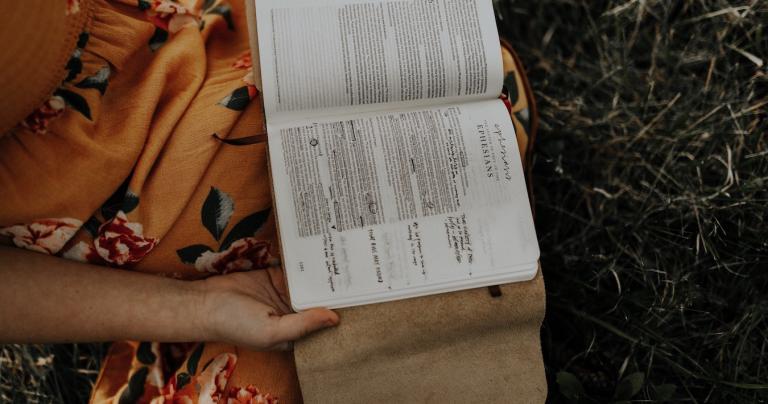
Ephesians | roles of the husband in family
2 Disclaimers:
- Judging by how I understand the terms, there is a fine line between gender equality and egalitarianism. Under my present means of interpretation, I personally do not believe the latter is Scriptural.
- Leaving roles out of the family can be difficult, unless one wants to ignore Biblical teaching. I certainly agree, slavery cuts against the grain of any modern belief. Even so, Paul is granting rights to women, children, and slaves in this Passage. Holy inspiration compels Paul to restore a little dignity to everyone in a time when the normal household code grants all authority to the male head of household. Out of the box, this is where women’s rights begin. Leaning in, Paul’s Word is that powerful for that era.
the Classic Greek philosopher Aristotle says:
“The first and fewest possible parts of a family are master and slave, husband and wife, father and children.”[1]
Leading in all 3 parts of the ancient family, the role falls on the man. And this is the understanding of the man in the ancient Near East (aNE). New Testament (NT) roles will be examined in Paul’s unique household code: husband, head, and savior.
i. husband
During ancient Greece and Rome the man is considered the leader.
This is the common view of men in Aristotle’s day, and in the time of our Lord. This is also the foundation of the Greco-Roman household code.
In the aNE, a household code exists to form a leadership order in the home and in society: men in charge, then women, children, and slaves.[2]
“Wives, submit to your own husbands, as to the Lord. For the husband is the head of the wife even as Christ is the head of the church, his body, and is himself its Savior. Now as the church submits to Christ, so also wives should submit in everything to their husbands.” (Ephesians 5.22-24, ESV)
Paul uses the Greek term for husband 6 times from verses 22-33.
the NT seems to assume that we know what a good husband is
Today, in some ways we seem to know what a good husband is too.
“The number one complaint I’ve encountered from women in marriage counseling is My husband won’t lead.’ Wives don’t want to be dominated, but they do want their husbands to take initiative, especially when it comes to spiritual matters, children, and romance.”[3]
We know what the husband should be, but do we connect it with church? Paul’s NT household code comes under the Spirit-filled community (Eph 5.18-21).
The aNE household code utilizes husbands to support the society.
The NT household code points to a greater Kingdom, and husbands play a key role.
ii. the husband as head or kephale
“For the husband is the head of the wife even as Christ is the head of the church, his body, and is himself its Savior.” (Eph 5.23)
You’ll find “head” or kephale many times in the NT and in Paul’s writings. I’m not chauvinist, sexist, etc., but I cannot ignore God’s Word either. I don’t claim to have the clearest definition of this term.
Head or the Greek word kephale is a misunderstood word, sometimes thought to mean “the source.” The word kephale is thought to mean headwaters, source of a spring or river. So the assumed conclusion is that like water, grace in the family flows from the head (husband).
this sounds good, but kephale is never used as “the source” or headwaters in the NT
In fact, the word kephale is rarely used as “the source” or headwaters in all of Classic Greek Literature.
So to understand kephale, we need to think of family systems in the aNE. The h**ousehold includes family, extended family, and also servants.[4]
The term kephale refers to the father, perhaps the oldest male, the patriarch. This term kephale can be translated as tribal chief. The term kephale can be translated as head, chief, and first, i.e. first leader.[5]
In Ephesians, Paul only uses the term kephale 3 times. However, in all of Paul’s other Epistles he uses kephale the same way.
For Paul, kephale applies to 1) Jesus Christ’s Lordship, 2) the God-given role of the husband, and 3) sometimes other themes of honor.
In the NT Paul adds something unique to kephale – God-given honor, like a family calling.
iii. the husband as Savior!?!?!? is this possible?
“For the husband is the head of the wife even as Christ is the head of the church, his body, and is himself its Savior.” (Eph 5.23)
Saviors are common in the aNE. Think of lower case “-s” saviors, great heroes.
Savior is a common term in the aNE. Saviors help cities. They may financially help the city get started, or defend the city in a major battle, etc. Usually each town in ancient Greece and Rome has a savior, a hero, someone like a founding father.[6]
The savior does something for the city, that the city can’t do for itself. To pay the savior back, the city submits, honors, spreads his fame, etc. This is probably the best backdrop to consider Paul’s use of the term savior.
savior is only used 24 times in the NT, and Paul is possibly the earliest author
As our Savior, Jesus Christ does something for us that we cannot do for ourselves. In return, we make His name glorious, spread His fame, etc. Paul says the husband holds a savior-esque role with his wife and family.
I’ll share a simple story showing how husbands still want to be the savior, the hero of the home:
The husband and wife finally get a chance to talk after dinner.
The wife presents the husband with some type of “problem” from her day.
At least he hears the term “problem,” even if she never says it. So the loving husband straps on his relational utility belt with all of his tools and begins working away at her “issues.”
After awhile, the wife gets frustrated, but the husband has no idea why. After all, he’s just solved a relational problem for his wife.
The only problem is, his wife doesn’t have a problem! She just wants to talk to him.
This may not happen to all couples, but it’s happened to me countless times . . . and I have a seminary degree in counseling.
I still want to fix it.
I want to do something for my wife she cannot do
It’s still means something that I want her to be proud of me.
I want her to be my cheerleader.
I may not be her savior, but can I at least be her knight in shining armor?
There is something inside of me that wants to call to her, to call her up a little higher to see God’s wonders.
I believe my thoughts are natural for husbands, and accurate for Greco-Roman heroes or saviors. It’s what Paul teaches about our Savior and about husbands.
I’ve heard women say they wish their husbands would lead the home
I’ve got some questions for you if you’re that wife;
- Do you want your husband to be the husband, the man of the home?
- Are you comfortable with your husband as the head or leader, like a patriarch?
- Do you want a knight in shining armor, a savior of sorts?
- Even if your husband does not want these roles, are you willing to help him find leadership roles in the home?
- Do you truly believe God has a calling for the husband in the home?
notes:
pic credit: Hannah Busing | girl wearing floral dress reading bible alone in grass | 04.13.22 | unsplash
- David A. deSilva, Honor, Patronage, Kinship & Purity: Unlocking New Testament Culture (Downers Grove, IL: IVP Academic, 2000), 173.
- Paul J. Achtemeier, Joel B. Green, and Marianne Meye Thompson, Introducing the New Testament: It’s Literature and Theology (Grand Rapids, MI: Wm. B. Eerdmans, 2001), 387.
- Robert Morris, “Happy Wife, Happy Life,” in the New Living Translation Fresh Start Bible: Direction for Every Day, ed. John Andersen (Southlake, TX: Gateway Press, 2019), 1046.
- Achtemeier, Green, and Thompson, 47.
- deSilva, 231.
- Frederick J. Long, OneBook Daily-Weekly: The Letter to the Ephesians (Franklin, TN: Seedbed Publishing, 2017), 114.
General Christian
Women in Religion
Relationships and Religion
Previous Post

March 6, 2023
Ephesians | marital sexuality
Next Post
March 12, 2023 Ephesians | a Word about the wife
Browse Our Archives
Select a Category Communion Cruz Ingle Crystal Ingle Early Church Engaging Culture Ethics & Society Family Formation History In Dialogue Jared & Crystal Kingdom of God Majority World Church Mateo Ingle Messenger College Mission Narrative Pentecostal Church of God Prayer Shepherding The Sermon The Writings Theology Theology & Psychology Traverse City Uncategorized Vernell Ingle Word Study
Select a Month October 2026 September 2026 August 2026 July 2026 June 2026 May 2026 March 2026 February 2026 January 2026 December 2025 October 2025 September 2025 August 2025 July 2025 June 2025 May 2025 April 2025 March 2025 February 2025 January 2025 December 2024 November 2024 October 2024 September 2024 August 2024 July 2024 June 2024 May 2024 April 2024 March 2024 February 2024 January 2024 December 2023 November 2023 October 2023 September 2023 August 2023 July 2023 June 2023 May 2023 April 2023 March 2023 February 2023 January 2023 December 2022 November 2022 October 2022 September 2022 August 2022 July 2022 June 2022 May 2022 April 2022 March 2022 February 2022 January 2022 December 2021 November 2021 October 2021 September 2021 August 2021 July 2021 June 2021 May 2021 April 2021 March 2021 February 2021 January 2021 December 2020 November 2020 October 2020 September 2020 August 2020 July 2020 June 2020 May 2020 April 2020 March 2020 February 2020 January 2020 December 2019 November 2019 October 2019 September 2019 August 2019 July 2019 June 2019 May 2019 April 2019 March 2019 February 2019 January 2019 December 2018 November 2018 October 2018 September 2018 August 2018 July 2018 June 2018 May 2018 April 2018 March 2018 February 2018 May 2017 March 2017 March 2014 February 2013 January 2013 October 2012 July 2012 May 2012 April 2012 March 2012 February 2012 January 2012 December 2011 August 2010
Follow Us!
TAKE THE
Religious Wisdom Quiz
What city was Paul heading to when he encountered Jesus?
Select your answer to see how you score.
Rome Damascus Antioch Jerusalem
Related posts from Jared Ingle


Be Still and Know That I am God


TRENDING AT PATHEOS Evangelical

How the author of the world's best hymn...
I've been working with John Newton for a while now. This makes...

Long before this Lectio Divina, Psalm 130 - the song - started...

What About the Trees? Another Living Parable
After I finished writing the last article about falling leaves as a...

Why Classical Education Is a Conversation, Not a...
Come and Read: Joy in Classical Education When I was a little...

Falling Leaves: A Living Parable on Letting Go
I’ve spent the vast majority of my life in the southeast corner...

Cornell University has received a great deal of negative publicity and intense...
view all Evangelical blogs
Ad-Free & Subscriber Log-In Subscription Support
- About Us
- 2026 Calendar
- Videos
- Podcasts
- Library of World Religions
- Faith In Media Tracker
- Advertise With Us
- Write for Us
- Privacy Policy
- Terms of Service
- Do Not Sell My Data
- Contact Us
- Radiant Digital
- Manage Newsletter Subscriptions
- Unsubscribe From Notifications
- Sitemap
Copyright 2008-2026, Patheos. All rights reserved.
Subscription Support Ad-Free & Subscriber Log-In
Follow Patheos