
BuddhistCatholicContemplativeEvangelicalGeneral ChristianHinduJewishLatter-day SaintMuslimNew VisionsProgressive Christian
Beliefs
- Buddhist
- Catholic
- Contemplative
- Evangelical
- General Christian
- Hindu
- Jewish
- Latter-day Saint
- More Voices
- Muslim
- New Visions
- Pagan
- Progressive Christian
Topics
- Religion News
- Food and Religion
- Sports and Religion
- Religious Art
- Religious Music and Entertainment
- Religious Events
- History and Religion
- Style and Religion
- Politics and Religion
- Women in Religion
- Recreation Outdoors and Religion
- Business Finance and Religion
- Careers Workplace and Religion
- Education and Religion
- Family Parenting and Religion
- Health Fitness and Religion
- Home and Religion
- Relationships and Religion
- Technology and Religion
- Travel and Religion
Columnists
- Buddhist Columnists
- Business Finance and Religion Columnists
- Careers Workplace and Religion Columnists
- Catholic Columnists
- Contemplative Columnists
- Education and Religion Columnists
- Evangelists Columnists
- Family Parenting and Religion Columnists
- General Christian Columnists
- Health Fitness and Religion Columnists
- Hindu Columnists
- History and Religion Columnists
- Home and Religion Columnists
- Jewish Columnists
- More Voices Columnists
- Latter Day Columnists
- Muslim Columnists
- New Visions Columnists
- Nonreligious Columnists
- Pagan Columnists
- Politics and Religion Columnists
- Progressive Columnists
- Recreation Outdoors and Religion Columnists
- Relationships and Religion Columnists
- Religion News Columnists
- Religious Art Columnists
- Religious Events Columnists
- Religious Music and Entertainment Columnists
- Sports and Religion Columnists
- Style and Religion Columnists
- Technology and Religion Columnists
- Travel and Religion Columnists
- Women in Religion Columnists
Resource Library
- 2026 Calendar
- Library of World Religions
- The 100 Most Holy Places on Earth
- Patheos Answers
- Podcasts
- Videos
- Faith Leaders Database
- Anglican Episcopalian
- Bahai
- Baptist
- Buddhism
- Christianity
- Confucianism
- Eastern Orthodoxy
- Hinduism
- Holiness and Pentecostal
- ISKCON
- Islam
- Judaism
- Lutheran
- Methodist
- The Church of Jesus Christ of Latter-day Saints
- New Age
- Paganism
- Presbytarian and Reformed
- Protestantism
- Religion Behind the Scenes
- Roman Catholic
- Scientology
- Shia Islam
- Sikhism
- Sufism
- Sunni Islam
- Taoism
- Zen
- See all religions
Research Tools
 Ad-Free & Subscriber Log-In Subscription Support
Ad-Free & Subscriber Log-In Subscription Support
Follow Patheos 

- Trending:
- Forgiveness
- |
- Marriage
- |
- Consciousness
- |
- Death Penalty
- |
- Election
- |
- Halloween

- Home
- Evangelical
- History and Religion
- seat of authority, ethics part 13
seat of authority, ethics part 13
Last updated on: October 16, 2022 at 3:15 pm by Rev. Jared V. Ingle
seat of authority, ethics part 13 2022-10-15T00:41:26-04:00 Rev. Jared V. Ingle
Patheos Explore the world's faith through different perspectives on religion and spirituality! Patheos has the views of the prevalent religions and spiritualities of the world.
There is one seat of authority over all, even Christians . . . even regarding matters of ethics or conviction.
In Romans xiv.6-9, Paul launches into other matters of conviction. Again, the backdrop is a debate with the Judaizers, a rogue group attempting to make all Gentile Christians conform to Jewish Law and tradition (verse 6). There is always fuel for discussions on matters of conviction though, i.e. personal preferences, group norms, etc.
Paul ties people together from various sides of the discussion by stating we have a responsibility to make choices, “in honour of the Lord” (repeated in verse 6, NRSV).
“To do something as unto the Lord is to do it as serving him. If one cannot serve the Lord (for whatever reason) in doing the activity, he should refrain.”[1]
Paul seems to go to an extreme, making one think these things are a matter of life and death (verses 7-9). Indeed wars have been fought and people have died because of “Christian” differences. However, Origen believes Paul is referring to baptism.
“Here ‘death’ refers to the death which we die when we are buried with Christ in baptism, and ‘life’ is the life we live in Christ, having died to sin and become strangers to this world.”[2]
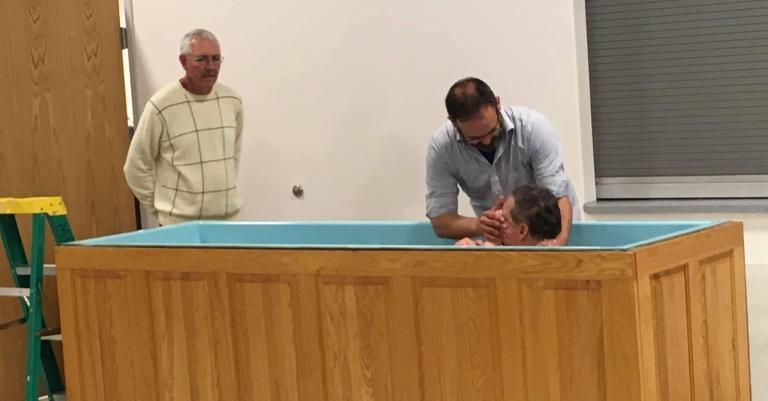
Baptism then can be a reminder to us of our separation from our sinful lifestyles, and a deterrent.
A good compass in making ethical choices is whether or not we can invite God into the decision.
Do we invite God into our moral choices?
Does God influence our convictions and ethics?
Paul uses strong language in verses 10-11.
Why do we judge?
Why do we look down on each other?
The language suggests that we view each other as nothing (verse 10).
After all, we are brothers. Paul is not just diffusing the arguments.
Paul basically says we are taking the place of God. We are judging, when it is Christ’s place to do so. He reminds us that all Christians will stand before the judgment seat of Christ (verse 10).
In the times, a magistrate would have a raised platform from which to make a judgement, a judgement seat, one word in the Greek – bema.
The judgment seat of Christ has been called the Bema Seat, and it is for Christians, not sinners. The nature of the judgment is not always well articulated in history, but there is a Bema Seat nonetheless.
“The judgment seat of God is the same thing as the judgment seat of Christ, to which Paul refers when writing to the Corinthians.”[3]
This courtroom will be no great showroom of magnificent Christians. John Chrysostom explains the Bema Seat pointing us, “to the terror of the judgment to come.”[4]
God is the one who will weigh out our convictions and the way we look at others because of them.
We will answer for ourselves. In verse 11, we’re reminded that no one else will speak for us on that day because, “every knee shall bow . . . every tongue shall confess” (KJV). Remember, this verse is in the context of Christian judgment, the Bema Seat.
“So then every one of us shall give account of himself to God.” Romans xiv.12, NRSV
Viewed alone, verse 12 implies that we are each personally responsible to God for our lives, convictions, etc. However, seeing verse 12 as the fitting end to Paul’s statements in verses 10-11, the meaning is richer.
There is a place for judgment within the scope of church authority. Paul is not speaking of this. He is speaking of an infectious attitude. We are not to judge. We cannot judge. If we do, we face judgment.
Paul pauses amid the arguments he is addressing. He wants us to beware of the judgment seat of Christ. We all will stand at the Bema Seat.
There may be debate about what we will be judged for at the Bema Seat. However, Paul makes it clear we will face some type of judgment call from Christ if we are judging each other perniciously.
This in effect summarizes Paul’s whole discussion in Romans 14. We all have to answer to our Lord for our convictions, our personal ethics if you will. We also will answer to our Lord if we prematurely judge others for their convictions.
John Chrysostom has a parting shot for legalists, fundamentalists, and all who compare to the Judaizers.
“Be careful when you see the Master sitting on his judgment seat, and do not make schisms or divisions in the church by breaking away from grace and running back to the law. For the law belongs to Christ as well.”[5]
notes:
[1] John S. Feinberg and Paul D. Feinberg, Ethics for a Brave New World (Wheaton, IL: Crossway Books, 1993) p. 44.
[2] Origen, Commentary on the Epistle to the Romans.LIV
[3] Origen, Commentary on the Epistle to the Romans.XII; see also 2 Corinthians v.10
[4] John Chrysostom, Homilies on Romans.xxv.13
[5] Chrysostom, Homilies on Romans.xxv.22
General Christian
History and Religion
Food and Religion
Previous Post

October 13, 2022
Happy New Year!
Next Post

October 18, 2022 Bible reading tips & tea time recipes for the day
Browse Our Archives
Select a Category Communion Cruz Ingle Crystal Ingle Early Church Engaging Culture Ethics & Society Family Formation History In Dialogue Jared & Crystal Kingdom of God Majority World Church Mateo Ingle Messenger College Mission Narrative Pentecostal Church of God Prayer Shepherding The Sermon The Writings Theology Theology & Psychology Traverse City Uncategorized Vernell Ingle Word Study
Select a Month October 2026 September 2026 August 2026 July 2026 June 2026 May 2026 March 2026 February 2026 January 2026 December 2025 October 2025 September 2025 August 2025 July 2025 June 2025 May 2025 April 2025 March 2025 February 2025 January 2025 December 2024 November 2024 October 2024 September 2024 August 2024 July 2024 June 2024 May 2024 April 2024 March 2024 February 2024 January 2024 December 2023 November 2023 October 2023 September 2023 August 2023 July 2023 June 2023 May 2023 April 2023 March 2023 February 2023 January 2023 December 2022 November 2022 October 2022 September 2022 August 2022 July 2022 June 2022 May 2022 April 2022 March 2022 February 2022 January 2022 December 2021 November 2021 October 2021 September 2021 August 2021 July 2021 June 2021 May 2021 April 2021 March 2021 February 2021 January 2021 December 2020 November 2020 October 2020 September 2020 August 2020 July 2020 June 2020 May 2020 April 2020 March 2020 February 2020 January 2020 December 2019 November 2019 October 2019 September 2019 August 2019 July 2019 June 2019 May 2019 April 2019 March 2019 February 2019 January 2019 December 2018 November 2018 October 2018 September 2018 August 2018 July 2018 June 2018 May 2018 April 2018 March 2018 February 2018 May 2017 March 2017 March 2014 February 2013 January 2013 October 2012 July 2012 May 2012 April 2012 March 2012 February 2012 January 2012 December 2011 August 2010
Follow Us!
TAKE THE
Religious Wisdom Quiz
What does "Abba" literally mean?
Select your answer to see how you score.
Parent Father Lord My God
Related posts from Jared Ingle
Vernell Ingle | I've Just Called to Encourage...

Be Still and Know That I am God


TRENDING AT PATHEOS Evangelical

How the author of the world's best hymn...
I've been working with John Newton for a while now. This makes...

Long before this Lectio Divina, Psalm 130 - the song - started...

What About the Trees? Another Living Parable
After I finished writing the last article about falling leaves as a...

Why Classical Education Is a Conversation, Not a...
Come and Read: Joy in Classical Education When I was a little...

Falling Leaves: A Living Parable on Letting Go
I’ve spent the vast majority of my life in the southeast corner...

Cornell University has received a great deal of negative publicity and intense...
view all Evangelical blogs
Ad-Free & Subscriber Log-In Subscription Support
- About Us
- 2026 Calendar
- Videos
- Podcasts
- Library of World Religions
- Faith In Media Tracker
- Advertise With Us
- Write for Us
- Privacy Policy
- Terms of Service
- Do Not Sell My Data
- Contact Us
- Radiant Digital
- Manage Newsletter Subscriptions
- Unsubscribe From Notifications
- Sitemap
Copyright 2008-2026, Patheos. All rights reserved.
Subscription Support Ad-Free & Subscriber Log-In
Follow Patheos